
Get Plugin Alliance Brainworx Bundle 2025.06.16 for Mac
VST Plugins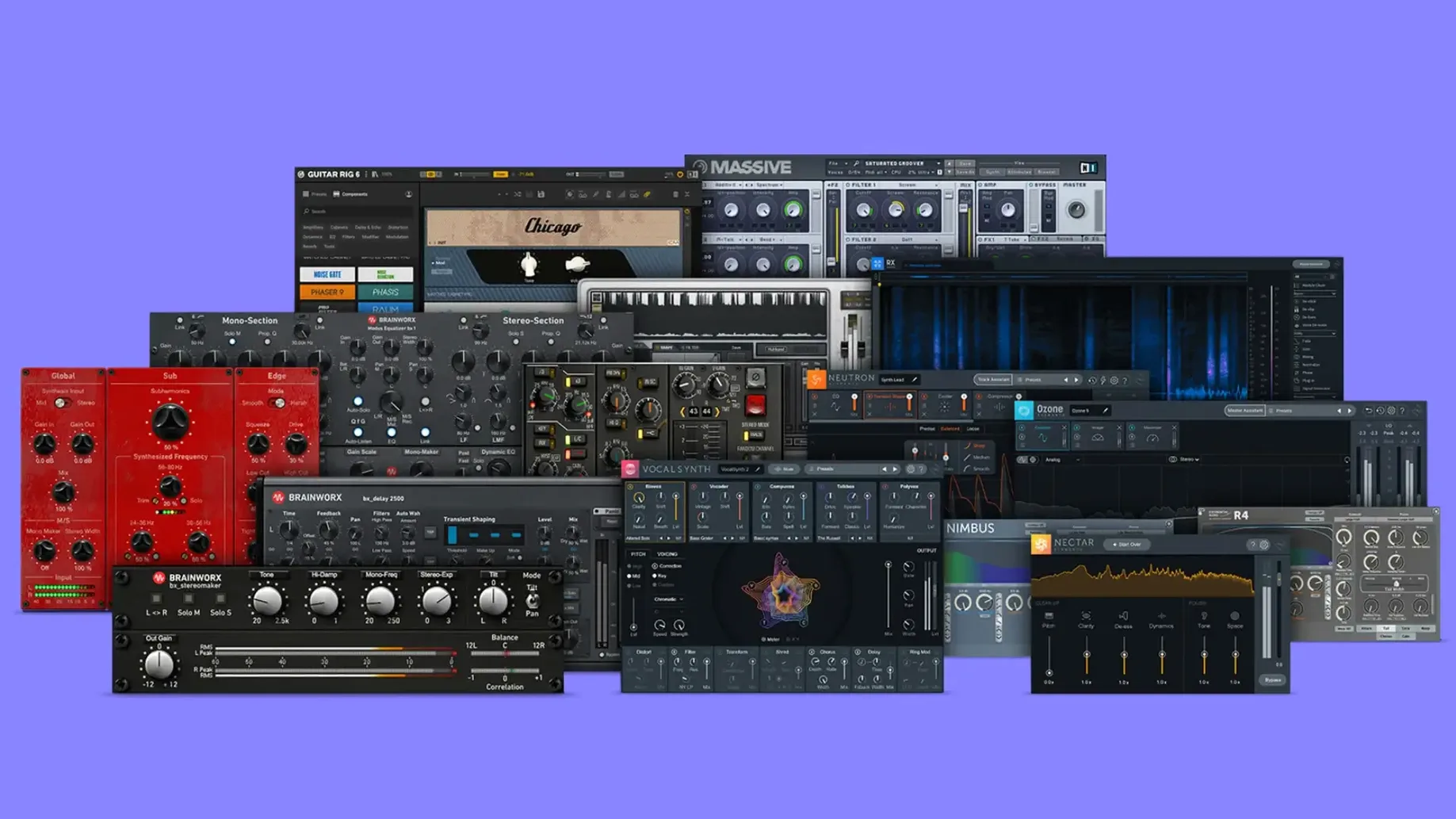
You've got a folder of raw tracks and a mix that feels flat. The Brainworx bundle from Plugin Alliance is one of those toolkits that brings the console color and surgical precision to your Mac, but before you start dialing in tones, you need to know if it'll actually launch on your machine. Here's exactly what you get and what your system needs.
- Runs natively on Apple Silicon and 64-bit Intel Macs, so your M-series or older Intel machine is covered.
- Requires macOS 11 or later — Big Sur is the oldest OS that will work.
- Includes the bx_2098 EQ for broad, musical tone shaping.
- Adds the bx_bassdude amp modeler for warm, live-sounding bass tracks.
- Comes with the bx_townhouse Buss Compressor, modeled on the classic SSL-style console bus.
- Gives you bx_rockrack V3 for guitar amp and cab simulation right in your DAW.
If your Mac is on Apple Silicon or an Intel chip running macOS 11 or newer, the whole collection of EQs, compressors, and amp sims is ready to go. It's a solid fit for anyone mixing in the box who wants the Brainworx sound without worrying about compatibility hiccups.
When you first open the installer and watch a dozen Brainworx plugins appear in your DAW, it's tempting to just start throwing them on tracks. A handful of settings changes early on can save you time and keep the sessions feeling responsive.
Soften bx_masterdesk Pro’s aggressive foundation curve
Most of the Brainworx tools default to a moderate amount of visual feedback, but a couple of tweaks make daily use smoother. Pull up bx_masterdesk Pro and flip the foundation slider to a gentler curve — the default can feel heavy on bass-heavy material, and dialing it back early gives you more room to shape the low end with the EQ section later. If you're working on headphones, turn on the mono-maker below 120 Hz so the sub frequencies stay centered; it stops your headphone mix from feeling lopsided before you even touch a fader.
Inside bx_console SSL 4000 E, the analog noise and hum modeling is on by default. For clean pop or electronic sessions, switch both off in the channel strip header. You'll still get the EQ and dynamics character without the subtle hiss, and the CPU hit drops slightly on older Intel Macs. While you're there, set the V-Gain knob to match your average input level — around -18 dBFS keeps the modeled circuitry in its sweet spot and avoids unintended saturation when you push the dynamics section.
For bx_glue on the mix bus, the auto makeup gain can overshoot on dense arrangements. Disable it once, set the threshold where the needle barely moves on verses, and then manually bring up the output. You'll hear the compression action more clearly and won't end up chasing a louder-but-flatter mix later.
Stacking three console emulations without listening
The biggest stumble is layering three console emulations on the same track without listening to what each one adds. Someone drops bx_console AMEK 200 on a vocal, then inserts bx_glue on the group, then bx_townhouse Buss Compressor on the master — and wonders why the top end disappeared. Each Brainworx plugin models a specific piece of hardware with its own phase shift and harmonic footprint. Stack them blind and you get mud. Pick one console flavor per signal path and commit to it; the difference in clarity is immediate.
Another common move is treating the bx_digital V3 like a normal stereo EQ and ignoring the mid-side matrix. When you boost 10 kHz on the side channel without checking mono compatibility, the cymbals can vanish on a Bluetooth speaker. Use the solo buttons on the mid and side sections to audition what you're actually affecting. A wide master sounds great, but a master that collapses in mono doesn't survive outside the studio.
On the amp sims — bx_bassdude and bx_rockrack V3 — beginners often skip the cabinet section entirely and run the amp output straight into the channel. The cabinet IR is more than half the tone. Cycle through the mic positions before you reach for an EQ downstream; a ribbon mic two inches off the cone often solves a harsh upper-mid buildup faster than a notch filter.
M-series plugin scans now finish in half the time
The 2025.06.16 Fix release tightened a few things that had been nagging users since the Apple Silicon transition. Plugin scanning on M-series Macs is noticeably faster — Logic Pro and Ableton Live find the Brainworx plugins in roughly half the time they took in late 2024 builds, which matters when you rebuild your plugin cache after a DAW update.
Graphical hiccups on Retina displays are mostly gone. Earlier versions of bx_console SSL 4000 E would occasionally draw the EQ curve one pixel off from the knob position when you resized the window; that's cleaned up. GUI elements now stay sharp at any scaling percentage, so you can shrink the console strip to fit a laptop screen without the knobs turning to smudges.
On the processing side, the bx_masterdesk Pro limiter stage got a subtle revision in its transient handling. The same settings from a 2024 session won't sound radically different, but you'll notice less top-end dulling when you push into 3 to 4 dB of gain reduction — the clipper and limiter interact more transparently now. If you have older projects that relied on the limiter for loudness, give the output a quick A/B with the bypass; you might find you can back off the threshold by half a decibel and keep the same perceived level.
Start a mix with bx_console SSL 4000 on every track
Imagine a Tuesday evening. You've tracked a four-piece band — drums, bass, two guitars, vocals — and the raw multitrack is sitting in your DAW with nothing on it yet. The first thing you do is drop bx_console SSL 4000 E on the drum bus. You pull up the gate on the kick and snare channels, set the expander gently on the overheads, and nudge the high shelf on the bus at 8 kHz until the cymbals breathe. The console's THD knob stays around 9 o'clock; just enough to give the transients a little roundness.
Next is the bass. You insert bx_bassdude on the DI track, flip through the cabinet models until you find a 1x15 with a dynamic mic close to the grille, and blend the dry signal back about 40 percent. The amp gives you grit and body; the dry blend keeps the attack tight so the notes don't blur into the kick drum.
On the vocal, you use bx_2098 EQ before the compressor. A broad 2 dB boost at 100 Hz warms up the chest tones, and a narrow cut around 2.5 kHz takes out a harsh edge from the condenser mic. After the EQ, bx_glue on the vocal group catches the peaks with a 2:1 ratio and slow attack — it's barely working on quiet phrases, but it holds the loud sections in place without sounding squeezed.
The mix bus gets bx_townhouse Buss Compressor with the threshold set so the needle moves on the snare hits and nothing else. Ratio at 2:1, attack at 10 ms, auto release. The mix already feels glued. Finally, you strap bx_masterdesk Pro across the master output, dial the foundation to taste, add a half-dB of presence, and check the limiter on the loudest chorus. The whole session took under an hour, and nothing sounds like a preset.
- macOS 11 or later
- Apple Silicon or 64-bit Intel processor
- Compatible DAW that hosts VST, AU, or AAX formats
Questions I actually get
Does the Brainworx bundle work on Apple Silicon Macs?
Yes, it offers native support for Apple Silicon along with 64-bit Intel processors, so modern M-series Macs run it smoothly.
What is the minimum macOS version required?
You need macOS 11 (Big Sur) or later to install and run the Plugin Alliance Brainworx bundle.
What plugins are included in the Brainworx bundle?
It features the bx_2098 EQ, bx_bassdude, bx_townhouse Buss Compressor, and bx_rockrack V3, among other Brainworx tools.
Porch talk 0
Come in or pull up a chair to leave a comment.
Nobody has pulled up a chair yet. If you used it on a real Saturday, say what the hour was.
More for the same hour
Everything in VST Plugins Plugin Alliance Shadow Hills OptoMax
1.0.0 VST Plugins
73 MB
Plugin Alliance Shadow Hills OptoMax
1.0.0 VST Plugins
73 MB
 Pulsar Audio IPA
1.0.9 VST Plugins
75 MB
Pulsar Audio IPA
1.0.9 VST Plugins
75 MB
 RC-20 Retro Color
1.5.1 VST Plugins
170 MB
RC-20 Retro Color
1.5.1 VST Plugins
170 MB
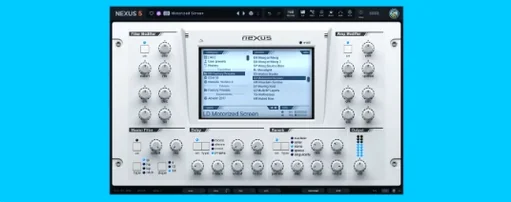 reFX Nexus
5.5.21 VST Plugins
Updated 72 MB
reFX Nexus
5.5.21 VST Plugins
Updated 72 MB
 Revoice Pro
5.1.30 VST Plugins
39 MB
Revoice Pro
5.1.30 VST Plugins
39 MB
 RipX DAW Pro
8.0.3 VST Plugins
1.6 GB
RipX DAW Pro
8.0.3 VST Plugins
1.6 GB
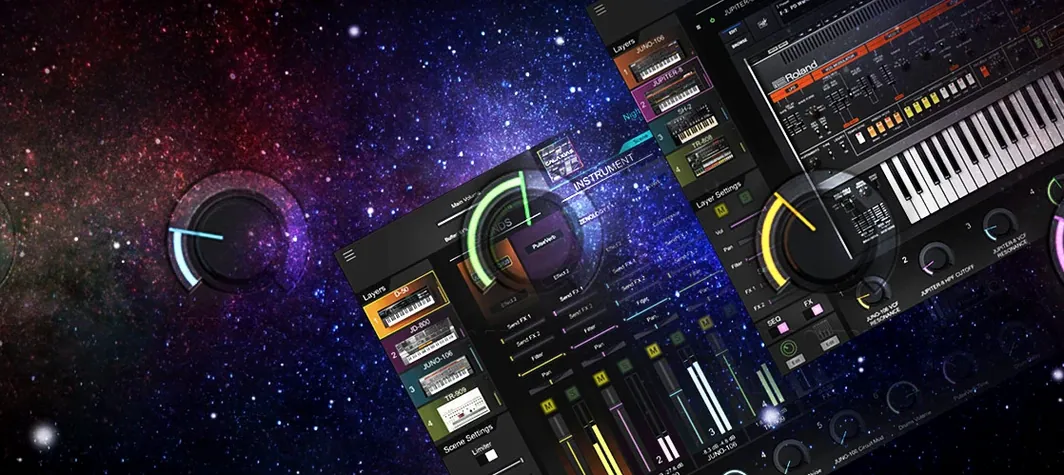 Roland Cloud Legendary Series
2025.06.29 VST Plugins
1.3 GB
Roland Cloud Legendary Series
2025.06.29 VST Plugins
1.3 GB
 Output Portal
1.2.1 VST Plugins
319 MB
Output Portal
1.2.1 VST Plugins
319 MB