
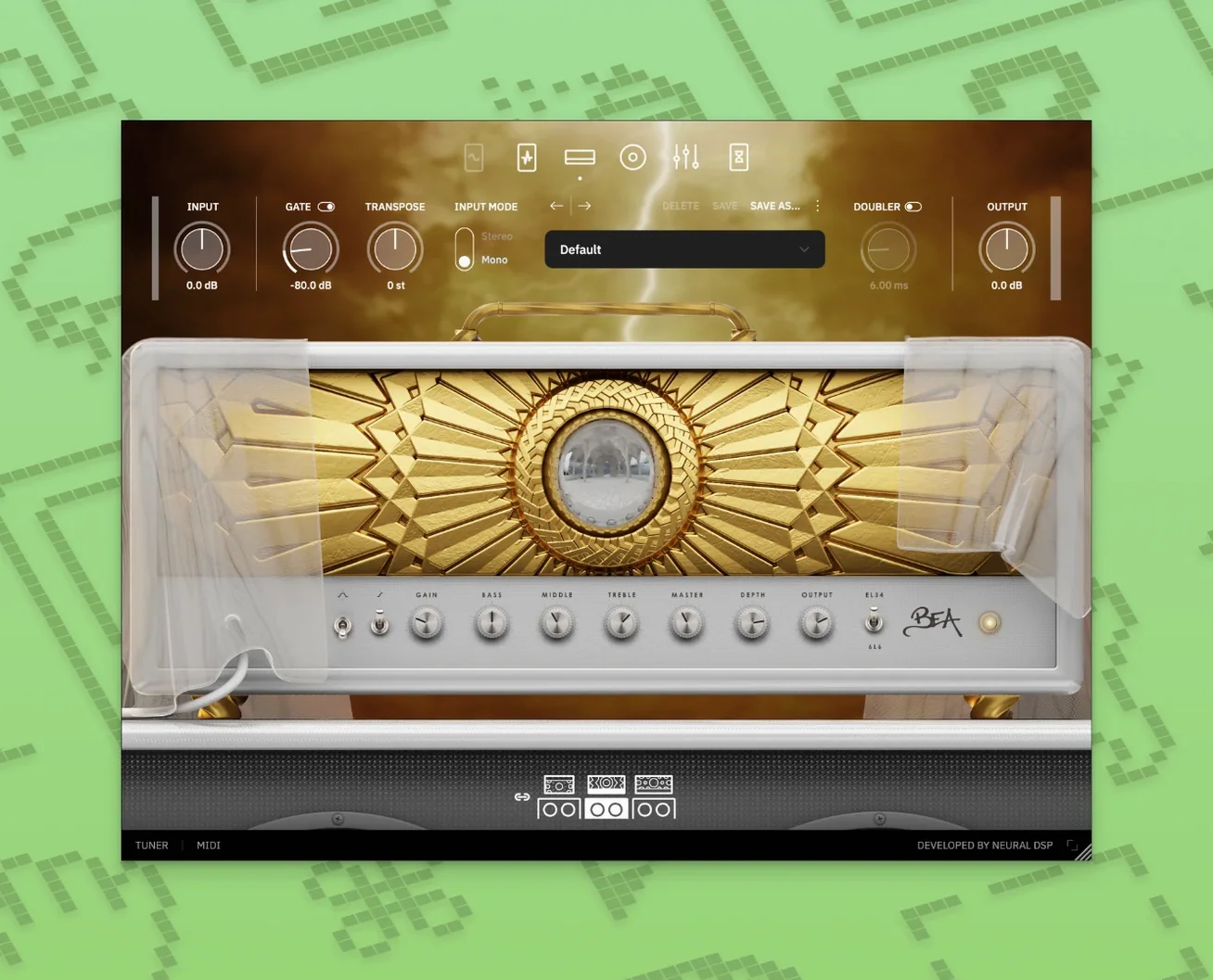
A rhythm part needs a darker edge, so you pull up Archetype Rabea X on a guitar bus and let the amp do the work. Later, the same track gets a synth line from Overlord, layered just under the chorus. That is the kind of session this plugin fits into without much fuss.
Tones That Cut Without Clutter
- Guitar tracks: amp tones sit comfortably in a dense arrangement.
- Parallel buses: effects add movement without burying the dry signal.
- Synth duties: Overlord triggers up to two oscillators at once for simple, direct lines.
Built for the Mac in front of you
Neural DSP built this Archetype from scratch, and it runs natively on Apple Silicon. You get VST2, VST3, AU, AAX, and a standalone app, so it fits into whatever host you already reach for. Overlord stays monophonic, which keeps things honest when you need a part to sit in one register and stay there.
Guitar plugins rarely live alone. Archetype Rabea X sits inside a chain, and how you connect it to the rest of your Mac determines whether Overlord hums or fights you. The standalone app is fine for late-night noodling, but the real work happens inside a DAW. I drop it on a stereo instrument track in Logic, route MIDI from a keyboard to Overlord, and keep the guitar input on a separate mono track. That way, the synth never steals the guitar's front-of-amp position, and I can nudge Overlord's timing without touching the amp settings.
On the macOS side, a few things make life easier. The plugin respects Audio Unit host transport, so looping a section in Logic keeps Overlord's arpeggiated pulses locked to the downbeat. If you run an aggregate device — say, a small interface for guitar and the built-in output for headphones — the standalone app sees it immediately. No digging through audio preferences. And because Neural DSP uses a single plugin binary for each format, dragging the component file into your user Library keeps things tidy without needing to re-scan everything.
Two mistakes I see all the time
The first one is gain-staging Overlord like a regular synth. People patch it into a stereo aux, crank the oscillator level, and wonder why the amp block down the chain turns to fizz. Overlord feeds the same signal path the guitar does, so hitting the front of the amp with a hot square wave from the synth pushes the gain stages into a brittle, pinched territory that sounds nothing like the demo videos. Back the oscillator output down about six decibels and let the amp's own character do the heavy lifting.
The second mistake is ignoring the manual's note about monophonic tracking. Two oscillators can fire simultaneously, but Overlord follows one pitch at a time. Play a dyad on a MIDI controller and the synth will grab one note — usually the highest — and discard the rest. I have watched people spend twenty minutes troubleshooting what they thought was a voice-stealing bug. It is not. It is monophonic by design. If you need chords, record the part twice with different oscillator tunings and pan them apart.
Building a Baritone Synth Bass from Scratch
Last weekend I had a track that needed a verse part somewhere between a baritone guitar and a pulsing synth bass. I opened an instance of Archetype Rabea X on a new instrument track in Ableton Live. First step: bypass Overlord entirely and dial in the amp. The default cabinet impulse worked for the low-mid body I wanted, so I nudged the bass control up a touch and pulled the treble back to keep the attack rounded. Nothing fancy.
Next, I turned on Overlord and set both oscillators to a saw wave, one an octave below the other. The lower oscillator sat at about forty percent volume. I played a simple root-fifth pattern on a MIDI keyboard, keeping the notes short so the amp's sag had room to breathe between hits. The plugin's noise gate clamped down cleanly between phrases, which mattered because the guitar input was silent and I did not want the synth's idle hum creeping into the arrangement.
With the part recorded, I nudged the dry guitar track — a DI take I had kept muted — into a second instance of the plugin. Same amp settings, no Overlord. The two tracks blended without fighting because the synth line sat mostly in the lower octave while the guitar occupied the midrange. A little panning, and the verse had a thickness that did not need bass guitar at all.
Patch Recall That Survives a Session Reload
The jump to 1.0.1 did not add new amp models or effects, but the quality-of-life fixes smoothed out a handful of small frustrations. Patch recall is more reliable when switching sessions in Logic — previously, reopening a project sometimes reset Overlord's oscillator tuning to default, and now the setting sticks. The standalone app also handles sample-rate changes from an external clock without dropping audio, which matters if you switch between 44.1 and 48 kHz projects regularly.
Bug fixes addressed a few edge cases with MIDI program changes and the noise gate's release behavior at very short settings. For everyday use, the biggest difference is that the plugin simply feels more stable when you push it. I used to save a preset before closing a session just in case; now I do not think about it. That is the kind of update that never makes a headline but quietly keeps a plugin on your default track template.
Version 1.0.1 keeps things steady with no headline changes worth writing home about.
- macOS 10.15 or later
- Apple Silicon or Intel
- Interface language: English
Questions I actually get
What formats does Archetype Rabea X come in?
The plugin is available as VST2, VST3, AU, AAX, and a standalone application.
Does Archetype Rabea X run natively on Apple Silicon?
Yes, it supports Native Apple Silicon as well as Intel Macs running macOS 10.15 or later.
Can Overlord play chords?
No. Overlord is a monophonic synth, but it can trigger up to two oscillators simultaneously.
Porch talk 0
Come in or pull up a chair to leave a comment.
Nobody has pulled up a chair yet. If you used it on a real Saturday, say what the hour was.
More for the same hour
Everything in VST Plugins Neural DSP Archetype Petrucci
1.0.0 VST Plugins
745 MB
Neural DSP Archetype Petrucci
1.0.0 VST Plugins
745 MB
 Neural DSP Fortin Nameless Suite X
1.0.1 VST Plugins
441 MB
Neural DSP Fortin Nameless Suite X
1.0.1 VST Plugins
441 MB
 Neural DSP Parallax X
1.0.0 VST Plugins
179 MB
Neural DSP Parallax X
1.0.0 VST Plugins
179 MB
 Neural DSP Soldano SLO-100 X
1.0.0 VST Plugins
340 MB
Neural DSP Soldano SLO-100 X
1.0.0 VST Plugins
340 MB
 Native Instruments Massive X
1.7.1 VST Plugins
1.6 GB
Native Instruments Massive X
1.7.1 VST Plugins
1.6 GB
 noteGRABBER
2.0.0 VST Plugins
35 MB
noteGRABBER
2.0.0 VST Plugins
35 MB
 Nudist Audio Nudistort
1.2.5 VST Plugins
45 MB
Nudist Audio Nudistort
1.2.5 VST Plugins
45 MB
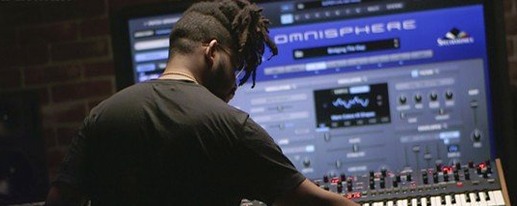 Omnisphere
3.0.2c VST Plugins
205 MB
Omnisphere
3.0.2c VST Plugins
205 MB