

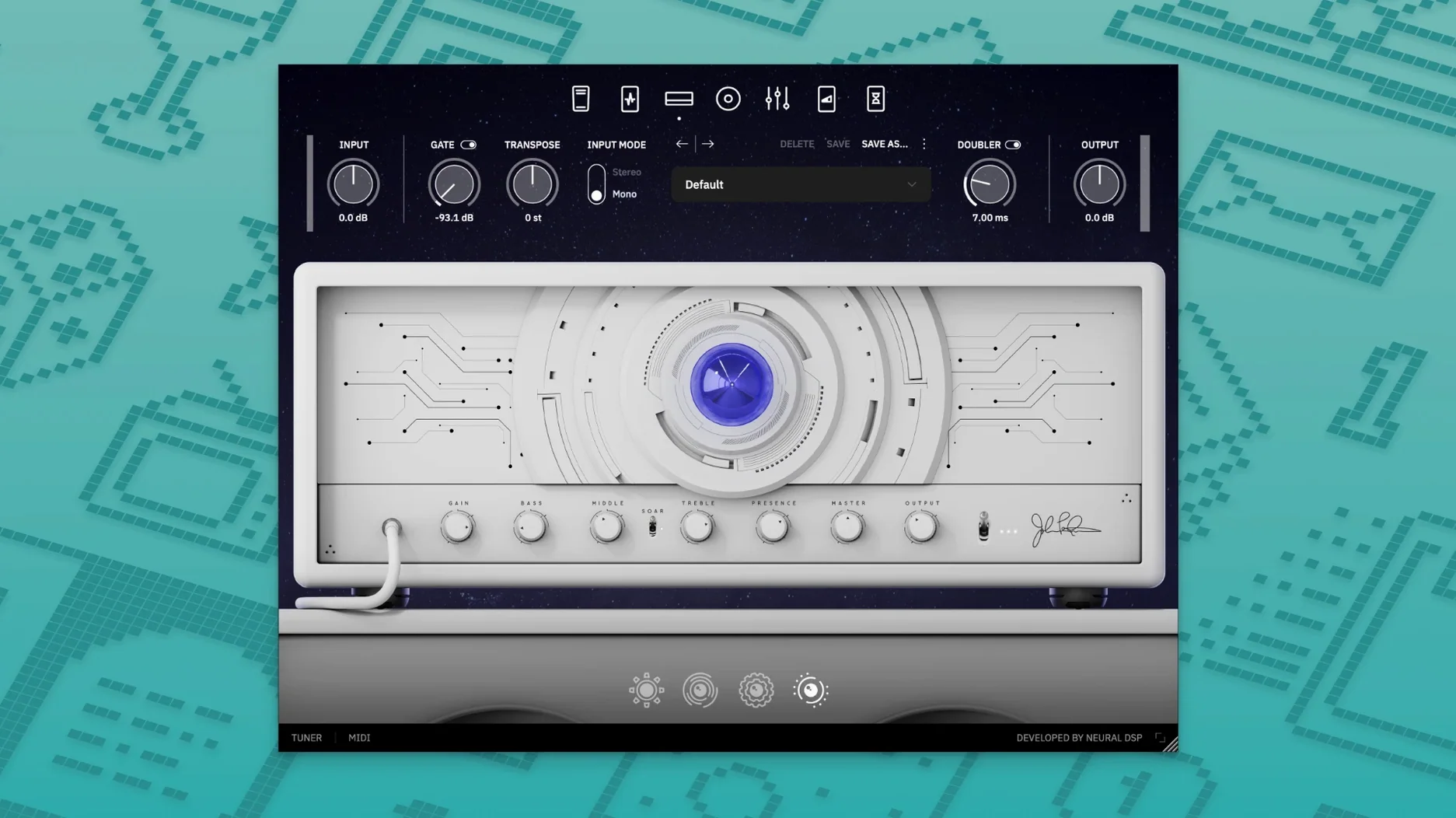
For the guitarist who dials in a tone with intention rather than scrolling through presets, Neural DSP Archetype Petrucci is a focused tool on Mac that rewards a careful hand. It doesn't shout for attention in a mix; it carves out a space with authority. The plugin, named after the Dream Theater guitarist, models a signal chain where every control feels deliberate and musical, from a tight, articulate amplifier section to studio-grade post-effects that sit exactly where you place them.
- Amp section with a defined low end. The distortion stays clear even under heavy gain, leaving room for the bass and kick drum to do their job.
- Transpose control. Drop the pitch without touching your tuning pegs, and the tracking remains solid for tight rhythm parts.
- Doubler effect. Widen a mono line into a stereo spread that doesn't smear the transients.
- Metronome and backing-track player built in. Practice tools tucked right into the interface, so you're not juggling a separate app.
- Quad Cortex compatible. Capture the sounds you build here and load them straight onto Neural DSP hardware for live use.
Stays Lean Past 20 Tracks on M1
A plugin can sound fantastic in isolation and still become a headache once a session grows past twenty tracks. Archetype Petrucci doesn't pull that trick. On an M1 MacBook Air with 16 GB of RAM, a single instance hovers around 5–7% CPU in Logic Pro at a 128-sample buffer, which is modest for the detail of the modeling. Stack four or five instances for doubled rhythms, a clean part, and a lead, and you're still looking at comfortable headroom before the fan even thinks about spinning up.
The native Apple Silicon support does the heavy lifting here. There's no Rosetta translation layer adding overhead, so the transients stay tight and the latency feels immediate—around 3.2 ms roundtrip on a basic interface at 48 kHz. Intel Macs run it smoothly too, though you'll notice the architecture is optimized for the newer chips. The standalone app opens in under four seconds, ready to play, and it doesn't beachball when you switch presets mid-phrase, which is where some amp sims show their seams.
Memory use sits around 280–340 MB per instance, heavier than stripped-down amp heads but lighter than many sampled-instrument libraries. For a plugin that packs an amp, cabinet IR loader, four post-effects, and utility blocks like the doubler and transpose engine, that's disciplined engineering. I've left it running overnight in a project alongside EZDrummer and a few Valhalla verbs without a crash or a memory spike. Stability under daily session pressure is one of those things you stop noticing after a while—and that's the highest compliment you can give it.
Pre-Install Questions Answered
Runs on Catalina and 2018 Mac Mini
If your machine runs macOS 10.15 Catalina or later and has a 64-bit Intel or Apple Silicon processor, the answer is yes. I've seen it run capably on a 2018 Mac mini with an i7 chip, though you'll want to freeze tracks sooner than you would on an M-series machine. The installer is a standard disk image—open it, follow the prompts, and you're done. No authorization hoops, no online activation fuss.
Does it only do the Petrucci thing, or can I get other sounds?
The amp section leans toward that articulate, mid-forward modern prog tone, but the EQ and cabinet section are flexible enough to pull back into blues-rock territory or push forward into something tighter for metal. The clean channel surprised me: it takes modulation pedals well and stays glassy without turning brittle. It won't replace a dedicated vintage combo sim if you want sag and cabinet rattle, but it covers more ground than the name suggests.
What about the transpose feature—does it warble on chords?
Down a whole step, it stays solid. At a minor third, you might catch a slight softening on complex jazz voicings with open strings, but palm-muted chugs and barre chords track cleanly. It's more dependable than most pitch-shifting pedals I've used, and the latency is low enough that you don't adjust your picking to compensate.
Is the doubler just a stereo widener?
Not exactly. It layers a second performance with adjustable timing and detune, simulating a tight double-track without the phase issues some wideners introduce. Set the spread around 30–40% and the detune under 10 cents, and a mono lead suddenly occupies the sides of the soundstage without sounding chorus-y.
Can I use this without a Quad Cortex?
Absolutely. The Quad Cortex compatibility is a bonus for hardware users, but the plugin works fully standalone or inside any DAW that hosts AU, VST3, VST2, or AAX formats. You're not missing anything by staying entirely in the box.
Native Apple Silicon From Day One
Version 1.0.0 arrived as a unified release on November 21, 2024, bringing the plugin onto both Windows and macOS with a clean slate. For Mac users, the headline is native Apple Silicon support baked in from the start—no transition period, no waiting for an update. That means the installer you download today is already optimized for M1, M2, M3, and M4 chips, with the AU and VST3 formats recognizing the architecture automatically.
Before this release, the Archetype line sometimes staggered its Mac and Windows updates, leaving one platform waiting. This simultaneous launch puts both on equal footing, and the build feels mature for a point-zero. The installer is a single disk image with no additional content packs to chase down; everything lives in one place. For anyone who's grabbed a neural dsp torrent in the past and dealt with mismatched component versions, that cohesion matters. It also means the preset library ships complete—no downloading extra banks from a cloud service.
The Quad Cortex integration works at launch too, not as a promised future feature. You can capture the amp and cabinet section directly to the hardware, and the plugin recognizes the device immediately over USB. In daily terms, that means a tone you sculpt at your desk transfers to a fly rig without re-dialing anything.
Drop-C Riff Building on a Tuesday Night
It's a Tuesday evening. You've got a rhythm part in D minor that needs weight without mud. You open the standalone app first, plugging straight into your interface with a guitar tuned to drop C.
The transpose block catches your eye—you're at D standard but want the low C without retuning. You pull the knob down a whole step, hit a few palm mutes, and the tracking holds. No digital warble, just the thump you need. Satisfied, you switch to the DAW and load the AU version on a fresh track.
In the amp section, you start with the lead channel, gain at about 11 o'clock. The low end is immediate but not bloated; you nudge the bass knob back to 10 o'clock to leave room for the kick drum pattern you know is coming later. The presence control gets a slight bump—just enough to let the pick attack cut through without sounding fizzy.
The cabinet section is next. You cycle through the IR choices with the mic position pulled slightly off-axis. There's a blend that tightens the low mids without thinning the body, and you land there. The doubler comes in at 25% spread, detune barely perceptible, and suddenly the mono riff feels wide and cinematic, not doubled.
The post-effects are the final polish. You add a touch of analog delay, tempo-synced to the session at a dotted eighth, and dial the mix low enough that it's more texture than tail. The reverb stays on a room setting, short decay, just to push the guitar back a few feet in the stereo field. You open the built-in metronome to check timing against the click, then mute it and hit record.
Twenty minutes later, the part sits in the mix with almost no additional EQ on the channel strip. That's the pattern with this plugin: you spend less time fixing and more time playing. If you've explored a Neural DSP Mac crack before and want to make sure everything runs smoothly right away, the difference here is that the tools stay out of your way once they're set.
The character here is restrained power. If you find oversized plugin suites distracting, this one keeps the palette tight and the results immediate.
First public release for macOS and Windows.
- Version 1.0.0 brings the full Archetype Petrucci suite to desktop.
- macOS 10.15 or later
- 64-bit host
- Apple Silicon and Intel supported
Porch talk 0
Come in or pull up a chair to leave a comment.
Nobody has pulled up a chair yet. If you used it on a real Saturday, say what the hour was.
More for the same hour
Everything in VST Plugins Neural DSP Archetype Rabea X
1.0.1 VST Plugins
742 MB
Neural DSP Archetype Rabea X
1.0.1 VST Plugins
742 MB
 Neural DSP Fortin Nameless Suite X
1.0.1 VST Plugins
441 MB
Neural DSP Fortin Nameless Suite X
1.0.1 VST Plugins
441 MB
 Neural DSP Parallax X
1.0.0 VST Plugins
179 MB
Neural DSP Parallax X
1.0.0 VST Plugins
179 MB
 Neural DSP Soldano SLO-100 X
1.0.0 VST Plugins
340 MB
Neural DSP Soldano SLO-100 X
1.0.0 VST Plugins
340 MB
 Native Instruments Massive X
1.7.1 VST Plugins
1.6 GB
Native Instruments Massive X
1.7.1 VST Plugins
1.6 GB
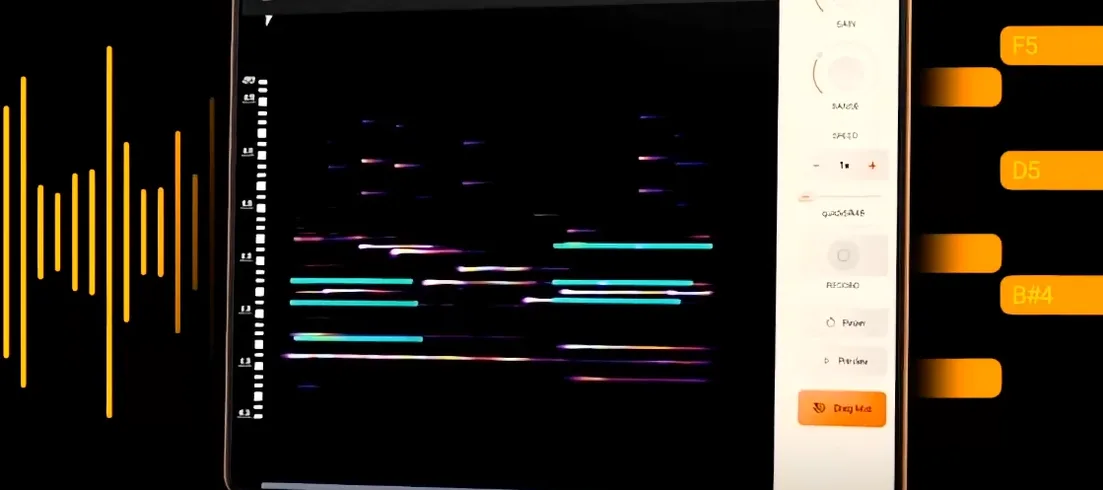 noteGRABBER
2.0.0 VST Plugins
35 MB
noteGRABBER
2.0.0 VST Plugins
35 MB
 Nudist Audio Nudistort
1.2.5 VST Plugins
45 MB
Nudist Audio Nudistort
1.2.5 VST Plugins
45 MB
 Omnisphere
3.0.2c VST Plugins
205 MB
Omnisphere
3.0.2c VST Plugins
205 MB