

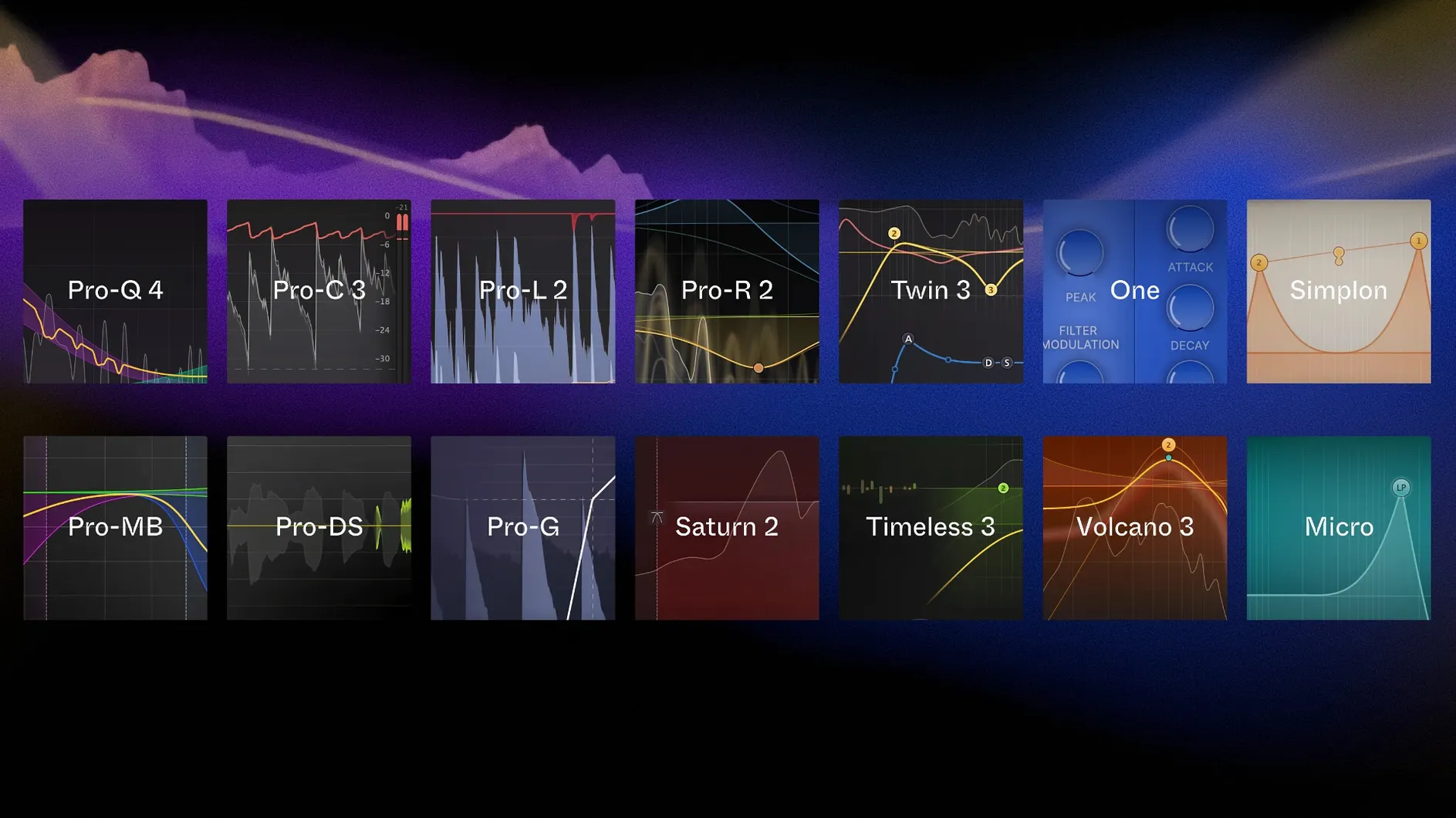
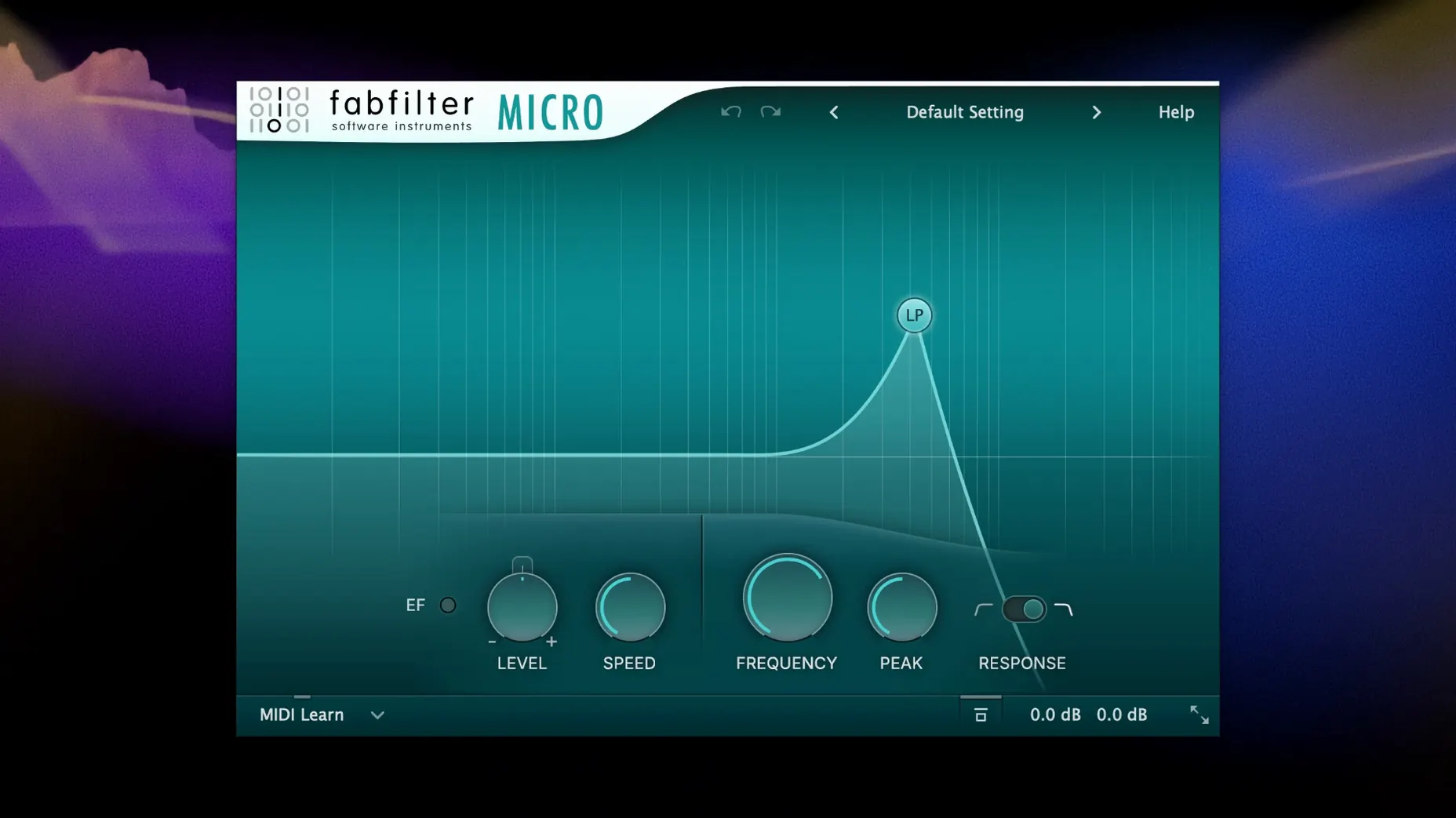
Pro-Q alone can clean up a muddy low end or open up a dull vocal with a few well-placed bands, but there is a whole rack sitting next to it. The Total Bundle rolls the complete set into one download — everything from surgical mixing tools to sound-mangling creative effects.
What handles dynamics and level control?
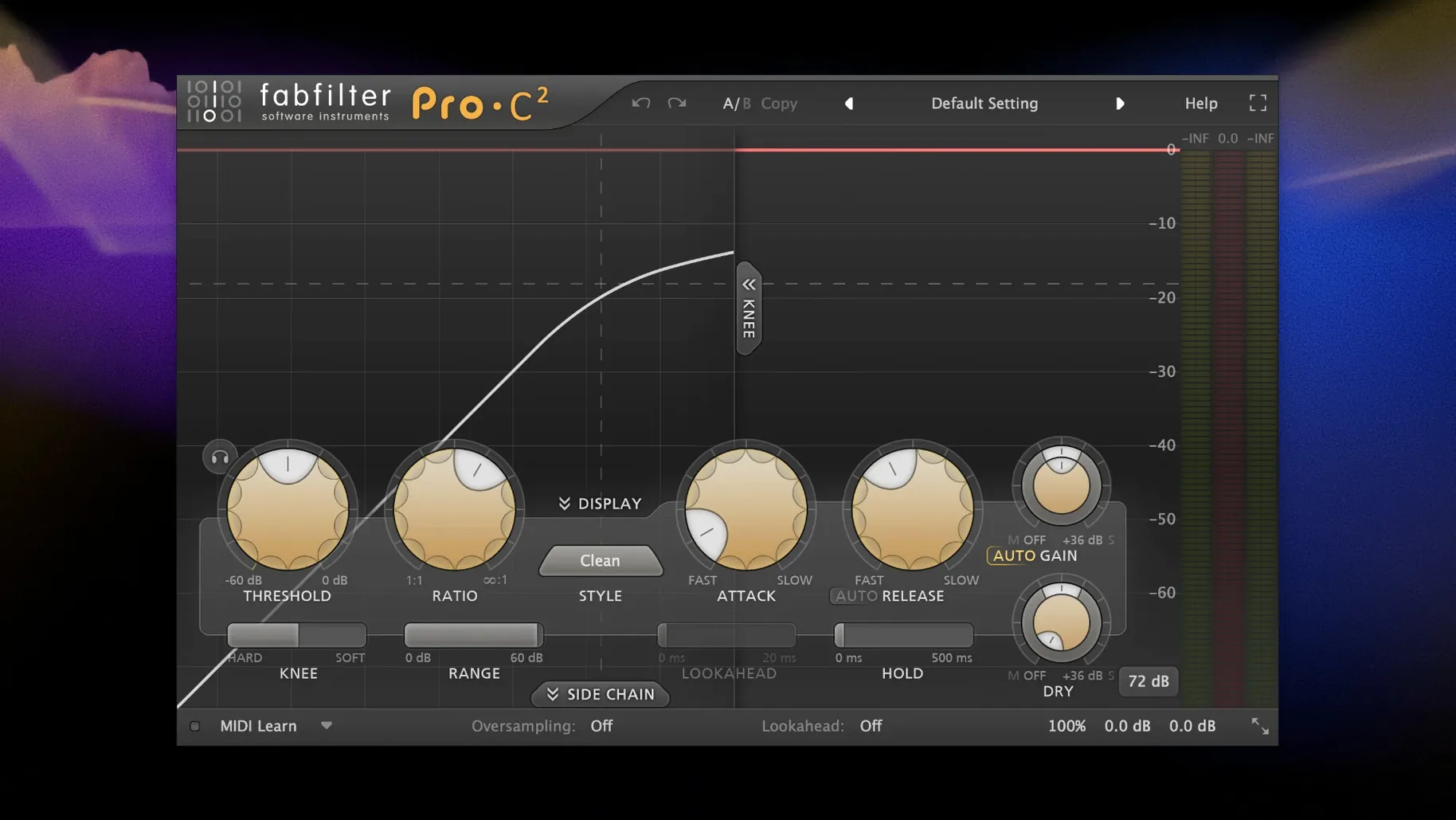
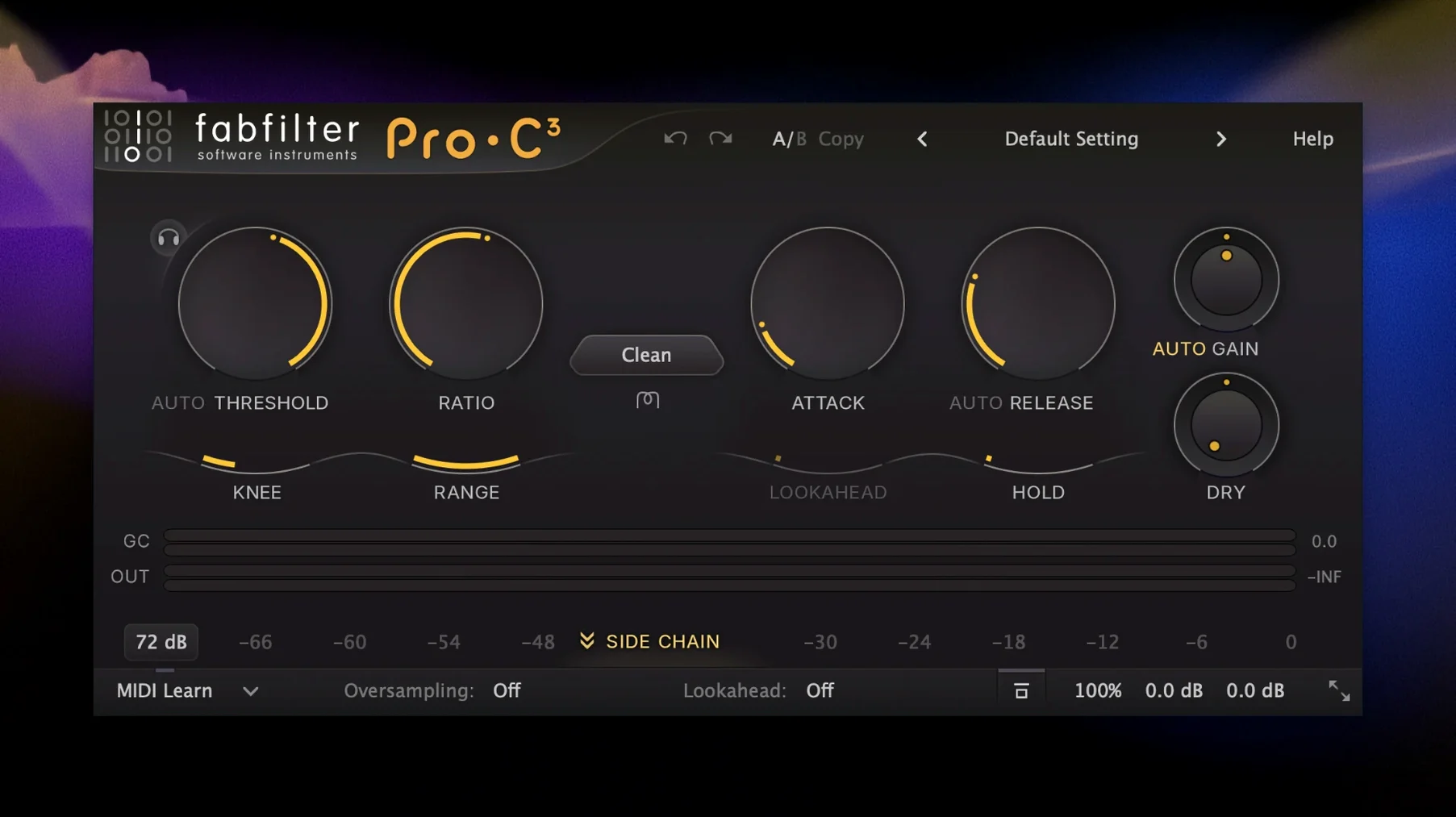
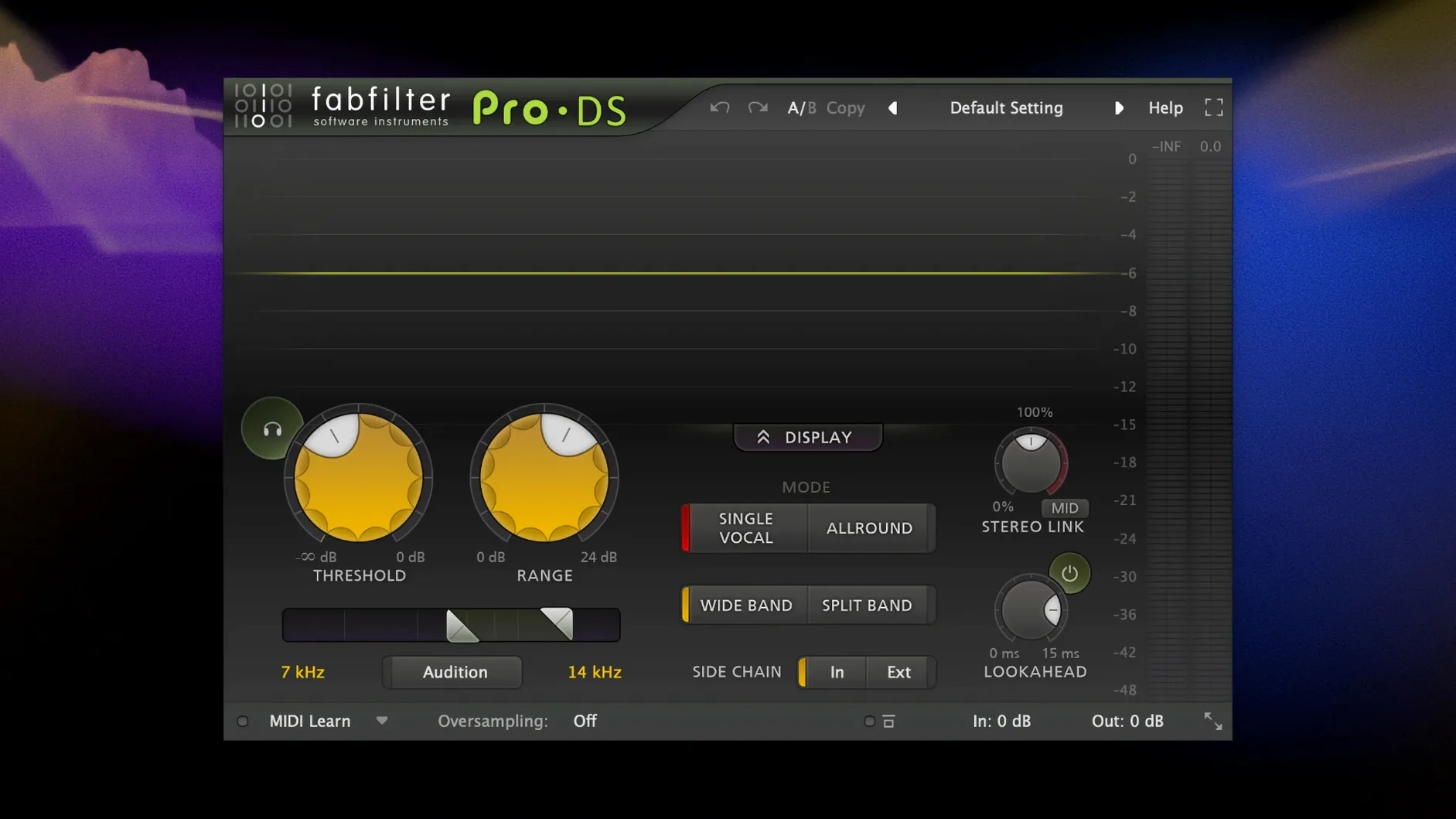
Pro-C 2 brings musical compression with styles that model classic hardware, while Pro-L 2 guards the final output with transparent limiting and true peak metering. For frequency-specific dynamics, Pro-MB splits the signal into bands so you can compress the low end without touching the mids, and Pro-DS catches sibilance before it hits the listener.
Which plug-ins cover space, tone, and character?
Pro-Q 4 delivers surgical and musical equalization with dynamic EQ bands and spectrum grab. Pro-R 2 gives you a natural-sounding algorithmic reverb where you can adjust the decay by frequency, and Saturn 2 layers on everything from warm tube saturation to destroyed multiband distortion.
What about delay, filtering, and synthesis?
Timeless 3 handles everything from tape-style slapback to modulated, pitch-shifted clouds of delay. Volcano 3 brings analog-modeled filtering with envelope followers and internal modulation, while Twin 3 is a full-featured polyphonic synthesizer for generating pads, leads, and bass from scratch.
Questions that usually pop up before installing
Most people stare at the plug-in list and wonder whether their Mac can actually run all of this without grinding to a halt. The short answer: if you are on a machine from the last six or seven years — Intel or Apple Silicon — you are in good shape. The bundle runs on macOS 10.13 and later, and it supports both architectures natively. That means no Rosetta gymnastics, no wrapper headaches. Just install and load.
Another question I hear a lot is whether the CPU hit is manageable on an older quad-core i7. Pro-Q 4 and Pro-C 2 are surprisingly light for what they do. Pro-R 2 and Saturn 2 are hungrier, especially with long reverb tails or high-quality oversampling engaged. If you are on an M1 or M2 Mac, the bundle barely breaks a sweat. On an older Intel machine, freeze or bounce tracks as you go and you will not hit a wall.
People also ask if the bundle overlaps with stock DAW plug-ins. It does not replace them — it rethinks them. The Spectrum Grab in Pro-Q 4, the per-band compression styles in Pro-MB, the way Twin 3 handles oscillator drift and filter saturation — none of that lives in your DAW's channel strip. You reach for these when the stock tools feel like blunt instruments and you need something more precise or more characterful.
EQ, compression and reverb in one week
Do not install everything and then stare at the list. Pick three plug-ins and live with them for a week. Pro-Q 4, Pro-C 2, and Pro-R 2 are the trio I would grab first. That combination covers EQ, dynamics, and space — the backbone of any mix — and gives you a feel for FabFilter's design language. The drag-and-drop modulation, the real-time spectrum display, the way double-clicking resets a parameter: once you learn it on one plug-in, it carries over to the others.
Open Pro-Q 4 on a vocal bus and try the dynamic EQ mode. Grab a peak, set it to cut only when the singer pushes, and watch the band dip in real time. It is one of those moments where you realize static EQ was fighting you all along. Then drop Pro-C 2 on a drum subgroup and cycle through the style presets — Clean, Classic, Opto, Pumping — with the same ratio and threshold. The knee behavior shifts dramatically, and hearing it side by side teaches you more about compression character than any tutorial.
Leave Saturn 2 for week two. It is deep, and it is easy to overcook a track before you understand the multiband crossover and the drive per band. Spend that first week just on clean processing, then let yourself get messy.
Surgical precision hides broad musical curves
The biggest one is treating every FabFilter plug-in as a precision tool. Yes, Pro-Q 4 can surgically notch out a whistle at 4.2 kHz, but it also has broad, musical curves and a tilt shelf that can reshape a whole mix bus in one move. Beginners sometimes live in the surgical mode and miss the musical side completely. Flip to the zero-latency natural phase mode for tracking, or try the linear phase modes on the master bus — the character of the EQ changes noticeably.
Another mistake is stacking Saturn 2, Volcano 3, and Timeless 3 on a single channel with every band active and every LFO running. The sound turns into a fizzy, phasey mess, and it is not the plug-in's fault. Start with one saturation style on Saturn 2 — the Warm Tube model, maybe — and drive it gently. Add one modulated filter from Volcano 3 downstream. Use Timeless 3 for a simple ping-pong delay. Build complexity slowly, and bypass each plug-in to check whether you are adding something or just piling on.
A subtler misstep is ignoring the output section on Pro-L 2. Beginners often push the gain, hear the loudness jump, and call it done. But the true peak meter, the dithering options, and the different limiting styles (especially the Modern and Allround modes) change the final loudness-versus-punch tradeoff. If your mixes sound squashed after limiting, back off the gain and try the Transparent style with a slower lookahead.
One producer's afternoon with Twin 3 and Pro-R 2
Imagine a producer who makes ambient electronic music — the kind built from long, evolving textures rather than tight drum grooves. She has a chord progression recorded from a hardware synth, but it sounds static. She drops Twin 3 onto an instrument track, bypasses the factory presets, and starts from the init patch.
She sets up two oscillators with detuned saw waves, adds a third oscillator an octave up as a sine wave, and routes a slow LFO to the filter cutoff. The filter is the modeled ladder type, driven just enough to saturate. Then she opens Pro-R 2 on the channel and pulls the decay time up to twelve seconds, but tapers the high-frequency decay faster so the tail does not wash out into harsh shimmer. She sets the character to Clean and pulls the distance knob back so the sound sits deeper in the imagined room.
Within twenty minutes she has a pad that breathes and moves, and it fills the space without dominating the mix. She did not need a separate reverb send or a complicated effects chain. Twin 3 and Pro-R 2 played together like they were designed to — because they were.
Force a rescan when plug-ins vanish
Plug-ins do not show up in the DAW after installing. This is usually a validation issue. Open your DAW's plug-in manager and force a rescan. On Apple Silicon Macs, some DAWs still default to Intel mode — check that you are running the native ARM version. If the plug-ins appear but crash on load, trash the DAW's audio unit cache and reboot.
Pro-Q 4 spectrum analyzer does not show a signal. The most common cause is that the plug-in is placed on a bus or aux track and the source track is not routed to it yet. Check your send levels and routing. If the signal is present but the analyzer looks blank, click the analyzer range button and make sure it is not zoomed into a tiny dB window.
Pro-R 2 introduces a metallic ring on certain sources. This can happen with the Bright or Plate characters on percussive material. Switch to the Clean or Dark character, or pull the high decay down below 1.0x. If the ring persists, shorten the overall decay time and increase the predelay slightly — it separates the dry signal from the reverb onset.
Saturn 2 adds latency that throws off timing during tracking. Some of the higher-quality saturation modes and oversampling options add significant latency. For tracking, switch to the Good quality mode or engage the low-latency option in the plug-in header. For mixing and sound design, latency does not matter, so crank the quality back up.
- macOS 10.13 or later
- Apple Silicon and Intel native
Porch talk 0
Come in or pull up a chair to leave a comment.
Nobody has pulled up a chair yet. If you used it on a real Saturday, say what the hour was.
More for the same hour
Everything in VST Plugins EZdrummer
3.1.2 VST Plugins
786 MB
EZdrummer
3.1.2 VST Plugins
786 MB
 EZbass
1.3.3 VST Plugins
81 MB
EZbass
1.3.3 VST Plugins
81 MB
 elastiquePitch
2.5.0 VST Plugins
17 MB
elastiquePitch
2.5.0 VST Plugins
17 MB
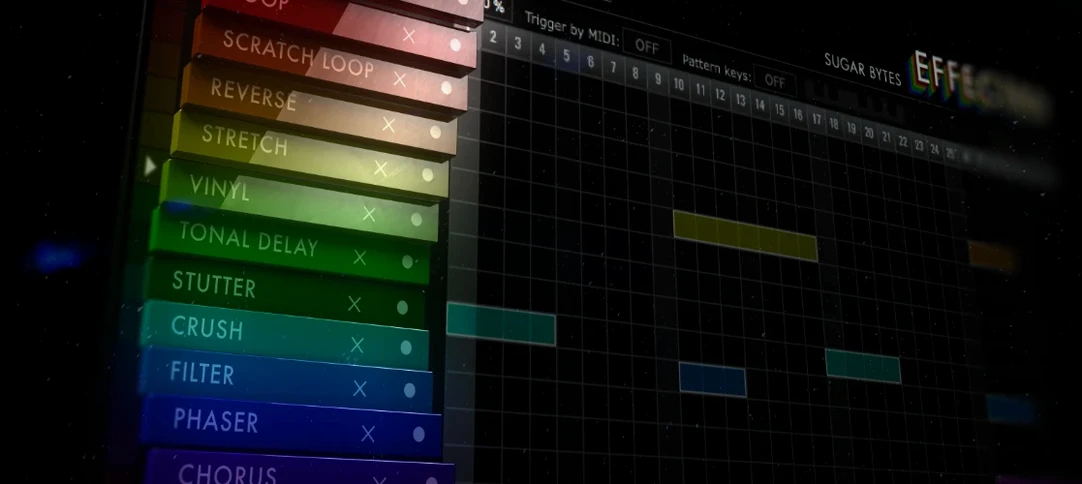 Effectrix
1.4.8 VST Plugins
20 MB
Effectrix
1.4.8 VST Plugins
20 MB
 Devious Machines Infiltrator
2.5.26 VST Plugins
46 MB
Devious Machines Infiltrator
2.5.26 VST Plugins
46 MB
 Cymatics VOXITY
1.0.0 VST Plugins
97 MB
Cymatics VOXITY
1.0.0 VST Plugins
97 MB
 Cymatics QUAKE
1.0.0 VST Plugins
1.6 GB
Cymatics QUAKE
1.0.0 VST Plugins
1.6 GB
 iZotope Insight
2.4.0 VST Plugins
iZotope Insight
2.4.0 VST Plugins