
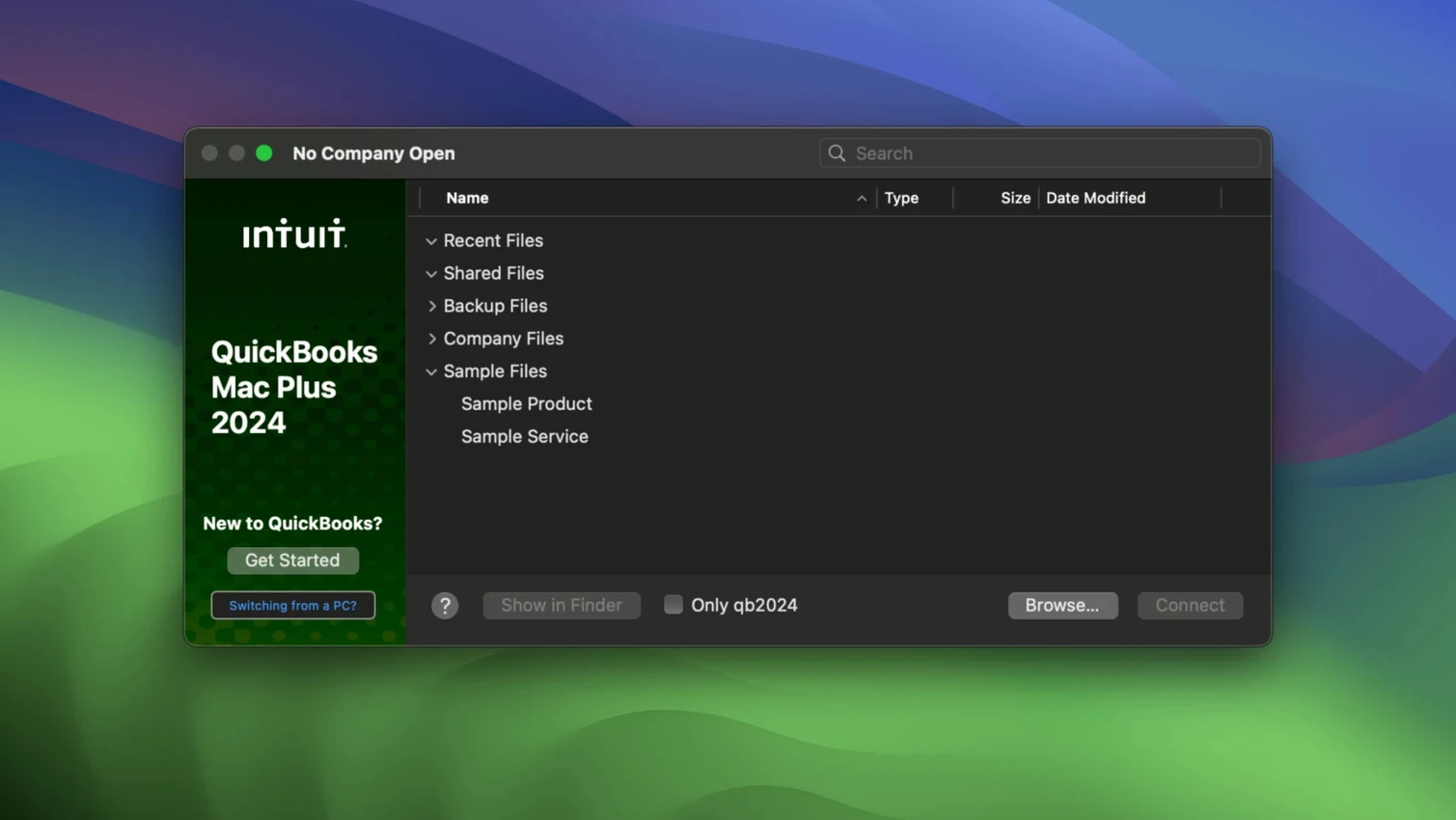
The R10 update quietly adds a couple of practical touches that experienced users will notice right away: a Backup Save As option for manual backups and the ability to set company-specific backup locations. It’s the kind of refinement that makes daily bookkeeping feel less like paperwork and more like a smooth routine.
Real-Time Inventory That Adjusts Itself
- Real-time inventory tracking — enter products and services once and watch quantities and costs update as you work
- Importing existing data from Excel or Xero tables without rebuilding your records from scratch
- Generating reports that project income and expenses 90 days ahead, giving you a clear short-term financial picture
- Uploading and storing receipts directly, so nothing gets lost between the shoebox and the tax return
English-Only on Monterey or Newer
- The app is English-only, which may not suit multilingual teams
- Requires macOS Monterey or later — older Macs need not apply
- Reporting is detailed but takes some exploration to set up exactly how you want it
Tackling a month-end reconciliation in QuickBooks Mac Plus
End of the month rolls around and the bank statement arrives. Rather than cross-referencing two screens, pull the statement into the app. Connect your bank account, let the transactions flow in, then match each one against the invoices and expenses already logged. The dashboard highlights anything uncategorized, so you spot that missing payment before it becomes a mystery.
Start with the bank feed. Accept the matched transactions first — QuickBooks pairs amounts and dates automatically for most entries. For the stragglers, open the expense or invoice side by side and confirm manually. Once every line has a home, run a reconciliation report to lock the month. The whole process, from importing to final sign-off, takes under twenty minutes once you know the rhythm.
From there, generate a 90-day projection report. It pulls actuals from the reconciled month and overlays upcoming bills and open invoices. You walk away knowing exactly what the cash position looks like heading into the next quarter.
Reconnecting Banks After macOS Updates
Bank connection drops after a macOS update. This one catches folks off guard. After a system update, the link between QuickBooks and your financial institution sometimes breaks. The fix is usually straightforward: disconnect the account in the app’s banking section, wait a minute, then reconnect. If that doesn’t stick, check that you haven’t enabled any new firewall rules or VPN settings that block the connection.
Imported Excel data lands in the wrong columns. When pulling in records from a spreadsheet, the mapping screen can be misleading. The trick is to preview the first five rows before committing. If column headers don’t line up with QuickBooks fields, cancel the import, open the file, and rename the headers to match the app’s expected labels — things like “Income Account” instead of “Revenue Category.” A quick cleanup avoids hours of manual corrections later.
Inventory counts drift from reality. Real-time tracking works only if every transaction touches the inventory item correctly. When quantities look off, trace back through recent invoices and purchase orders to find where someone typed a product name instead of selecting it from the list. Typed entries bypass inventory adjustments entirely. Train the habit of choosing from the dropdown, and the numbers settle back into place.
A bookkeeper’s Tuesday morning
Mara handles books for three small businesses — a landscaping outfit, a boutique shop, and a freelance design studio. On Tuesday, she opens QuickBooks Mac Plus and switches to the landscaping company file. The dashboard shows two overdue invoices and a spike in fuel expenses. She sends payment reminders from the invoicing screen, then snaps photos of receipts the owner left on her desk, uploading them directly against the fuel transactions.
Next, she imports a spreadsheet of seed and mulch purchases the owner tracked himself. A quick column check catches a header mismatch; she fixes it in the file and reimports without a hitch. Inventory updates automatically as the stock lands in the system. Before moving to the boutique file, she runs a manual backup using the new Backup Save As option, dropping it into the landscaping company’s dedicated folder. That folder now holds backups going back six weeks, each one labeled by date and purpose.
By lunchtime, Mara has reconciled two of the three companies, projected cash flow for the month ahead, and left clear notes for each owner. The backups give her the confidence to close the app and step away — nothing’s going anywhere.
Version 23.1.9.R10 Plus lands with a couple of welcome backup improvements. You now get a Backup Save As option for creating manual backups, plus the ability to set company-specific backup locations.
- macOS 12 Monterey or later
- Works on both Apple Silicon and Intel Macs
Questions I actually get
Can I move my existing accounting data into QuickBooks Mac Plus?
Yes, the app supports importing data directly from Excel and Xero tables, so you can bring your records over without re-entering everything manually.
Does the inventory feature update automatically?
It tracks products and services in real time, meaning quantities and costs adjust as you create invoices or receive stock.
Porch talk 0
Come in or pull up a chair to leave a comment.
Nobody has pulled up a chair yet. If you used it on a real Saturday, say what the hour was.