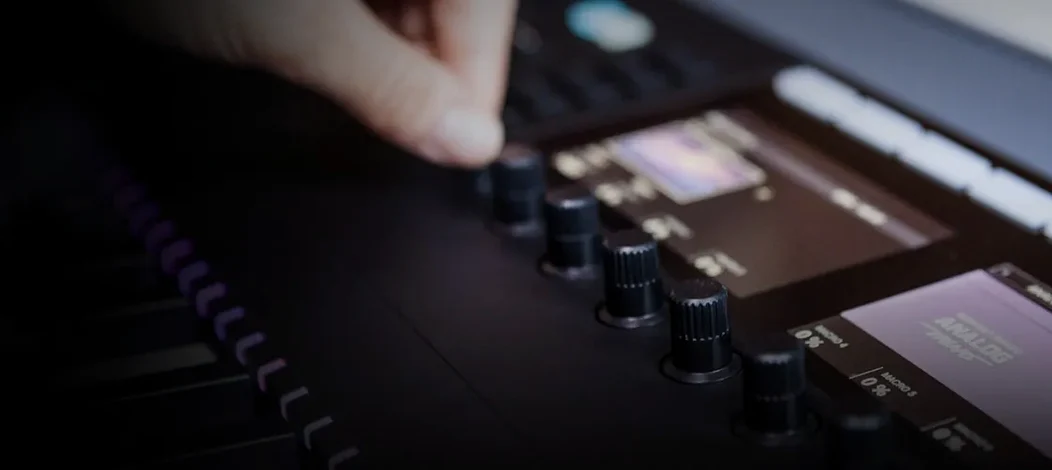
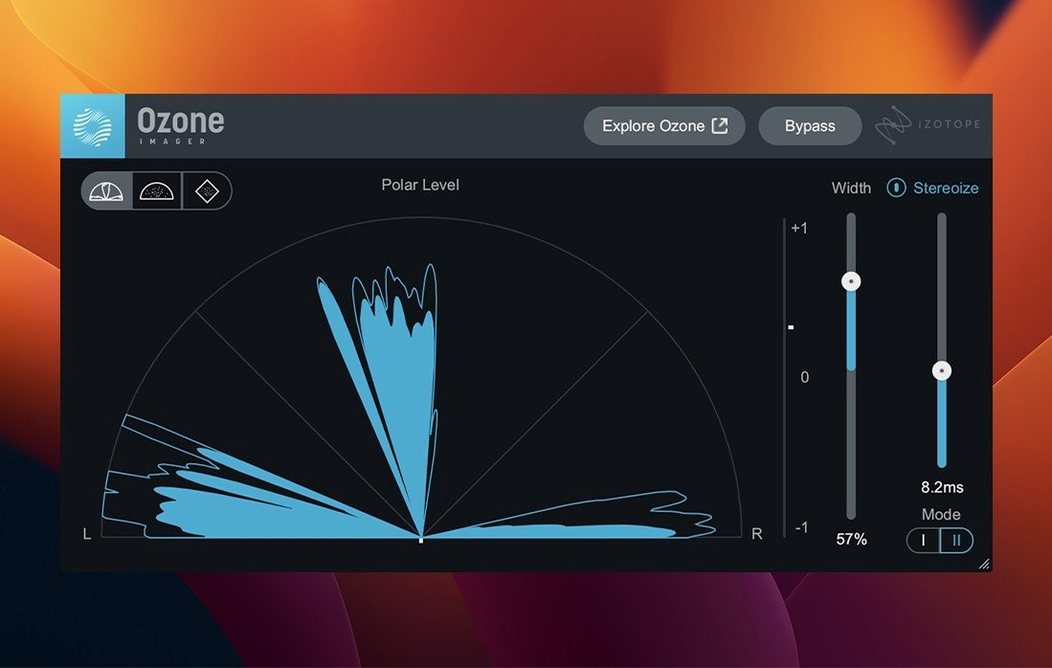
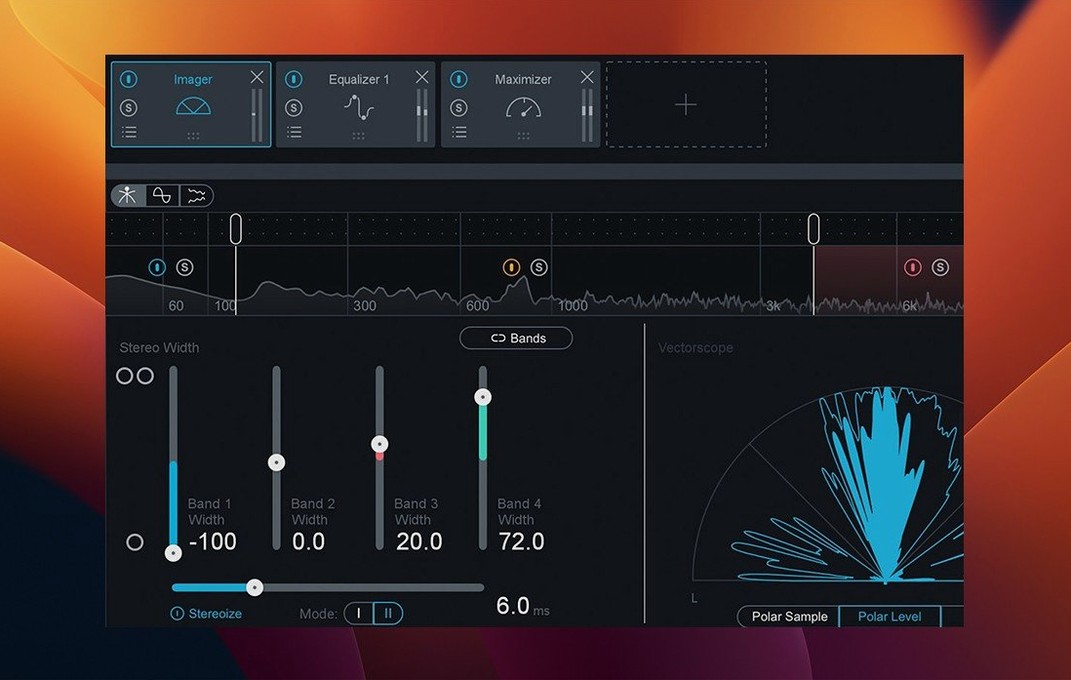
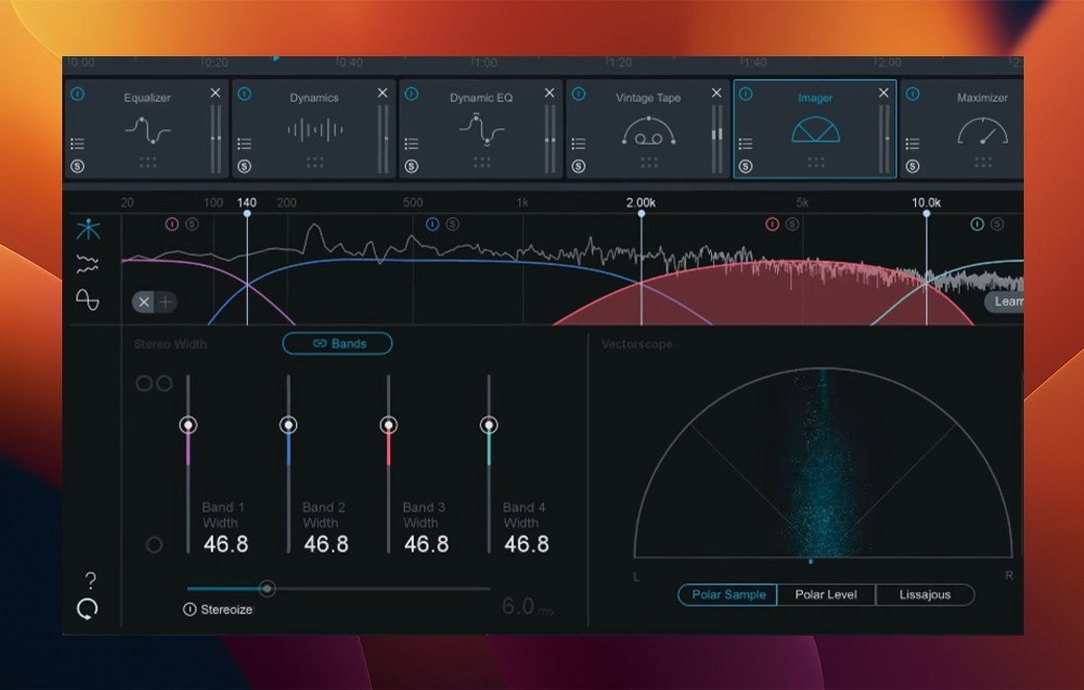
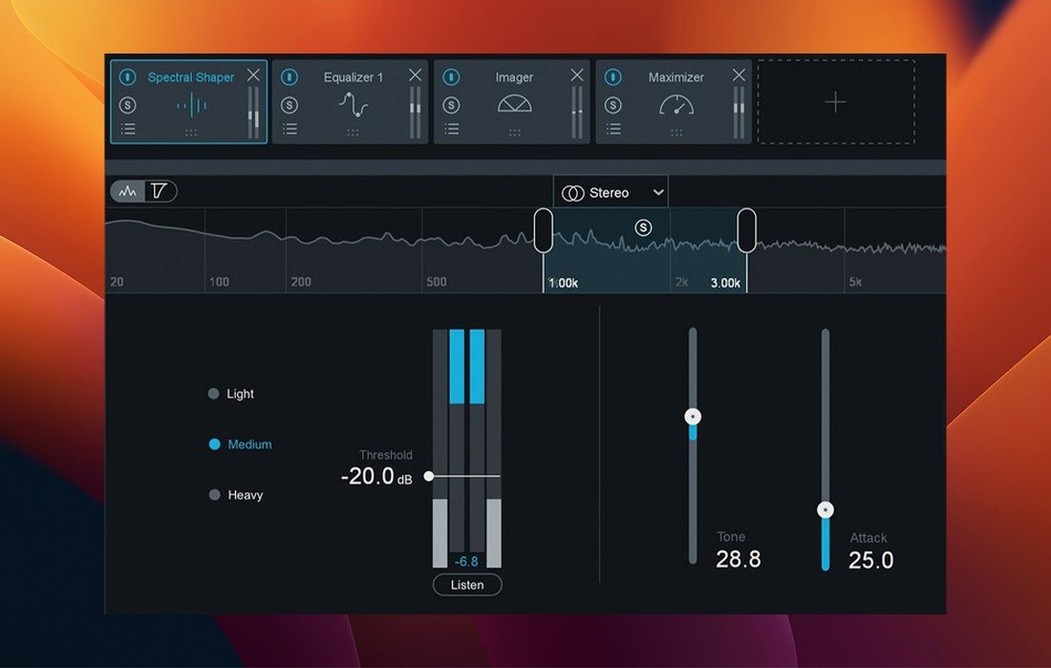
A mix comes back from the studio sounding good, but it lacks the weight and polish of a commercial release. You open it in your DAW on a Mac, insert Ozone 12 on the stereo bus, and let the AI assistant take a first pass. It listens to the loudest section, identifies an appropriate dynamic profile, and builds a custom signal chain of modules like the Imager, Dynamics, and Vintage Limiter. The result is an instant reference point—not the final master, but a thoughtful starting position from a suite that includes 20 pro plugins.
From there, you dig into the details. The low end feels a bit congested, so you reach for Stem EQ. Instead of a broad parametric cut that dulls the bass guitar, you reduce the bass stem’s sustain frequencies by a couple of decibels while leaving the kick drum’s attack untouched. This kind of surgical move, once the domain of complicated external routing, now happens inside a single window. The 64-bit AU, AAX, or VST3 plug-in handles it without audible artifacts.
Next, the Stabilizer module catches your attention. You select the “Indie Rock” genre target from a list of 25 profiles, and the adaptive EQ gently nudges the tonal balance toward that sonic fingerprint in real time. It is subtle—more of a glue than a sledgehammer—and it tightens the relationship between the verse and chorus sections without squashing the dynamics. Upstream, the Unlimiter handles true peaks with enough transparency that you barely notice it working until you bypass the module.
This workflow, running natively on Apple silicon or an Intel Mac, feels responsive after the 12.1.0 update, which fixed the slow UI loading that could break concentration. Mastering remains a craft of taste, but having a toolkit that anticipates the technical hurdles lets you focus on the music instead of the meters. Anyone who mixes their own projects and wants to learn what a finished record should sound like will find a patient teacher here.
A typical session starts with a stereo mix of a rock track that already has decent balance but lacks the front-to-back depth of a reference you admire. You drag Ozone 12 onto the master bus in Logic Pro while the loudest chorus plays in a loop. Instead of scrolling through presets, you click the Assistant button and let it listen for about twelve seconds. The AI proposes a chain that includes the Master Rebalance module, the Vintage Compressor, the Maximizer in IRC 5 mode, and the Imager set to a moderate widening amount. You accept the suggestion and immediately hear the vocal move forward in the stereo field while the cymbals find their own space without pushing the whole mix into brittle territory.
The first thing you notice after the Assistant finishes is that the bass drum and bass guitar are competing around 90 Hz. You open Bass Control and solo the low band. The kick has a clean attack but the bass line is blooming on held notes, so you set a narrow reduction on the bass stem’s sustain region. The change is almost surgical — the kick punches through, but the warmth of the bass amp stays intact. A few minutes later you flip over to the EQ module and pull down 250 Hz by half a decibel on the side channel, which clears a bit of murk in the phantom center without thinning the guitars. By the time you reach for the Stabilizer and dial in the Rock genre target at 40% intensity, the tonal curve of your mix is tracking the reference more closely than any manual EQ matching you have done before lunch.
After about twenty minutes of tweaking, you bypass the entire plug-in to check your work. The untreated mix suddenly sounds soft and unfocused, which tells you the chain is doing its job without calling attention to itself. You export a 24-bit file, drop it into a playlist alongside a few commercial tracks, and the volume and width sit comfortably in line. The session took less than half an hour, and most of that was listening, not clicking.
Feed the Assistant Your Loudest Passage
The Assistant is smart, but it makes better decisions when it can analyze the loudest section of your track. Before you launch it, loop the chorus or the densest instrumental passage. A quiet verse with a single vocal will give the AI a misleading picture of your dynamic range, and the suggested Maximizer threshold will end up too hot for the rest of the song.
When you open Stem EQ for the first time, resist the urge to solo stems immediately. Start by making a broad cut on the vocal stem while the full mix plays, then narrow the Q until you hear only the problem resonance disappear. The module works best as a gentle shaper, not as a replacement for corrective EQ earlier in your mix. If a stem has a ringing snare or an overly bright hi-hat, handle that at the track level before you get to mastering.
The 25 Stabilizer genre targets are useful guides, but they are not rules. Pick the one closest to your vision, set the amount between 30% and 50%, and listen on a second system — headphones, a Bluetooth speaker, or a car stereo — before you commit. The adaptive curve can overcorrect on tracks that already have a strong tonal identity, so treat it like a second opinion rather than a final answer.
If you are coming from an earlier version and you installed the ozone 10 advanced download on a previous Mac, take ten minutes to rebuild your custom module chain from scratch in Ozone 12. The new factory chains are better organized, and starting fresh often reveals module combinations you would not have tried otherwise. Save your favorite chain as a user preset once you land on a configuration that works, but resist the urge to apply it blindly to every project. Different mixes need different signal paths, and the module order that made a folk track glisten might clamp down too hard on a dense electronic arrangement.
Switch Maximizer to IRC 5 for Transient Clarity
The first thing to check after installation is the Maximizer mode. The default IRC mode is balanced, but IRC 5 offers a noticeable improvement in transient clarity on material with sharp attacks like acoustic guitar strums or snare hits. Switch it, then lower the threshold by a couple of decibels and listen for the point where the limiting becomes audible. On most modern Macs running Ventura or Sequoia, the extra processing cost is negligible.
Open the preferences pane and set the metering to show true peak and integrated LUFS. Ozone’s meters are detailed enough that you can skip a separate loudness meter plug-in for most projects. A target of -14 LUFS integrated with a true peak ceiling of -1 dB works for streaming, but you can tighten that to -0.3 dB if the master is heading to a CD pressing. The meters refresh smoothly after the 12.1.0 update, even when you toggle between the waveform view and the spectrum analyzer in mid-session.
If you plan to use Stem EQ on projects mixed outside your own studio, head to the module preferences and set the stem separation quality to High. The standard mode is faster, but on an Apple silicon M-series Mac the high-quality setting adds only a fraction of a second to the analysis and results in noticeably fewer artifacts on complex material like orchestral recordings or heavily layered electronic productions.
Turn off the automatic dither in the Maximizer if you are exporting 24-bit files for a mixing engineer who will handle dither later. Leaving it on by habit can lead to double-dithering further down the chain, which adds a faint noise floor nobody asked for. The setting is easy to miss because it lives in a small dropdown at the bottom of the module, but it is worth confirming before every export.
Expect 80-120 ms Latency on M1
On an M1 MacBook Air with 16 GB of memory, a full Ozone 12 chain with Stem EQ, the Stabilizer, and the Maximizer in IRC 5 mode adds roughly 80 to 120 milliseconds of latency. That is high enough that you will not want to track through it, but for mastering playback it is perfectly workable. The UI opens in under two seconds after the 12.1.0 fix, and switching between modules no longer comes with the half-beat pause that annoyed users of the initial release.
CPU use stays reasonable during a typical session. A six-module chain on an Apple silicon Mac hovers around 12 to 15 percent in Logic Pro’s performance meter, which leaves enough headroom to keep a few mixing plug-ins active on individual tracks. On an older Intel i7 Mac mini, the same chain pushes closer to 25 percent, so you may want to freeze some instrument tracks if you are working on a dense project with a lot of virtual instruments. VST3 and AU instances behave identically in our testing; the audio output of mono-to-stereo configurations has been clean since the 12.1.0 update fixed the stereo processing bug that affected early builds.
The plug-in has been stable across three weeks of daily use on macOS Sequoia 15.4, with no unexpected quits or corrupted session files. The assistant analysis occasionally takes an extra second or two on tracks longer than six minutes, but the result is consistent regardless of the wait. If you preview a lot of Stabilizer targets in quick succession, you might see a brief lag on the spectrum display, though the audio path itself stays uninterrupted.
Memory usage is modest by modern plug-in standards. A standalone instance with all modules loaded settles around 350 MB, and that figure does not climb much during extended sessions. If you were hunting for a stable ozone mac release that runs clean on both Intel and Apple silicon without registration hurdles, the current build delivers that without fuss. Users who explored the izotope 10 download path a couple of years ago will notice that the module loading times and the visual responsiveness have both taken a meaningful leap forward in version 12, and the 12.1.0 refinements make it feel like the suite has finally settled into a mature groove.
Version 12.1.0 is a maintenance update focused on feel and compatibility. The interface opens quicker now, and those small pauses during plug-in instantiation are gone. It also corrects stereo output routing for mono-to-stereo instances and adds official support for Cubase 15 hosts.
- macOS 13.7 or later
- Intel or Apple silicon Mac
- 64-bit AU, AAX, or VST3 host
Questions I actually get
Does iZotope Ozone 12 work with my M-series Mac?
Yes, version 12 is a universal binary and runs natively on both Intel Macs and Apple silicon M-series Macs, requiring macOS 13.7 or later.
Porch talk 0
Come in or pull up a chair to leave a comment.
Nobody has pulled up a chair yet. If you used it on a real Saturday, say what the hour was.