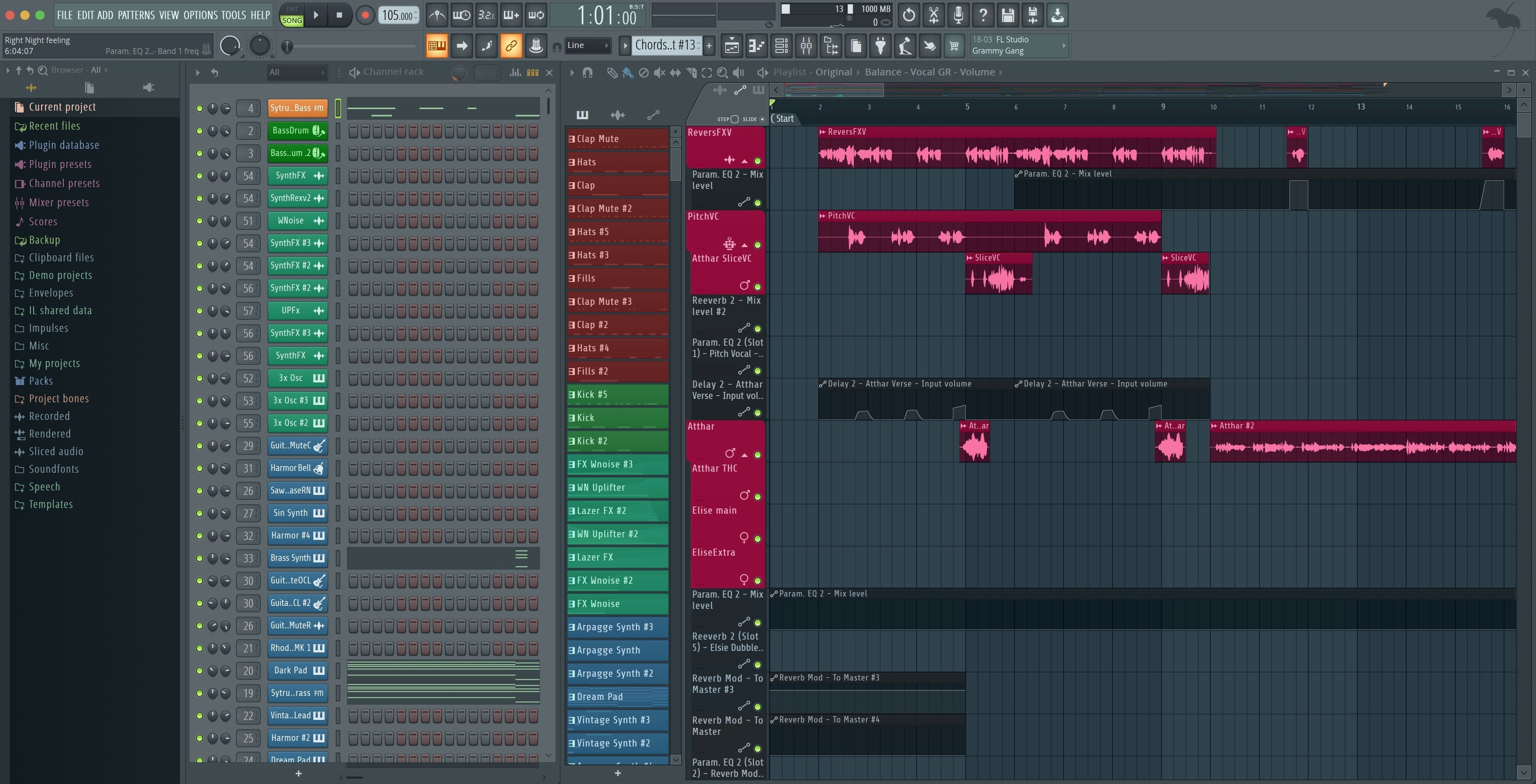
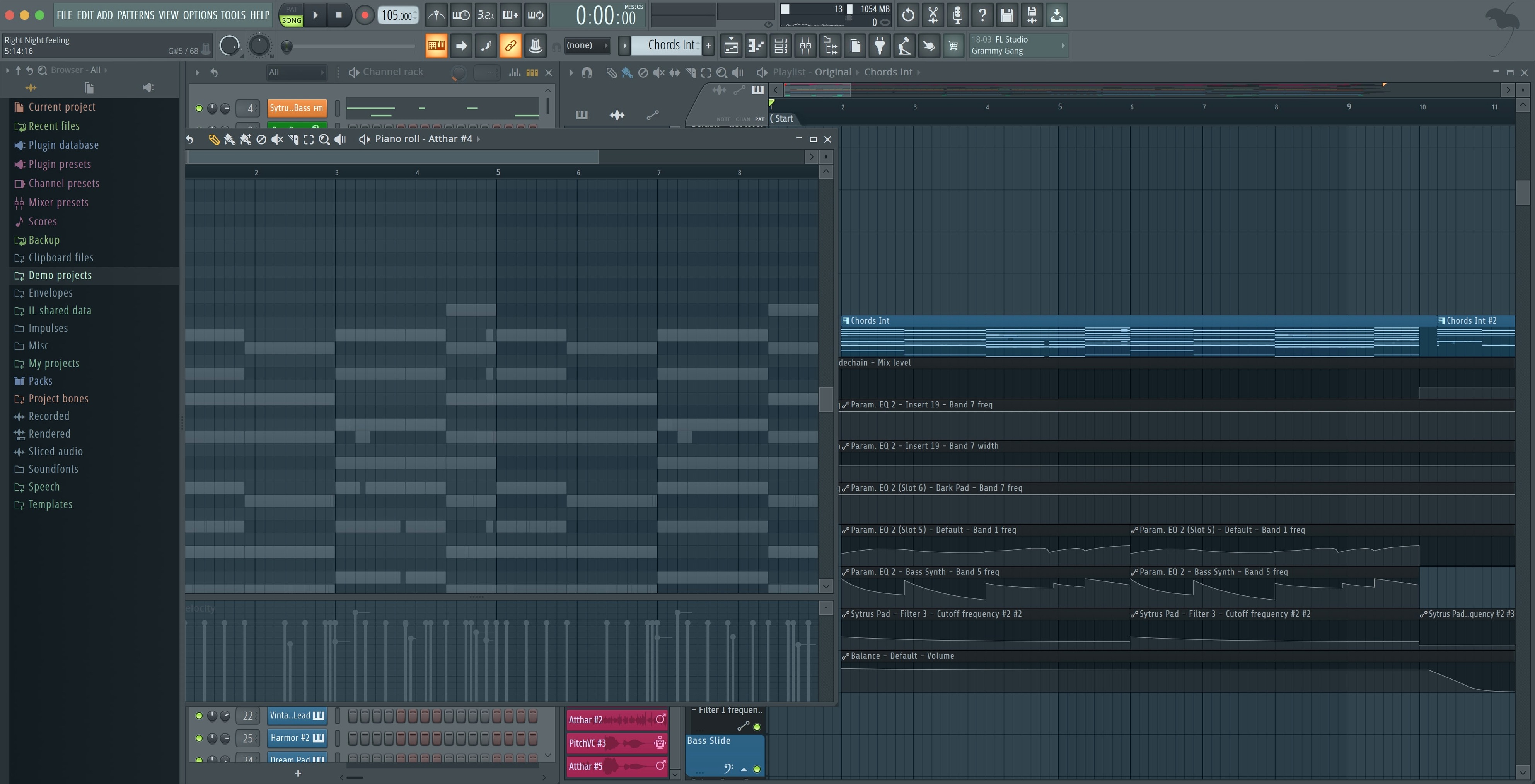
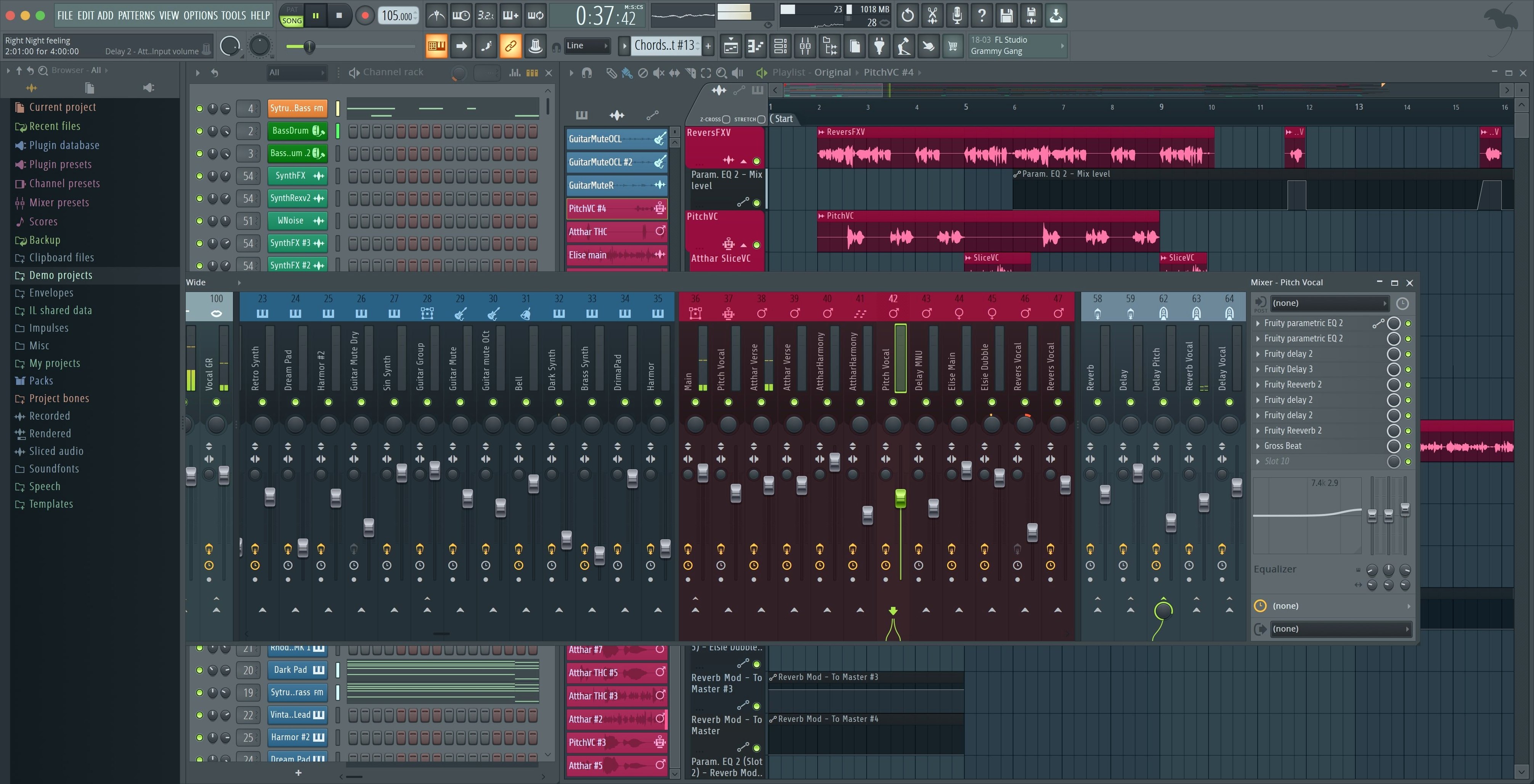
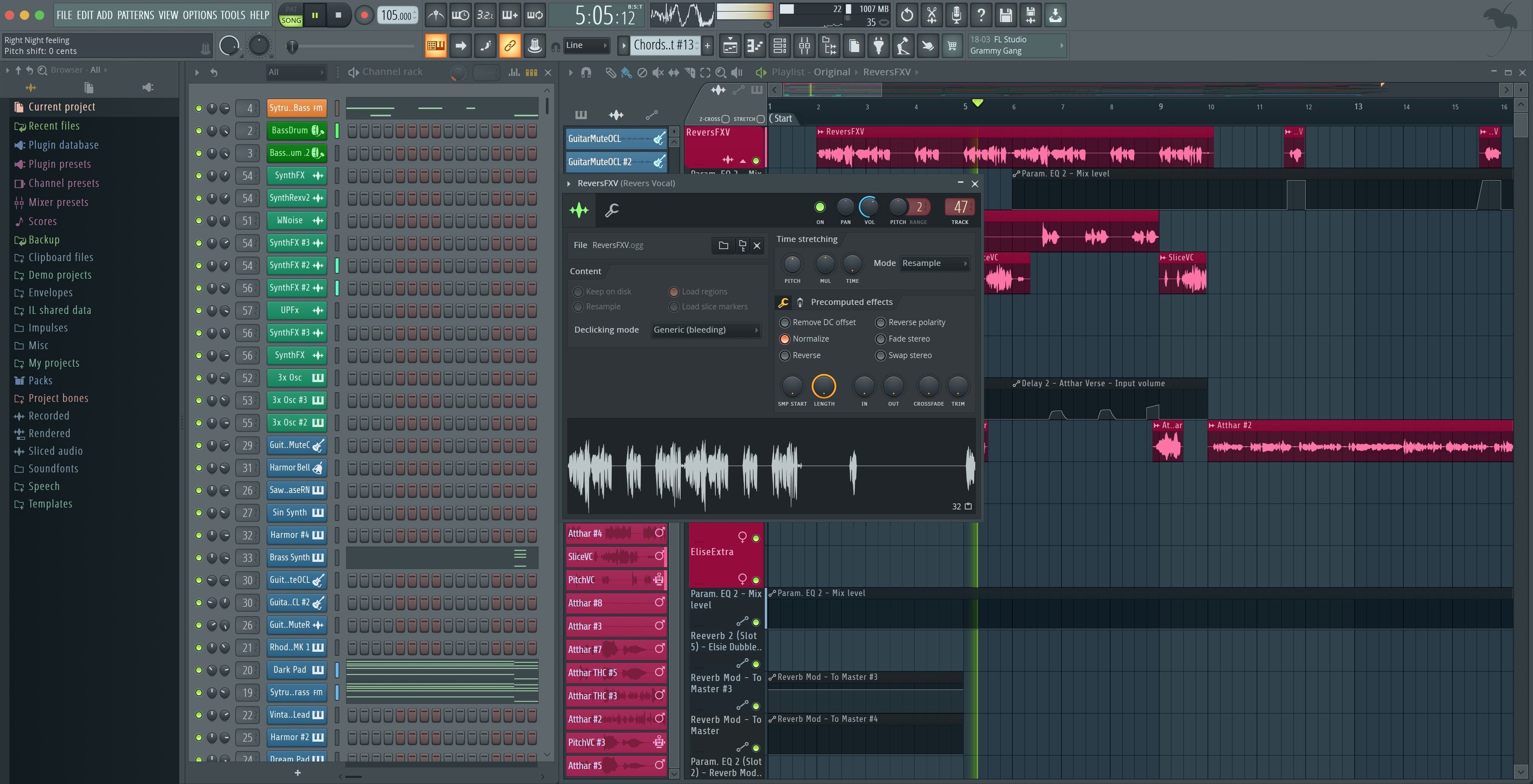
FL Studio is a complete digital audio workstation where you record, arrange, edit and mix music inside a single window on your Mac.
First steps for newcomers
After you open FL Studio 2026, a few things will get you comfortable faster than poking around menus at random. Here's a little workflow to try.
- Open FLEX and search for a sound. FLEX is a built-in synthesizer with a library of presets. Version 2026 added a new sound search right inside the plugin, so you can type something like "upright piano" and pull up a patch without scrolling through a long list.
- Drop a pattern into the Channel Rack. Click through a few steps in the step sequencer to sketch a beat or a bassline. It's the fastest way to hear something musical without touching a MIDI keyboard.
- Check the Plugin Performance Monitor. If you start adding VST plugins—FL Studio supports the format widely—glance at the monitor to see how much CPU each one uses. The latest update refined the percentage readout with fractional precision, so you can spot small spikes that might add up later.
- Plug in a MIDI controller. When you connect something like an Akai Fire, the software now shows a notification and gives you an option to enable it right away. The Fire controller in particular uses a dedicated script by default with this build, so the pads and knobs map without extra setup.
The Tuner interface also got a readability tweak in the maintenance update, which helps if you're recording an instrument across the room and need to see pitch information from a distance. If you're new to music production on a Mac and want a DAW that lets you move quickly from a blank project to a rough arrangement, this is a solid place to start.
Switch to Your Interface’s Native Driver Early
A fresh install of FL Studio comes with sensible defaults, but a couple of tweaks early on will save you from annoyance later. Head into the audio settings and switch to your audio interface's native driver instead of the built-in output—on a Mac that usually means picking Core Audio with your interface selected, then dialing the buffer size down to 128 or 64 samples while you're sketching ideas. You can bump it back up to 512 or 1024 during mixing when the plugin count climbs. The Plugin Performance Monitor with its new fractional readout is your friend here; watch it while you adjust.
Next, open the project general settings and turn on Enable autosave if it is not already active. The 2026 release introduced cloud project backup, but a local autosave set to every five or ten minutes has pulled more late-night sessions out of trouble than anything else. While you are in that panel, check the Circular panning law setting—if you send tracks to a hardware mixer or stem things out for someone else, setting this to a constant-power curve keeps levels steady when sounds sweep across the stereo field.
One more: in the mixer, right-click an empty send slot and choose Create submix to > Master for any group of channels you know will want shared processing later. Doing this on day one with your drum bus or vocal stack means you are not re-patching routing when the arrangement is already thirty tracks deep.
Mistakes beginners bump into with FL Studio on Mac
A pattern-based workflow is the heart of FL Studio, and it trips up people coming from linear DAWs every time. The most common slip is painting a pattern into the Playlist without realizing that Pattern mode is still active—you drag a one-bar loop, hit play, and wonder why the whole song just repeats that bar instead of moving to the chorus. Switching to Song mode with the button near the transport controls tells the Playlist to read the arrangement left to right like you expect.
Another early stumble: adding effects directly to a mixer channel instead of using sends for time-based stuff like reverb and delay. It works, sure, but by track ten you have six different reverbs chewing through CPU with no way to glue the space together. Route a few channels to a shared reverb send and you get a cohesive room sound plus a lighter processor load—the Plugin Performance Monitor will show the difference immediately.
Beginners also ignore the Smart disable feature. It is tucked in the audio settings and tells plugins to stop processing when no audio is passing through them. Leave it off and every silent synth and idle compressor in your project keeps running in the background. On a Mac laptop running on battery, that is the difference between finishing a sketch and watching the fan spin up for no reason.
A beatmaker's evening with FL Studio 2026
Imagine someone who makes lo-fi hip-hop beats after work—the kind of person who has a folder of field recordings on their phone and a small MIDI keyboard on the desk. They open FL Studio on a MacBook Air, plug in the keyboard, and see the new controller notification pop up. One click enables it, and within seconds they are tapping out a Rhodes chord progression through FLEX, using the updated sound search to pull up a warm, dusty electric piano patch by typing "worn rhodes" instead of scrolling.
They lay the chords into a pattern, switch to the Channel Rack, and build a kick-and-snare pattern with the step sequencer. A soft bass from the built-in 3x Osc rounds out the loop. When they drag the pattern into the Playlist and hit Song mode, the arrangement starts to breathe—eight bars of intro with just the filtered keys, then the drums drop. They route the drums to a submix, add a gentle compressor on the bus, and check the Plugin Performance Monitor to make sure nothing is spiking. The fractional readout shows a calm 12.3% on the drum bus chain, so they keep layering.
By the end of the hour they have exported a rough mix using the new split-track checkbox in the export dialog, sending separate stems to a friend who adds guitar. No crashes, no routing panic—just a quiet evening turning a loop into a song. If that rhythm rings familiar, FL Studio for Mac fits that kind of session naturally.
The 2026.1.6 maintenance update brings a handful of thoughtful refinements. The Plugin Performance Monitor now displays percentage values with fractional precision, making it easier to catch subtle CPU changes. New MIDI controllers trigger a notification with a quick enable option, and the Akai Fire defaults to its dedicated script. The export dialog also gained checkboxes to render both Master and Current tracks when splitting mixer tracks, and the Tuner interface was adjusted for better readability at a distance.
- macOS 10.15 Catalina or later
- Apple Silicon or Intel Mac
- Apple Silicon Macs do not require Rosetta
Questions I actually get
Does FL Studio run natively on Apple Silicon Macs?
Yes. FL Studio 2026 runs natively on Apple Silicon and Intel Macs with macOS 10.15 Catalina or later, with no need for Rosetta on Apple Silicon machines.
Porch talk 0
Come in or pull up a chair to leave a comment.
Nobody has pulled up a chair yet. If you used it on a real Saturday, say what the hour was.