Version 4.6.0 landed with support for macOS 27 and a smarter Transcribe block that now suggests a Recommended transcription model, making speech-to-text a one-click affair. If you have just grabbed the Audio Hijack download mac users are talking about, the app's grid of blocks can look more like mission control than a recorder. Here is where to point it first.
- Transcribe a voice memo. Drop in an Application block set to Voice Memos, connect it to the updated Transcribe block, and pick the new Recommended model. You will have a searchable text file before your coffee cools.
- Record a FaceTime call. Capture both sides of the conversation by pulling audio from the FaceTime app and your microphone into a single Recorder block. Perfect for interview practice or saving a family catch-up.
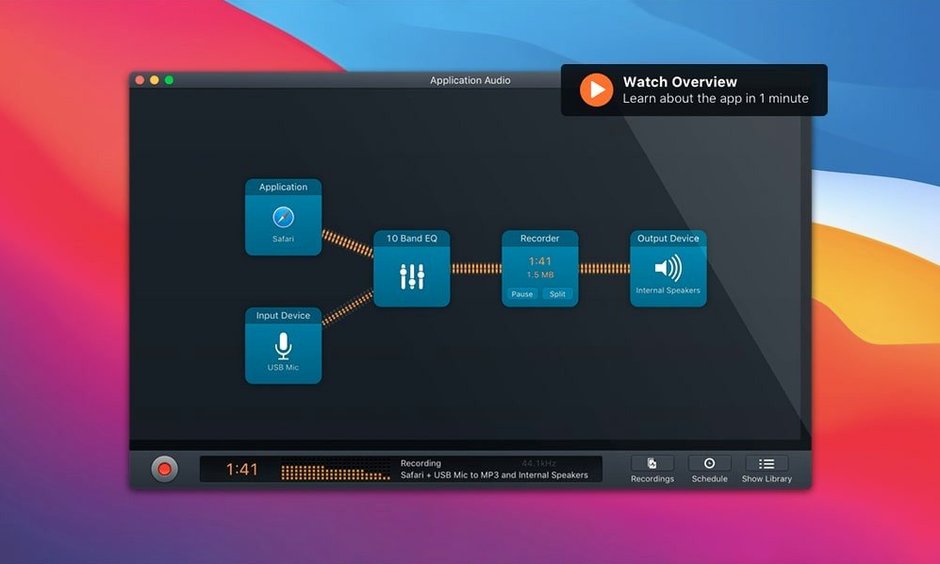
- Grab a live internet stream. Route Safari's audio straight to a high-quality FLAC recording. The session template gets you from tuning in to saving the setlist in under a minute.
- Quiet a noisy recording. Open an old file in the post-processing area and run the Denoise, Declick, and Dehum filters. A boomy HVAC hum or a scratchy record can often be tamed with just the Dehum slider.
- Build a multi-source podcast session. Combine a USB mic, a co-host on Skype, and a soundboard app into separate tracks inside one session, giving you clean stems to edit later.
The joy of the app is in wiring these blocks together. Start with a voice memo or a streaming capture, then slowly build a session with multiple sources. If you have ever wanted to save a sound that was just passing through your Mac, this is your toolkit.
Will It Capture Audio from Any App?
Folks usually have the same handful of concerns when they hover over the download button. The big one is whether the app can grab audio from any app or just a blessed few. The answer is refreshingly broad: if a Mac application makes sound, Audio Hijack can intercept it. Safari, Music, FaceTime, Skype, QuickTime Player, DVD Player, even niche VoIP clients — the routing happens at the system level, so the source app does not need to cooperate. The only exception is apps that use hardware-encrypted audio paths, which are rare in everyday computing.
Another frequent question is whether recording a call requires the other person's consent. The software stays out of that decision entirely. It captures what your Mac hears, and you are responsible for knowing the laws where you live. Some users set up a session that records only their own microphone for note-taking, leaving the other side out of the file.
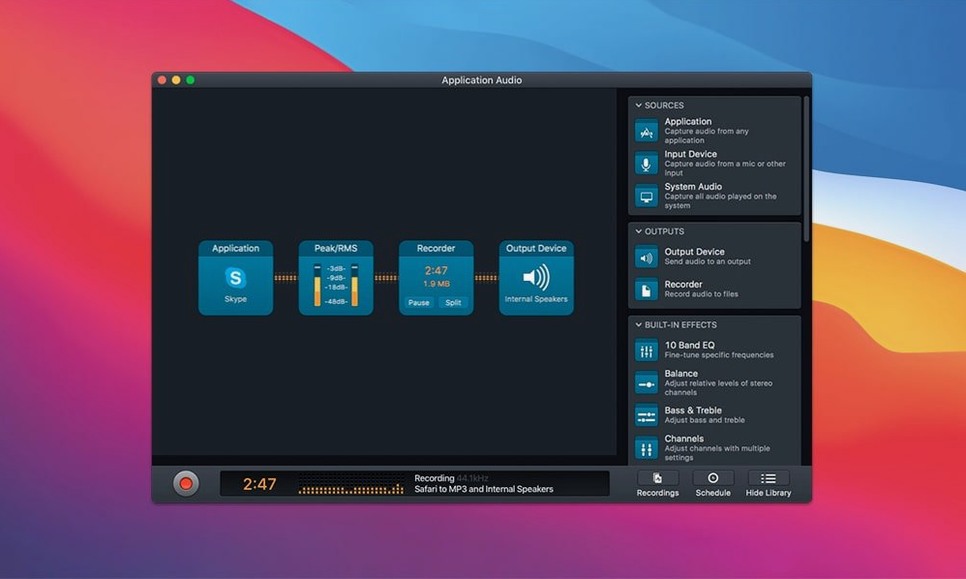
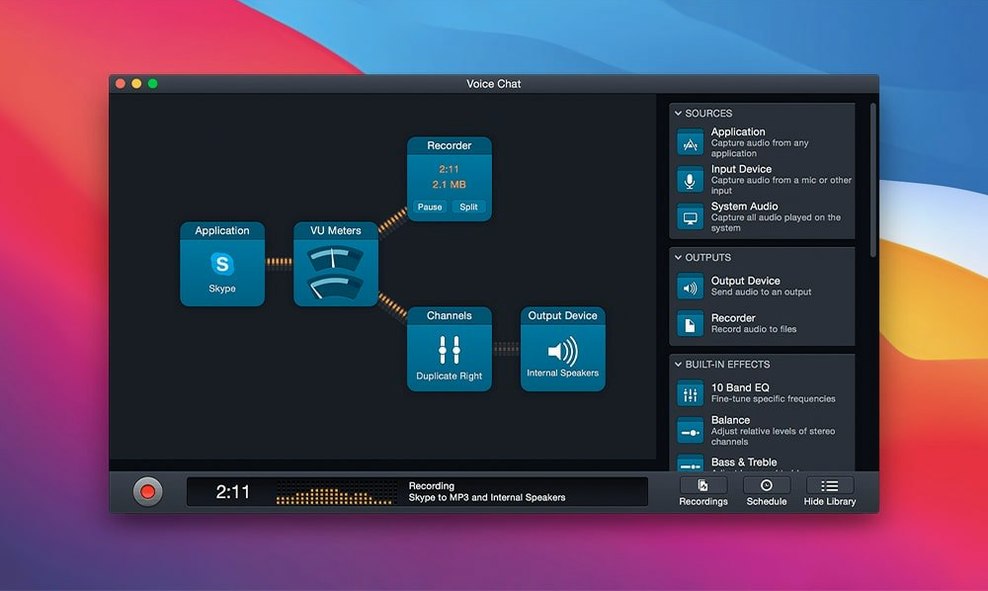
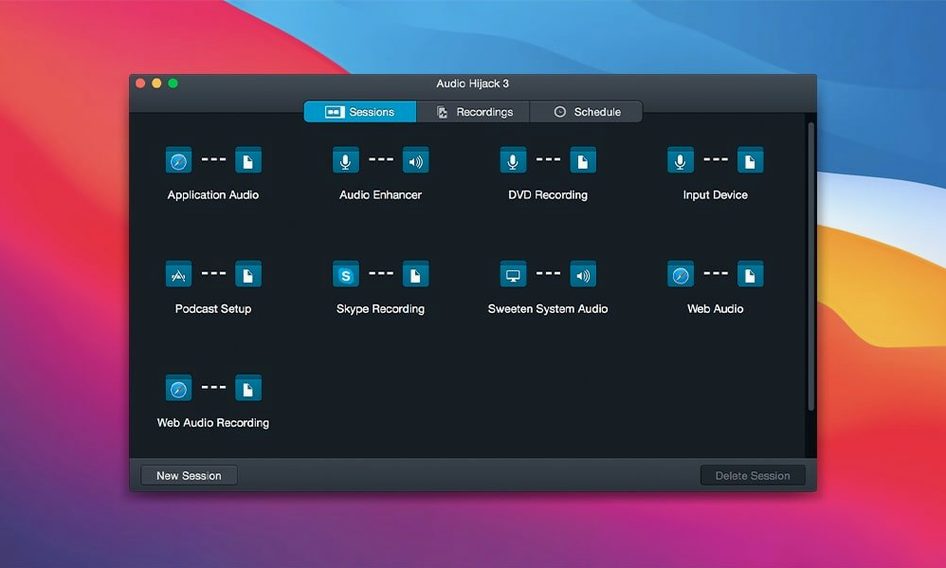
People also ask about the block system looking intimidating at first. It is closer to Lego than to a mixing desk. Each colored block does one job — grab audio, apply a filter, save a file — and you drag connections between them. The templates handle the wiring for common tasks, so you can start recording without touching a single block. When you are ready to customize, the learning curve is gentle.
A question that surfaces in forums is whether an audio hijack torrent floating around will behave like the real thing. The short answer is that nobody can vouch for what a hijack torrent actually installs. The app relies on a system-level audio capture component that hooks into macOS deeply, and a tampered version often breaks after minor OS updates or quietly strips out the Denoise and Transcribe blocks. If you value the transcription feature that got updated in 4.6.0, a clean audio hijack mac torrent is something many users explore—just be sure to verify that the capture engine loads correctly under System Settings → Privacy & Security → Microphone.
Whisper Model Picking Is Now Automatic
The macOS 27 compatibility is the headline item, but for most people the practical shift is inside the Transcribe block. Before 4.6.0, you had to know which Whisper model to pick — tiny, base, small, medium, large — and the wrong choice either wasted processing time or produced gibberish. The new Recommended model takes away the guesswork. Rogue Amoeba tuned it to balance speed and accuracy on Apple Silicon, and the backend bump from Whisper.cpp 1.7.4 to 1.9.2 brought cleaner paragraph breaks and fewer hallucinated words in long recordings.
In everyday terms, this means you can drop a recording onto the Transcribe block and trust the output enough to search for a phrase and jump to that moment in the audio. Podcasters who used to run separate transcription tools are finding the built-in block good enough for rough cuts and show notes. The Dehum filter also received a quiet stability fix — not mentioned in the release notes but noticeable if you work with old tape digitization sessions that used to stutter on long captures.
From SD Card to Edited Session in One App
Consider someone who lugs a portable recorder to farmers' markets and city parks, then comes home with an SD card full of ambient noise and short interviews. Their Mac is where the real editing happens. They mount the card, open Audio Hijack, and build a session that routes the Finder's audio preview through the Denoise and Declick filters before hitting a FLAC recorder. Now they can audition clips cleanly and capture only the processed version, leaving the raw file untouched on the card.
Later that afternoon, they remember a conversation they recorded with a beekeeper. They pull the file into the Transcribe block, let the Recommended model chew through it, and within a few minutes they have a text file they can skim for the moment the beekeeper mentioned propolis. The transcription is not perfect — "propolis" comes out as "prop list" — but it is close enough to find the timestamp and drop it into a project. This whole chain, from dirty field audio to searchable transcript, happens without leaving one application.
Checking Output Format Before a Long Recording
The most common slip is forgetting to set the output format before recording a long session. A new user will wire up a brilliant multi-source setup, hit record, and only later discover the file saved as a compressed AAC stream when they needed uncompressed WAV for editing. The Recorder block defaults to a sensible format, but sensible is not always what your workflow demands. Take thirty seconds to click the Recorder block, open its settings, and pick FLAC or AIFF if you plan to edit later.
Another early stumble is recording an application's audio but muting the system volume, then wondering why the capture is silent. Audio Hijack grabs audio before it reaches the speakers, so muting your Mac does not affect the recording. But if the source app itself is paused or its internal volume is down, you will capture exactly that silence. Check the app's own volume slider, not the system-wide one.
Beginners also tend to stack every filter block they can find onto a single chain, assuming more cleaning equals better sound. Denoise, Declick, and Dehum each do something specific. Running all three on a clean digital recording can actually muddy the highs and introduce artifacts. Start with one filter, listen, and add another only if the problem is still there. The preview button is your friend — use it before you commit to a two-hour capture.
Finally, a surprising number of people who search for an audio hijack crack assume the app needs a separate launcher or daemon running in the background. It does not. Once installed, the audio capture engine loads only when you open the app and tears itself down cleanly when you quit. If you see extra processes or a menu bar item you did not expect, that is not part of the genuine build.
Version 4.6.0 arrives with full support for macOS 27 and a welcome boost to its transcription tool.
- Updates the built-in Transcribe block with a Recommended transcription model.
- Updates the Whisper.cpp backend from 1.7.4 to 1.9.2.
- Adds support for macOS 27 (Golden Gate).
- macOS 14.4 or later
- Apple Silicon and Intel Macs
Questions I actually get
Can Audio Hijack record from a microphone and an application at the same time?
Yes. You can add multiple input blocks—like a microphone and Safari—to a single session and route them into one recording.
Does the Transcribe block work offline?
It runs entirely on your Mac using the built-in Whisper backend, so no internet connection is needed after the initial model download.
What audio formats can I save recordings in?
The Recorder block supports several formats, including high-quality FLAC, which is a favorite for archiving lossless audio.
Porch talk 0
Come in or pull up a chair to leave a comment.
Nobody has pulled up a chair yet. If you used it on a real Saturday, say what the hour was.