
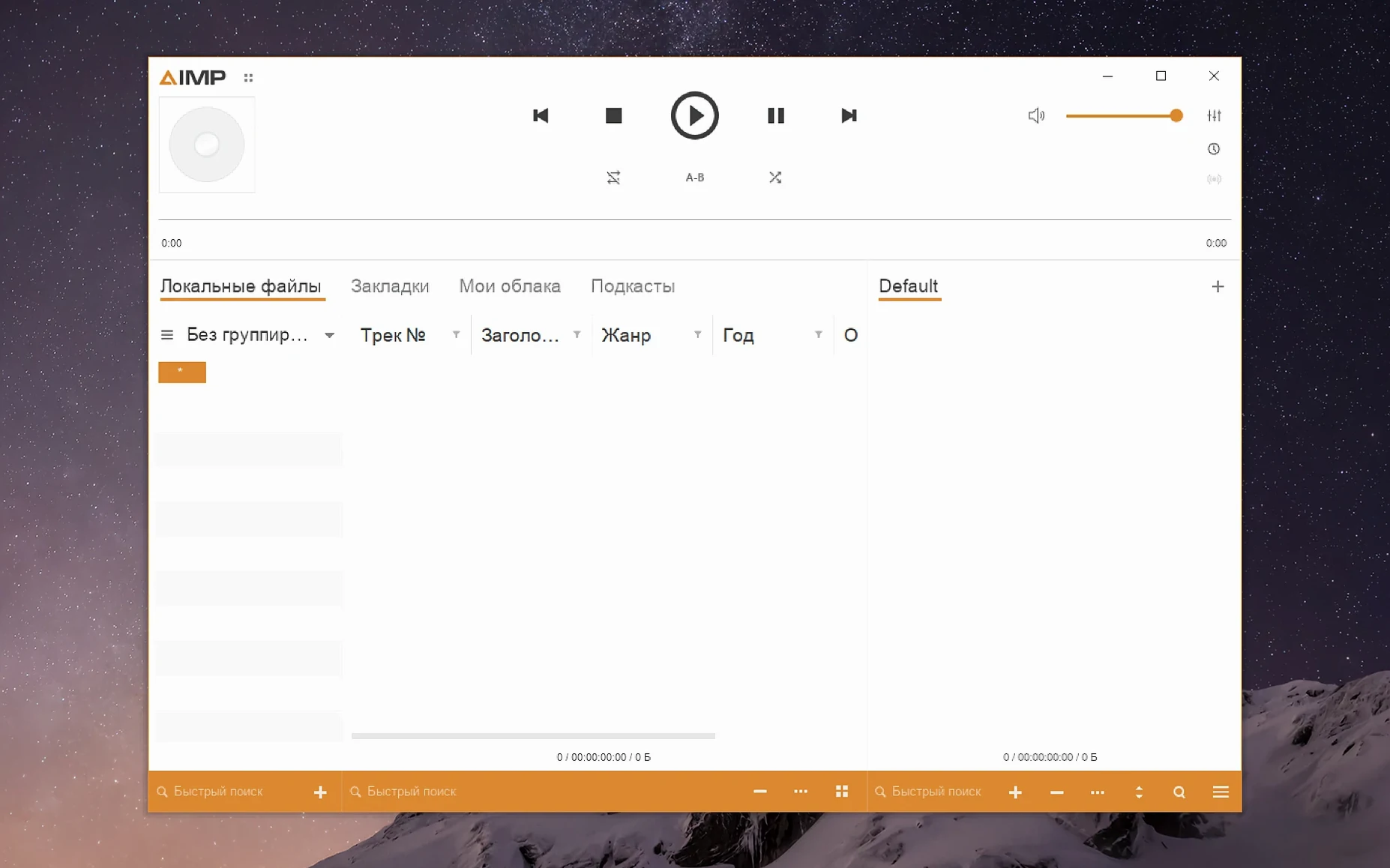
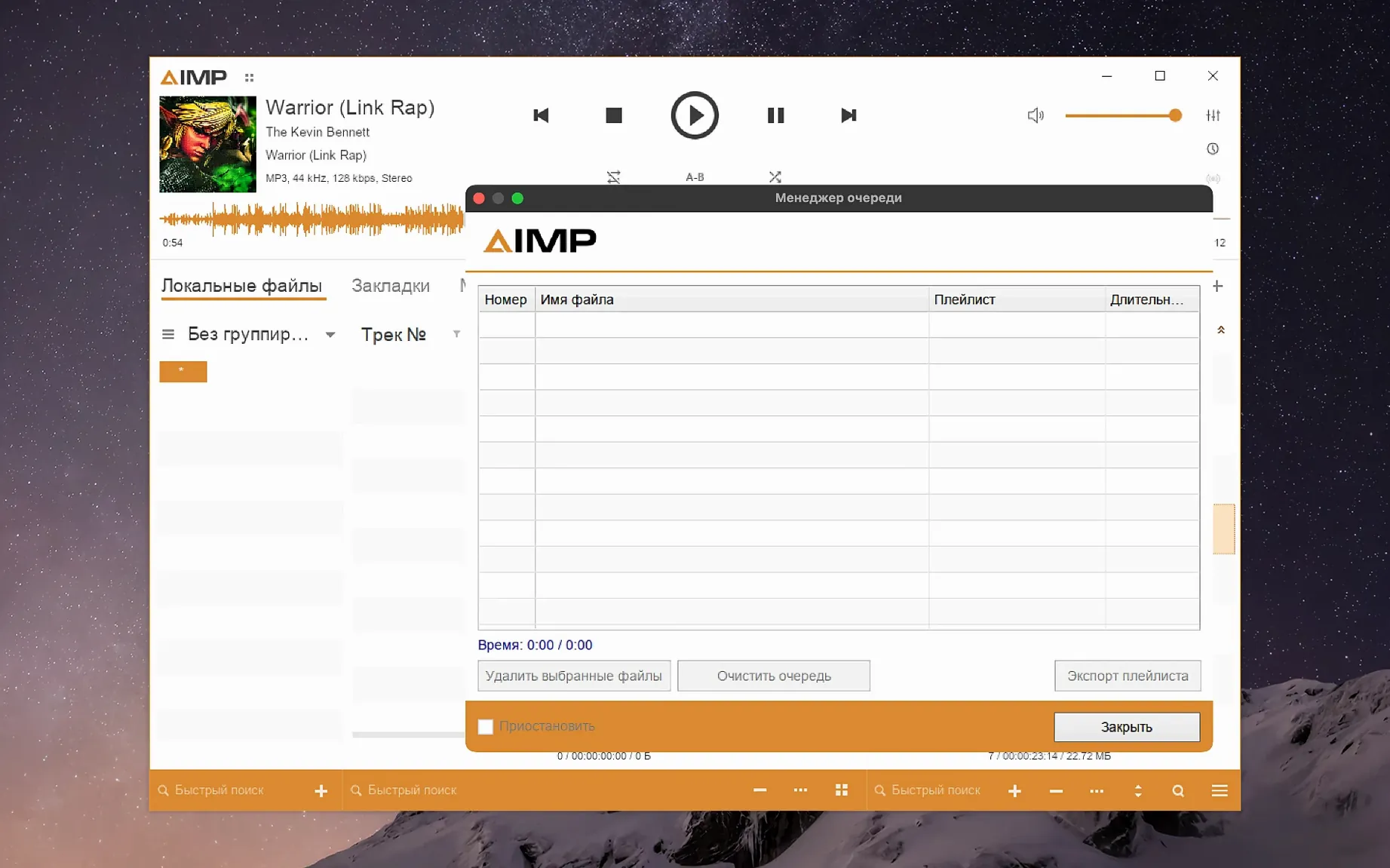
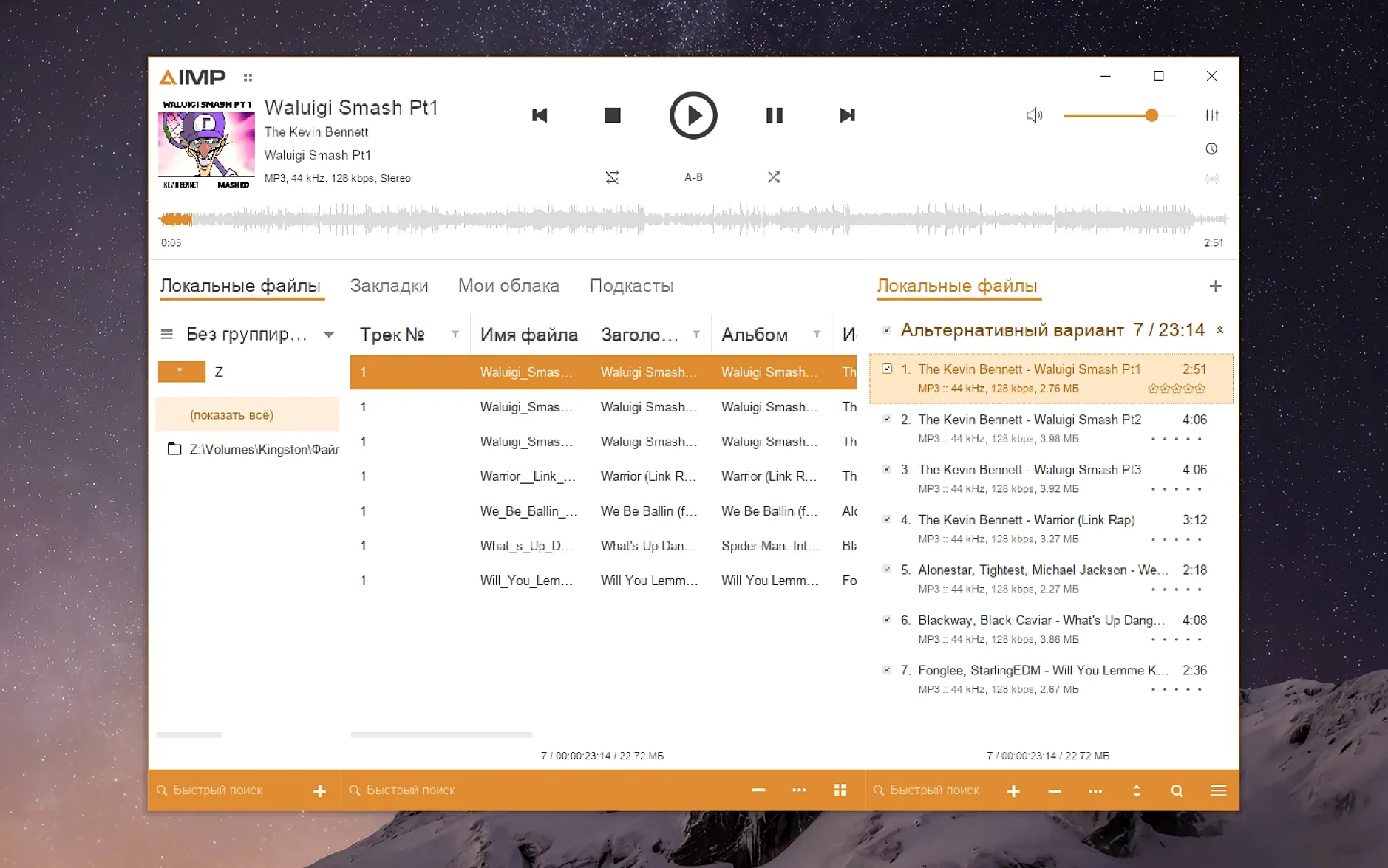
You’ve outgrown players that treat a library like a flat list. When you need a tag editor that parses obscure MP4 fields without choking, waveform seek that actually keeps up, and a grouping tree that respects your clicks, a lightweight Mac-native app can start feeling like a dead end. The AIMP download for Mac brings the Windows workhorse over through Wineskin, and this build tightens the screws where power users will feel it first.
- Tag editor now handles unnamed MP4 fields — no more parser errors for metadata that other editors left behind.
- Waveform calculation received a speed bump, making it practical to generate overviews for longer high-resolution files.
- Monkey’s Audio codec updated to 11.08, so your APE collection decodes with current library fixes.
- libVorbis conflict resolved — third-party plugins that rely on Vorbis no longer clash with the built-in decoder.
- Grouping tree Alt+Click behavior fixed in the music library, restoring a navigation shortcut that had slipped.
- Sampling-frequency buffering corrected, so changing output rates no longer leaves stale audio in the pipeline.
Under the hood, localization updates cover nearly twenty languages including Ukrainian, Swedish, and Traditional Chinese. If you catalog lossless collections, edit finicky tags, or just want a player that respects the signal chain all the way to the buffer, this build rewards the extra setup.
Drag in a messy folder of WAVs and start playing
You come back from a weekend of recording local shows, and the SD card holds a few dozen WAV files with messy names. The first thing you do is open AIMP and point the playlist at the folder — the files land in order, and the waveform seek bar sketches itself out faster than it used to. You click a track, and the playback starts without a beat of hesitation.
Next you switch to the tag editor. The old habit of cleaning metadata one file at a time disappears when you select the whole batch and fill in the album and artist fields together. One of the MP4 files had a field some other editor refused to parse, and here it just shows up, ready to be renamed or left alone. You save, close the editor, and let the library grouping tree sort everything by album. Alt+Click still collapses the branch the way it should.
Toward the end of the session you enable a Vorbis-based plugin for replay gain scanning, and it loads without arguing with the built-in decoder. When you switch the output from 44.1 kHz to 96 kHz for a high-res set of APE files, the transition stays clean — no leftover buffers, no clipped start.
Set your DAC as output before you hear a note
Once the app launches, a few adjustments make everyday use feel less like a Windows transplant and more like a Mac player.
- Output device and sample rate. Open Preferences and set the output to your DAC or interface before you play anything. The buffering fix in this build means rate changes settle faster, but choosing the right device early avoids a flurry of switches later.
- Playlist behavior. By default AIMP keeps a single active playlist. If you juggle multiple collections, enable the playlist manager tabs and set new folders to open in a new tab instead of replacing the current one.
- Waveform display. The updated calculation speed makes the seek bar useful on long files, but you can toggle it off for network-mounted libraries where scanning would still be unnecessary.
- Skin and font scaling. The Wineskin wrapper can leave interface elements feeling small on a Retina display. Follow the KegworksConfig route and set the screen resolution in the Graphics tab to a value between 122 and 144 — text and buttons gain comfortable breathing room.
- Language. The localization list is long, and the updated strings mean Czech, Belarusian, and Korean all read naturally. Change it once in Preferences and restart the app.
APE files from modern encoders now play without errors
The 5.40.2675 build focused on quiet frustrations rather than flashy additions. The updated Monkey's Audio codec to 11.08 means APE files encoded with recent tools now play without fallback errors. The waveform speed improvement shows up most when you load a playlist of long recordings — the seek previews appear in less time, so scrubbing through a two-hour set feels responsive instead of laggy.
The libVorbis conflict fix matters if you keep third-party plugins around. Before the change, a plugin that linked against Vorbis could destabilize playback or refuse to load. Now the built-in decoder and the plugin can coexist, which keeps the plugin ecosystem open for AIMP on macOS without a compatibility minefield.
The sampling-frequency buffering correction removes a subtle annoyance: switching output rates no longer flushes stale audio, so a track that follows a rate change starts clean. The playlist manager also stopped marking your library as modified just because you changed the playing track in the active storage — small, but it means fewer accidental "Save changes?" prompts. Taken together, these fixes make the AIMP for macOS wrapper feel less like a workaround and more like a daily driver for people who keep large, varied libraries.
- macOS 11 or later
- Apple Silicon
Questions I actually get
Does AIMP for Mac run natively on Apple Silicon?
It runs on Apple Silicon Macs through Wineskin, which translates the Windows application to work under macOS 11 and later.
Which codec got updated in AIMP 5.40?
The Monkey's Audio codec was updated to version 11.08 for improved APE file decoding.
What was fixed in the tag editor?
A parser error that occurred when the editor encountered an unnamed MP4 field has been resolved, so those files now open cleanly.
Porch talk 0
Come in or pull up a chair to leave a comment.
Nobody has pulled up a chair yet. If you used it on a real Saturday, say what the hour was.