

The June 2026 update, build 25.0.0.11, brings this Mac port closer to its Windows roots without losing the desktop-first feel.
Edit across multiple windows
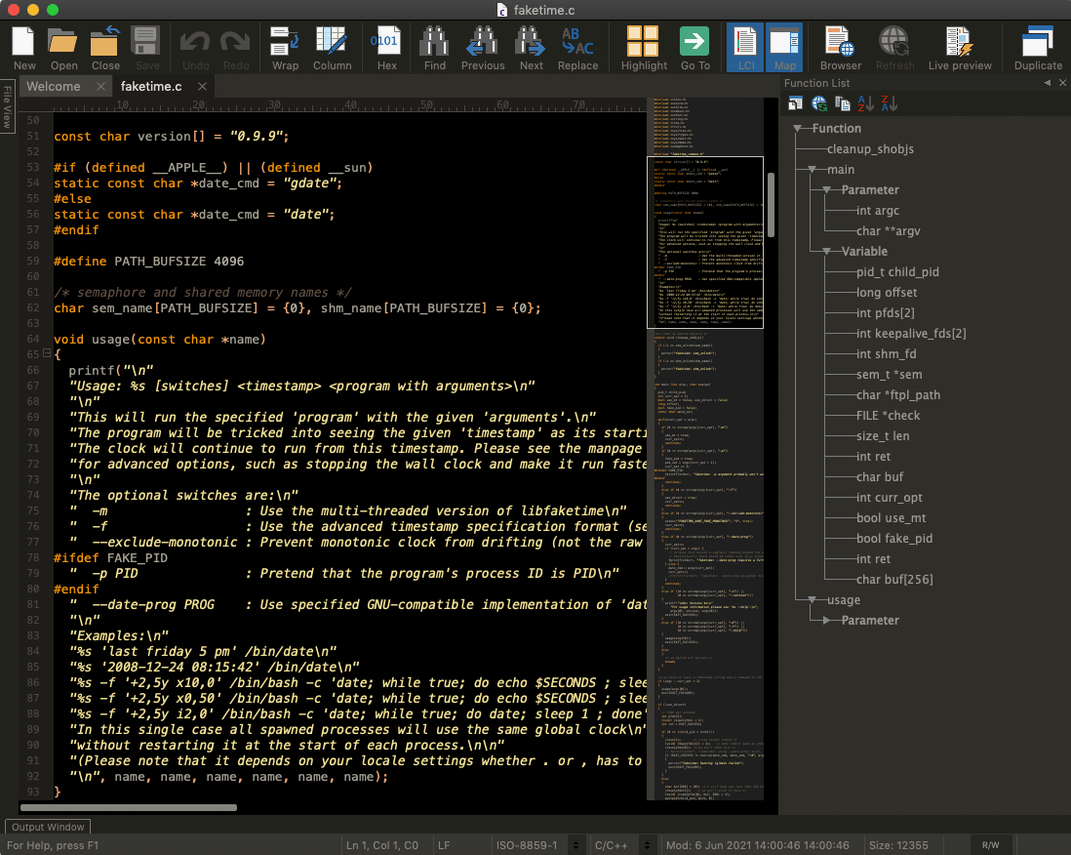
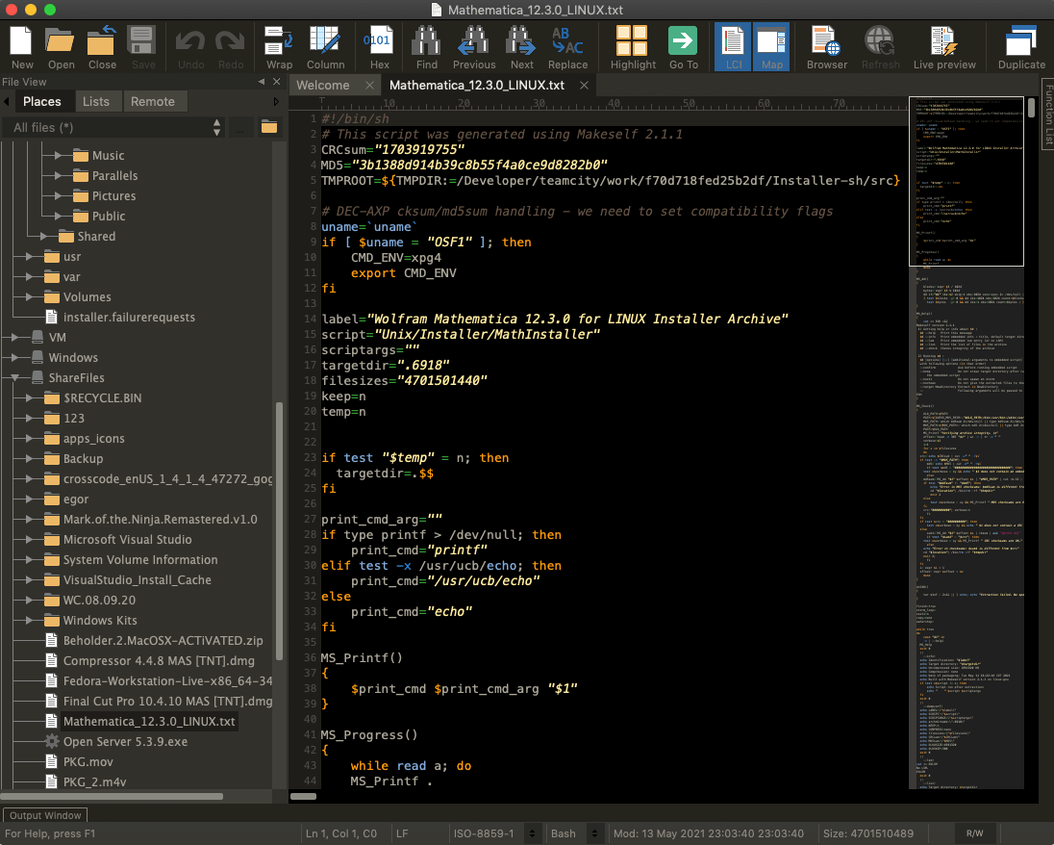
UltraEdit treats each file as its own workspace, so comparing two documents or dragging text between projects feels natural. Syntax highlighting covers a long list of languages, and you can add tag libraries and macros to speed up repetitive edits.
Manage files over FTP
The built-in FTP client lets you open, edit, and save remote files directly. You stay inside one application instead of juggling a separate file transfer tool.
Work with version control
Branch cloning, checkout, commit, merge, push, and pull are all supported. It is a solid fit for developers who want Git integration without switching to a terminal or a cloud-based editor.
Carve out an afternoon to uncover hidden comfort tweaks
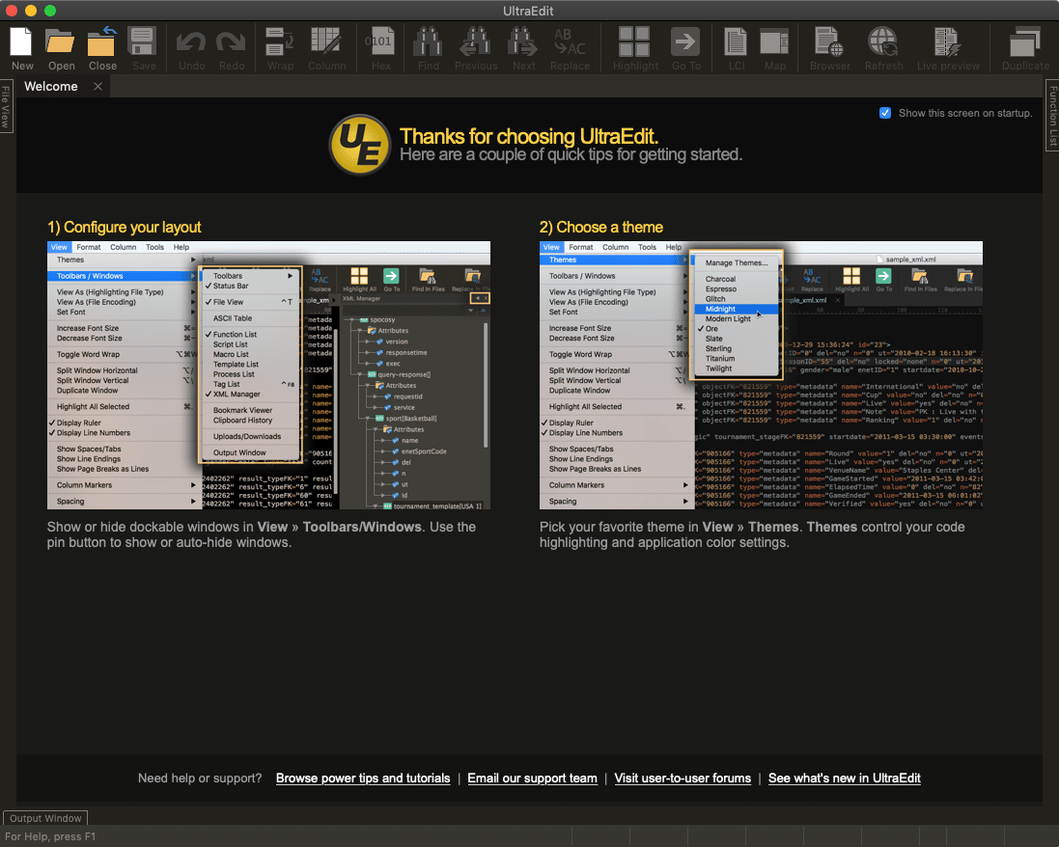
Give yourself a quiet afternoon to poke around the preferences. UltraEdit for Mac is not the kind of editor that shows all its cards on the first launch. A few early tweaks make a real difference to daily comfort.
- Tame the toolbars early. Right-click any toolbar and pick Customize. Drag away the buttons you never touch and pull in the ones you actually need — things like Show whitespace, Column mode, or the FTP browser. A clean toolbar keeps the window from feeling cluttered on a laptop screen.
- Set up a syntax dictionary for an odd language you use. The built-in list covers the usual suspects — C/C++, HTML, Java, Perl — but UltraEdit lets you add dictionaries for whatever else you write. If you maintain Ansible playbooks or write in a small templating language, spend ten minutes searching for a community wordfile or write a minimal one yourself. Syntax coloring in a familiar shade makes long blocks of YAML or Jinja much easier to scan.
- Record a throwaway macro on day one. Hit Macro > Record, perform a small sequence — maybe find-and-replace a pattern, indent a block, trim trailing spaces — then stop recording. Play it back a few times. Even a tiny macro teaches you the rhythm of the feature, and you will start spotting places where a saved macro can replace thirty seconds of manual typing.
- Let the FTP panel become a habit. Instead of reaching for a standalone client, open the FTP browser inside UltraEdit and bookmark the server you edit on most. Opening a remote .conf or .css file directly, making a change, and saving it back to the server in one motion feels like a small superpower after a day or two.
Edit a remote file under Git without leaving the app
Imagine you are tweaking a web server configuration that lives on a remote host and also sits in a Git repository. The old way might involve three separate tools: a terminal for Git, an SFTP client for fetching the file, and a text editor. UltraEdit for Mac collapses that into one window.
Start by opening the FTP browser and connecting to the server. Navigate to /etc/nginx/sites-available/ and double-click the config file. It opens in a new tab, syntax-highlighted, ready to edit. You make a few changes — adjusting a timeout value, adding a new location block. Before saving, you turn on column mode briefly to align a column of IP addresses that looked ragged. One keystroke toggles it; the block snaps into alignment.
Save the file back to the server over FTP. Now switch to the Repository view. The same file is in a local working copy. You commit the change with a short message, then push to the remote branch. The whole sequence — fetch, edit, align, save remotely, commit, push — happens without leaving UltraEdit. No terminal, no separate SFTP window, no copy-paste between applications. For developers who maintain live configs or live sites, this tight loop between FTP and Git is where the editor earns its keep.
If the remote host requires a different encoding, you can set it per file before saving. That little detail saves a surprising amount of headache when bouncing between Linux servers and a Mac desktop.
Who clicks with UltraEdit and why
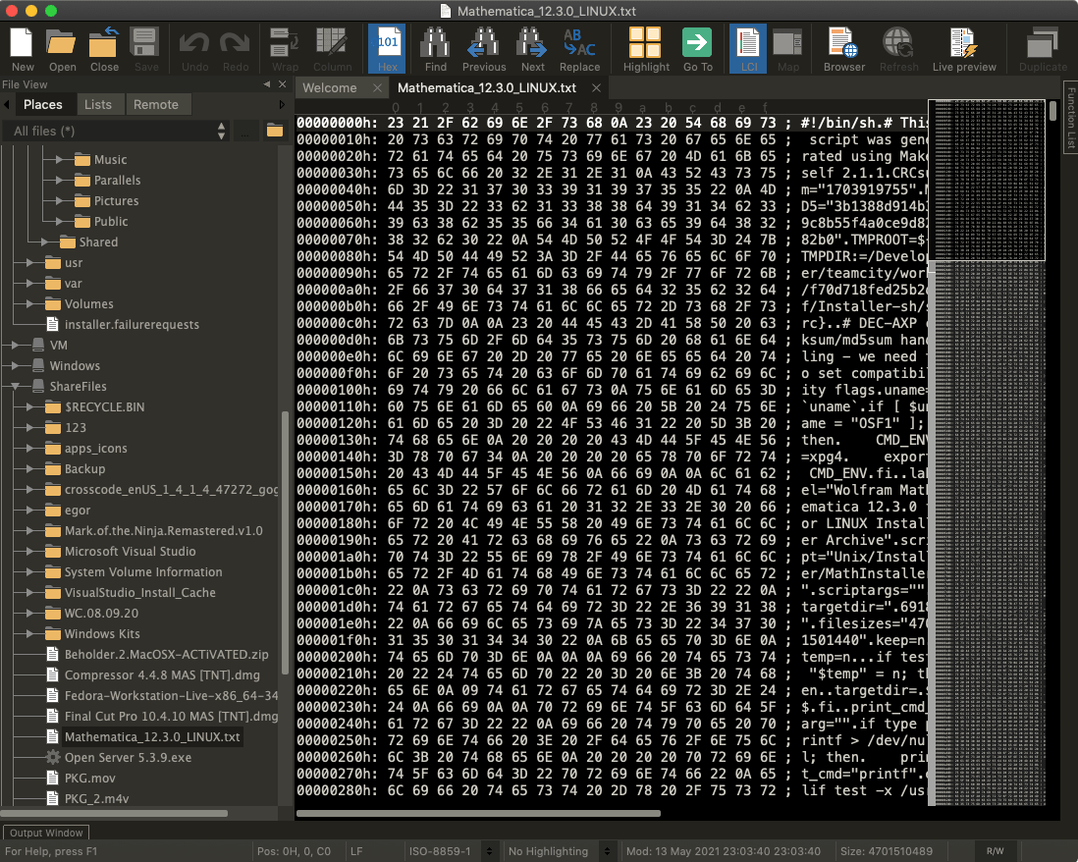
UltraEdit for Mac suits people who already know what a hex editor is and why they might need one, even if they only open it twice a month. It is built for tinkerers — the kind of user who appreciates a preference panel with dozens of checkboxes and does not mind spending twenty minutes getting whitespace rendering exactly right.
Programmers who split time between local code and remote servers get the most immediate payoff. The built-in FTP client removes a tool from the dock, and the Git integration keeps the commit history close without a separate GUI client. Web developers who hand-write HTML, CSS, and JavaScript find the tag libraries and multi-window editing helpful when they need to compare a stylesheet against the markup it styles. Technical writers who work in plain-text formats like Markdown, LaTeX, or DocBook will appreciate the syntax highlighting and the macro system for repetitive formatting passes.
If you are the kind of Mac user who still keeps a Windows VM around partly because you miss a heavyweight editor, this port might let you delete that VM sooner than you thought. It does not try to look like a minimalist Mac app, and that is exactly the point. Some people will download UltraEdit for Mac, open the torrent or the disk image, install it, and immediately feel at home in a way that lighter editors never quite manage.
The latest release is build 25.0.0.11, a maintenance update that polishes the 2025.0 Mac release.
- macOS 10.13 or later
- Apple Silicon and Intel Macs
- Interface language: English
Questions I actually get
Is UltraEdit a cloud-based application?
No, UltraEdit is a desktop application that runs locally on your Mac.
Does UltraEdit for Mac support Git?
Yes, it supports branch cloning, checkout, modify, commit, merge, push, and pull operations.
What is the current version of UltraEdit for Mac?
The current Mac release is version 2025.0, build 25.0.0.11.
Porch talk 0
Come in or pull up a chair to leave a comment.
Nobody has pulled up a chair yet. If you used it on a real Saturday, say what the hour was.
More for the same hour
Everything in Mac Apps
 Typeface
4.5.0 Mac Apps
23 MB
Typeface
4.5.0 Mac Apps
23 MB
 Tuxera NTFS
2023.1 Mac Apps
111 MB
Tuxera NTFS
2023.1 Mac Apps
111 MB

 TunesKit iPhone Unlocker
2.7.0.16 Mac Apps
64 MB
TunesKit iPhone Unlocker
2.7.0.16 Mac Apps
64 MB

 Vector Magic
1.20 Mac Apps
17 MB
Vector Magic
1.20 Mac Apps
17 MB

 Viaduct
1.3.0 Mac Apps
49 MB
Viaduct
1.3.0 Mac Apps
49 MB

 VideoByte BD-DVD Ripper
2.1.6 Mac Apps
124 MB
VideoByte BD-DVD Ripper
2.1.6 Mac Apps
124 MB

 Transmit
5.11.7 Mac Apps
Updated 34 MB
Transmit
5.11.7 Mac Apps
Updated 34 MB

 VideoProc Converter AI
8.12 Mac Apps
254 MB
VideoProc Converter AI
8.12 Mac Apps
254 MB