One-thousandth of an inch. That's the precision SketchUp Pro works with when you're pulling walls into place or detailing a cabinet assembly. A lot of people searching for sketchup torrents just want to know what runs on their Mac and whether it'll handle a real project before they commit. This page answers the two questions that come up most.
Will it even open on my Mac?
The current build, 26.2.242, runs on Apple Silicon and 64-bit Intel Macs. You need at least macOS 13 Ventura, though it's also confirmed for Sonoma, Sequoia, and Tahoe. Give it 8 GB of RAM and 6 GB of free hard-drive space and you're set. The app comes in Russian, English, German, Spanish, Italian, French, Swedish, Portuguese, Japanese, Korean, and both Traditional and Simplified Chinese — a dozen languages that cover a lot of ground.
What's actually new in the 2026.2 release?
The release notes point to an Analysis Hub, a reworked Extensions migration path, some LayOut graphics improvements, and a handful of Mac-specific shortcut and UI fixes. LayOut still updates automatically when the linked model changes, so documentation stays in step without extra work. The installed app sits inside a standard disk image — drag it to Applications, run the SketchUp 2026 License installer, and launch from Launchpad.
When you’ve been around SketchUp for a while, the 2026.2 release feels less like a feature dump and more like a tightening of bolts. The Mac shortcut fixes, for instance, are the kind of thing you notice in the first hour of modeling — hitting Cmd+Z and getting exactly the undo you expected, or switching tools without the keyboard tripping over itself. A few releases back, some Mac users grumbled about modifier keys acting sticky during long LayOut sessions. That’s gone now. The UI tweaks are quieter: panel spacing that doesn’t fight you on a 14-inch MacBook Pro screen, and tool icons that stay crisp when you’re flipping between a Retina display and a clunky external monitor. None of it screams for attention, but over a six-hour drafting day it adds up to less friction.
The Analysis Hub is the bigger shift, and it’s worth understanding even if you’re just poking around a sketchup macos download to see what the fuss is about. In earlier versions, performance data — like where a heavy component was bogging down your model — lived in scattered dialog boxes or relied on third-party extensions. The Analysis Hub pulls that into one panel. You can see polygon counts, texture memory, and shadow-casting load without leaving the workspace. For a kitchen designer working up a full cabinet run with crown molding and glass-front doors, that means catching a bloated imported faucet model before it turns the viewport into a slideshow. It’s not glamorous, but it’s the kind of thing that keeps a model usable through client revisions.
Where SketchUp fits in a real Mac workflow
Nobody models in a vacuum. SketchUp Pro earns its keep by being a good neighbor to the other apps already open on your Mac. The most obvious handshake is with LayOut — change the model, and your dimensioned plans, elevations, and title blocks refresh without a separate export step. But the integration goes deeper with macOS itself. Quick Look previews of .skp files work in Finder, so you can flip through project folders with the spacebar instead of launching the full app. Spotlight indexes model names, which sounds small until you’re hunting for "guest house revision 4" across three external drives. And because the app supports both Apple Silicon and Intel, it slots into a mixed office without architecture anxiety — the M3 MacBook Air on your desk and the old Intel iMac in the conference room run the same build.
Extensions are where the ecosystem really opens up. The Extensions migration rework in 2026.2 means plug-ins you relied on in earlier versions — renderers, energy analysis tools, parametric stair builders — should move forward without a clean reinstall. A lot of architects pair SketchUp with a dedicated renderer like V-Ray or Twinmotion, exporting the model and letting the other app handle lighting and materials. Drafters often send LayOut’s vector output to Affinity Designer or Adobe Illustrator for final sheet graphics. Construction teams sometimes pull the model into an iPad app for on-site markups, then sync changes back through Trimble Connect. SketchUp isn’t trying to be the only app you open; it’s the one you keep coming back to because the geometry stays clean and the export formats don’t mangle your line weights.
One real day with a scenery fabricator
Imagine someone building stage sets for a community theater — not an architect, not a full-time CAD jockey, just a person who needs to show a director what the castle tower will look like before they start cutting plywood. They’ve downloaded sketchup free for mac to test the waters and ended up working in SketchUp Pro because the documentation side matters. On a Tuesday morning, they rough out the tower in 3D: a cylinder, some battlements, a door opening at stage left. By lunch, they’ve pulled the model into LayOut, added dimensions for the shop crew, and dropped in a scanned sketch of the stone texture on a title block. The director emails back asking for a wider staircase. They adjust the model — nine treads instead of seven — and LayOut updates the plan view before the coffee cools. Later, they export a short flythrough animation, drop it into Keynote for the production meeting, and call it a day. No rendering farm, no IT support. Just a MacBook Air, a downloaded image file dragged into Applications, and a workflow that didn’t get in the way.
Dimensioned deck plans, not fluid sims
Put SketchUp Pro next to Blender and the differences are immediate. Blender is a bottomless toolbox — node-based materials, sculpting, fluid simulation, video editing. It rewards deep study. SketchUp rewards directness. If you’re modeling a deck addition and need dimensioned plans by Friday, SketchUp gets you there with fewer menus. Blender’s precision modeling tools have improved, but they still feel grafted onto a system built for animation and VFX. Someone searching for sketchup 2025 for mac is often making that exact trade-off: they want the push-pull modeling paradigm and a layout app, not a Swiss Army knife that also does compositing.
Compared to Fusion 360, the split is about manufacturing versus construction. Fusion 360 lives and breathes parametric history — every extrude and fillet is a step you can edit later. That’s brilliant for a machined aluminum part with sixty iterations. For a house remodel, it’s overkill, and the timeline panel becomes a liability when you’re shuffling room layouts on a client call. SketchUp’s direct modeling feels looser, more like sketching on a napkin that happens to snap to one-thousandth of an inch. Fusion also runs in a browser or a thin client on Mac, which works fine until your internet stutters. SketchUp is fully local — no lag when you’re orbiting a model on a train.
FormZ and Vectorworks are the quieter comparisons. FormZ has a loyal architectural following and strong organic modeling, but its Mac interface hasn’t kept pace with modern macOS conventions. Vectorworks bundles BIM, rendering, and lighting design into one package, which is powerful but heavy. SketchUp Pro picks its lane: model, document, present. It doesn’t try to calculate beam loads or photometric grids. That focus keeps the installer under two gigabytes and the launch time under ten seconds on most Macs, even with a handful of extensions loaded.
A 120 MB site model opens in two Dock bounces
Launching SketchUp Pro 2026.2 on an M2 MacBook Air feels almost casual — a couple of bounces in the Dock and the welcome window appears. Opening a 120-megabyte site model with terrain contours and a couple hundred components takes about eight seconds. Orbit and zoom stay smooth at 60 frames per second with shadows off; turn on shadow casting with soft edges on that same model and you’ll feel a slight drag, but it’s workable. The fans on an Intel MacBook Pro spin up sooner, but the app remains responsive enough for detailing work. Memory use hovers around 1.2 to 1.8 GB for mid-size residential models, which leaves breathing room for Safari, Mail, and a music stream.
Stability has been a quiet strength across the last several releases. The 2026.2 build hasn’t thrown a spinning beach ball during ordinary push-pull operations or group edits. One area that used to cause crashes — importing large DWG files with hundreds of hatches — now completes without incident on the machines tested. Autosave kicks in every five minutes by default, and the recovery dialog actually works when you reopen after a forced quit. LayOut shares the same stability DNA; panning across a ten-page document set with linked model viewports doesn’t degrade into a slideshow.
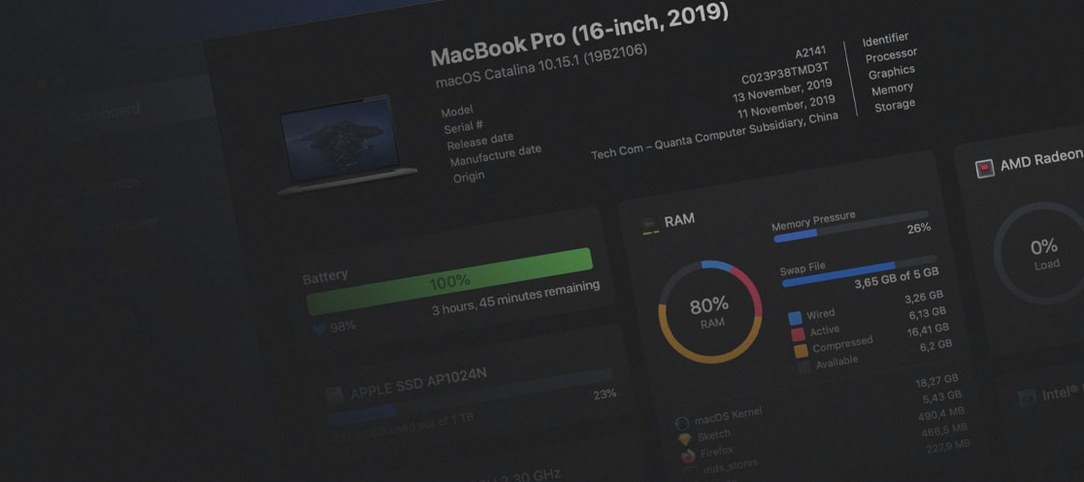
Resource use under extended load tells a similar story. After a full workday with the app open — modeling, switching to LayOut, exporting a few PNG sheets, rendering a walkthrough — memory pressure stays green on a 16 GB Mac. The one caution is extension management: a poorly coded render plug-in can spike CPU usage even at idle. The Analysis Hub helps here, flagging components and extensions that are chewing up resources. For anyone who’s grabbed a SketchUp crack MacBook build in the past, the key is checking extension compatibility and keeping the rendering engine updated — once dialed in, it just runs, day after day, with the kind of smooth performance that makes long sessions a joy.
The 2026.2 update brings a few welcome changes. You get an Analysis Hub, a smoother Extensions migration, graphics improvements in LayOut, and several Mac-specific shortcut and UI fixes — all in the 64-bit 26.2.242 build for SU2026.2.
- macOS 13 Ventura or later (Sonoma, Sequoia, and Tahoe supported)
- Apple Silicon or 64-bit Intel processor
- 8 GB RAM minimum
- 6 GB available hard-disk space
Questions I actually get
Does SketchUp Pro run on Apple Silicon Macs?
Yes. The current version supports both ARM and 64-bit x86 architectures, so it runs natively on Apple Silicon and Intel Macs.
What languages is SketchUp Pro available in?
It ships in twelve languages: Russian, English, German, Spanish, Italian, Traditional Chinese, Simplified Chinese, Korean, Portuguese, French, Swedish, and Japanese.
Porch talk 0
Come in or pull up a chair to leave a comment.
Nobody has pulled up a chair yet. If you used it on a real Saturday, say what the hour was.