
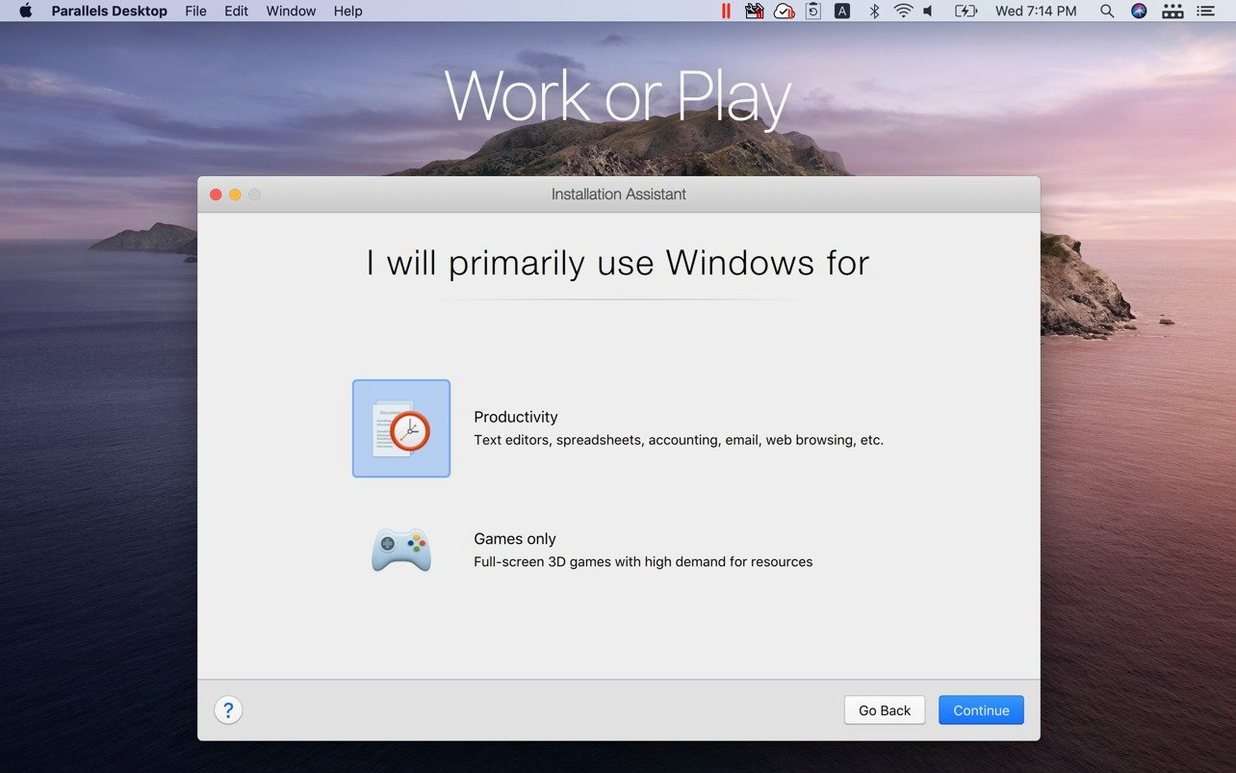
Parallels Desktop is the software that lets your Mac run Windows and Linux as though they were just another set of apps on your dock.
Set up a brand-new Linux environment
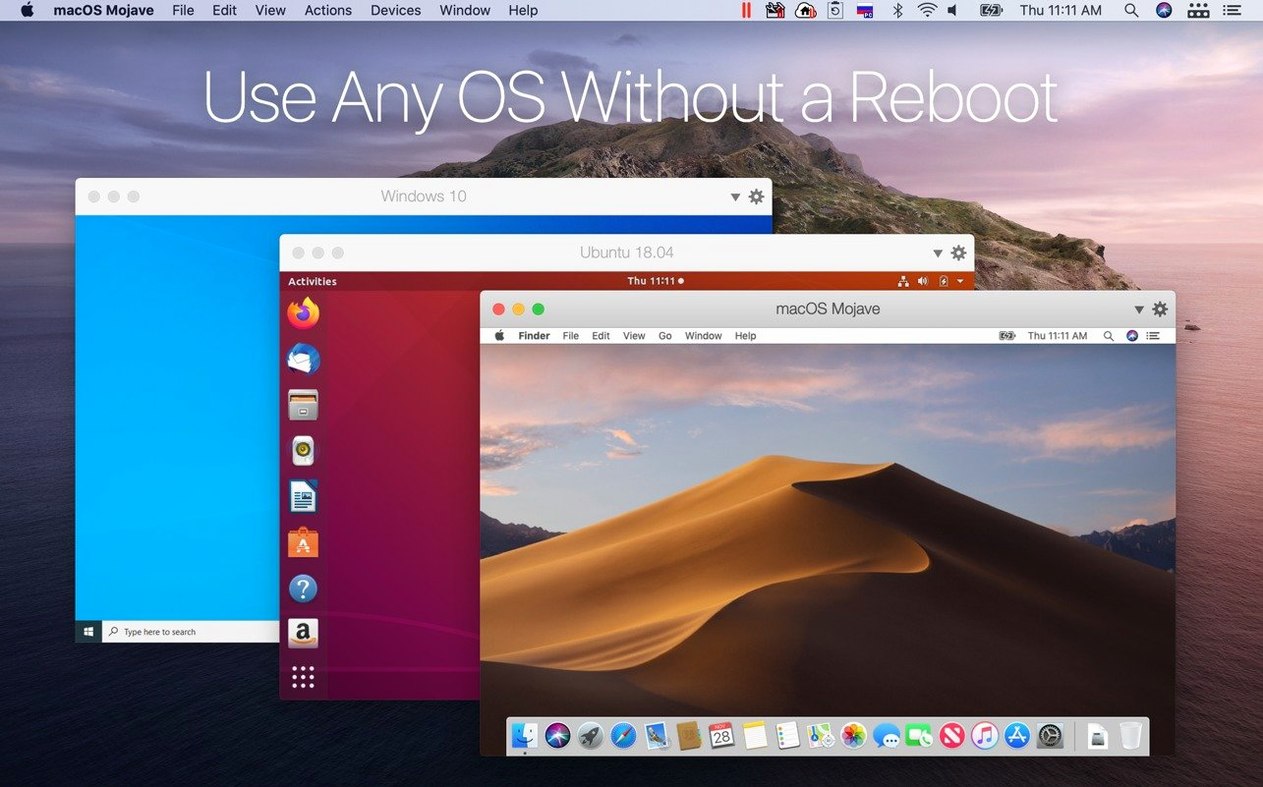
Version 27.0.2 brings out-of-the-box support for several fresh Linux releases, including Ubuntu 26.04 LTS with x86_64 emulation, Fedora 44, Debian 13.6, and Kali Linux 2026.2. Pick your distribution during setup and the wizard handles the rest.
Run Windows with Microsoft’s blessing
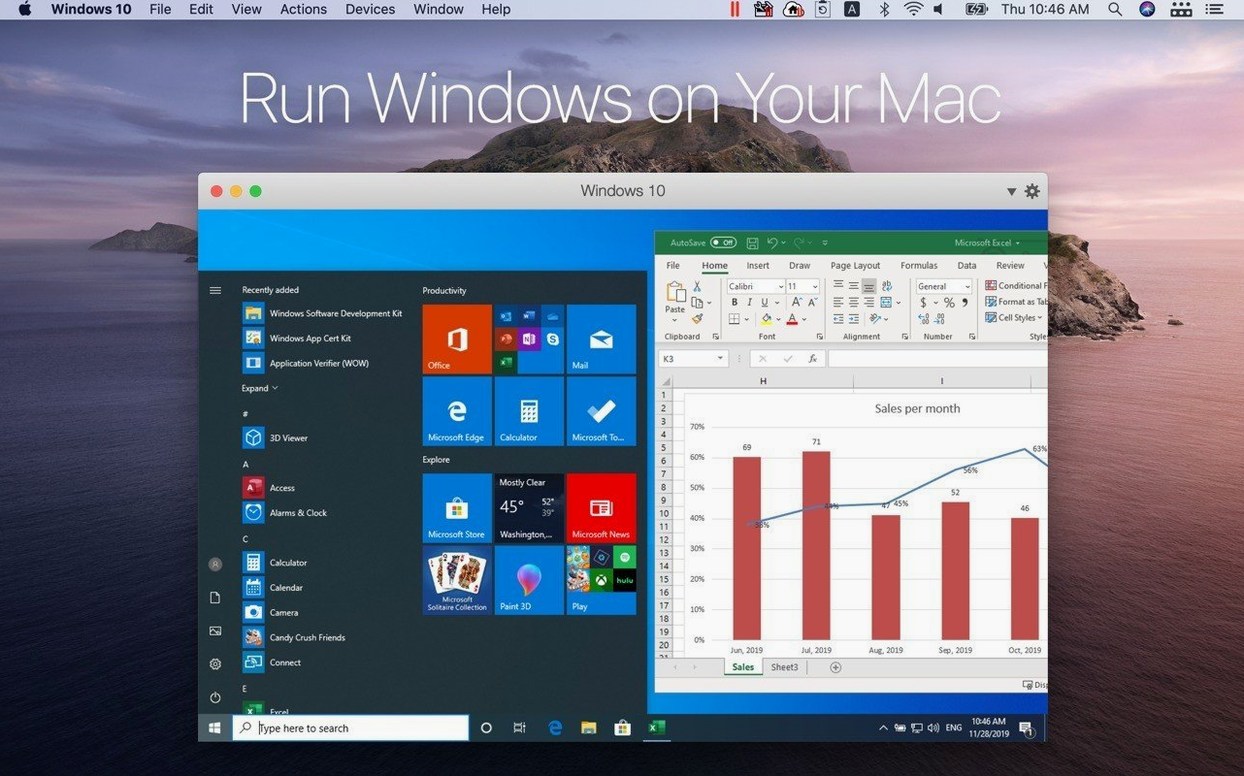
This is the first Microsoft-authorized solution for running Windows on Apple silicon Macs. You can launch Windows apps in full screen or let them float in a window alongside your Mac programs—no rebooting, no second machine.
Know what left the building
With version 27, support for Intel Macs and Boot Camp-based virtual machines has been removed. The current release is built exclusively for Apple Silicon and has earned ARM SystemReady SR 3.1 certification, so it’s tuned for the hardware you have today.
Where Parallels sits in your Mac workflow
You know those moments when you find a Windows-only utility that does exactly one thing really well, and nothing on the Mac side quite matches it? Parallels turns that friction into a non-issue. The virtual machine sits on your desktop like any other app window, but it doesn't live in a bubble. Shared folders bridge the two operating systems without you thinking about it—drop a PDF into your Mac Downloads folder and Windows sees it instantly. Clipboard sharing works for text and images, so you can copy a screenshot on the Mac side and paste it straight into a Windows application. Drag a file from Finder onto a Windows app window and it lands there, ready to use.
The real glue is how it plays with macOS features that you already use. Spotlight doesn't index inside the VM, but you can pin frequently used Windows applications to your Mac dock, and they launch as if they were native. Mission Control treats the full-screen Windows view as its own space, so a three-finger swipe slides you between your Mac desktop and a Windows environment that fills the whole display. Coherence mode goes even further: the Windows taskbar vanishes, and individual Windows app windows float alongside your Mac apps, each with its own entry in the dock. You can Command-Tab between a Windows spreadsheet and a Mac text editor without a second thought.
For developers who keep Linux VMs around, the integration is just as practical. Set up a shared development folder that your Mac editor and a Linux server both see. The VM's network adapter can run in bridged mode, so the Linux instance gets its own IP address on your local network—handy when you're testing web services from other devices. You can also set the VM to use a shared network, which routes traffic through your Mac's connection, keeping things simple for everyday browsing inside the guest.
Intel Mac support dropped at version 27
The jump to version 27 drew a clean line in the sand: Intel Macs and Boot Camp VMs are no longer part of the picture. If you've been holding onto an old Boot Camp partition thinking you'd one day import it, that door closed with this release. On the flip side, the architecture is now entirely focused on Apple Silicon, and the ARM SystemReady SR 3.1 certification confirms the virtual machines behave consistently across ARM hardware. For most people, that translates to fewer odd compatibility surprises when spinning up ARM-based Linux distributions.
The stability and security fixes in 27.0.2 aren't flashy, but they show up in the quiet ways that matter. A VM that used to stutter when resuming from a saved state now wakes up smoothly. Network hiccups that occasionally dropped the bridged connection after the Mac woke from sleep appear to be ironed out. These are the kinds of fixes you don't notice until you realize you haven't rebooted a VM in two weeks.
What you will notice is the expanded Linux catalog. Having Ubuntu 26.04 LTS ready out of the box, with x86_64 emulation included, means you can run older Intel-compiled binaries on an ARM VM without hunting down separate emulation layers. Fedora 44, Debian 13.6, and Kali Linux 2026.2 round out the lineup for different crowds—the Debian release for server tinkerers, Kali for security testing, Fedora for those who like their packages fresh. Each one installs through the same guided setup that asks a few questions and then builds the machine, no manual partitioning or driver hunting required.
Launch a Windows stitcher mid-edit without rebooting
Let's walk through an afternoon where Parallels earns its keep. You're editing photos in a Mac app and realize you need to run a Windows-only panorama stitcher that your Mac tools don't handle well. The VM isn't running, so you click its dock icon. A saved snapshot restores the Windows desktop in about ten seconds, right where you left it with the stitcher still in the taskbar. You drag the raw image files from a Finder window onto the stitcher's open dialog—the shared folder path resolves automatically—and start the stitch.
While the panorama renders, you switch to a different space where a Debian 13.6 VM is running a local web server. You've been testing a small application, and you need to check how it handles a few edge cases. The terminal inside the Debian window is already tailing logs. You make a change to the source code in your Mac text editor, saved to the shared development folder. Over in Debian, you restart the server process, and the refreshed output confirms the fix worked. No file transfers, no SCP commands—the folder is just visible to both systems.
Back in Windows, the panorama finishes. You copy the result to the shared folder, switch back to the Mac, and pull it into your photo library. A notification pops up from the Windows VM: a system update is available. You let it download and install in the background while you keep working. The VM handles the reboot inside its window without interrupting anything on the Mac side. By the time you wrap up, the Windows environment is patched and ready for next time.
This kind of back-and-forth becomes second nature. You stop thinking about which operating system owns which file or which app. The VM recedes into the background, and the work just happens across both platforms.
Mac users who rely on one or two Windows-only apps
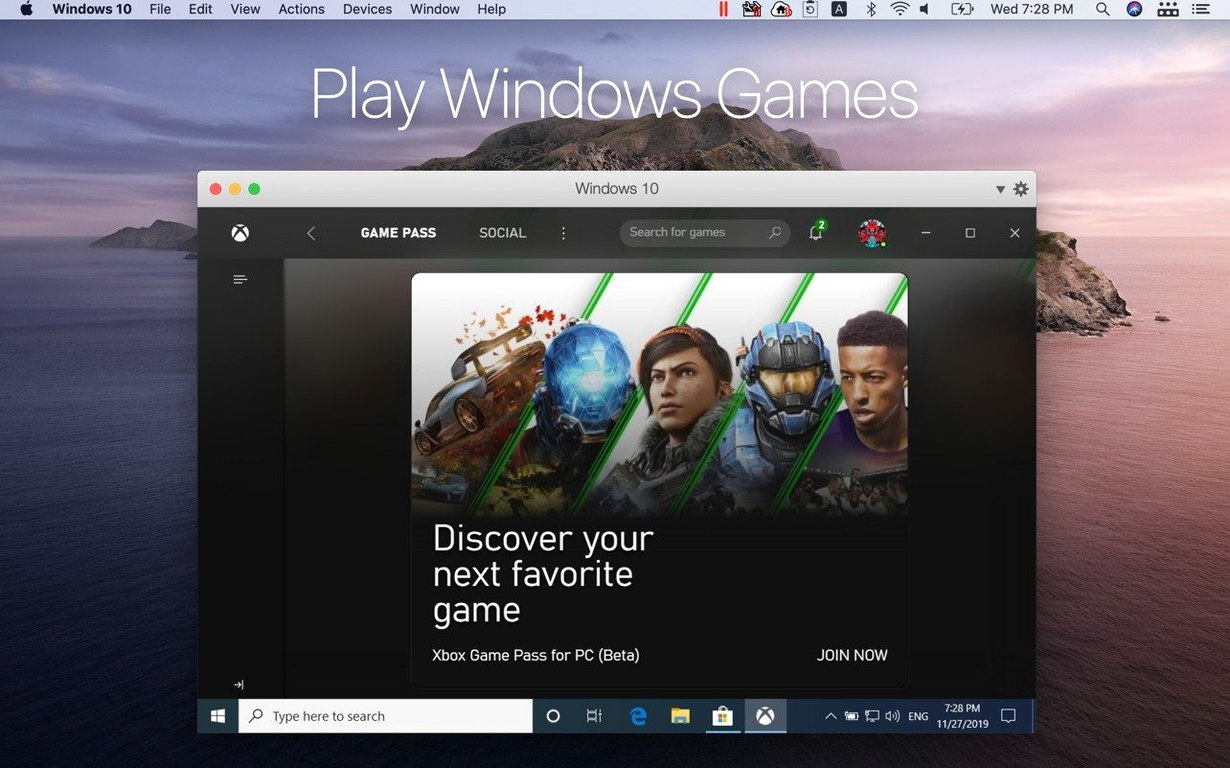
The sweet spot for Parallels isn't one specific job title—it's anyone whose work or hobbies pull them across operating system lines. Mac users who need one or two business applications that only ship for Windows get the most obvious win. An accounting package, a specialized engineering tool, an older game that never got a Mac port—the VM handles these without requiring a separate machine on the desk.
Developers get a different kind of value. Testing software against multiple Linux distributions from a single Mac is cleaner than dual-booting or maintaining separate hardware. The ARM SystemReady certification means the virtual environment behaves predictably, so what you see in the VM matches what you'd get on a physical ARM server. The x86_64 emulation support for Ubuntu opens that up even further when you need to run legacy binaries or test compatibility layers.
Security researchers and students gravitate toward the Kali Linux 2026.2 support, since it puts a full penetration testing toolkit inside a disposable virtual machine. Spin it up, run your tests, snapshot or discard the VM when you're done—the Mac host stays clean. Similarly, anyone experimenting with system configurations or software that might destabilize an OS appreciates the snapshot feature. You can try something reckless, break the guest system entirely, and roll back to a working state in seconds.
If you've ever kept an old PC around just to run one program, or you've hesitated to try a Linux distribution because setting up a dedicated machine felt like overkill, this fits. The VM lives on the Mac you already use, sharing files and a clipboard, and it wakes up faster than most computers boot.
Version 27.0.2 is a polish-and-compatibility update that keeps the engine running smoothly.
- General stability and security fixes.
- Ready-to-go support for Ubuntu 26.04 LTS, Ubuntu 26.04 LTS x86_64 emulation, Fedora 44, Debian 13.6, and Kali Linux 2026.2.
- Certified ARM SystemReady SR 3.1 (VE band).
- macOS 26 or later
- Apple Silicon Mac
Questions I actually get
Can I use an old Boot Camp partition with Parallels Desktop 27?
No. Support for Boot Camp was removed in version 27, so you’ll need a standard virtual machine image instead.
Porch talk 0
Come in or pull up a chair to leave a comment.
Nobody has pulled up a chair yet. If you used it on a real Saturday, say what the hour was.
More for the same hour
Everything in Mac Apps
 Paragon NTFS
LAST Mac Apps
70 MB
Paragon NTFS
LAST Mac Apps
70 MB

 Paste
6.6.2 Mac Apps
28 MB
Paste
6.6.2 Mac Apps
28 MB
 Path Finder
26.1.9 Mac Apps
26 MB
Path Finder
26.1.9 Mac Apps
26 MB
 Pacifist
4.1.4 Mac Apps
38 MB
Pacifist
4.1.4 Mac Apps
38 MB

 PDF Squeezer
4.9 Mac Apps
Updated 20 MB
PDF Squeezer
4.9 Mac Apps
Updated 20 MB

 OpenIn - Advanced Link Handler
4.5.1 Mac Apps
Updated 16 MB
OpenIn - Advanced Link Handler
4.5.1 Mac Apps
Updated 16 MB

 Perfectly Clear WorkBench
4.8.0.2871 Mac Apps
200 MB
Perfectly Clear WorkBench
4.8.0.2871 Mac Apps
200 MB
 One Switch
1.35.4 Mac Apps
7 MB
One Switch
1.35.4 Mac Apps
7 MB