

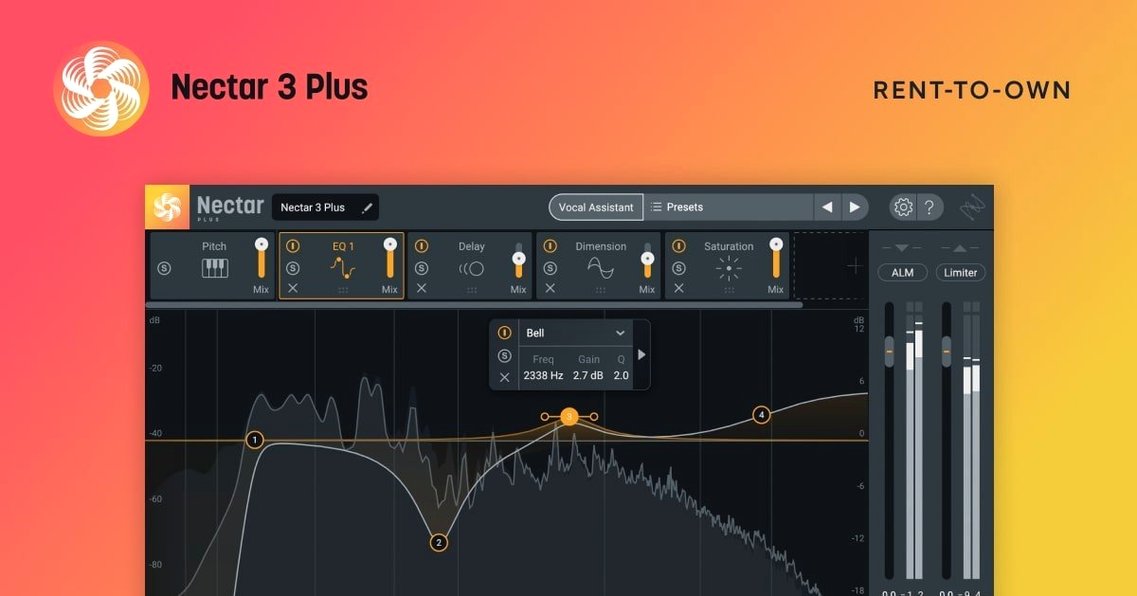
A singer has just laid down a few takes, and now you're staring at the raw tracks. Nectar is the tool producers and musicians reach for at that moment—a dedicated vocal suite that puts a chain of processing at your fingertips without having to build it from scratch. The current release, version 4.1.0 from June 2025, is a maintenance update that tidies up a few loose ends rather than rewriting the playbook.
What changed? On the compatibility front, the minimum macOS requirement is now Ventura 13.7.4, which means older systems are finally left behind. Windows users got proper HiDPI support, and a nagging authorization bug with iLok on the Standard edition has been squashed. The list of supported DAW and NLE versions also got a refresh, so you'll want to check that if you're running an older workstation. The core feature set—the assistive audio technology, the 64-bit processing, and the tiered feature set across Elements, Standard, and Advanced editions—carries over unchanged.
Speaking of tiers, the Advanced edition still gets the spotlight feature: Auto-Level, which automatically rides the vocal gain before it hits the rest of your chain. Everything below that tier, including the AI-powered modules for EQ, compression, and de-essing, remains available across the lineup. The interface stays in English regardless of edition, and the plugin runs natively on both Apple Silicon and Intel Macs.
For anyone mixing vocals on a recent Mac, this update is about stability. The plugin you knew last month is the same one you'll open today—just a little less likely to interrupt your session.
Will it choke a loaded session
Most people downloading Nectar for the first time have the same handful of concerns. Will it slow down a session that already has twenty plugins running? The answer depends on which modules you load, but the 64-bit architecture and native Apple Silicon support mean the processing sits comfortably on modern Macs. If you're stacking Voices and Backer on top of a full channel strip, bounce those layers to audio and your CPU will breathe easy again.
Another question that comes up is whether the Vocal Assistant actually listens or just slaps on a preset. It analyzes the incoming signal—level, tonal balance, dynamic range—and builds a starting point tailored to that specific recording. You can tweak every parameter afterward, so nothing is locked in. Think of it as a fast first draft, not a final mix decision.
People also wonder if you need the Advanced edition to get anything useful done. The Elements version gives you the core vocal chain including the assistant, EQ, compression, and de-essing. Standard adds Voices for harmony generation and Backer for background vocal thickening. Advanced piles on Auto-Level and a few extra surgical tools. If you mostly mix dry lead vocals, Elements holds its own; if you're building stacked arrangements, the upper tiers earn their keep quickly.
How Nectar stacks up against similar tools
Three names tend to come up in the same breath: Waves Ovox, Antares Auto-Tune Pro, and the stock vocal chains inside Logic Pro. They all touch vocals, but the approach differs.
Waves Ovox is a vocal synthesizer and harmonizer first, a mixing tool second. It excels at robotic textures, vocoder effects, and pitched layers that sound deliberately artificial. Nectar leans the other direction—its Voices and Backer modules aim for natural-sounding doubles and harmonies that sit behind a lead rather than stealing the spotlight. If your track calls for a Daft Punk moment, Ovox gets there faster. If you want the listener to hear one polished vocal with subtle support, Nectar is the quieter choice.
Antares Auto-Tune Pro is a pitch correction specialist with deep control over every cent and curve. Nectar includes pitch adjustment inside its assistant workflow, but it doesn't give you the graph-based editing or the real-time retune speed tweaks that Antares built its reputation on. Producers who need surgical pitch editing often run Auto-Tune on the insert before Nectar handles the tone and space. They're complementary rather than rivals.
Logic Pro's built‑in plugins—Channel EQ, Compressor, DeEsser 2, Space Designer—can absolutely get a vocal across the finish line. What Nectar offers is a unified interface where all those decisions happen in one window, guided by analysis that connects EQ moves to compression thresholds to de-essing bands automatically. It's less about having tools you don't already own and more about how fast you arrive at a sound you trust.
Plugin missing from your DAW
One common hiccup after installing an iZotope Nectar torrent is the plugin not showing up in your DAW. Nine times out of ten, the Audio Units or VST3 component landed in the wrong folder during installation. Rescan your plug-in directories, and make sure the .component file is sitting in /Library/Audio/Plug-Ins/Components for AU or the correct VST3 path. A full restart of the DAW—not just a rescan—sometimes clears the cache that's blocking recognition.
Another snag crops up when someone grabs an iZotope Nectar 4 Mac torrent and finds the authorization step confusing. The included installation and activation guide walks through the process, and the key detail is making sure any previous iLok entries from older Nectar versions aren't conflicting. If you hit a wall, removing leftover license files from an earlier iZotope Nectar 4 full crack attempt usually clears the path for a clean activation.
Latency complaints tend to surface when Auto-Level or the Vocal Assistant is active during recording. These modules analyze the signal over time, which introduces a small delay. For tracking, bypass them and monitor through a lighter chain; switch them back on during mixing. If the latency persists, the DAW's buffer size is usually the culprit—drop it to 128 samples or lower while recording, then push it back up for playback.
Finally, a handful of users running a nectar 4 mac torrent on older Intel machines notice the interface lagging when multiple modules are open. Disabling the animated spectrum display in the EQ module's settings often smooths things out. It's a small GPU hit that adds up on integrated graphics, and turning it off rarely changes the sound.
Version 4.1.0 arrived on June 25, 2025, with a handful of fixes that keep things running smoothly.
- Windows HiDPI support was added for sharper visuals on high-resolution screens.
- Fixed an authorization failure that affected Nectar Standard users with iLok.
- Updated the list of officially supported DAW and NLE versions.
- The minimum macOS requirement was raised to macOS Ventura 13.7.4.
- macOS Ventura 13.7.4 or later
- Apple Silicon or Intel processor (64-bit)
- Interface language: English
Questions I actually get
Which edition of iZotope Nectar 4 includes Auto-Level?
Auto-Level is exclusive to Nectar 4 Advanced and is not included in the Elements or Standard editions.
What macOS version is required for Nectar 4.1.0?
You need macOS Ventura 13.7.4 or later. The minimum version was raised with this update.
Does Nectar 4 run on Apple Silicon Macs?
Yes, the plugin has native support for both Apple Silicon and Intel Macs, and is 64-bit only.
Porch talk 0
Come in or pull up a chair to leave a comment.
Nobody has pulled up a chair yet. If you used it on a real Saturday, say what the hour was.
More for the same hour
Everything in VST Plugins iZotope Insight
2.4.0 VST Plugins
iZotope Insight
2.4.0 VST Plugins

 iZotope Neutron
5.2.0 VST Plugins
928 MB
iZotope Neutron
5.2.0 VST Plugins
928 MB
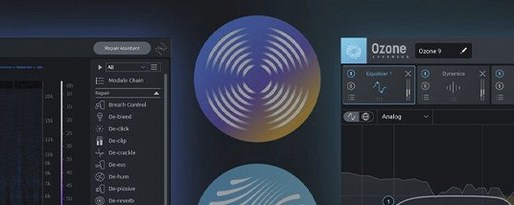 iZotope RX
12.0.0 VST Plugins
2.1 GB
iZotope RX
12.0.0 VST Plugins
2.1 GB
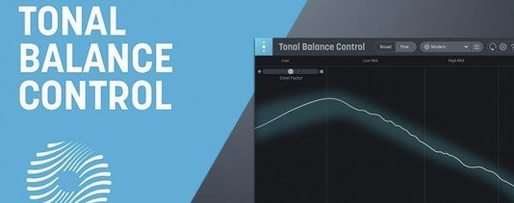 iZotope Tonal Balance Control
3.0.0 VST Plugins
264 MB
iZotope Tonal Balance Control
3.0.0 VST Plugins
264 MB
 Kalifornia Dynamic KD Alkane
1.0.17.0 VST Plugins
270 MB
Kalifornia Dynamic KD Alkane
1.0.17.0 VST Plugins
270 MB
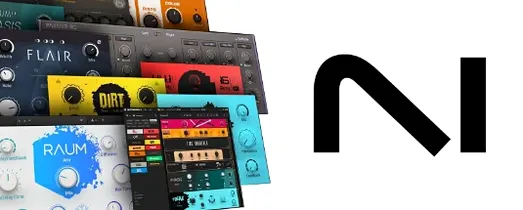 Komplete FX Bundle
2026.1 VST Plugins
3.2 GB
Komplete FX Bundle
2026.1 VST Plugins
3.2 GB
 Komplete Kontrol
3.5.4 VST Plugins
785 MB
Komplete Kontrol
3.5.4 VST Plugins
785 MB
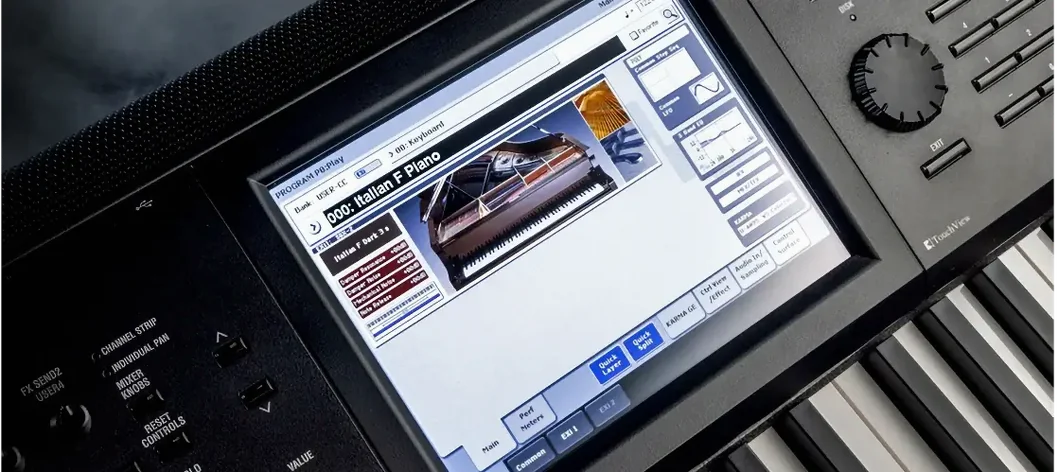 KORG Collection
1.0.3 VST Plugins
175 MB
KORG Collection
1.0.3 VST Plugins
175 MB