
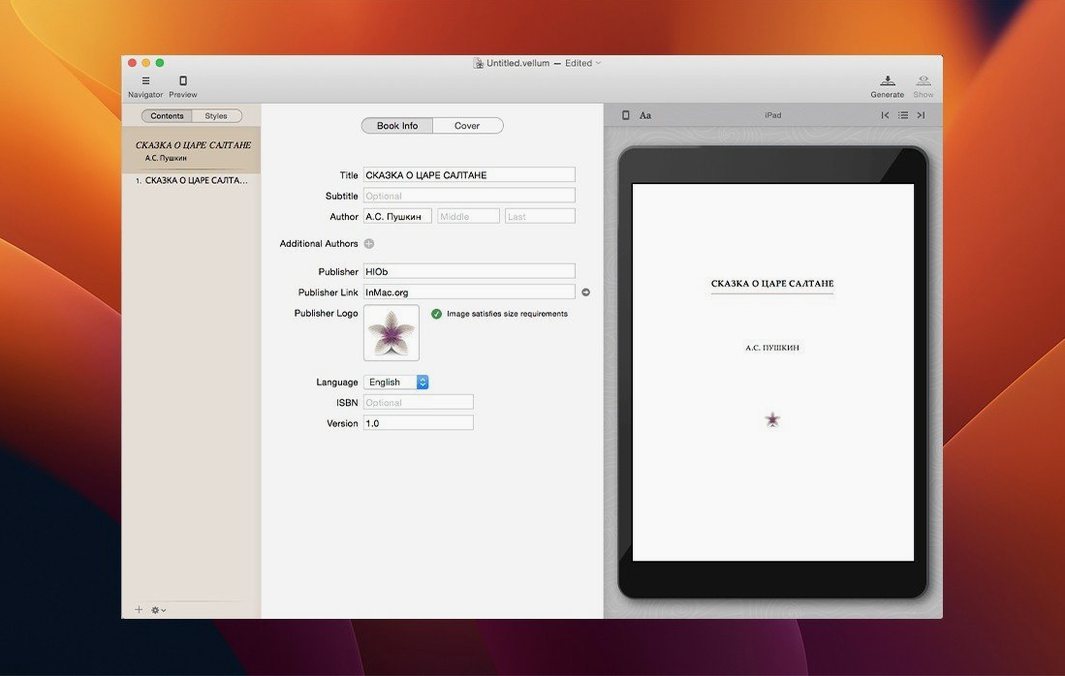
Indie authors and small presses often reach a point where the manuscript is ready, but the thought of wrestling with formatting for Kindle, Kobo, and a paperback feels like a second job. That's the crowd that tends to settle in with Vellum, a Mac app built from the ground up for this exact task.
Style your book
A big part of the work happens by picking a trim size and watching the margins, page numbers, and headers adjust themselves. You can add copyright-page details right inside the app, and the instant preview lets you see changes on multiple device simulations as you edit.
Fine-tune the pages
Vellum handles widows and spread balancing so you don't have to hunt for stray lines at the bottom of a page. When you need to tweak a detail after a final read-through, regenerating the updated ebook files is straightforward.
Export for readers
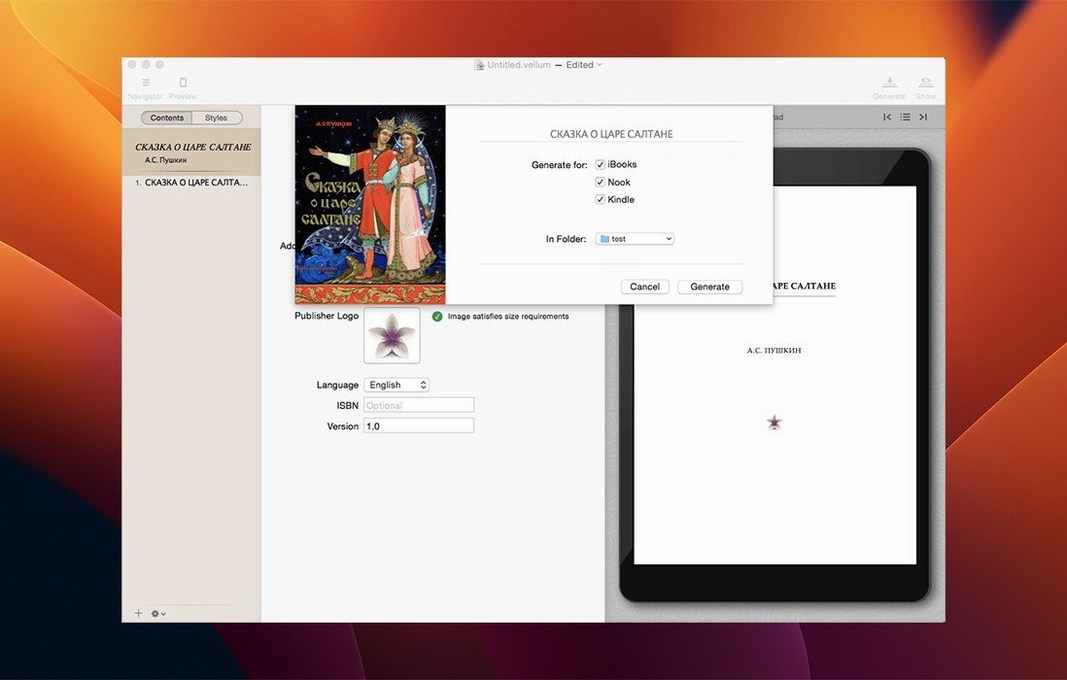
When the book looks right, you can create files for Kindle, Kobo, and Apple Books from the same project. The print output also gets a dedicated preview, showing exactly what will land on paper before you commit to a proof copy. If you write on a Mac and want the formatting to feel like part of the creative process rather than a chore, it's worth a look.
Why Scrivener users eventually export to Vellum
Plenty of authors start out in Scrivener, which is brilliant for drafting and organising a messy manuscript. Its compile feature can push out an EPUB, but the path to a polished, print-ready PDF often means exporting into another tool anyway. Vellum skips the word-processing layer entirely and focuses on the final form: it assumes you already have finished text and just need it to look like a real book. If your writing brain lives in Scrivener, using both in sequence feels natural.
Then there's Atticus, a cross-platform contender that runs on Windows and in a browser. It handles similar styling and preview duties, and it has a respectable chapter-by-chapter editor built in. The difference shows in the finesse of the output. Vellum's previews tend to feel more immediate and its print typography — things like spread balancing and widow control — comes across as more considered out of the box. Atticus closes the gap with every update, but authors who work solely on a Mac often appreciate how Vellum stays out of the way with a native, single-purpose interface.
Snappier Kindle-to-print preview switching
The 4.1.5 EDiSO build lands after a string of point releases that tightened a few practical edges. In daily use, you'll notice that preview refreshes feel snappier, particularly when flipping between a Kindle Fire simulation and a large-print paperback layout. The boxed-set feature, which stitches multiple books into a single volume, got attention too — metadata handling is cleaner, and navigating between included titles inside the generated ebook is less likely to confuse a retailer's conversion pipeline. Under the hood, the team worked on Apple silicon optimisations, which matters when you're regenerating a 400-page omnibus and want the progress bar to move along without the fans kicking up.
Fix mangled imports by cleaning your heading structure
One common head-scratcher happens when a manuscript imports with odd line breaks or missing chapter splits. Vellum reads the heading structure you feed it, so running the text through a quick pass in your word processor — making sure chapter titles use a consistent "Heading 1" style — clears up most gremlins before they reach the app.
Another sticking point is the copyright page. People sometimes type it directly into the manuscript's front matter, then discover the app's dedicated copyright-page editor is blank. The fix is simple: let Vellum generate the boilerplate from its own panel and paste your custom text there instead. That way the legal fine print stays tied to the book's metadata and doesn't wander during style changes.
A trickier situation crops up when someone grabs a vellum torrent of an older cracked version and finds previews broken on Apple silicon Macs. That usually traces back to missing components in the repackaging, not a fault of the app itself. The current build, properly set up without stripped files, runs smoothly on both architectures.
- macOS 11 or later
- Works natively on Apple Silicon and Intel 64-bit Macs
Porch talk 0
Come in or pull up a chair to leave a comment.
Nobody has pulled up a chair yet. If you used it on a real Saturday, say what the hour was.