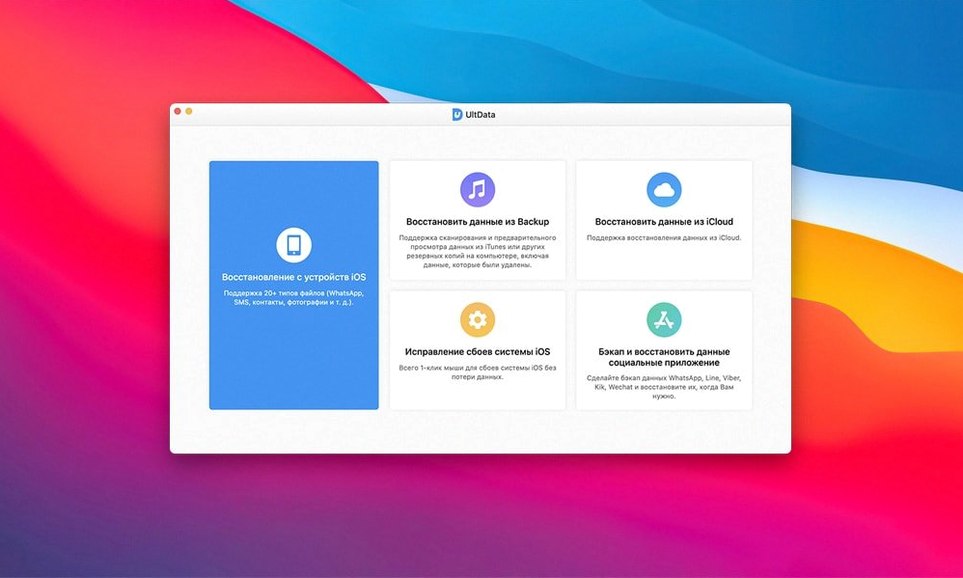
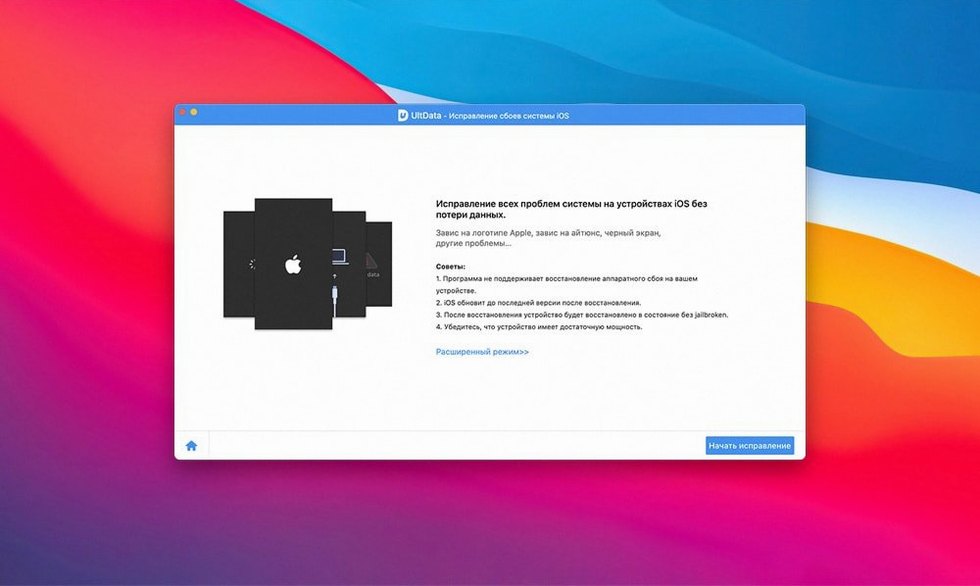
UltData runs on a wide range of Macs, stretching back to OS X 10.8. If you are on an Intel machine from the last decade or so, the 64-bit app will feel right at home. It does not require the latest macOS, though it runs smoothly on versions from 10.10 onward as well.
First recoveries to try
When you open the app and connect an iPhone, the sheer list of recoverable data can surprise you. Instead of scanning everything at once, pick a single category for your first test. Some good starting points include:
- Lost Safari history from a browsing session you closed too quickly.
- Deleted WhatsApp or WeChat threads you need for a specific address or date.
- Voice memos that disappeared after a rushed sync.
- FaceTime call records and voicemail you thought were gone for good.
The app also handles Kik, Viber, Tango, and LINE messages, along with Reminders, Notes, music, and iBook content. It works with a broad range of iPhones, from the iPhone 4 and 5 family through the 6s and SE, right up to the iPhone 11, 11 Pro, and 11 Pro Max. All iPad Air, mini, and Pro models are supported too.
A quiet recovery
Recovery is not always dramatic. Sometimes you get back a single voice memo you need for a project. Other times, a whole month of Reminders reappears, and you can finally tick off tasks you forgot you had. The key is to scan one data type at first and see what surfaces. Once you are comfortable, you can go deeper into the other categories. If you have just installed the app and are wondering where to begin, start small. Pick the one thing you miss most and let the software do its quiet work.
Trust prompts block device detection
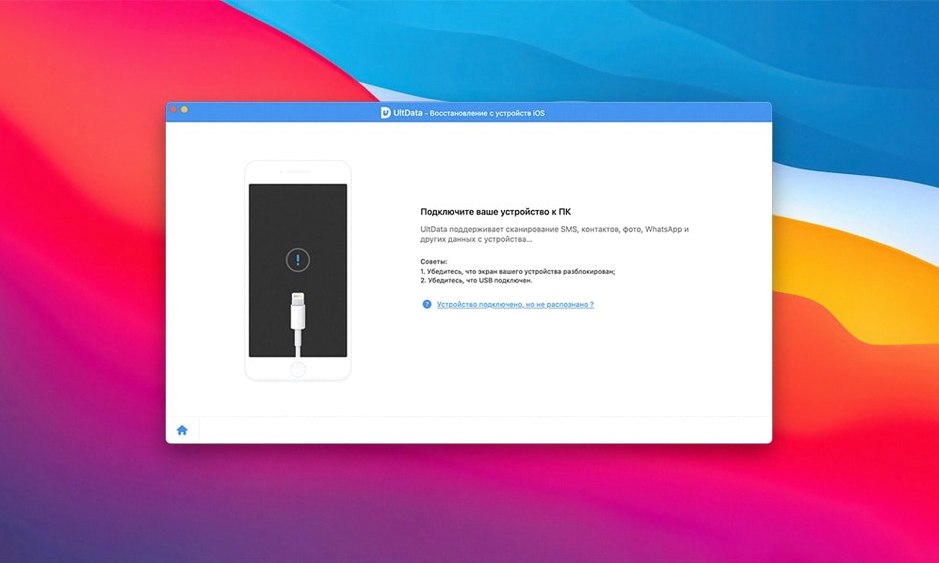
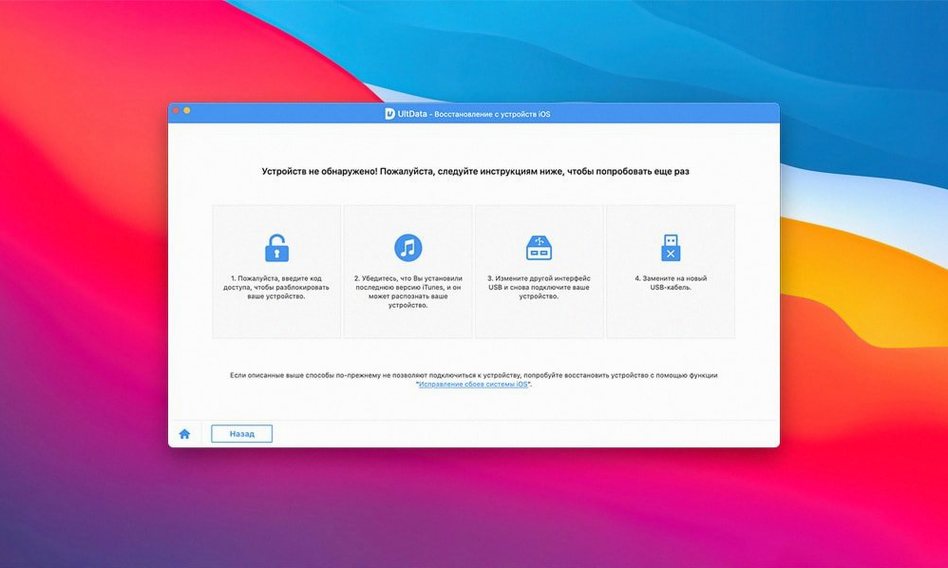
A few bumps tend to show up early, especially if you're new to iOS recovery tools. The most frequent one is the app not recognizing a connected iPhone right away. Nine times out of ten, it's a trust prompt on the device screen that got dismissed too quickly. Unlock the phone, reconnect the cable, and tap "Trust" when it appears — the Mac should pick it up within seconds.
Another hiccup crops up with partial scan results. If UltData finds fewer messages or photos than you expected, the backup may be incomplete. The app pulls from iTunes backups and device scans, so an outdated local backup can skew things. Try switching recovery modes — the three built-in options each target a different data source. The direct device scan often digs up items a stale backup misses.
Folks running older Intel Macs sometimes notice a slower scan when tackling large photo libraries. That's normal. Let it finish; canceling midway just means running it again later. On the software side, if you grabbed UltData for Mac via a Tenorshare UltData torrent or similar route, you might hit Gatekeeper friction. The install steps — mounting the disk image, opening Terminal for the Gatekeeper bypass with a quick Enter, then dragging the app to Applications — handle that cleanly. Once it's in place, the app launches without fuss.
Recover only lost iMessages after a bad restore
You plug in an iPhone SE that just lost a week of iMessages after a botched restore. The phone vibrates, you tap Trust, and UltData's main window lists the device immediately. Instead of scanning everything, you pick Messages from the category panel and click Scan. A progress bar fills slowly over four or five minutes — your Mac's fan might kick in if it's an older model.
When the scan finishes, a threaded view of conversations appears. Deleted threads sit in orange, existing ones in gray. You scroll to a group chat from last Tuesday, tick its checkbox, and hit Recover. The app asks for a destination folder; you point it to the desktop. Within seconds, the messages are back as an HTML file you can open in any browser. Encouraged, you run a second scan for Voice Memos, find three recordings you thought were lost after a failed iCloud sync, and save those too. The whole session takes under fifteen minutes, and you walk away with data that felt gone for good.
Recovery without an Apple Store run
This tool fits a particular kind of Mac user: someone who keeps their iPhone for a few years, runs into the occasional sync mishap, and wants a recovery route that doesn't require an Apple Store appointment. If you regularly juggle chats across WhatsApp, WeChat, LINE, and Viber, the app's deep support for third-party messengers becomes a quiet safety net.
Photographers who treat their iPhone as a secondary camera also benefit. The app's ability to pull app photos, app videos, and app documents means lost shots from lesser-known camera apps can resurface. It's equally handy for anyone who treats Voice Memos as a scratchpad — those recordings vanish easily during iOS updates, and UltData gives them a second chance. The broad device range, from an iPod touch 1st generation up through an iPhone 11 Pro Max, means households with mixed Apple devices can rely on a single tool. And because the Mac version plays nicely with OS X 10.8 onward, even an older Mac tucked in a corner stays useful as a recovery station when you need it.
- OS X 10.8 or later
- Intel 64-bit processor
Questions I actually get
Can UltData recover messages from apps like WhatsApp?
Yes, it supports recovering data from WhatsApp, WeChat, Kik, Viber, Tango, and LINE.
Which iPhones work with this version of UltData?
It works with models from the iPhone 4 up to the iPhone 11, 11 Pro, and 11 Pro Max, including the SE and 6s series.
Will it run on my older Mac?
Compatibility starts at OS X 10.8, and the app is a 64-bit Intel build, so it fits many older Intel Macs.
Porch talk 0
Come in or pull up a chair to leave a comment.
Nobody has pulled up a chair yet. If you used it on a real Saturday, say what the hour was.