
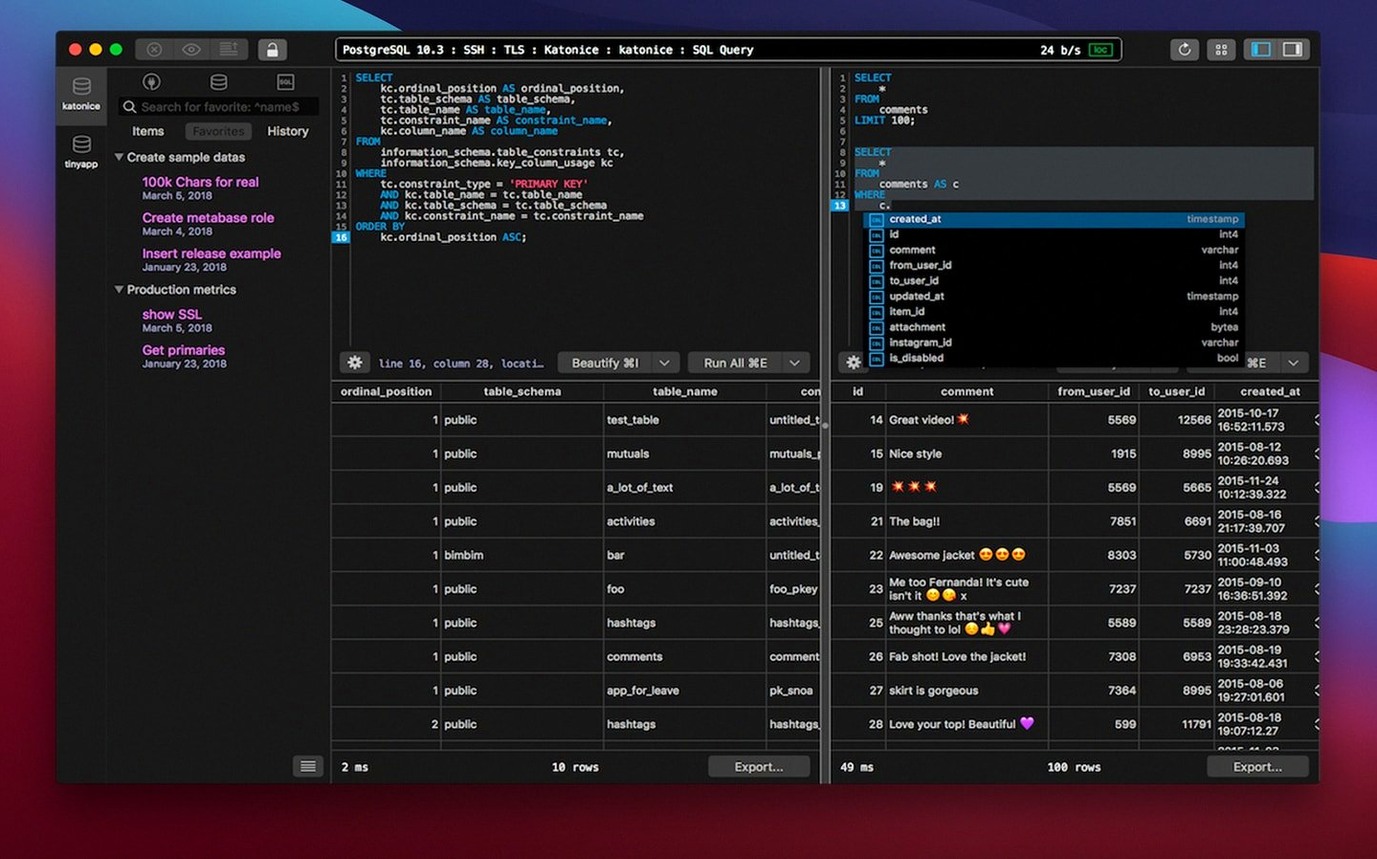
Over 200,000 lines of SQL can scroll past in a single session without the interface breaking a sweat. TablePlus is built for people who live in their databases, and the tools that matter most aren't the flashy ones — they're the quiet features that keep a workflow moving when a query gets complex. The app supports MySQL, PostgreSQL, SQLite, and Microsoft SQL Server right out of the box, with a native Apple Silicon build that feels quick even under heavy tab loads.
- Native TLS and libss encryption. Connection security isn't bolted on — it uses the system's own libraries for encrypting sessions to remote servers, which matters when you're juggling production credentials across multiple windows.
- Safe mode. A toggle that protects you from yourself. When it's on, any query that would alter data or drop a table gets blocked until you confirm you really meant it.
- Plugin and driver extensibility. Need a driver that isn't bundled? You can add it. The plugin architecture lets you wire in support for additional databases without waiting on a release cycle.
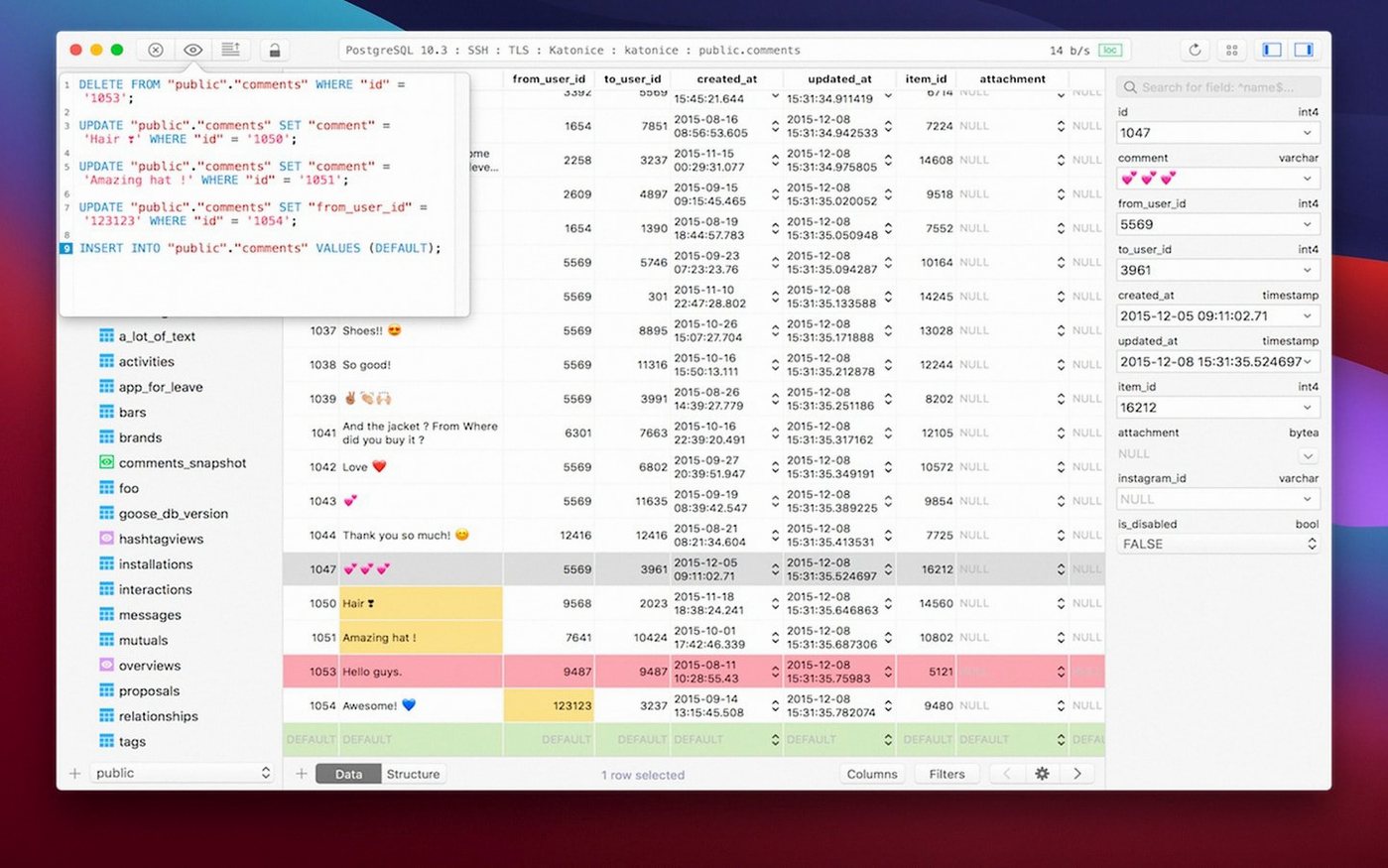
- Code preview. Before any structure change hits the server, you see the exact SQL that will run. No guessing what an index rebuild or column alteration actually does under the hood.
- Multiple tabs and windows. Run a long query on a staging server in one tab, compare schemas in another, and keep a production connection open in a separate window — all without the app getting in the way.
If you spend more time in a database client than a code editor, the things that earn their keep are reliability and fine-grained control. The dark mode is a nice touch for late nights, but it's the encryption defaults, the safety net, and the room to grow with plugins that'll matter six months in.
50,000 Rows Scroll Like a Text File
A database tool that stutters when a result set gets large chews through your concentration faster than a bad query plan. TablePlus doesn't do that. Opening a 50,000-row table feels about as heavy as opening a text file, and scrolling through it keeps pace with your trackpad without the beach ball making an appearance. Memory use sits politely in the background — I've had it running alongside Xcode, a browser with too many tabs, and a Docker daemon without the MacBook's fans ever waking up.
Connection handling is where the stability really shows. Dropping a VPN connection mid-session doesn't crash the app or freeze the window; you get a clean disconnect notice, and reconnecting is one click. The same holds for waking the Mac from sleep with a dozen database tabs open — sessions either reconnect quietly or wait for you to tap the refresh icon. No force-quit drama, no lost workspace.
Double-Click a Cell to Commit the Update
A few touches took me weeks to stumble onto, and they've saved more time than any feature list would suggest.
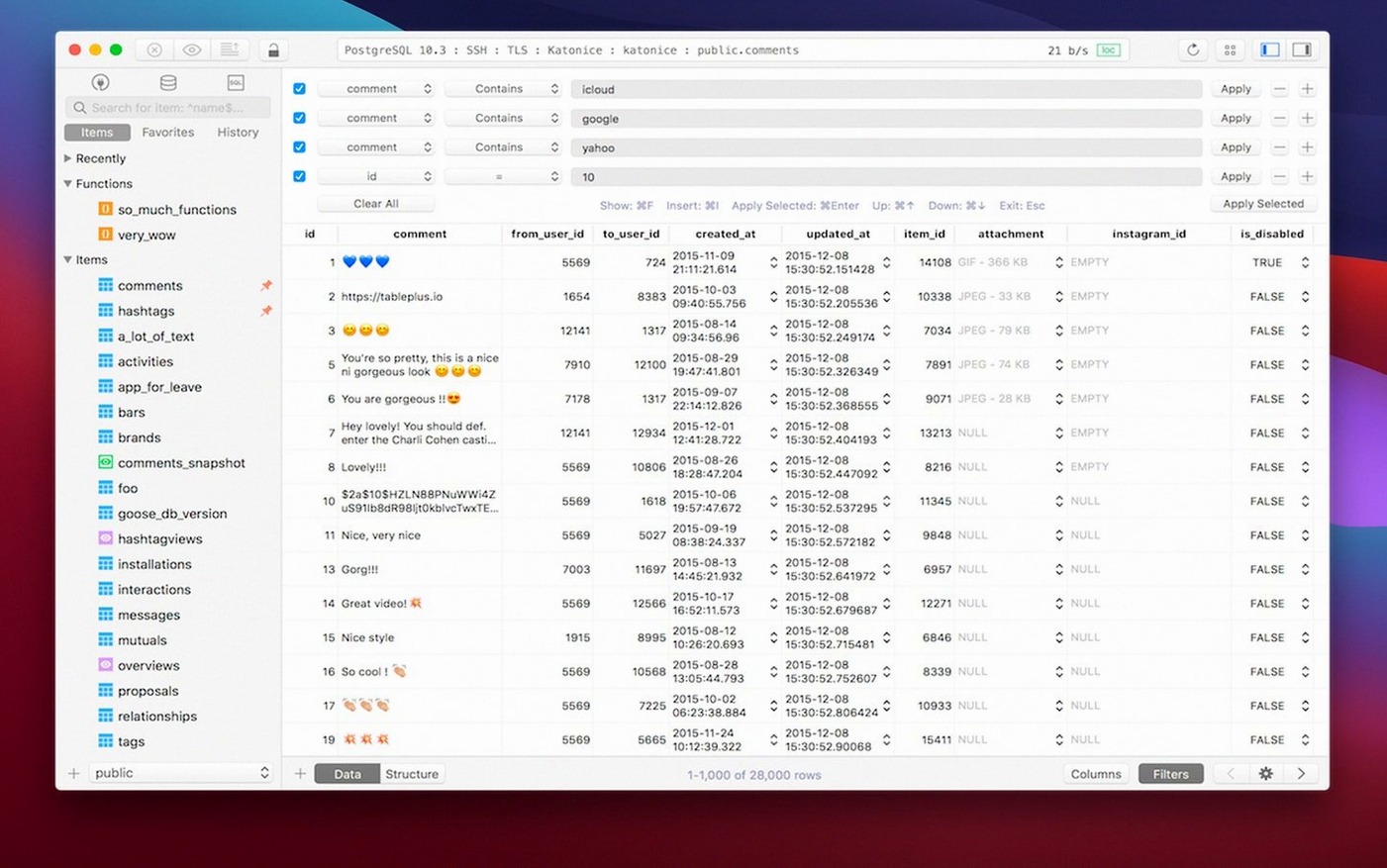
- Inline row editing. Double-click a cell, change the value, and the update statement runs the moment you press
Return. For quick cleanup work on lookup tables or configuration rows, it's faster than writing a manualUPDATE. - Filter bar shorthand. The filter input above any table view understands operators like
>,<, and!=without forcing you into a separate dialog. Typecreated_at > 2025and it narrows things down right there. - Clipboard-aware paste. Copy a row from a spreadsheet and paste it into a table — the column mapping is smart enough to line things up by order, even if the source had extra formatting gunk.
- Tab memory. Close the app with five database tabs open, and they all come back exactly where you left them, down to the active query in each editor. Nothing gets lost.
Flip On Safe Mode Before Touching Production
New installations reward a little setup before the real work starts. The first thing to do is flip on safe mode from the preferences — it's off by default, and one mistyped WHERE clause on a production server is all it takes to wish you'd toggled it sooner. The confirmation dialog it adds to destructive queries is brief enough not to annoy, and thorough enough to catch the kind of mistake you only make once.
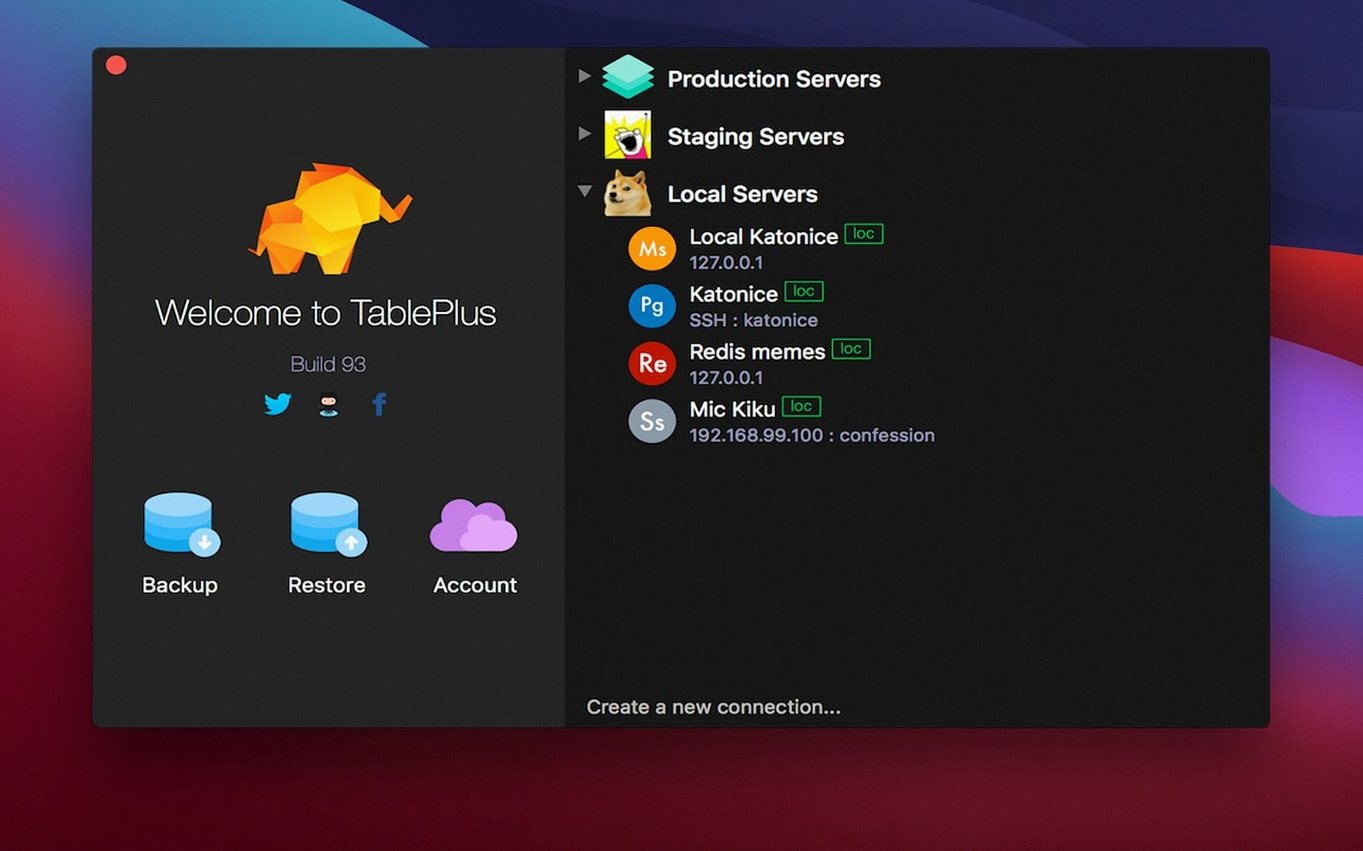
Next, spend ten minutes setting up your most-used connections and organizing them with color labels. A red stripe for production, green for staging, blue for local — the visual cue costs nothing and pays out every time you switch contexts quickly. The connection library supports folders too, so grouping by project or environment keeps a long list from becoming a hunt.
Finally, learn the three keyboard shortcuts that do the most lifting: Cmd + Return to run the current query, Cmd + Shift + R to run only the selected text, and Cmd + T for a fresh tab. After a day of intentional use, your hands stop leaving the keyboard for routine work, and that's where the native build's responsiveness combines with muscle memory to make the tool disappear — which is exactly what a database client is supposed to do.
- macOS 12.6 or later
- Apple Silicon or Intel Mac
Questions I actually get
Which databases does TablePlus support?
The documented set includes MySQL, PostgreSQL, SQLite, and Microsoft SQL Server, with the ability to add more through custom plugins and drivers.
Does TablePlus run on Apple Silicon Macs?
Yes, the developer confirms native Apple Silicon support, so it runs without Rosetta translation on M-series chips.
Porch talk 0
Come in or pull up a chair to leave a comment.
Nobody has pulled up a chair yet. If you used it on a real Saturday, say what the hour was.