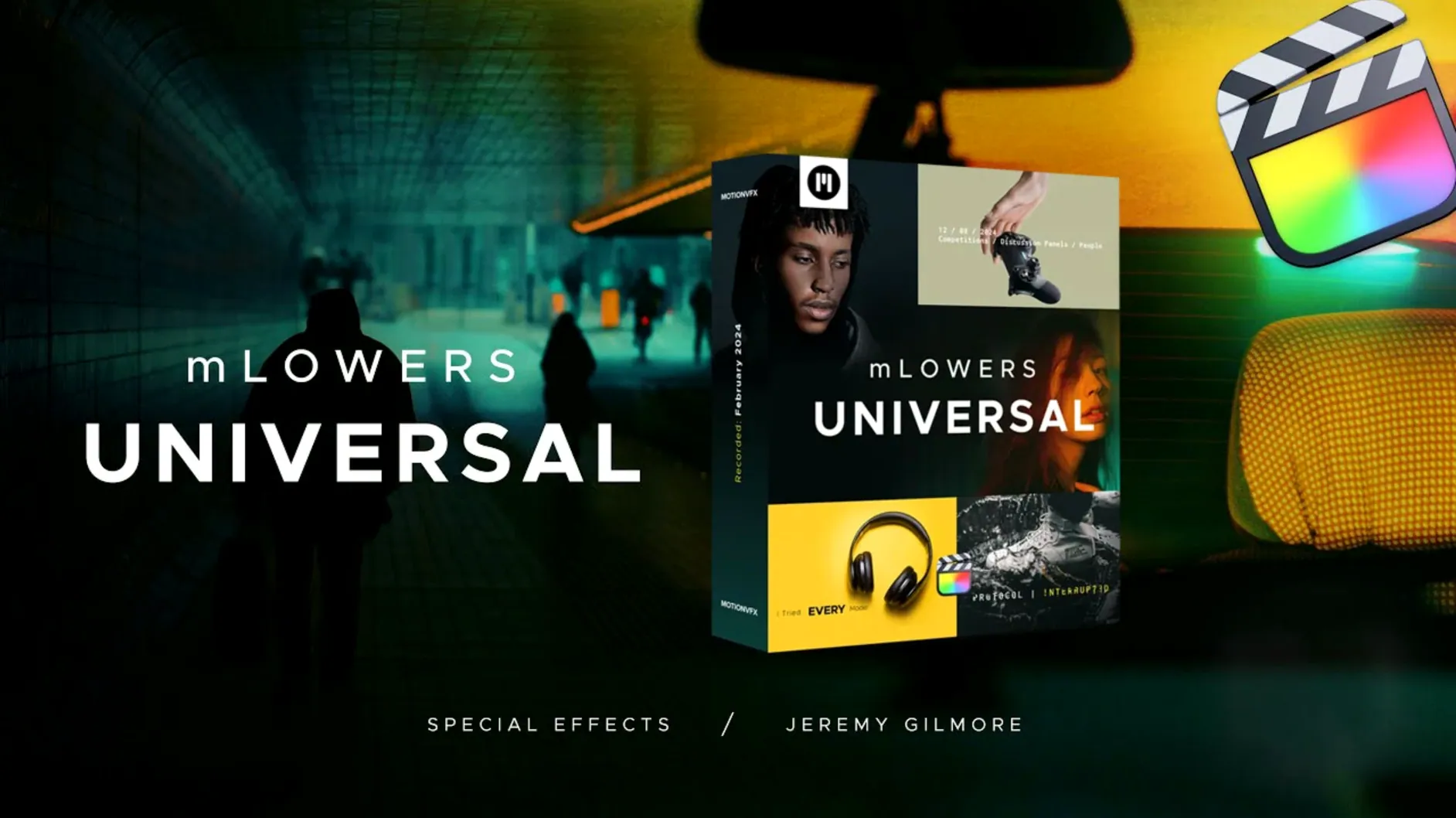
mLowers Universal is a collection of lower-third and title presets built for Final Cut Pro, mixing big-screen polish with the gritty energy of modern feeds. It hands you a range of styles without asking you to animate a single keyframe.
- Designs pulled from movie-screen compositions and retro broadcast looks
- Dynamic glitch-style effects that add controlled chaos to text reveals
- Social-media markers sized for cross-platform promotion right on screen
- Ready-to-use templates that drop directly into Final Cut Pro projects
Everything lives inside the Titles browser once installed, so you drag, adjust the text, and keep cutting. It suits editors who want a quick hit of character for interviews, YouTube outros, or event recaps without building graphics from scratch.
There’s a certain kind of quiet frustration that hits when you drag a shiny new title onto the timeline and it just sits there, stubbornly static. The fix is usually under your nose. Most templates in this pack are published as Title generators, not Generators, so the right browser tab matters — it’s the one with the big T icon. If you’ve copied the folder to the correct path and still see nothing, check that you’ve quit and relaunched Final Cut Pro completely. A simple window close won’t prompt the app to rescan the Motion Templates directory.
Stretching text bounds in glitch-style designs
A handful of the glitch-style lower thirds stretch text bounds more than you’d expect, especially with long names or two-line job titles. The on-screen controls let you drag the bounding box wider, but the real control is in the Inspector under the Title tab — look for a Scale or Width slider that ships with the effect. Another hiccup appears when you layer one of the retro designs over dark footage; the preset outlines can wash out. Dropping a subtle Color Curves adjustment on the clip below, or switching the title’s blend mode to Screen, brings the edge definition back in seconds.
If you’re working with vertical timelines for TikTok or Reels, the social-media markers keep their position relative to the 16:9 canvas by default. You’ll need to nudge the Y position manually for 9:16, but the text controls remain fully editable — no baking required. On Apple Silicon machines, performance stays smooth even with half a dozen instances stacked, though the glitch animations benefit from a quick render when playback stutters on older Intel hardware.
Drag-and-drop synergy with mTitle collections
mLowers Universal slides into a Final Cut Pro workflow without demanding a separate helper app, which keeps things straightforward. But it plays particularly well with two companions. Editors who also keep motionVFX’s mTitle collections around will recognize the same drag-and-drop logic, making it easy to mix cinematic lower thirds from one pack with clean broadcast titles from another. The preset naming conventions match across the catalog, so browsing feels consistent.
On the macOS side, the Motion Templates folder structure means these titles show up in Motion as editable projects too. If you’ve ever wanted to pick apart how a glitch transition was built or tweak the retro color palette at the source level, opening the generator in Motion gives you full access to the behavior rigs. That also unlocks the option to save your modified version as a new preset that appears right next to the originals in FCP’s Titles browser.
One less obvious win is how the social-media markers interact with Final Cut Pro’s Roles system. Tag the marker layer as a separate role — say, “Graphics” — and you can export a version without the handles when sharing to platforms that don’t need them, all from one timeline. It’s a small thing that saves a re-render later.
Tighter on-screen control responsiveness
Over the last few point updates, motionVFX tightened the on-screen control responsiveness across the entire mLowers line. Where early builds lagged slightly when dragging text fields directly in the viewer, the current iteration snaps to your cursor with no perceptible delay — something you notice quickly when positioning lower thirds over fast interview cuts. They also expanded the color-wheel range inside the Inspector for several of the high-tech designs, giving deeper saturation options without pushing the footage into banding territory.
The glitch effects picked up a subtle refinement in the randomization seed. Previously, repeated renders could produce slightly different flicker patterns; now the seed locks to the timeline position, so exports stay consistent across passes. That matters when a client asks for a tiny trim three days later and you don’t want the on-screen text acting differently than the approved version.
Test each category with placeholder text first
Give yourself fifteen minutes with the browser before you start a real project. Drop one of each category — movie-screen, glitch, high-tech, retro, social — onto a scratch timeline and type placeholder text. Watch how the longest design behaves with a single-word title and how the shortest handles three lines of credits. That quick tour tells you which templates stretch and which ones need tighter text editing, so you’re not discovering limits while a deadline looms.
One setting to check right away is the Build In / Build Out timing in the Inspector. Most presets default to around one second for the animation, which works for YouTube but feels sluggish on short-form vertical content. Halving those values to 0.5 seconds makes the pack far snappier for social clips without touching the core design. Save a few adjusted favorites to a Keyword Collection in FCP so the faster variants are always two clicks away.
Finally, keep the installation folder clean from the start. If you later add other MotionVFX packs — or come across a motionvfx download you want to try — separating each product into its own subfolder inside Titles prevents the browser from becoming a jumbled wall of thumbnails. A tidy template library makes the first drag of the day feel less like a scavenger hunt and more like pulling a tool from a well-organized rack.
- Requires Final Cut Pro
Questions I actually get
What kind of designs are included in mLowers Universal?
The pack covers movie-screen-inspired layouts, retro styles, dynamic glitch effects, and social-media markers for cross-platform use.
Does mLowers Universal work with any version of Final Cut Pro?
motionVFX states the pack is ready for Final Cut Pro projects, but check the developer's compatibility notes for your specific macOS and FCP version.
Where do I install the mLowers Universal templates?
Place the files inside /Users/Your Name/Movies/Motion Templates/Titles, then restart Final Cut Pro to see them in the Titles browser.
Porch talk 0
Come in or pull up a chair to leave a comment.
Nobody has pulled up a chair yet. If you used it on a real Saturday, say what the hour was.