

One right-click menu, but it ships with a fixed set of actions. MouseBoost Pro 5.2.8 works from a different idea—that the menu should bend around the work you actually do, whether that's copying a file path, jumping to a favorite folder, or generating an MD5 checksum. The new update adds a few thoughtful touches, particularly a quick preview for folder trees and automatic OCR copy, while keeping the core toolkit steady.
Customizable Finder Menu Stays Front and Center
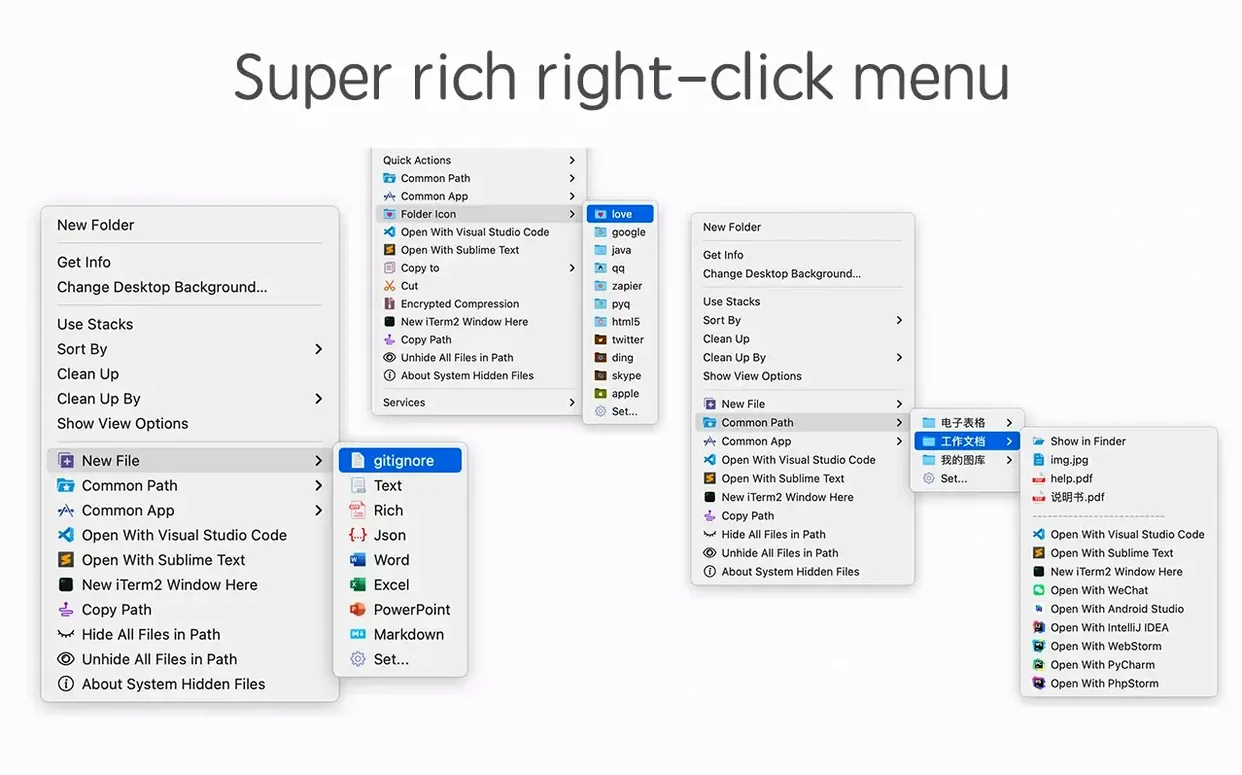
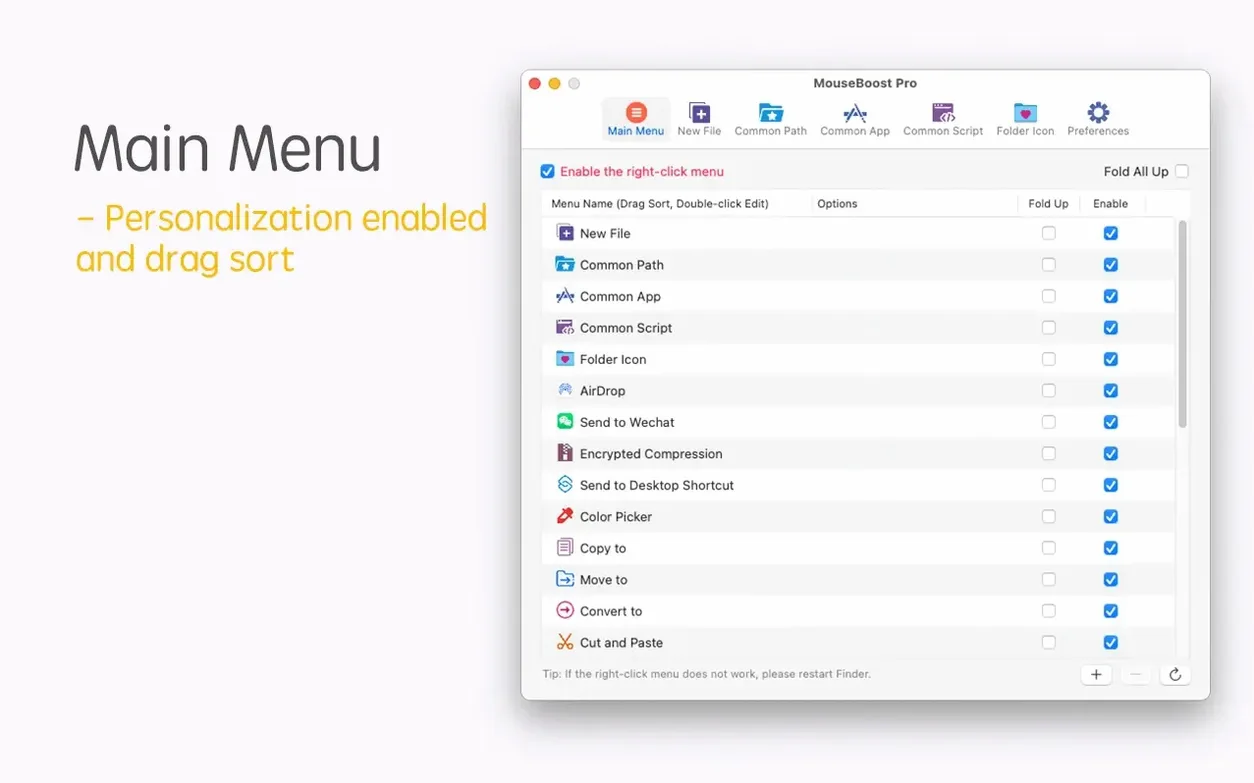
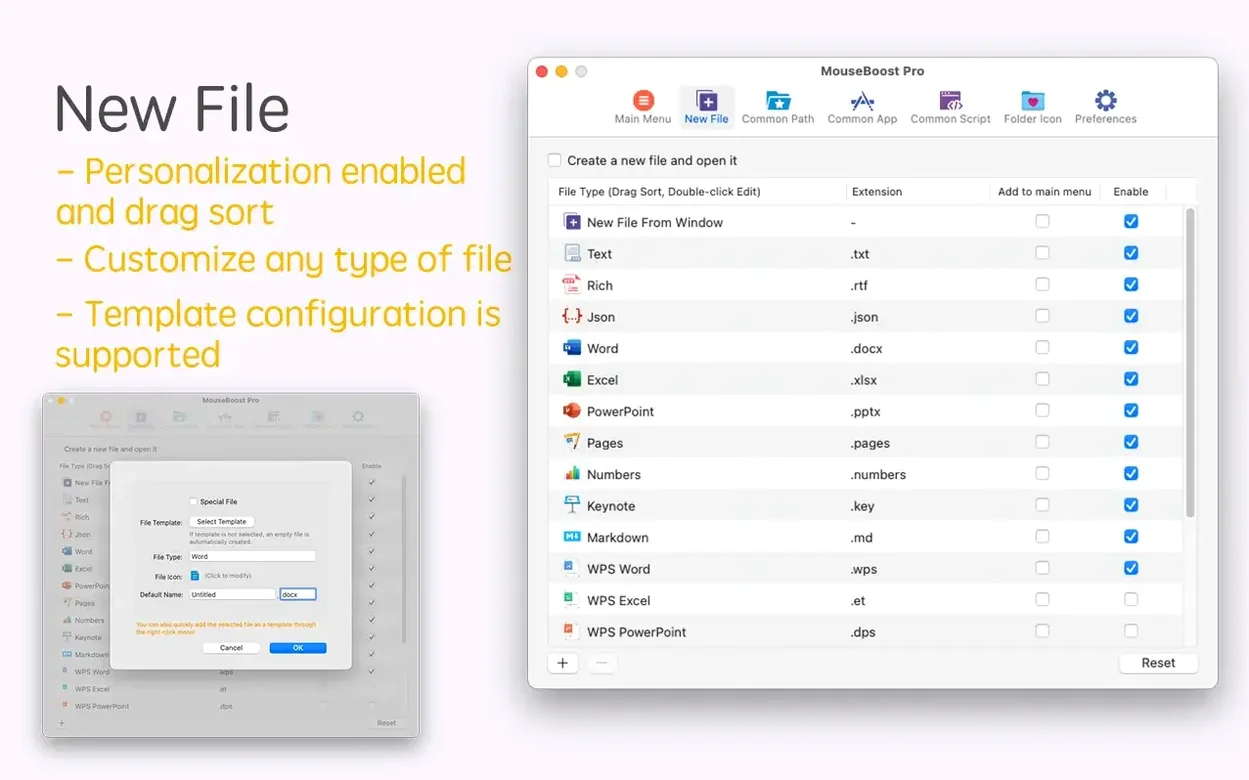
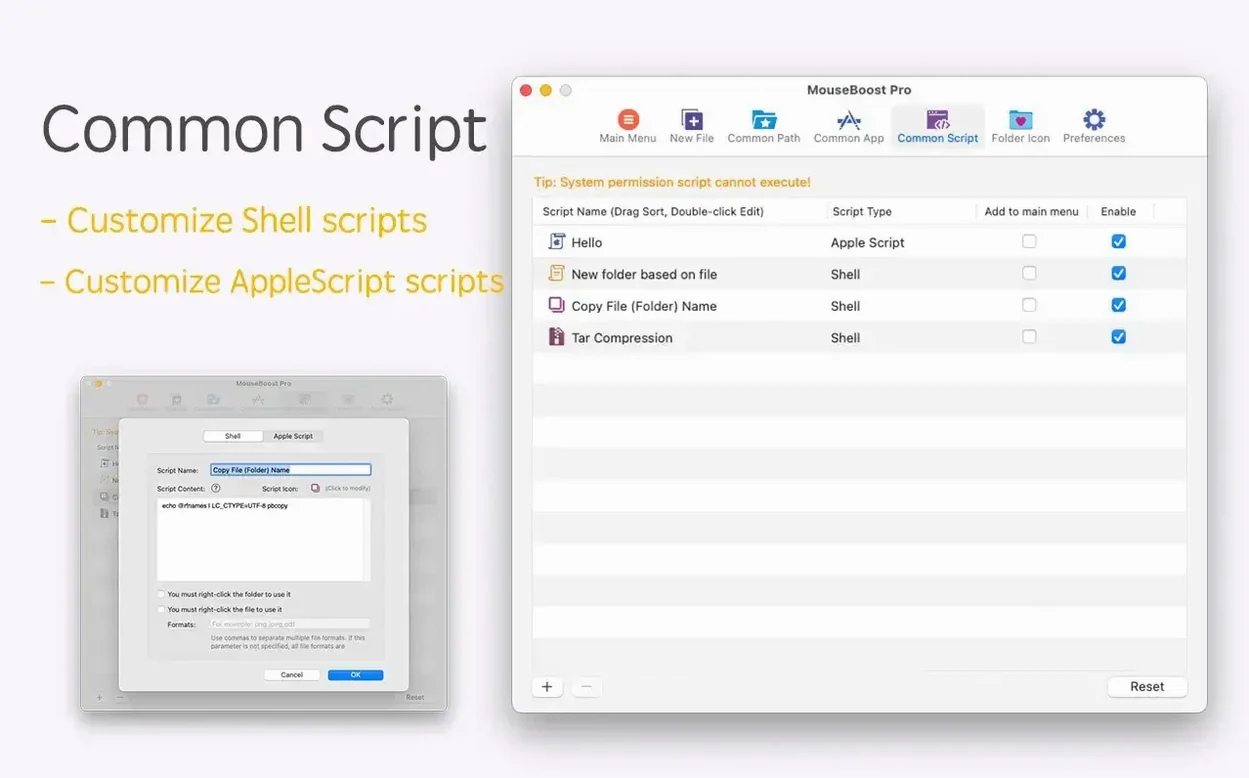
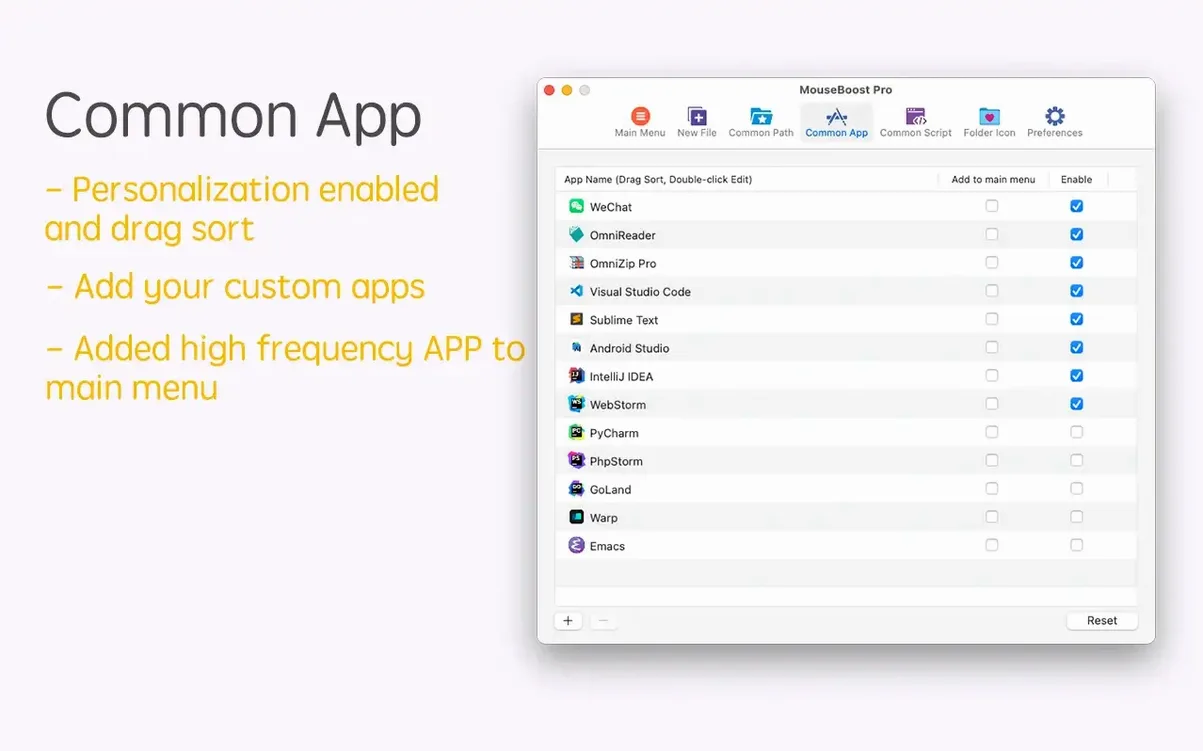
The app still hangs its hat on a customizable Finder extension. You can rearrange every command so the actions you reach for most sit right under your cursor. It continues to handle the small-but-constant tasks well: permanent file deletion, showing and hiding specified files, creating custom file types on the spot, and copying the current path. Opening a directory directly in iTerm2, VSCode, Sublime Text, or Emacs is just a click away. The batch renaming tools remain, now a bit smarter with the ability to insert text at a specific position and pull new names from a list. Both Apple Silicon and 64-bit Intel Macs are supported, going back to OS X 10.11.
Folder Tree Previews and Auto-Copy Text Arrive
This release focuses on visibility and refinement. A new quick preview for folder trees lets you glance at a directory's structure without fully expanding it. There is an aspect ratio selection tool and an option to automatically copy recognized text after an OCR scan. The scrolling capture feature got a tune-up, and a maximum depth setting now keeps file and directory trees from sprawling too wide. Alongside the batch renaming improvements, the developer also fixed a handful of known issues that had been hanging around. If your Finder right-click menu feels a little too quiet, this version fills it out without getting in the way.
The first days with MouseBoost Pro
Install it, launch it, and the right-click menu immediately grows about thirty items longer. That can feel like walking into a workshop where every tool is laid out on the same bench. Give yourself a quiet ten minutes on day one to pair the menu down. Open the preferences and uncheck everything you will not use this week—you can always turn things back on later. On day two, notice which actions you actually reached for and move them higher in the sort order. By day three you will have a menu that feels less like a catalogue and more like a reflex.
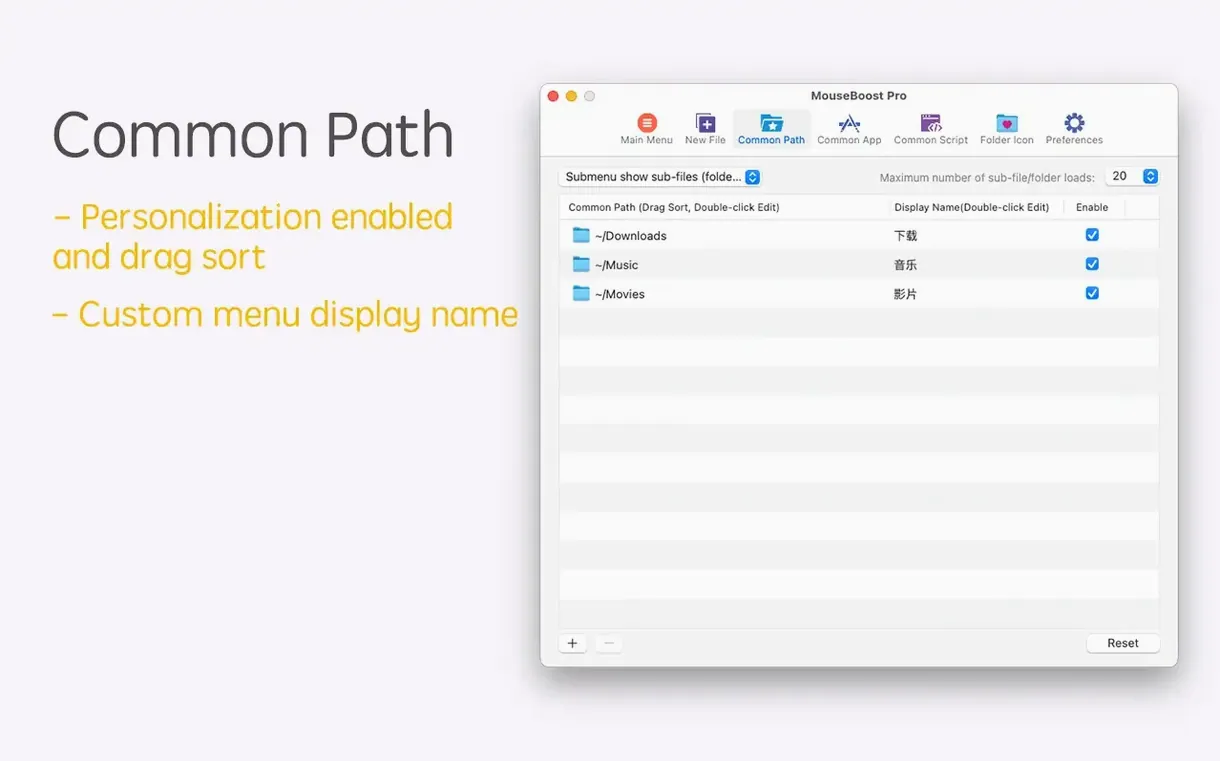
A couple of other small moves help early on. Set up two or three favorite folders right away; the open a favorite folder command saves more clicks than you expect, especially if you nest project directories deep. If you work in Terminal-style apps, pick your launcher—iTerm2, VSCode, Sublime Text, or Emacs—and test the “open in…” action once so muscle memory starts forming. And try the copy current path command on a file you need to reference in a script or a chat window. That single action tends to sell people on keeping mouseboost pro around.
Right-Click Paths, Checksums, and Slack Pastes
Say you start the morning inside a folder of client assets. You right-click a PNG, copy its path, and paste it into a Slack thread. A few minutes later you need a quick SHA256 checksum for a downloaded zip; a right-click and the hash lands on your clipboard. Then you create a new Markdown file on the spot without opening an editor—just the custom file-type action you defined last week. Midday, you right-click a folder and jump straight into iTerm2 at that directory to run a build script. Later, a batch of screenshots needs renaming: you highlight them, pull up the batch rename tool, and insert a date string at a fixed position while pulling the base names from a plain-text list. No Finder window hopping, no extra launches. The menu shrinks the distance between thought and action.
Workflow: prepping a design handoff folder
Here is a concrete task that leans on several pieces of mouseboost pro at once. You need to hand a developer a clean folder of exported icons, a text file listing their SHA256 checksums, and a compressed archive of the whole thing.
Start by selecting the folder of exported SVGs and PDFs. Right-click and choose file information to pull checksums for every file at once; the tool calculates MD5, SHA1, and SHA256 in a single pass. Copy the SHA256 column into a new text file—create that file right in the Finder window using a custom new-file action so it lands in the same directory. Name it checksums.txt. Next, right-click the parent folder, choose the encrypted compression option, and set a password. The archive appears alongside the original. Finally, hide the working SVGs folder so the developer sees only the archive and the checksum file. The whole sequence—hash, create, compress, hide—stays inside Finder, never touches a terminal, and leaves you with a tidy handoff package in under a minute. If you work this way often, sorting those four commands into a tight group near the top of the menu makes the flow nearly automatic.
Version 5.2.8 adds a few quality-of-life improvements and tidies things up:
- Quick preview for folder trees.
- Aspect ratio selection and automatic OCR copy.
- Improved scrolling capture.
- Insert text at a specific position during batch renaming.
- Rename-from-list support in batch renaming.
- Maximum depth setting for file and directory trees.
- Fixed known issues.
- macOS 10.11 or later
- Apple Silicon or Intel 64-bit processor
Porch talk 0
Come in or pull up a chair to leave a comment.
Nobody has pulled up a chair yet. If you used it on a real Saturday, say what the hour was.
More for the same hour
Everything in Mac Apps
 Mountain Duck
5.3.2 Mac Apps
187 MB
Mountain Duck
5.3.2 Mac Apps
187 MB

 Movavi Screen Recorder
23.1.1 Mac Apps
110 MB
Movavi Screen Recorder
23.1.1 Mac Apps
110 MB
 Motionvfx - mTitle Cinematic
Mac Apps
5 MB
Motionvfx - mTitle Cinematic
Mac Apps
5 MB

 Movavi Video Converter
22.5.0 Mac Apps
79 MB
Movavi Video Converter
22.5.0 Mac Apps
79 MB
 MotionVFX mModules
Mac Apps
5 MB
MotionVFX mModules
Mac Apps
5 MB

 Movavi Video Editor
22.4.1 Mac Apps
126 MB
Movavi Video Editor
22.4.1 Mac Apps
126 MB

 Movavi Video Suite
22.4.1 Mac Apps
294 MB
Movavi Video Suite
22.4.1 Mac Apps
294 MB
 MotionVFX - mLowers Universal for FCP
Mac Apps
71 MB
MotionVFX - mLowers Universal for FCP
Mac Apps
71 MB