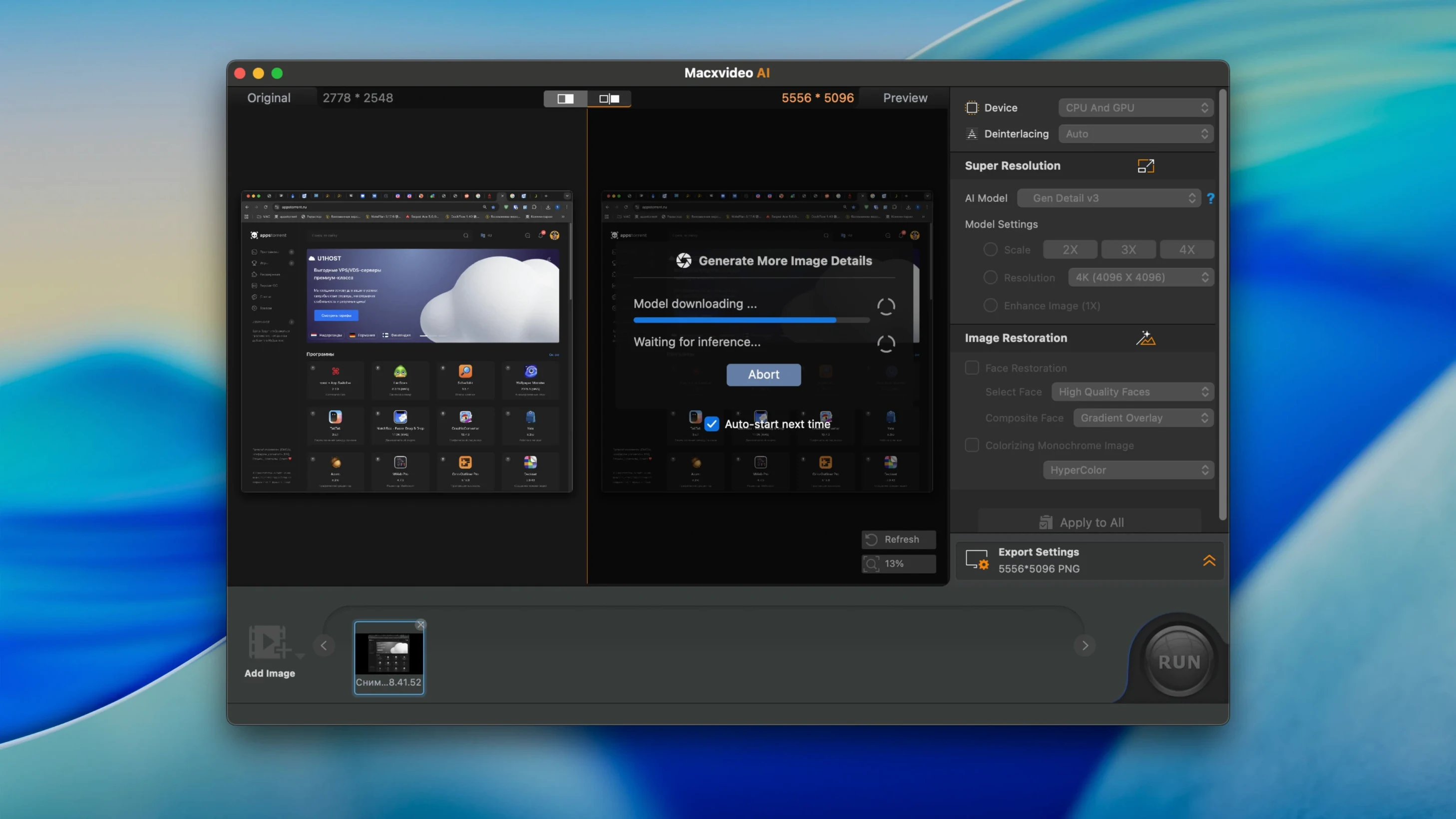
If you have spent time in HandBrake dialing in x265 parameters, you know the feeling when a one-click app hides the controls you actually want. Macxvideo AI comes from a family of conversion tools, but version 3.15 quietly added something that changes how it fits into a careful workflow: a Keep Original Colors option tucked inside the AI Super Resolution module. It is the kind of detail that rewards a second look.
When you need the pixels but not the shift
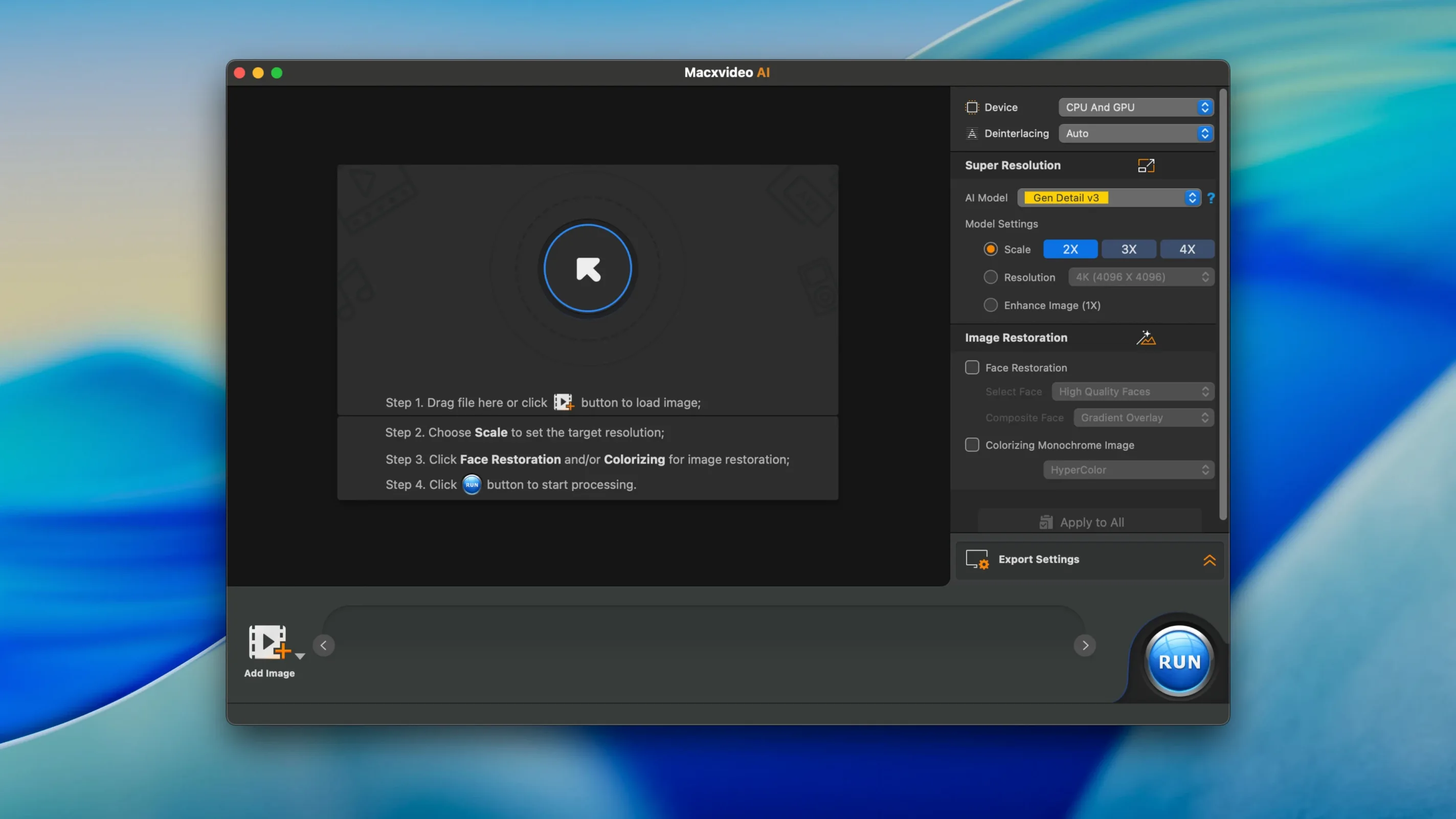
AI upscaling tends to nudge saturation and contrast, even when it gets the details right. With Keep Original Colors switched on, Macxvideo AI can push 1080p footage toward 4K or pull a still photograph to 10K without rewriting the palette you already approved. The same Video AI module handles denoising and frame interpolation, and it leans on GPU acceleration for 4K, 8K, and 3D sources — practical when you are processing a batch of video files or a folder of RAW stills overnight. Under the hood, version 3.16 moved the Python environment to 3.11, which matters if you have ever chased a library conflict in your own scripts.
Conversion that stays out of the way
The format list reads like a checklist for a media server: MP4, HEVC, AV1, MOV, multi-track MKV, and AAC, with batch processing that respects folder structures. Screen recording tops out at 4K, which is enough to capture a timeline playback without introducing its own scaling artifacts. You will not find a wizard holding your hand at every step, and that is the point — the deeper controls are there when you need them, and the app trusts you to decide when color fidelity matters more than a one-click preset.
A wedding videographer I know keeps a folder called “church candlelight” — ceremony footage shot at ISO 4000 on an aging DSLR. The grain is heavy, the autofocus hunted twice, and the color temperature is already where the couple wants it. She runs those clips through the Video AI module with denoising set to medium and Keep Original Colors on, then batch-converts the ceremony, speeches, and first dance into HEVC for the USB she hands over. The upscaling step is not about making 1080p look like native 4K; it is about giving the compression enough headroom so the grain does not turn into blocky mush. A few people hunting for a macxvideo ai for mac free download end up surprised that the color-respecting path is already built in.
Compare Keep Original Colors on vs. off on familiar faces
Start with a short clip you already know well — something with both fine texture and a face. Run it through AI Super Resolution at 2x with Keep Original Colors on, then off, and compare the two exports side by side in QuickTime before you touch anything else. That ten-minute exercise teaches you more about the enhancement engine than a spec sheet ever will.
After that, set up two batch queues. One for straight format conversion with GPU acceleration turned on, and a second for AI enhancement jobs that you let run while you step away. The app respects folder structures, so point it at a test folder first — not your primary media drive — while you learn which presets suit your footage. Long-term users of what some still call macxvideo ai tend to treat the denoising slider as a per-clip decision rather than a global setting, especially when mixing daylight and low-light sources in the same batch.
Version 3.16 lands with macOS 27 support and a few practical additions. Ready-to-use conversion options are now available for iPhone 18 Pro, iPhone 18 Pro Max, and iPhone Duo, and the Python environment has moved to 3.11.
- macOS 10.15 or later
- Apple Silicon and Intel Macs
Questions I actually get
What does the Keep Original Colors option do in Macxvideo AI?
It preserves the original color profile during AI Super Resolution upscaling, so you get sharper detail without the saturation or contrast shifts that some enhancement models introduce.
Porch talk 0
Come in or pull up a chair to leave a comment.
Nobody has pulled up a chair yet. If you used it on a real Saturday, say what the hour was.