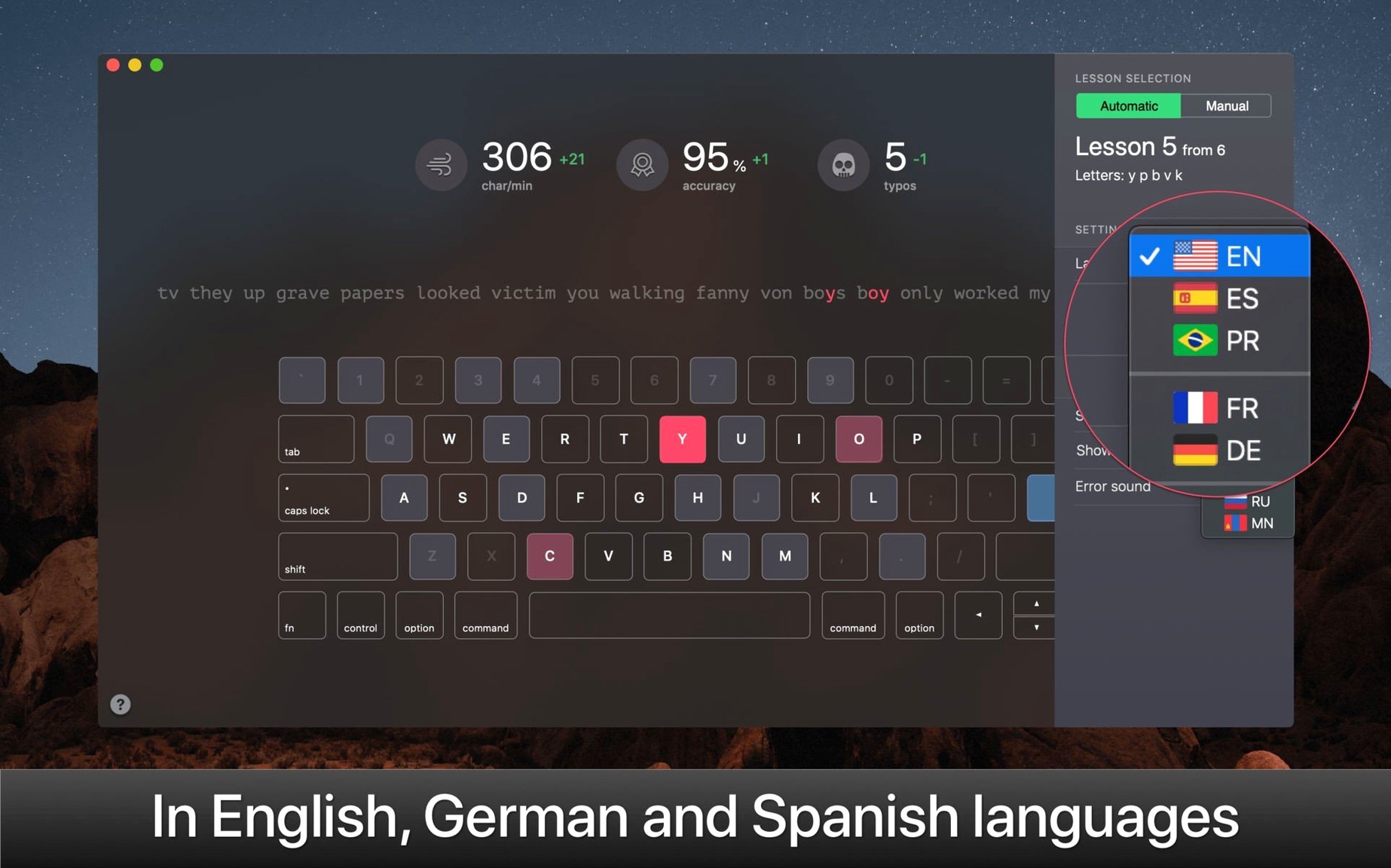
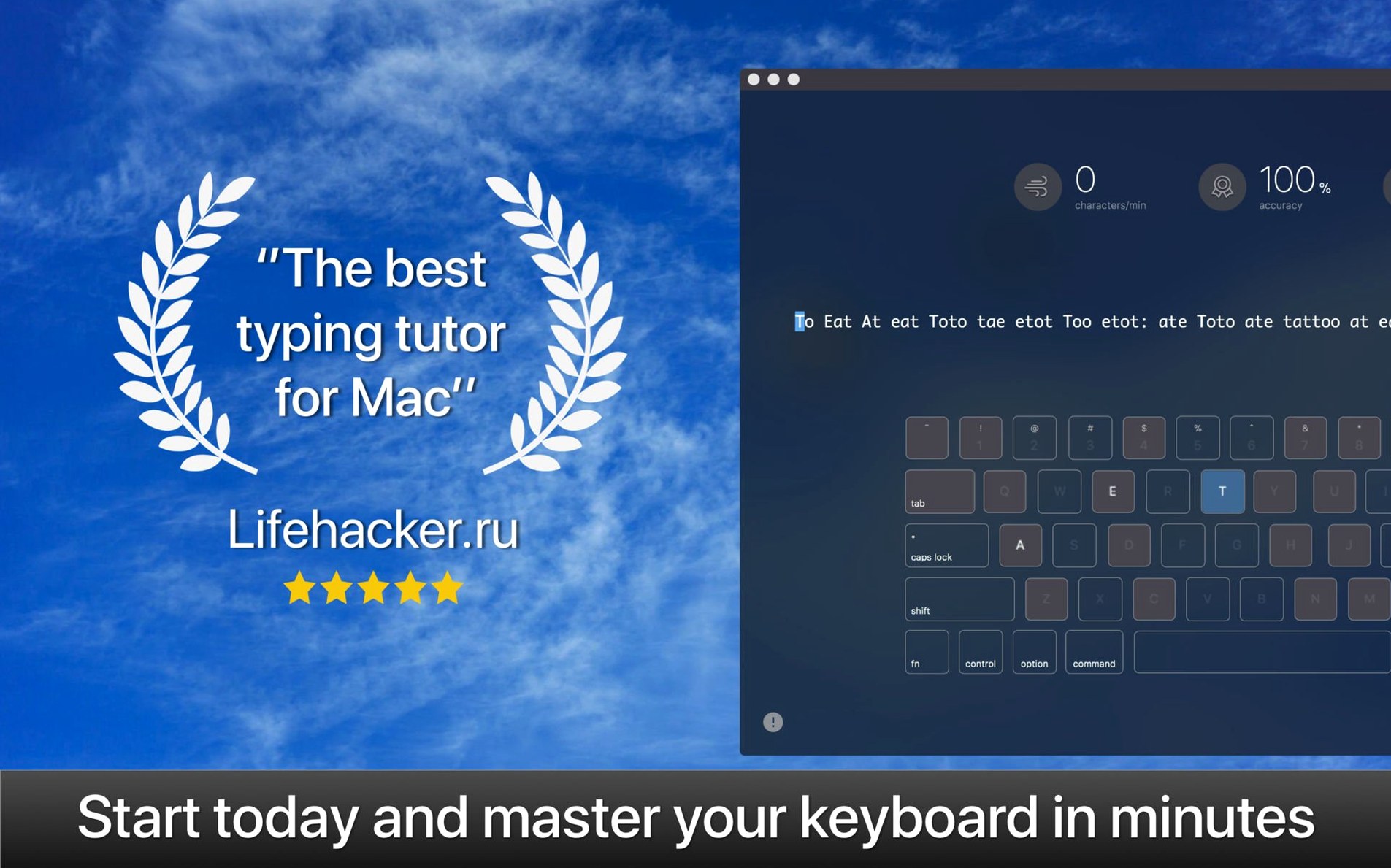
Version 2.9.31 arrives updated for macOS 27 Golden Gate, and the changes point toward comfort during longer sessions. The practice text now flows across two lines in a larger font, which feels closer to reading real prose than staring at a single cramped line. Key hints and finger highlights pop up on the on-screen keyboard as you type, and if you have a mechanical keyboard connected, you will hear a satisfying click with each keystroke.
| Detail | Value |
|---|---|
| Current Version | 2.9.31 |
| macOS Required | macOS 11 or later |
| Architecture | Intel & Apple Silicon |
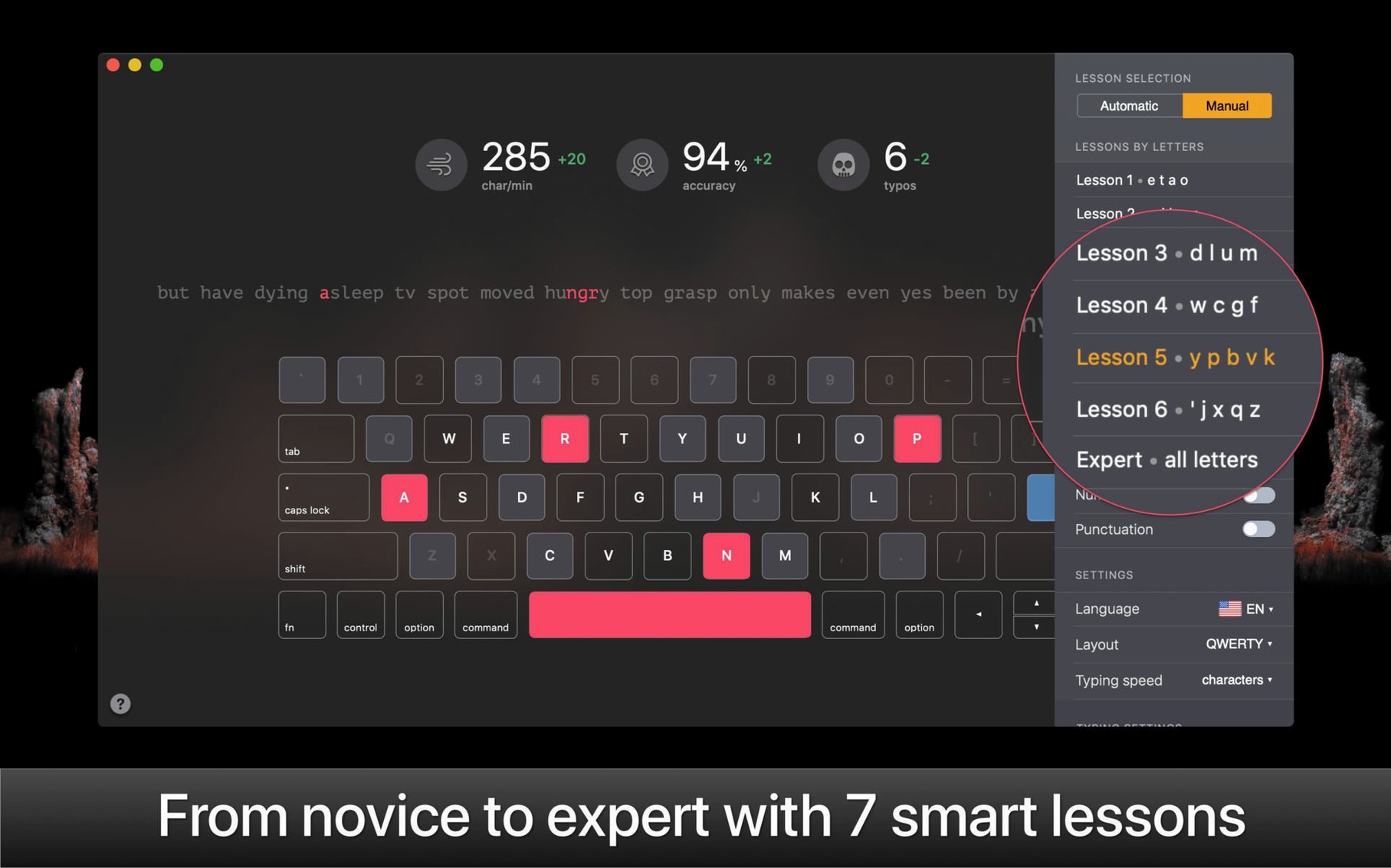
Beyond the basics, KeyKey rewards someone who has moved past home-row drills. The all-letters mode is where you can isolate trouble spots—spend ten minutes on nothing but punctuation marks, accented characters, or the number row until the hesitation disappears. The lesson line adapts to your current typing level, so you are not stuck repeating what you already know. With built-in layouts for Russian, Ukrainian, French, German, Greek, Mongolian, and several others, it handles Cyrillic and diacritical marks without sending anything to the cloud. Everything runs locally on the Mac, which keeps the latency low and your practice data private. If you are ready to refine accuracy on the symbols that slow you down, this is the deep end of the pool.
A session that feels like a conversation
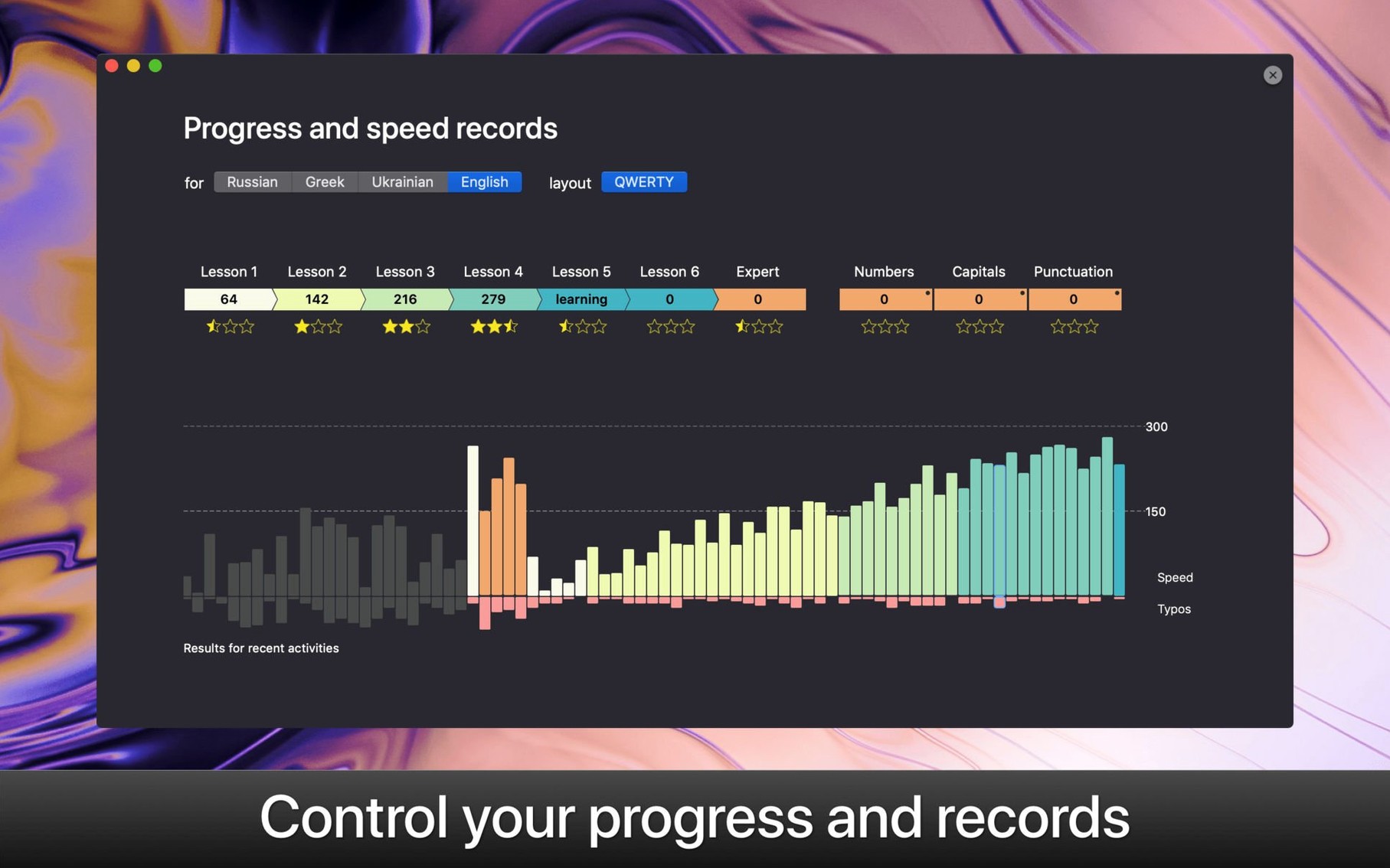
You open KeyKey after a long day of pecking at email, and it remembers exactly where you left off. No login, no syncing wait—just the lesson line waiting on screen. The first few words are gentle, the kind you can type without thinking. Then a capital letter slips in, maybe a Greek lambda if you switched layouts yesterday, and the on-screen keyboard lights up the finger that should strike it. A soft click comes through the mechanical keys. You glance at the hint, correct the motion, and keep going. Five minutes pass. The line lengthens. Punctuation creeps in—an em dash, a semicolon—each one highlighted on the virtual keyboard before your fingers land. By the ten‑minute mark the phrases feel like sentences pulled from a book, and you are reading ahead while your hands do the work. That is the moment KeyKey is built for: when the tutor fades into the background and you are just typing, faster than last week.
From frustration to fluency with the number row
Typing symbols and digits without looking is where most self‑taught typists hit a wall. Here is a workflow that turns the number row from a blind reach into muscle memory.
Launch KeyKey and open the all‑letters mode. Uncheck every character set except numbers and the symbols on the top row—!, @, #, and so on. The lesson line now serves only digits and symbols, nothing else. Set aside fifteen minutes with no distractions.
Start slow. The first line throws single digits at you: 4 7 2 9 1. Watch the on‑screen keyboard; the finger hints glow for each number. Do not look down, even when you miss. The app waits, highlights the correct key, and you correct without breaking rhythm. After a few lines, shift‑modifier pairs appear—$, &, (. The click sound from a mechanical board gives tactile feedback that matches the visual hint. You start associating the sound with the motion.
Around minute eight, the line mixes digits with lowercase letters you already know cold. This is where the real adaptation happens. Your brain has to switch contexts mid‑word: three letters, a percent sign, two more letters. The first attempts feel clumsy, but the lesson line adjusts its difficulty based on your accuracy, so it does not push past what you can handle. By the end of the session you have drilled the number row a hundred times without ever seeing a full sentence. Repeat the routine three evenings in a row, and the top row stops being foreign territory.
Version 2.9.31 brings KeyKey up to date for macOS 27 Golden Gate and adds a handful of quality-of-life improvements:
- Practice text now spans two lines and uses a larger font for easier reading.
- Key hints and finger hints are highlighted on the on-screen keyboard while you type.
- A click sound now plays when typing on a mechanical keyboard.
- macOS 11 or later
- Apple Silicon and Intel 64-bit Macs
Questions I actually get
Does KeyKey teach capital letters and punctuation?
Yes. The app covers both lowercase and uppercase letters along with punctuation marks, and you can isolate those symbols in the all-letters mode.
What keyboard layouts are built into the app?
KeyKey includes Russian, Ukrainian, English, Spanish, Portuguese, French, Italian, German, Turkish, Greek, and Mongolian layouts.
Does the app need an internet connection to work?
No, KeyKey runs entirely on your Mac and does not require an internet connection for lessons or tracking.
Porch talk 0
Come in or pull up a chair to leave a comment.
Nobody has pulled up a chair yet. If you used it on a real Saturday, say what the hour was.