You're finishing a batch of product photos, and the last step is always the same: resize, add a watermark, bump the contrast a touch, then export to a client folder and a cloud backup. Doing this twenty times over is a drain. Keyboard Maestro 11.0.4 is the kind of tool that handles that chain and far more—it is a deep macro automation utility for macOS that rewards people who want to build their own tools.
| Developer | Current Version |
|---|---|
| Stairways Software Pty Ltd. | 11.0.4 |
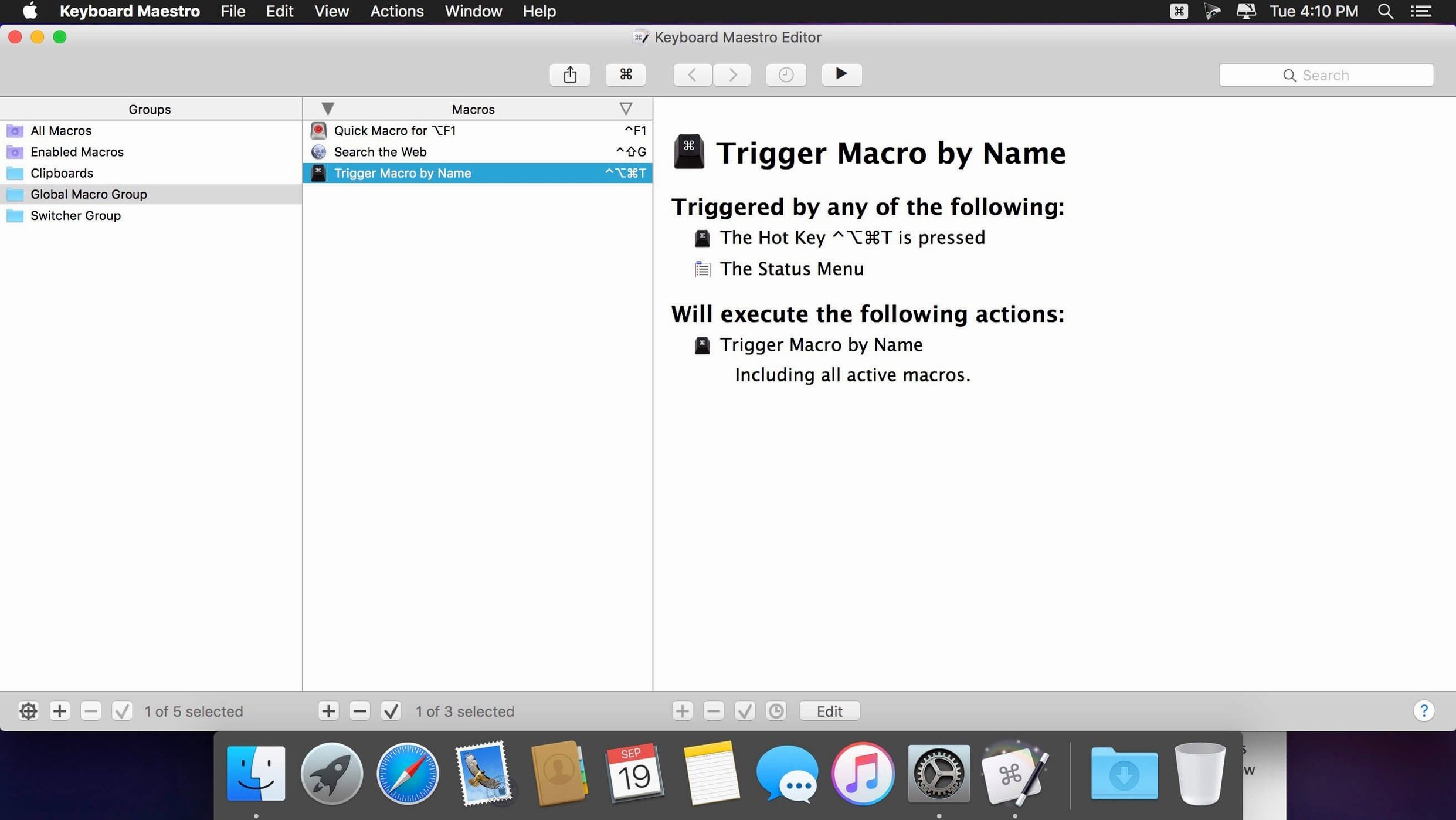
Beyond simple text expansion or shortcut triggers, experienced users will appreciate how this version handles logic and visual feedback. The Switch/Case actions now display which entries are currently true or would execute, making complex branching workflows much easier to debug without guesswork. The clipboard tools go deep, letting you filter entries and work with a history of multiple clippings, which is a real timesaver when you are pulling bits from different sources. For OCR tasks, the app now supports Apple Text Recognition in its conditions, so you can build macros that react to specific text on screen. It can automate across apps and websites, trigger actions via keyboard shortcuts, open specific documents, and even work with email to move data or generate reports. This is not a piece of software you outgrow; it is the one you grow into.
Writers Juggling Style Guides Run It All Day
Not everyone needs a macro engine this deep. The people who keep Keyboard Maestro running all day tend to fall into a few camps. Writers and editors who juggle multiple style guides, submission formats, and research notes lean on the text‑expansion and clipboard‑filtering features constantly. Photographers and designers build repeatable export chains that touch several applications—Lightroom to Photoshop to a client folder, with file naming rules baked in. Developers use it to run build scripts, format code, and reposition their editor and terminal windows into a precise layout with a single keystroke. Even folks in audio production find a home here; a quick search for ableton keyboard notes often leads to macros that trigger complex MIDI routing setups or recall window configurations across a multi‑monitor rig. If your work involves doing the same sequence of clicks, keystrokes, or menu selections more than twice a day, you are squarely in the target audience.
It also clicks with anyone who has tried simpler launchers or text expanders and hit a wall. Those tools handle one action well. Keyboard Maestro chains dozens of actions into a single trigger, and the 11.0.4 update makes debugging those chains far less opaque. The new tool tips in the Macro Debugger window alone save a ton of head‑scratching when a variable passes through five conditional branches before reaching the action that matters.
A Practical Workflow: Renaming and Tagging a Batch of Field Recordings
Imagine you just got back from a location recording session with a dozen WAV files named something like TASCAM_001.WAV. They need to land in a project folder, get renamed with the date and scene number, have their metadata tags filled in, and end up in your editing template. Doing this manually in Finder and your DAW eats up the first twenty minutes of editing. A single Keyboard Maestro macro can handle every step.
You start by selecting all the files in Finder. The macro trigger is a hotkey—say, Control‑Option‑R. The first action grabs the selected file paths and feeds them into a For Each loop. Inside the loop, a Rename File action uses a token like %Variable%SceneName%_%ICUDateTimeShort% to construct the new filename, pulling the scene name from a prompt that pops up once at the beginning. Next, an AppleScript action talks to your audio editor to set the BWF description and originator fields. After the loop finishes, a Move File action sends the batch to your project’s Audio folder, and a final Open Document action loads the first file into your template session. The whole thing takes under three seconds, and you never touched a Finder dialog or typed a filename by hand. The macro is editable later, so when the post house changes their naming convention, you tweak the date format in one place and move on.
Small Conveniences Worth Digging For
Some of the best parts of Keyboard Maestro are not on the feature list; they are the small touches you stumble into after a few weeks. The clipboard history can hold multiple entries and lets you filter them with a quick keystroke before pasting, which means you can copy five different addresses from a spreadsheet and paste them one by one without tabbing back and forth. The window‑rearranging actions are surprisingly precise: you can set an app’s window to exactly 1,200 by 800 pixels and anchor it to the top‑left corner of a specific display, then chain that with opening a particular document. It feels like having a stage manager for your desktop.
Another overlooked gem is the ability to trigger macros based on a mounted volume. Plug in your backup drive, and a macro can automatically launch your sync utility and open the log folder. Unplug it, and the windows tidy themselves up. The OCR condition now uses Apple Text Recognition, so a macro can watch for a specific error dialog in an app—even one that does not expose its UI to Accessibility—and click the right button before you even notice the alert. For anyone who has trawled forums looking for Keyboard Maestro Mac crack or Keyboard Maestro torrent to try before committing, finding these workflow enchantments firsthand is what turns a curious download into an everyday essential.
Input Tweaks vs. a Full Automation Core
Set Keyboard Maestro next to BetterTouchTool, and the overlap is real but the emphasis shifts. BetterTouchTool started with input‑device customization—trackpad gestures, Touch Bar tweaks, mouse button remapping—and grew outward into window snapping and a capable automation engine. Keyboard Maestro began as a pure macro tool and is still unmatched for chaining dozens of actions with conditional logic. If your automation needs are mostly about triggering actions with a gesture or a corner‑click, BetterTouchTool feels more native. If you are building a workflow that checks the contents of a web page, extracts a value, passes it through a calculation, and then names a file accordingly, Keyboard Maestro’s action library is broader and its debugging tools—especially the improved Switch/Case display in 11.0.4—are more mature.
Hazel, from Noodlesoft, covers a narrower slice of the same pie. It watches folders and applies rules to files that appear there: rename, move, tag, sort. For fully automatic, set‑and‑forget file management, Hazel is simpler and more elegant. But Hazel does not handle window management, text expansion, or application control. Many people run both: Hazel quietly organizes the Downloads folder while Keyboard Maestro handles the interactive, cross‑application tasks. A search for keyboard maestro mac download often comes from someone who has already tried Hazel and realized they need triggers beyond the filesystem.
Compared to built‑in Shortcuts on macOS, Keyboard Maestro feels like stepping from a tidy kitchen into a full workshop. Shortcuts is friendlier for newcomers and syncs across devices, but it cannot match the granular control over UI elements, the depth of loop and variable handling, or the sheer number of built‑in actions. A macro that waits for a specific pixel color to change on screen, then simulates a precise click, falls squarely in Keyboard Maestro territory. For people who end up on a page looking for Keyboard Maestro crack because they have heard it can do things Shortcuts cannot, the gap between the two becomes obvious within the first hour of use. Shortcuts fits quick personal automations; Keyboard Maestro fits when your Mac needs to act like a reliable extra pair of hands.
Version 11.0.4 brings some thoughtful clarity for macro builders. Switch/Case actions now show which entries are currently true or would execute, a small change that makes a big difference when tracing logic. The OCR Condition gains support for Apple Text Recognition, and the Macro Debugger window now includes helpful tool tips.
- macOS 10.13 or newer
- Works on both Intel and Apple Silicon Macs
- Interface language: English
Porch talk 0
Come in or pull up a chair to leave a comment.
Nobody has pulled up a chair yet. If you used it on a real Saturday, say what the hour was.