

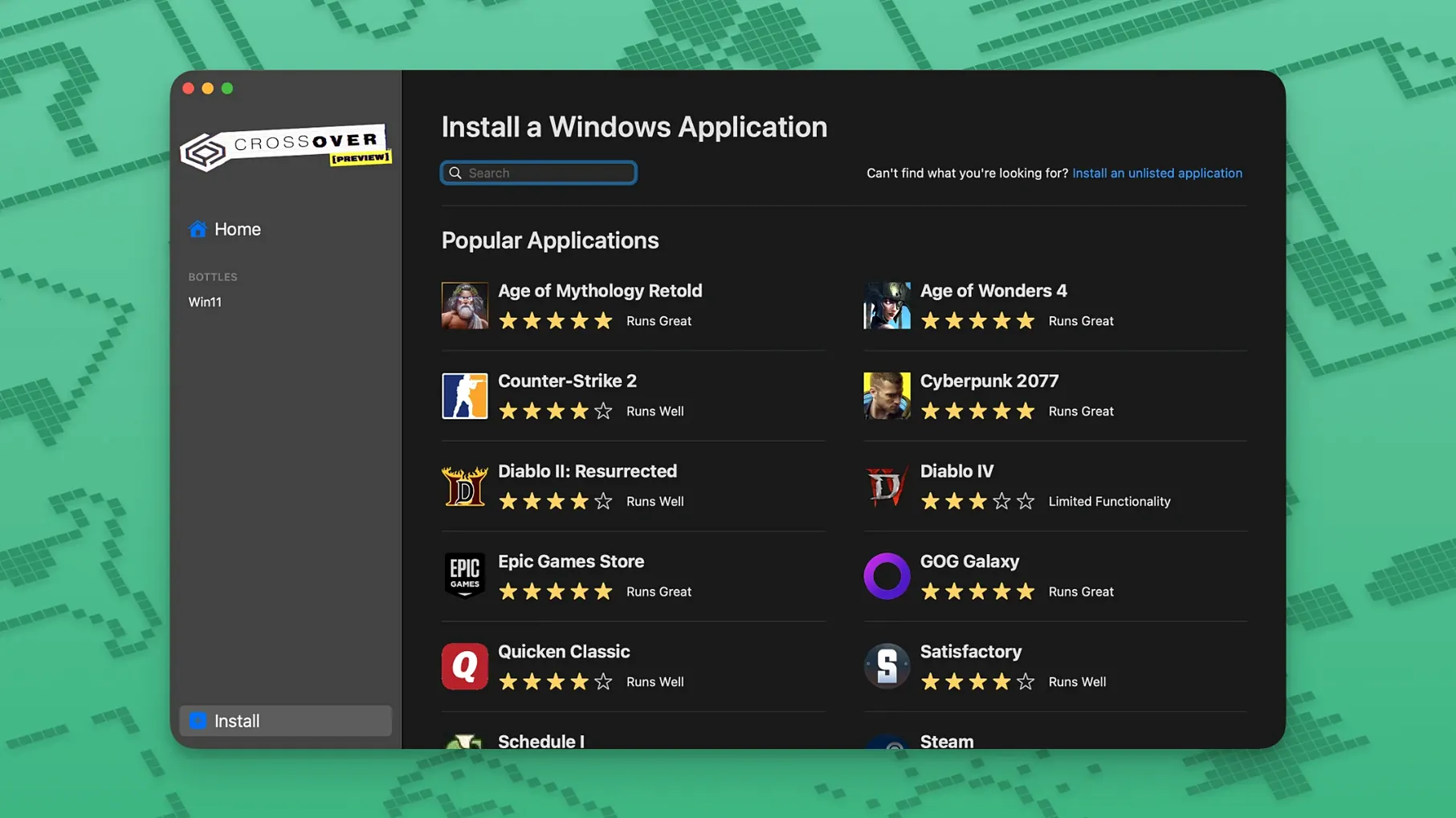
Version 26.3.0 landed with fixes for Diablo IV, the Epic Games Launcher, and the GOG Galaxy client—three headaches that had Mac players stuck at startup screens.
\n\nCrossOver — software that translates Windows program instructions for macOS, so you can open them without owning a Windows license.
\nBottle — a self-contained folder that mimics a Windows environment. Each application gets its own bottle to keep dependencies from colliding.
\nWine — the open-source compatibility layer underneath CrossOver. The CodeWeavers team polishes it and adds support for specific titles.
\n\nYou might fire it up because a single tool—say, a niche engineering program or an older RPG—has no Mac version. The bottle creation wizard asks which installer you want to use, picks a compatible Windows version, and gets out of the way. Once the application opens, it lives in your dock like any other Mac app, with menu bar access and native window resizing. Not everything will run, and some programs act jittery, but for targeted, light use the setup saves you from partitioning a drive or juggling a virtual machine just to open one piece of software.
Diablo IV and broken game patches finally get a fix
The jump to 26.3.0 isn't flashy on paper, but if you've been nursing a broken Diablo IV install for weeks, those three bullet points feel like a rescue. Prior to this release, a routine game patch from Blizzard could leave you staring at a black screen, and the Epic Games Launcher would silently fail mid-download on Mac. The GOG Galaxy client simply refused to load at all. These weren't minor annoyances—entire game libraries became inaccessible overnight.
For daily users, the practical effect is that launch-and-play reliability inched upward. When a crossover 26 build lands with targeted fixes like these, it's usually a signal that CodeWeavers has been watching crash logs and forum threads closely. The Diablo IV fix, for instance, addressed a rendering path change that the game introduced in its own update, not a bug CrossOver introduced. The Epic and GOG corrections handled network stack quirks that broke authentication handshakes after those clients updated too. In plain terms: you can open your launcher, let it pull down the latest game files, and actually play without hunting for a workaround.
Users who grabbed a crossover 26.2.0 build earlier saw some of these issues unresolved, which is why the 26.3.0 update arrived relatively quickly. The difference between those two versions, for the affected titles, is the difference between a launcher that crashes on launch and one that works. If your workflow depends on any of those three programs, skipping straight to the latest is worth the few extra minutes.
Gatekeeper blocking your first launch
Even with the 26.3.0 fixes, certain rough spots appear often enough to be predictable. Knowing them ahead of time turns a frustrating afternoon into a ten-minute tweak.
- Gatekeeper blocks the first launch. Dragging CrossOver into Applications isn't enough sometimes. If macOS refuses to open it, head to System Settings > Privacy & Security and look for an "Open Anyway" button near the bottom. Click it once, and subsequent launches should behave.
- A bottle stops responding after a macOS update. Major system version bumps can reset permissions or alter file paths that bottles rely on. The fix is usually simple: open CrossOver, select the misbehaving bottle, click the gear icon, and choose "Rebuild Bottle." This recreates the Wine environment without touching your installed applications.
- Full disk access blocks activation. The license tool needs to write a few files in protected locations. If Terminal throws a permission error during the croslic step, open System Settings > Privacy & Security > Full Disk Access, unlock the padlock, and toggle Terminal on. Re-run the license tool afterward.
- Game graphics flicker or show black textures. This often traces back to DXVK or MoltenVK settings within the bottle. In CrossOver's bottle settings, try toggling "DXVK Backend for D3D11" off and on, or switching the graphics mode from "Auto" to "Performance." Not every title likes the same combination.
- An installer hangs at 99%. Some Windows installers spawn a secondary process that CrossOver doesn't immediately track. Wait a full five minutes before force-quitting—sometimes the bottleneck clears on its own. If it truly freezes, kill the bottle, create a fresh one, and run the installer again with no other bottles open.
If activation still won't stick after granting full disk access, a restart often seals the deal. Terminal processes sometimes hold onto stale permission states until the system boots fresh.
Running a Windows photo cataloger on a Saturday morning
Let's say it's a Saturday morning and you want to run a Windows-only photo cataloging tool that you've relied on for years. Your Mac is on, coffee is nearby, and CrossOver 26.3.0 is already installed and activated.
You open CrossOver from the Applications folder. The main window lists your existing bottles—maybe two or three from previous experiments. You click the "+" button at the bottom left to create a new bottle. A dialog asks for a name and offers a dropdown of Windows versions. You type "PhotoTool" and leave it at Windows 10 64-bit. CrossOver churns for about fifteen seconds while it builds the folder structure, populates a bare registry, and sets the Wine prefix.
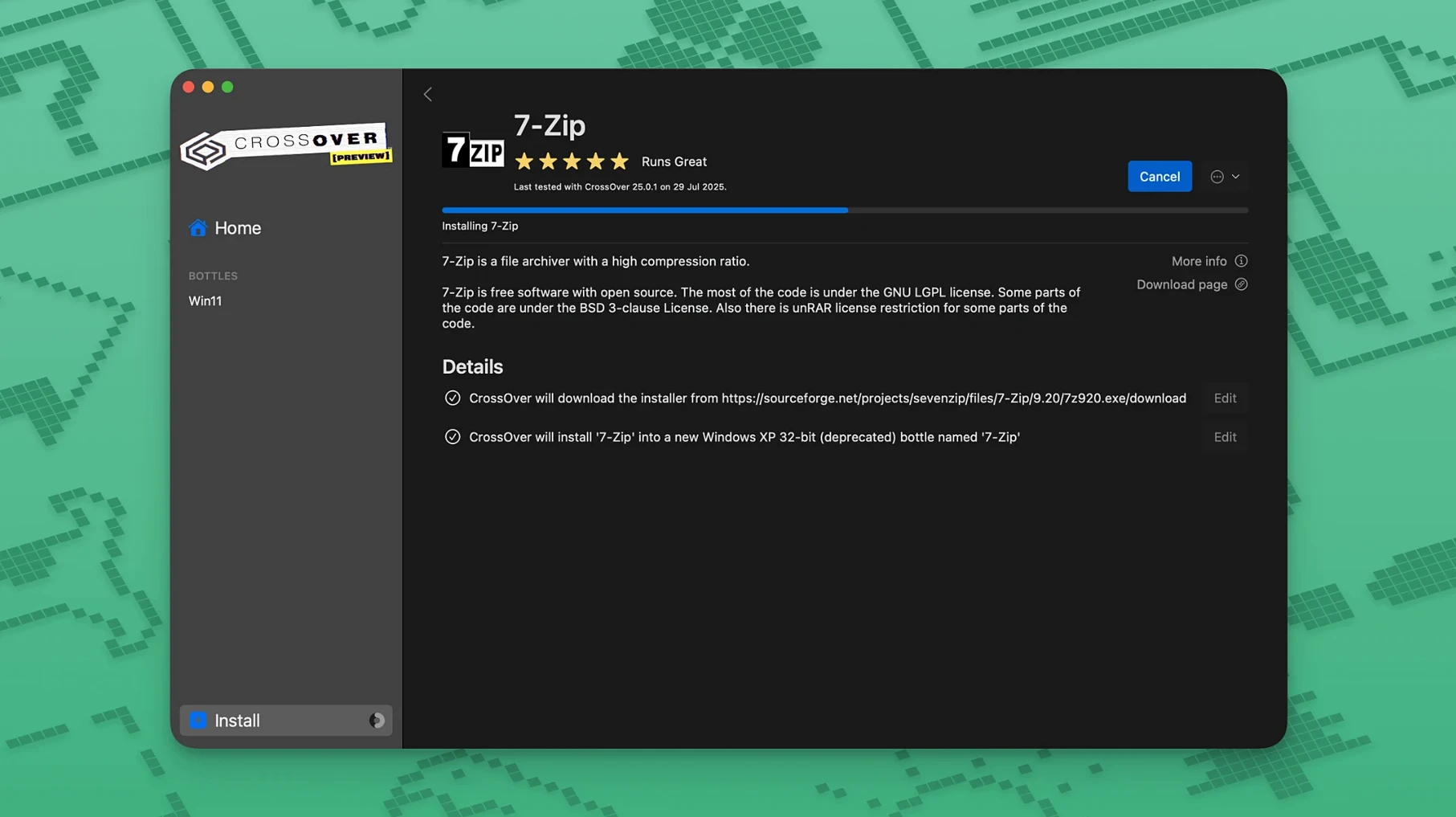
With the new bottle selected, you click "Install Application." CrossOver's database pops up with a search bar and a long list of supported titles. Your photo tool isn't in the list, so you click "Browse" and navigate to the installer EXE you downloaded earlier. You select it, and CrossOver launches the installer inside the bottle's virtual C drive. The familiar Windows setup wizard appears—gray buttons, license agreement, destination folder prompt. You click through with the defaults. Progress bars crawl, files extract, and within two minutes the installer announces completion.
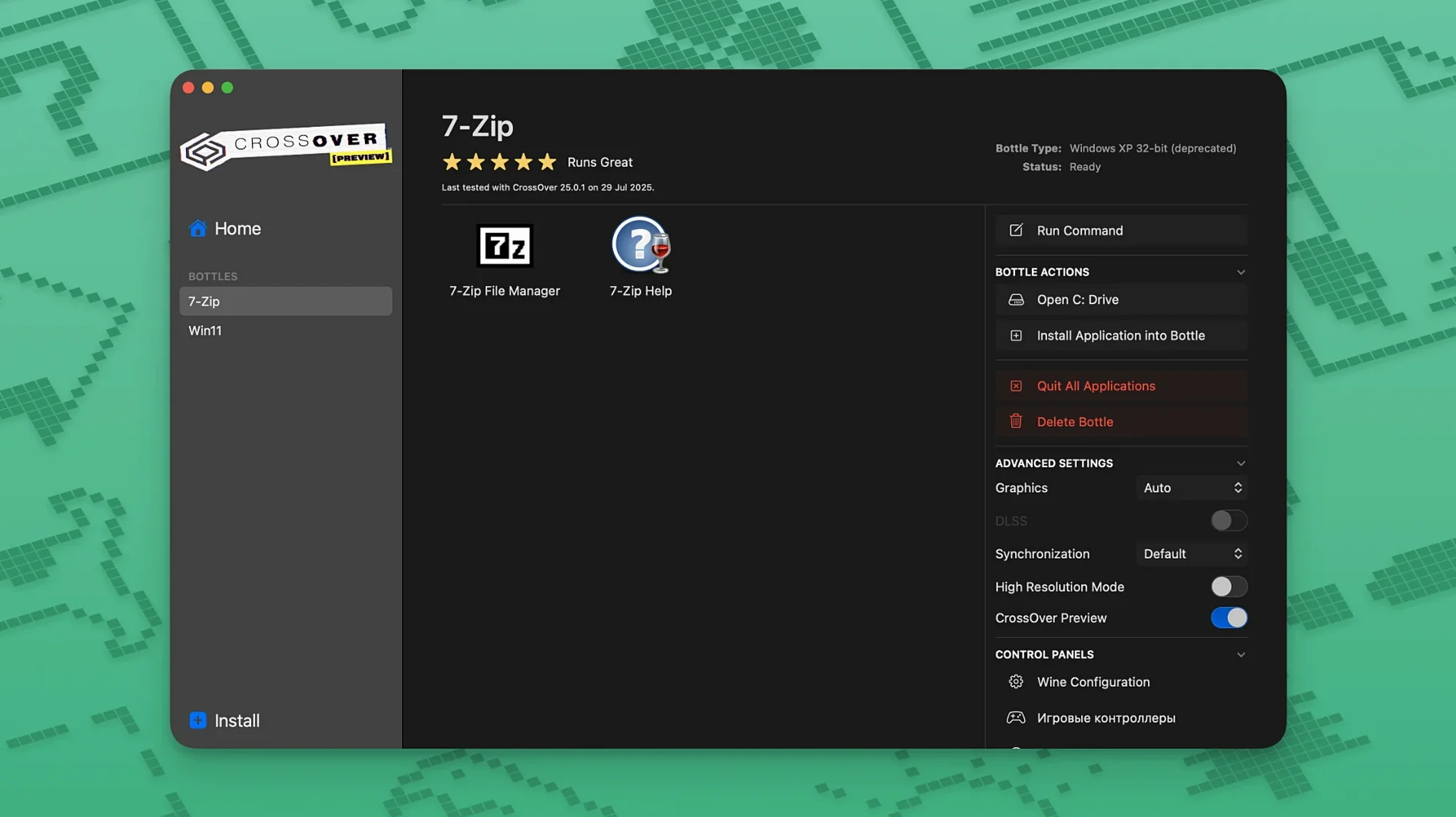
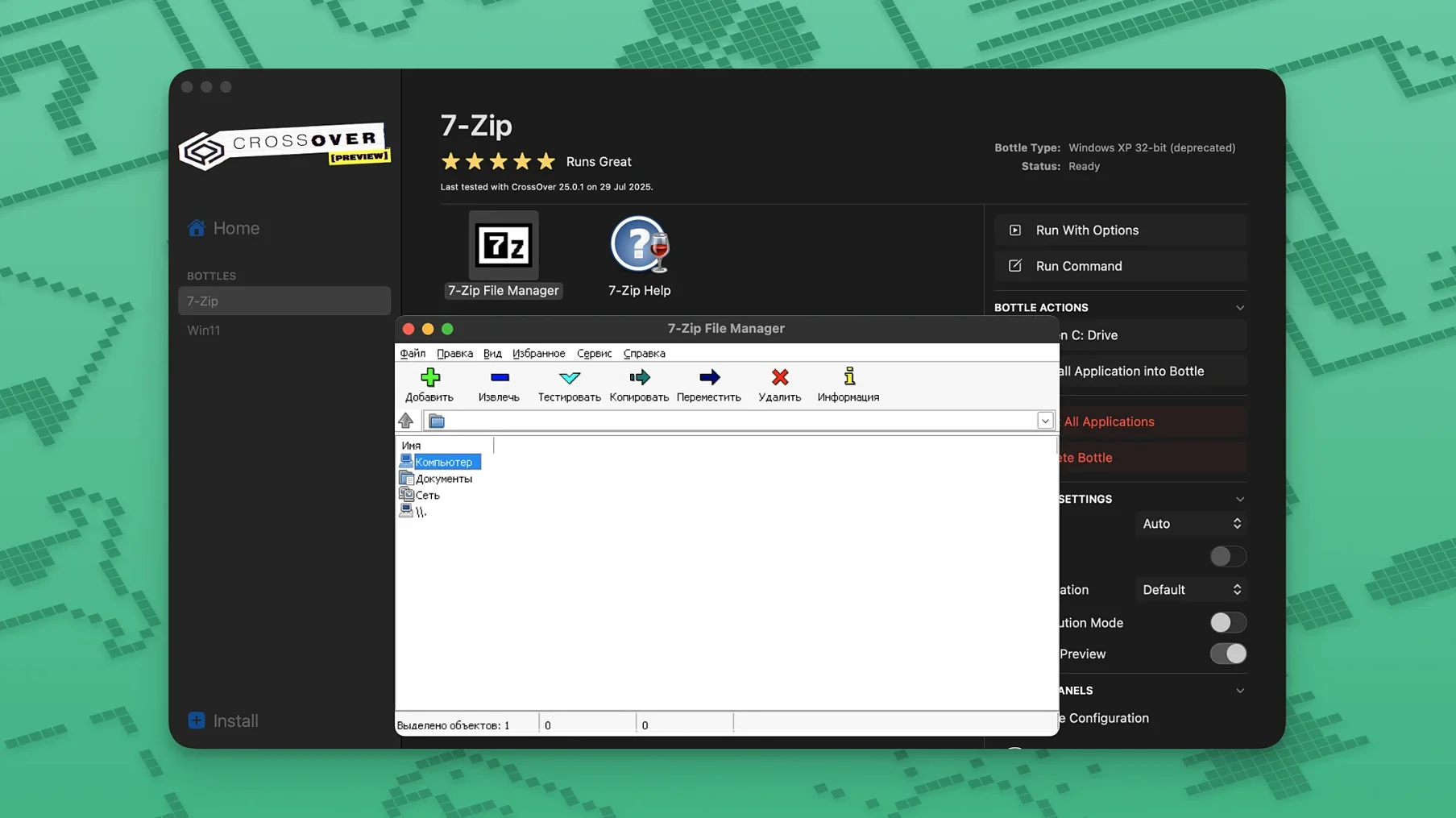
Back in CrossOver's bottle list, the photo tool now appears under "PhotoTool" with its own icon. You double-click it. The application window materializes on your Mac desktop, complete with standard Mac window controls—traffic-light buttons, resize handles, even Mission Control support. You load a folder of RAW files and the thumbnails populate without hesitation. The menu bar up top shows the application's own menus, not CrossOver's. You work for an hour, exporting a batch of JPEGs. When you're done, you close the window and the bottle idles silently in the background, using almost no resources until you open it again.
Closing CrossOver entirely is optional. If you leave it running, the next launch of your photo tool is instant—just click its dock icon and the window reappears. The whole experience feels close enough to native that you forget there's a translation layer underneath.
Treating CrossOver like a Windows emulator
New users often approach CrossOver like a Windows emulator, and that assumption leads to a handful of predictable missteps. Recognizing them early saves a lot of head-scratching.
- Installing everything into one bottle. It seems tidy, but mixing half a dozen applications in a single bottle invites dependency conflicts. A .NET runtime one program needs can break another program's Visual C++ redistributable. Give each major application its own bottle unless the CrossOver database specifically recommends grouping them.
- Skipping the CrossOver database search. Clicking "Browse" for every installer bypasses years of community-tested configuration tweaks. When a title appears in the database, CrossOver applies known-good settings—library overrides, DLL substitutions, sound driver choices—that manual installs miss. Always search first, even if you plan to install from your own EXE afterward.
- Expecting Windows-level performance in GPU-heavy games. The translation layers for DirectX calls add overhead. A game that runs at 90 FPS on a Windows desktop with similar hardware might manage 45–60 FPS through CrossOver. That's playable, but beginners who max out graphics settings on a MacBook Air often blame the software when the hardware and the translation layer both contribute to the lower frame rate.
- Not checking the bottle's Windows version after creation. Some programs need Windows 7 compatibility, others expect Windows 10. CrossOver picks a sensible default, but if an installer complains about an unsupported OS, switching the bottle's Windows version in the settings panel often clears the error immediately.
- Installing antivirus or system utilities inside a bottle. These programs expect deep kernel access that Wine doesn't provide. They'll either fail to install, crash on launch, or destabilize the bottle. Stick to user-facing applications and games.
- Deleting a bottle by dragging its folder in Finder. Bottles contain registry files, symlinks, and hidden Wine configuration data that Finder doesn't always show. Use CrossOver's built-in "Delete Bottle" command instead. It cleans up completely and prevents orphaned files from lingering in the Library folder.
A quiet tip worth knowing: if you're experimenting with a crossover free download scenario to test compatibility before committing long-term, create a disposable bottle, run the installer, and spend ten minutes pushing the application through its core tasks. If it holds up, you've got your answer. If it doesn't, you haven't cluttered your setup with half-working remnants.
Version 26.3.0 brings a trio of welcome fixes for gamers. Diablo IV no longer stalls after a game update, Epic Games Launcher downloads work again on Mac, and the GOG Galaxy client loads as expected.
- macOS 10.15 Catalina or later
- Intel processor
Questions I actually get
Can I run any Windows application with CrossOver?
No. Officially supported applications have the best chance, while unsupported Wine programs may be unstable or refuse to open at all.
Do I need a Windows license or installation media?
No. CrossOver launches supported applications directly in macOS without requiring a full Windows installation.
Porch talk 0
Come in or pull up a chair to leave a comment.
Nobody has pulled up a chair yet. If you used it on a real Saturday, say what the hour was.
More for the same hour
Everything in Mac Apps
 CorelDRAW
27.2.0.135 Mac Apps
2.1 GB
CorelDRAW
27.2.0.135 Mac Apps
2.1 GB

 CorelCAD
2022.5 Build 22.3.1.4090 Mac Apps
293 MB
CorelCAD
2022.5 Build 22.3.1.4090 Mac Apps
293 MB

 Cursor Pro
2.4 Mac Apps
Updated 30 MB
Cursor Pro
2.4 Mac Apps
Updated 30 MB
 Cookie
8.6.4 Mac Apps
Updated 8 MB
Cookie
8.6.4 Mac Apps
Updated 8 MB

 Compressor
5.3 Mac Apps
122 MB
Compressor
5.3 Mac Apps
122 MB
 Commander One PRO
3.18.0 Mac Apps
Updated 53 MB
Commander One PRO
3.18.0 Mac Apps
Updated 53 MB
 DaisyDisk
4.34.2 admin Mac Apps
9 MB
DaisyDisk
4.34.2 admin Mac Apps
9 MB
 Command-Tab Plus
2.9.9 Mac Apps
8 MB
Command-Tab Plus
2.9.9 Mac Apps
8 MB