
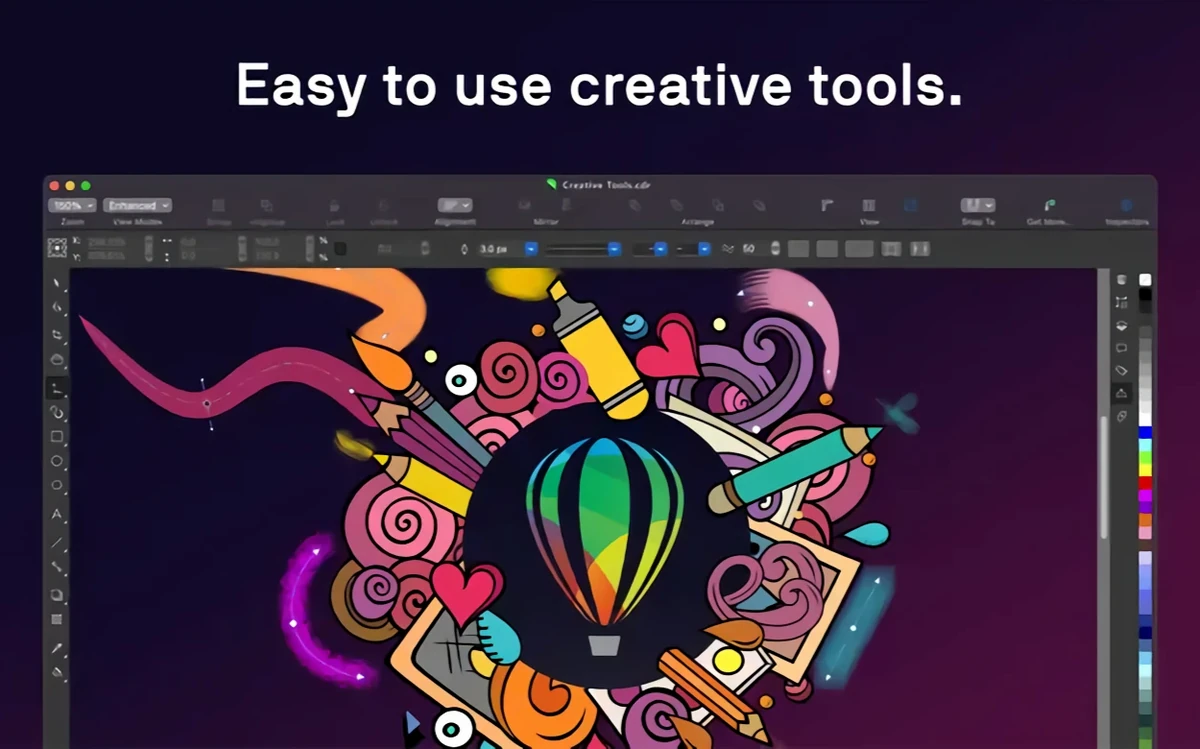
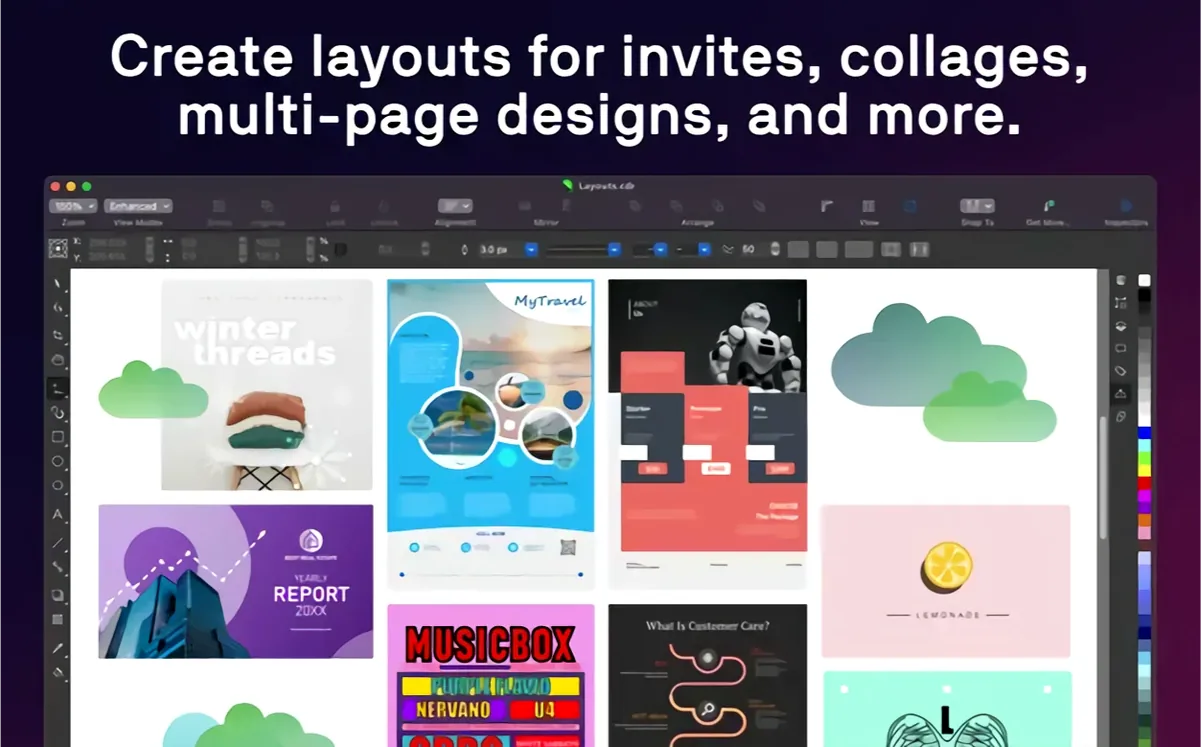
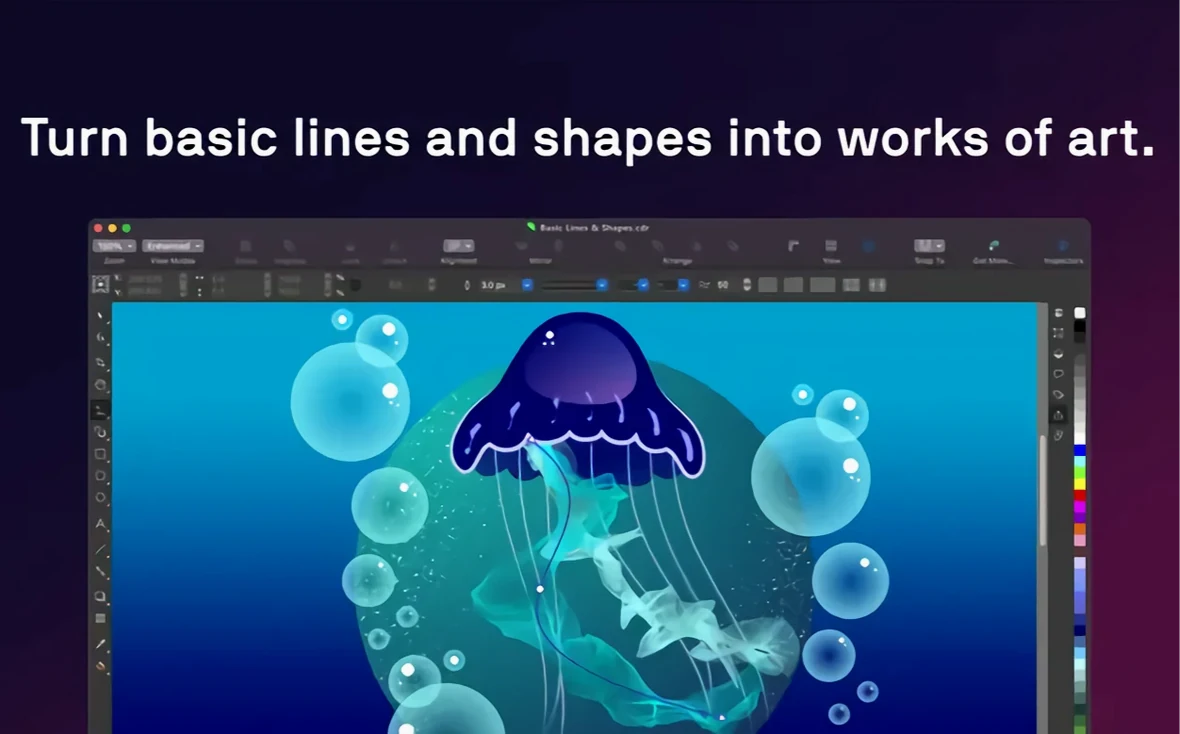
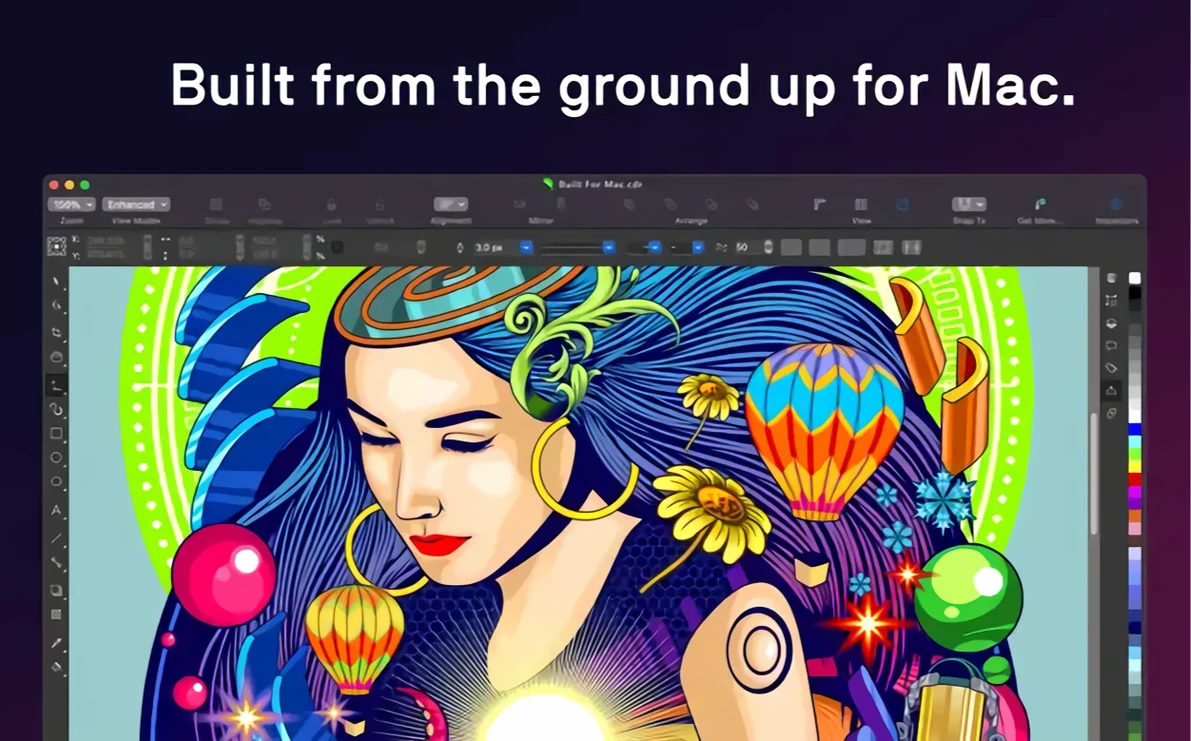
If you’ve spent time in Adobe Illustrator, you’ll find a familiar rhythm in CorelDRAW’s vector tools, though this suite stretches far beyond a single app. It’s a full graphics studio that covers vector illustration, page layout, and photo editing, and it runs natively on both Apple Silicon and Intel Macs. Before you hunt down a corel draw download torrent, let’s walk through what your Mac needs and what you actually get when the suite lands on your desktop.
- macOS 13 Ventura or later — the current version, 27.2.0.135, requires a modern system and supports both ARM (Apple Silicon) and x86 64-bit architectures.
- Three core applications — the suite bundles CorelDRAW for vector art and page layouts, Corel PHOTO-PAINT for image editing, and Corel Font Manager to wrangle your type library.
- Multi-page layout tools — build brochures, booklets, and other multi-page documents directly inside CorelDRAW, with styles and style sets that format entire documents or groups of objects in one go.
- Deep typography controls — fine-tune font, size, spacing, shadows, and outlines, plus support for variable fonts that let you interactively adjust weight and width.
- Apple ecosystem touches — Touch Bar shortcuts appear for layers and text tools on compatible Macs, and Sidecar lets you draw with an Apple Pencil on your iPad while watching changes live on your Mac screen.
- Vector and raster effects — apply both effect types within your workflow, and lean on a broad set of interface languages from English and German to Japanese and Czech.
This is a pro-level toolkit that asks for a recent macOS version but rewards you with a cohesive design environment. If your Mac is on Ventura or newer and you need a single suite that handles vectors, photos, and multi-page layouts without jumping between vendors, CorelDRAW fits the bill.
App Won't Launch and Other Early Friction Points
A fresh install on a Mac that meets the requirements usually hums along without drama, but a handful of friction points surface often enough that they're worth naming. The first one I hear about is the application refusing to launch after installation, often showing a brief icon bounce before nothing happens. On Apple Silicon Macs, this almost always traces back to a missing Rosetta 2 layer. Even though CorelDRAW runs natively on ARM, some of its supporting components still lean on Intel code paths. Running softwareupdate --install-rosetta from Terminal and restarting clears it up in under two minutes.
Another head-scratcher is the dreaded "file is corrupted" message when opening older CDR files. This isn't a defect in the suite — it's a version gap. CorelDRAW 27.2.0.135 reads CDR files back to version X5 without fuss, but anything older needs an intermediate save from a previous version or a conversion run through CorelDRAW's online viewer. If you're pulling vintage client files out of cold storage, batch-convert them before you need them under deadline.
The third sticky point tends to be performance. Users on 8 GB of RAM — the minimum spec — will notice lag when juggling large multi-page layouts with embedded high-resolution photos. The fix isn't always throwing more RAM at the machine, though that helps. Often it's about adjusting the render resolution in Preferences under Display. Dropping it to "draft" while you build and only switching to "final" for export review keeps the canvas responsive. And if you're working with a corel mac download that includes Corel PHOTO-PAINT, keep that app closed when you're not actively retouching; the two applications share memory resources and leaving both open chews through overhead fast.
Font Manager Quirks
Corel Font Manager is a quiet powerhouse, but it trips people up when it doesn't auto-detect fonts installed through Apple's Font Book. The two don't sync automatically. You'll need to point Font Manager at /Library/Fonts and your user font folder manually the first time. Once it's indexed, the variable font sliders work beautifully, but that initial scan takes a good five to ten minutes if you've got a collection of several hundred typefaces. Let it run in the background and don't force-quit halfway through.
Building a Trifold Brochure Without Leaving the Canvas
It's a Thursday morning and you've got a trifold brochure to turn around, plus a handful of product photos that need background cleanup. You open CorelDRAW first, not PHOTO-PAINT, because the brochure is the anchor document. The native macOS interface greets you with a dark theme you set last week — the toolbar icons sit flush with the window edges, nothing feels ported or out of place.
You start by pulling in a template from the New Document dialog, a tri-fold with bleed already calculated. The page sorter appears along the bottom, showing six panels spread across two physical sheets. You grab the text tool and rough out headline placement using a variable font you've been meaning to try. The sliders in the Properties bar let you widen the weight until the headline fills the front panel without feeling crowded. No trips to a separate font dialog, no guessing.
The product photos arrive from a colleague as a batch of TIFFs with studio backgrounds that need to go. You right-click the first image in your layout and choose "Edit in Corel PHOTO-PAINT." The image opens in a separate window — same dark interface language, same keyboard shortcut logic. You grab the Smart Carver tool to mark foreground areas, then let it strip the background in a few passes. A quick run through the JPEG artifact removal AI function cleans up some compression noise from an older shot. You save back to the layout, and the link updates in real time.
Back in CorelDRAW, you notice the color balance between the hero image and your vector gradients isn't quite right. The Color Styles docker lets you adjust the palette globally — shift one shade and every gradient that pulls from that color family shifts with it. By lunch, the brochure is proof-ready and exported as a press-ready PDF, with trim marks and a spot color channel for the metallic ink the client requested. No last-minute Illustrator export gymnastics, no "sorry, wrong color space" messages from the printer.
Treating It as a Vector App Instead of a Page-Layout Hub
The most common one I see is treating CorelDRAW like it's just another vector app. It isn't — it's a page-layout environment with vector tools built in, and that distinction matters. Newcomers often draw individual business cards as standalone documents instead of using the page tool to set up a multi-up sheet. When they go to print, they're stuck exporting one at a time instead of producing a clean imposition in a single file. Lay out your sheet first, then design inside the individual page frames.
Another classic stumble is ignoring the Object Manager docker entirely. People coming from other apps tend to manage stacking order by selecting and dragging on the canvas, which works for small projects and falls apart fast on a 40-layer packaging file. Name your layers. Group objects onto them logically — "die line," "front artwork," "legal text" — and lock layers you're not actively editing. Your future self will thank you when the client sends a last-minute copy change and you're not hunting through a flat heap of ungrouped rectangles.
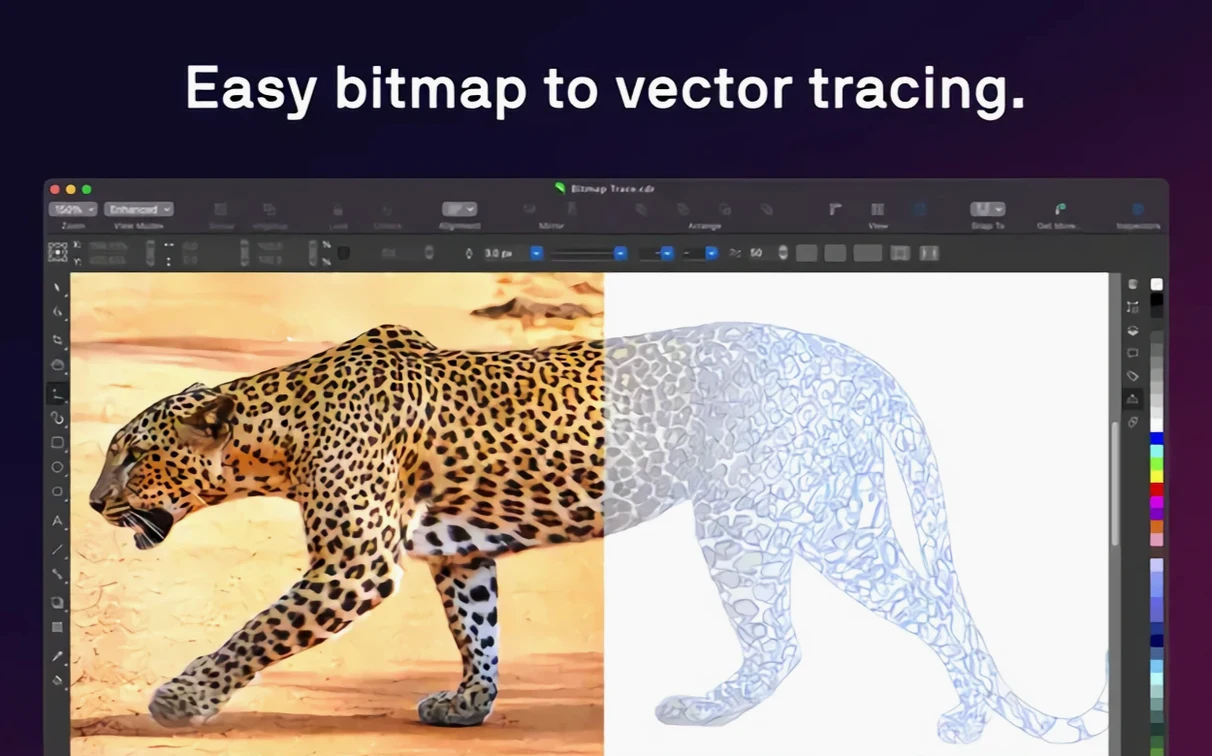
A subtler misstep involves the raster-to-vector tracing tool, PowerTRACE. It's genuinely good, but new users throw a low-resolution JPEG at it with default settings and then get frustrated when the result is a wobbly mess. The quality slider defaults to "balanced," which is a compromise. For logos, push it to "high quality" and tick the "smooth" option. For photographic elements you plan to stylize, drop it to "low quality" intentionally — the geometric simplification can look deliberate and clean, almost like a screen print. Either way, clean the source image first: bump the contrast, run the AI JPEG artifact removal in PHOTO-PAINT, and crop out anything you don't want traced. Garbage in, garbage out holds true here.
Export Format Confusion
Some beginners export everything as EPS out of habit, not realizing the format hasn't been actively developed for years. If your print shop accepts PDF — and nearly all do now — use PDF with the "press ready" preset. For web assets, SVG export works well for vector artwork, but test it in a browser before handing off to a developer. CorelDRAW's SVG output respects your layer names as IDs, which front-end folks appreciate. And if someone asks you for a coreldraw 2026 mac file and you're on version 27, just save as CDR and include a note about the version — backward compatibility is solid, but not infinite.
Snappy on Apple Silicon, Manageable on Intel
Will this slow down my Mac? On an Apple Silicon machine with 16 GB of RAM, CorelDRAW and PHOTO-PAINT together feel snappy even with complex documents. On an Intel Mac with 8 GB and integrated graphics, you'll want to close other heavy applications and lower the canvas render quality for anything beyond simple vector work. The installer itself is straightforward — open the included installation and activation instructions, follow the steps inside the package, and the whole process takes under ten minutes with a decent internet connection.
Can I open my old Illustrator files without losing layers? CorelDRAW reads AI files up to a certain version, and it preserves most layer structures and editable text. Complex gradient meshes and some newer Illustrator-specific effects may flatten or convert to bitmaps. If you're migrating a large library, test a handful of representative files first. PSD support in PHOTO-PAINT is stronger — layer styles, adjustment layers, and masks all translate well.
Does it play well with the Apple Pencil and Sidecar? Yes, and this is one of the suite's quieter strengths. Connect your iPad via Sidecar, drag a CorelDRAW window onto it, and the Apple Pencil gives you pressure-sensitive drawing directly in your vector canvas. Pressure maps to stroke width by default, but you can remap it to opacity or brush size in the preferences. It's not a full raster painting experience like Procreate, but for inking illustrations or tracing hand-drawn sketches, it's a genuine pleasure.
What about collaboration with Windows users? The CDR format is the same on both platforms. Someone running a CorelDRAW 24 torrent on a Windows laptop can send you a file, and you'll open it on your Mac without conversion. Fonts are the usual sticking point — if they used a Windows-only typeface, you'll get a substitution warning. Bundling fonts or converting headline type to curves before sharing solves it cleanly.
Is the AI upscaling actually useful, or is it a checkbox feature? It's genuinely practical for print work. A client sends a 1200-pixel product shot and wants it at full spread width? The upscaling in PHOTO-PAINT produces better edge definition than standard bicubic interpolation, especially on text in signage and packaging comps. It's not magic — you can't turn a thumbnail into a billboard — but for doubling or tripling resolution with crisp results, it earns its place in the toolbox. Combined with the JPEG artifact removal, you can salvage images that would otherwise need a reshoot.
- macOS 13 Ventura or later
- Supports both Apple Silicon and Intel (x86 64-bit)
Questions I actually get
Does CorelDRAW run natively on Apple Silicon Macs?
Yes, the current version supports ARM architecture, so it runs natively on M1, M2, and later Apple Silicon Macs alongside Intel-based models.
Porch talk 0
Come in or pull up a chair to leave a comment.
Nobody has pulled up a chair yet. If you used it on a real Saturday, say what the hour was.
More for the same hour
Everything in Mac Apps
 CorelCAD
2022.5 Build 22.3.1.4090 Mac Apps
293 MB
CorelCAD
2022.5 Build 22.3.1.4090 Mac Apps
293 MB

 Cookie
8.6.4 Mac Apps
Updated 8 MB
Cookie
8.6.4 Mac Apps
Updated 8 MB

 CrossOver
26.3.0 Mac Apps
285 MB
CrossOver
26.3.0 Mac Apps
285 MB

 Compressor
5.3 Mac Apps
122 MB
Compressor
5.3 Mac Apps
122 MB

 Commander One PRO
3.18.0 Mac Apps
Updated 53 MB
Commander One PRO
3.18.0 Mac Apps
Updated 53 MB

 Cursor Pro
2.4 Mac Apps
Updated 30 MB
Cursor Pro
2.4 Mac Apps
Updated 30 MB
 Command-Tab Plus
2.9.9 Mac Apps
8 MB
Command-Tab Plus
2.9.9 Mac Apps
8 MB
 Color Folder Pro
5.5 Mac Apps
23 MB
Color Folder Pro
5.5 Mac Apps
23 MB