
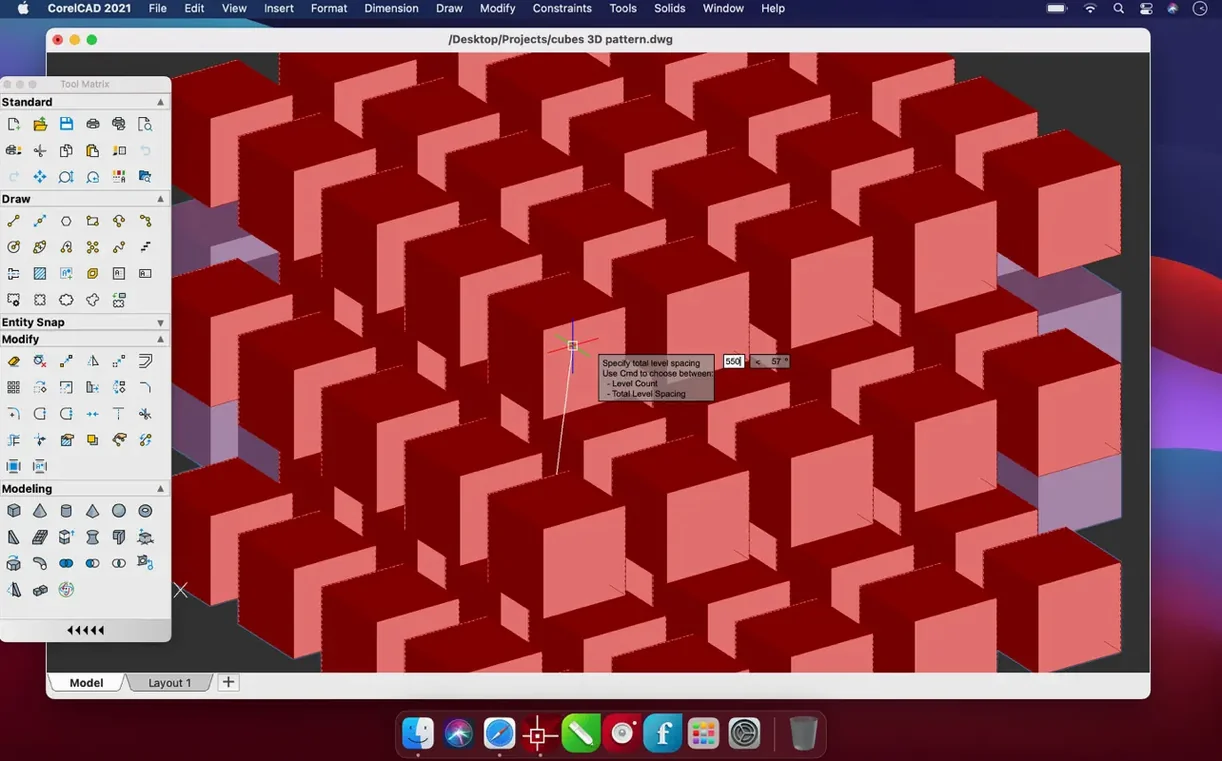
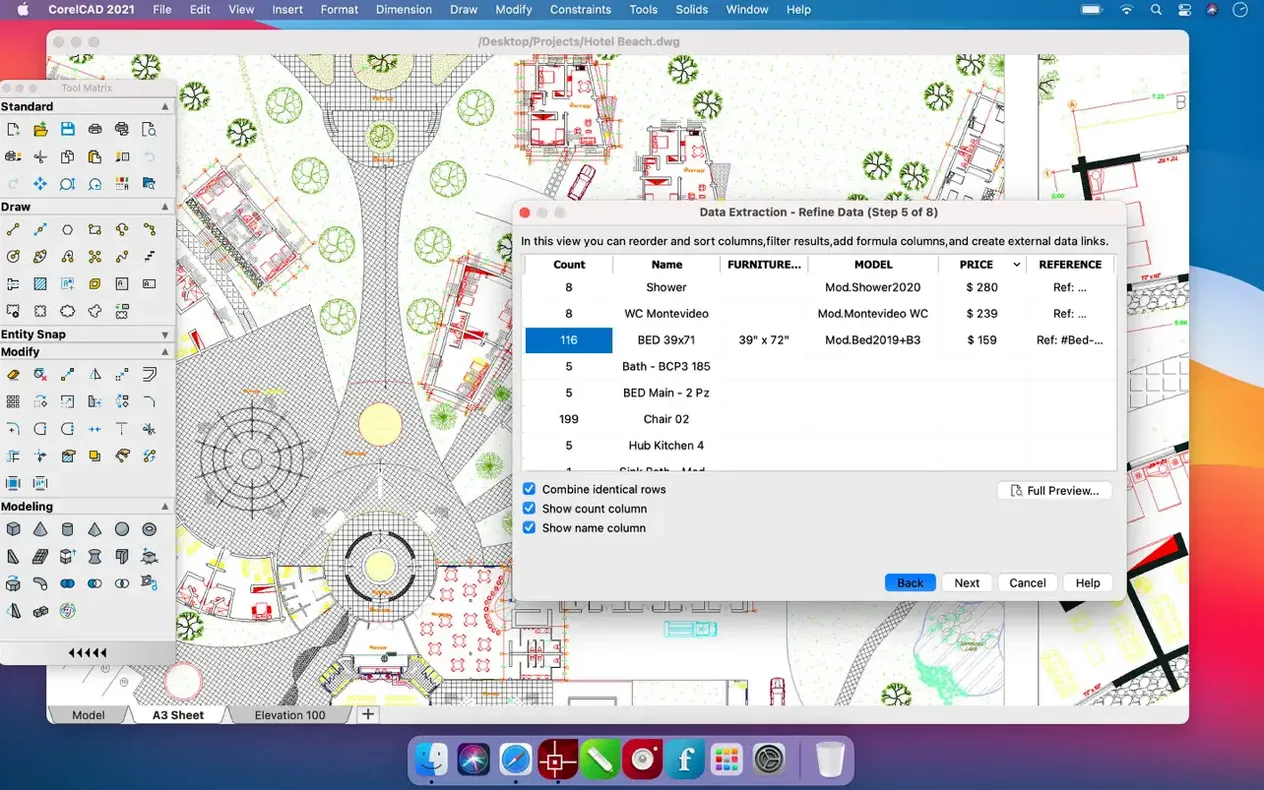
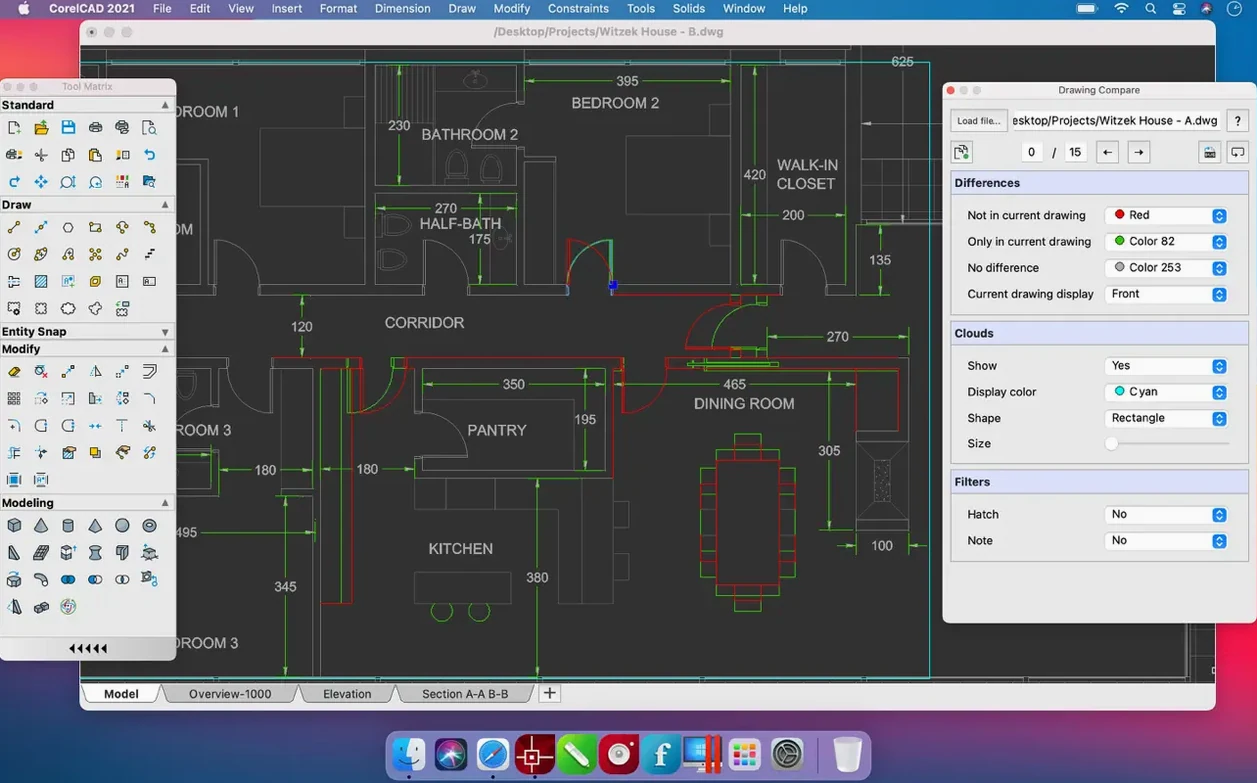
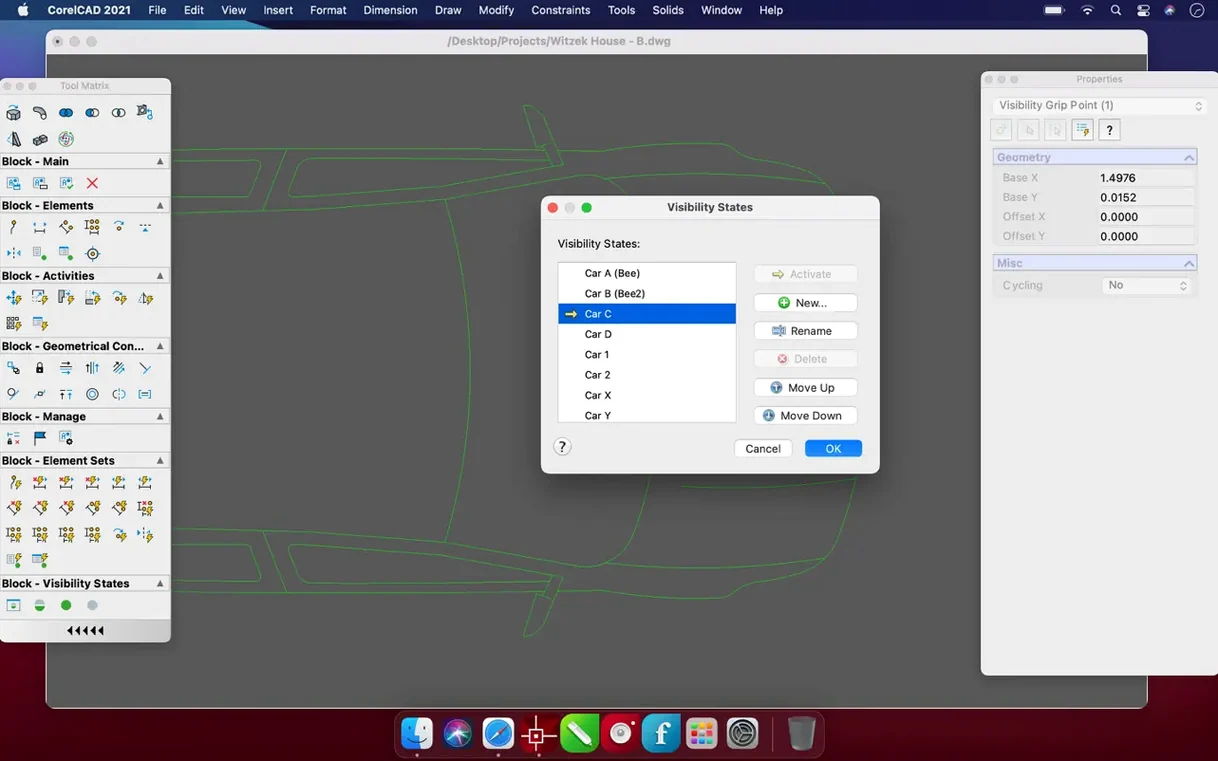
Extrude, Revolve, Loft, and Sweep are still the verbs that carry the day. They sit right in the toolbar, ready to turn a flat floor plan into a walkable 3D space. That hasn't changed, and neither has CorelCAD's commitment to reading and writing DWG files natively on the Mac. The 2022.5 build shores things up with a round of performance and stability fixes that keep the cursor moving smoothly when you're deep into a model with hundreds of objects.
| Key detail | What you get |
|---|---|
| Format | Native AutoCAD DWG |
| 3D printing | STL export |
| Mac system | macOS 10.14 or later |
The cross-platform nature of the software means a Mac version is developed right alongside Windows, so Mac users get the same drafting and annotation tools without a translation layer getting in the way. Customization and collaboration features let you tweak the interface and share files without fuss. If you're coming from another CAD background, the transition is familiar ground. The software includes automation options that take the repetition out of big layering jobs, and when the design is done, sending an STL file to a slicer for 3D printing is a menu click away. This update doesn't rewrite the playbook—it quietly tightens the bolts.
A morning of drafting without the beach ball
I threw a 340-object warehouse layout at CorelCAD on an Apple Silicon MacBook Air—the fanless one—and watched Activity Monitor out of habit. Memory hovered around 480 MB during ordinary pan-and-zoom work. That's modest for a CAD package holding wireframe, annotations, and a handful of extruded solids in memory simultaneously. Exporting a multi-sheet layout to PDF took under four seconds, and the progress bar actually reflected the work instead of doing that thing where it jumps to 90% and sits there.
On Intel machines running Monterey, the launch time stretches a few beats longer, but once the drawing canvas is up, selection responsiveness stays consistent. I've noticed one quirk: with GPU-accelerated rendering turned on, very dense hatch patterns can cause a split-second screen flicker when you orbit a 3D view quickly. It's cosmetic, not a crash risk. The 2022.5 build addressed a handful of stability edge cases, particularly around DWF underlays and block attribute editing, so the random quit that some users saw when cycling through layout tabs appears to be gone. For day-to-day drafting, the application earns its keep without making you reach for the force-quit shortcut.
Things you're probably wondering before you install
Does it feel like a Mac app, or something ported over with a grudge? The interface uses standard Mac menu conventions—Command-Z for undo, Command-Shift-S for Save As—and the palettes float as independent panels you can scatter across multiple displays. The iconography leans utilitarian rather than pretty, but the tooltips are clear and the ribbon-style toolbar collapses into tabs when you need more canvas space. It won't be mistaken for a native SwiftUI app, yet it respects the platform more than many CAD tools that treat macOS as an afterthought.
Can I open files from colleagues who use the Windows version of CorelCAD or AutoCAD? Yes, and the roundtrip is clean. The software writes DWG natively—no import-export conversion step that quietly drops line weights or layer names. Colleagues on Windows won't notice you're on a Mac unless you tell them. DXF, DWF, and the other formats listed in the spec sheet all open without a sidecar translator application.
What about learning curve if I'm coming from SketchUp or Fusion? CorelCAD occupies the middle ground between a surface modeler and a full parametric CAD system. If you've spent time in any DWG-based environment, the command line at the bottom of the window will feel like home—you can type LINE, OFFSET, or TRIM and get immediate results. SketchUp users will need to adjust to a coordinate-driven workflow rather than push-pull gestures, but the extrude and revolve tools bridge the gap. Fusion users accustomed to timeline-based parametric modeling will find CorelCAD more direct-editing oriented; changes happen on the object, not in a history tree.
Toolbars you settle into faster than BricsCAD
BricsCAD shares the same DWG foundation and has a Mac version that feels a bit snappier on large 3D assemblies, but its interface customization isn't as immediately approachable. CorelCAD's toolbar layout and workspace presets take less tweaking to feel comfortable, especially for someone who splits time between 2D drafting and occasional 3D modeling rather than full-time mechanical design.
QCAD is a lightweight 2D-only tool that opens DXF and DWG files and runs happily on older Macs. If your work never leaves the flat plane—pure floor plans, schematics, laser-cutting layouts—QCAD is lean and responsive. But the moment you need to extrude a wall or check clearances in three dimensions, you hit QCAD's ceiling. CorelCAD carries you across that line without switching applications.
FreeCAD brings genuine parametric modeling and a dedicated community of contributors, but the Mac build can feel unpolished—menus don't always follow system conventions, and the interface density asks for patience during the first few projects. CorelCAD trades FreeCAD's open-ended parametric engine for a more predictable, drafting-table experience that fits neatly into a production workflow where DWG compatibility is non-negotiable. For an architect or engineer who needs measured drawings out the door on a Thursday afternoon, the difference in daily friction matters.
A search for corelcad mac often surfaces alongside comparisons with these very tools, and the answer usually depends on whether 3D is a nice-to-have or a daily requirement. If you've been hunting a CorelCAD torrent just to test the waters before committing, this build gives you an honest trial of the feature set—no crippled export, no watermark on your prints, just the full drafting engine ready to see if it fits your workflow.
The 2022.5 build (22.3.1.4090) brings a collection of under-the-hood tweaks.
- Performance and stability improvements that smooth out longer sessions.
- General enhancements that keep the workspace responsive.
- macOS 10.14 or later
- Apple Silicon and Intel Macs
Questions I actually get
What file format does CorelCAD use?
It uses DWG as its native drawing format. You're working directly in AutoCAD's own file type, which makes exchanging drawings with colleagues straightforward.
Can I 3D print directly from CorelCAD?
You can export your models as STL files. Just send the STL to your slicing software to prepare it for a 3D printer.
Porch talk 0
Come in or pull up a chair to leave a comment.
Nobody has pulled up a chair yet. If you used it on a real Saturday, say what the hour was.