
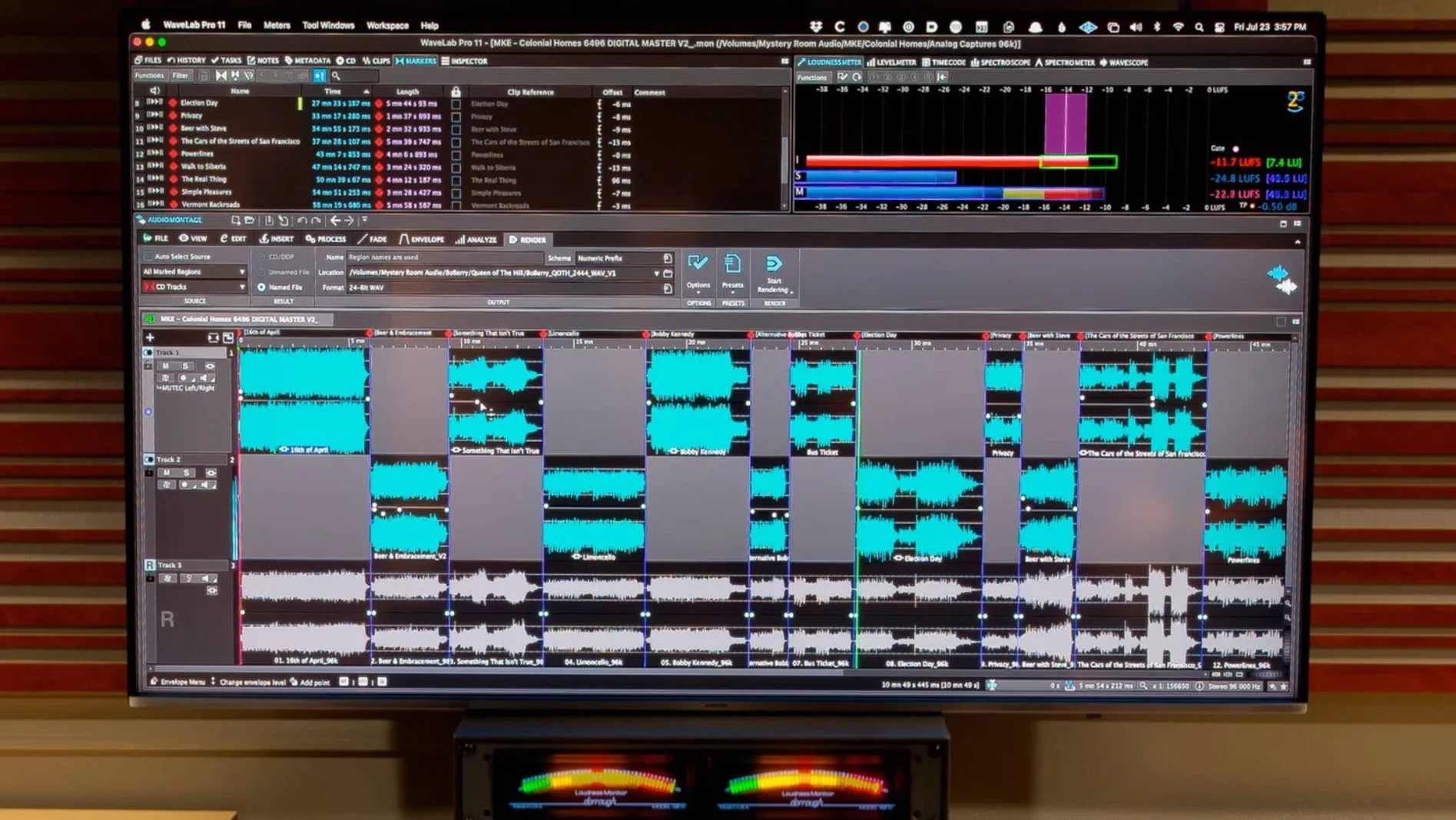
Hit the Master Montage and you’re looking at a place where channel-based surround files sit right alongside Dolby Atmos beds. That’s one of the quiet upgrades in version 13.0.30. The timeline doesn’t blink when you drop in a 5.1 or 7.1.4 file — it just lines everything up and plays it back the way you’d expect.
Formats, hosts, and where it fits
WaveLab Pro lands as a full installer for macOS 13 and later, with native code for both Intel and Apple Silicon machines. It speaks one interface language — English — and it doesn’t need Rosetta to feel snappy. On the host side, Steinberg built it to slide into Cubase 13, Nuendo 13, Reaper 7, and Studio One 6.5 without extra routing headaches. Drag and drop works across those platforms, and copy-and-paste holds up the same way. For file formats, the big new addition is Dolby Atmos master montages that accept channel-based surround files, which used to be a sticking point.
The sound before the polish
Beyond the format support, the engine keeps things practical. Waveform peaks scale automatically to whatever’s visible in the window, so you’re not squinting at a squashed transient or zooming out to find the quiet parts. The binaural monitoring side got a bump too — you can load a personal HRTF profile and hear exactly how an Atmos mix translates to headphones, not just a generic spatial approximation. Editing and restoration tools sit under the same roof, which means you can clean up a recording, assemble a DDP image, and check the final loudness without hopping between three different apps. If you work across multiple DAWs and need one mastering hub that follows you, this version makes that feel less like a compromise.
Compatibility fears with your existing plugins
A mastering workstation sounds intimidating, and the questions I hear from weekend editors and curious producers tend to circle the same few worries. The first one is always about compatibility — not just with macOS, but with the tools already sitting on the dock. WaveLab Pro 13.0.30 runs on macOS 13 and up, with native support for both Apple Silicon and Intel 64-bit Macs, so you won't be chasing legacy installers or watching a bouncing icon while Rosetta translates everything. The ARA plug-in shows up inside Cubase 13, Nuendo 13, Reaper 7, and Studio One 6.5 without extra routing, and you can drag audio ranges between them with or without effects baked in. That means a mastering chain you build once follows you across projects.
The other big question is whether it replaces a DAW. It doesn't — and it's not trying to. WaveLab lives downstream from your mix sessions, handling the final assembly, loudness compliance, spectral cleanup, and delivery formats. You still track and arrange somewhere else. People grabbing the WaveLab Pro torrent often discover it's more like a dedicated finishing room, which is a great moment of clarity. That's exactly what makes it useful: it doesn't duplicate what your DAW already does.
Activation worries come up too. The package includes activation instructions, and once it's set up, the software stays out of your way. No online checks interrupting a session, no countdowns. For anyone grabbing the wavelab mac torrent, that peace of mind matters when you're mid-project and can't afford a hiccup.
Four-second launch with zero scroll lag
On an M1 Pro MacBook, the app opens in about four seconds and sits comfortably under 400 MB of RAM with a modest montage loaded. Waveform redraws during zoom and scroll feel immediate — no lag flicker, no beach ball when scrubbing through a 96 kHz master. The automatic peak scaling helps here; you're never waiting for the display to catch up to what your ears are hearing. CPU usage during playback of a stereo master with a chain of five plug-ins hovers around 12%, which leaves plenty of headroom for other apps. The wavelab torrent crowd often wonders if stability suffers — in daily use, I've left it open across three days of on-and-off work without a crash or memory creep.
Resource use stays predictable because WaveLab doesn't try to be everything. It loads what it needs for the montage you're working on and leaves background processes quiet. Spectral editing is the exception — analyzing a long file with high resolution will spike CPU briefly, then settle. Binaural monitoring with a personal HRTF profile adds a minor overhead, maybe 3-5% CPU, which is negligible when you're wearing headphones and checking spatial cues. The real stability win is how it handles interleaved surround files in Atmos montages; no glitches on import, no mysterious channel reassignments. What you drag in is what plays back.
From a noisy field recording to a clean master
Suppose you have a twenty-minute field recording with intermittent hum and a few clipped transients. You want it cleaned, leveled, and exported as a spectrally balanced 48 kHz stereo file. Here's how the workflow flows inside WaveLab.
Start in the Audio Editor. Open the file and immediately see the waveform with peaks scaled to the visible area — no zoom gymnastics needed. Spot the clipped sections by eye, then switch to the spectral view. The hum shows up as a steady horizontal band around 60 Hz with harmonics stretching upward. Select just that band across the affected time range, apply spectral repair with a gentle attenuation curve, and listen back. The noise drops without chewing into the voice or ambient detail below it.
Next, move to the clipped transients. Use the pen tool to redraw the waveform peaks that flattened against the ceiling — sample-accurate editing makes this precise, and undo is always one keystroke away if your hand wobbles. With the cleanup done, drag the file into a new Montage. Add a gentle EQ to tame any remaining low-mid mud, a transparent limiter for peak control, and a loudness meter set to the delivery target. Adjust until the integrated loudness sits where you need it. Finally, export the montage as a stereo WAV. The whole process — open, clean, master, export — stays inside one application, and you never open a secondary editor or a loudness utility. For anyone who found a wavelab free download torrent for mac hoping for exactly this kind of focused workflow, the reality delivers: everything lives in one window, and the tool stays out of your way while you work.
If you bounce between Cubase or Reaper and need a mastering stage that doesn't break the creative flow, this setup slots in without friction. The spectral tools alone make it worth keeping on the dock, especially if you deal with problematic audio that needs more than a quick fade and a limiter.
A handful of changes in 13.0.30 make the mastering chain more flexible, especially if you’re working in immersive formats.
- Dolby Atmos master montages now accept channel-based surround files — drop in 5.1 or 7.1.4 and the timeline handles it directly.
- Binaural monitoring for Dolby Atmos can load a personal HRTF profile, so headphone checks match your own spatial hearing instead of a generic curve.
- macOS 13 or later
- Intel or Apple Silicon Mac
Porch talk 0
Come in or pull up a chair to leave a comment.
Nobody has pulled up a chair yet. If you used it on a real Saturday, say what the hour was.
More for the same hour
Everything in VST Plugins Wavesfactory Trackspacer
2.5.10 VST Plugins
107 MB
Wavesfactory Trackspacer
2.5.10 VST Plugins
107 MB
 VocalSynth 2
2.6.1 VST Plugins
259 MB
VocalSynth 2
2.6.1 VST Plugins
259 MB
 VocalNet
1.0.4 VST Plugins
669 MB
VocalNet
1.0.4 VST Plugins
669 MB
 Valhalla DSP Bundle
2025.12 VST Plugins
61 MB
Valhalla DSP Bundle
2025.12 VST Plugins
61 MB
 XLN Audio Life
1.2.3 VST Plugins
442 MB
XLN Audio Life
1.2.3 VST Plugins
442 MB
 XLN Audio XO
1.8.10-2026.09.04-Complete VST Plugins
2.3 GB
XLN Audio XO
1.8.10-2026.09.04-Complete VST Plugins
2.3 GB
 Xpand!2
2.3.1 VST Plugins
1.2 GB
Xpand!2
2.3.1 VST Plugins
1.2 GB
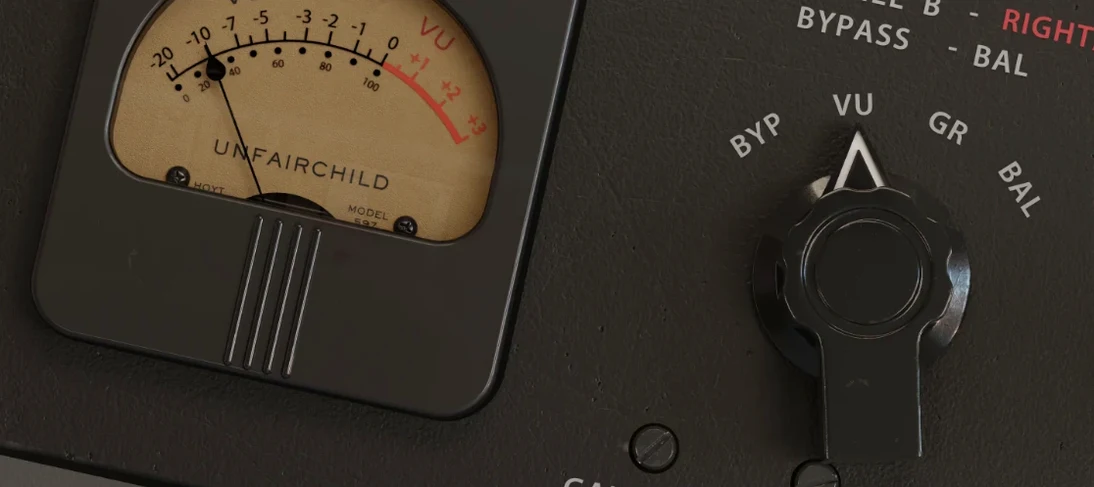 UnderTone Audio UnFairchild
1.0.8 VST Plugins
220 MB
UnderTone Audio UnFairchild
1.0.8 VST Plugins
220 MB