
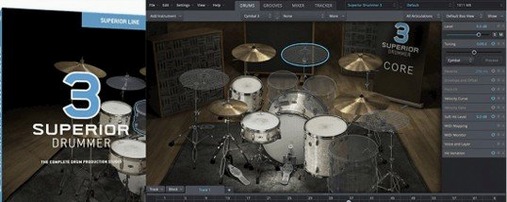
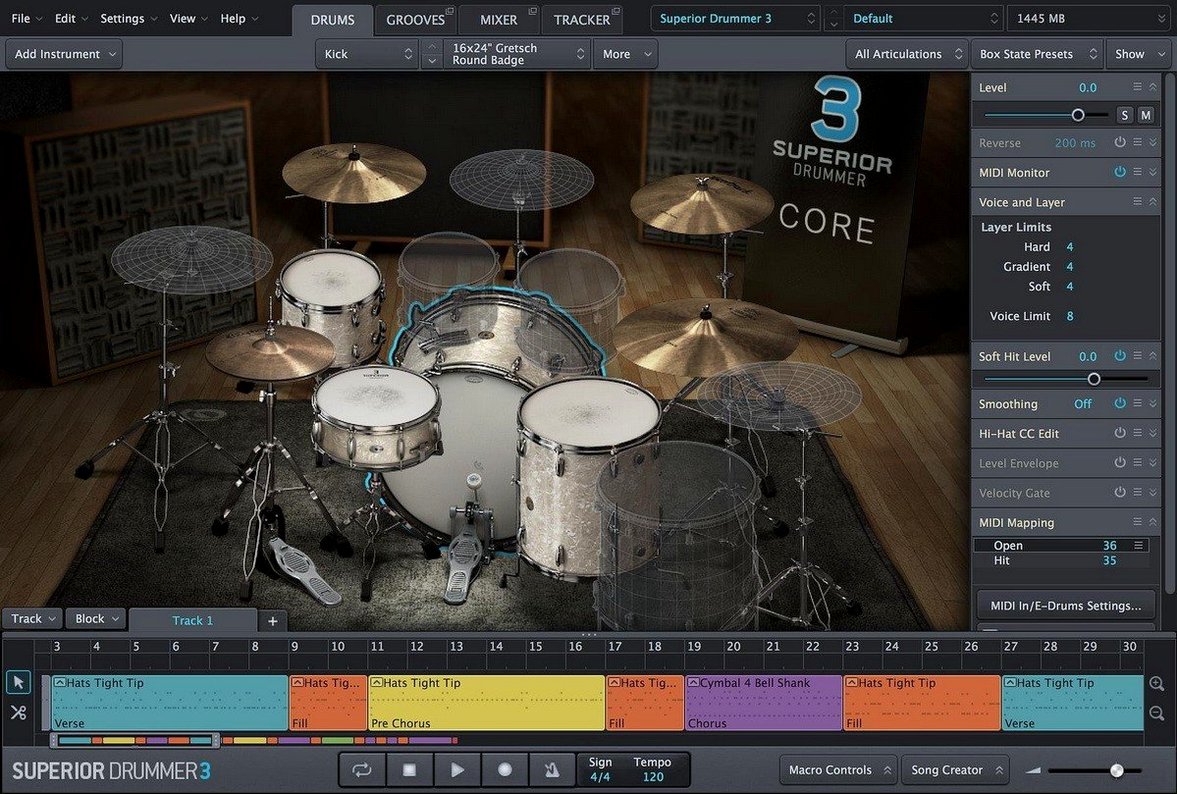
You're staring at a piano roll with a lifeless kick-snare pattern, and the track needs real movement. That's the moment a proper drum sampler earns its keep. Superior Drummer puts a full virtual studio on your Mac — not just a collection of hits, but a space where you can shape drum sounds from the overhead mics down to the room bleed. The current version, 3.4.4, runs on macOS 10.13 and later with 64-bit host support, and it arrives as a standard disk image you install step by step.
- A drum sampler with seven full kits and a built-in mixer for shaping tone inside the plug-in
- Converts drum audio to MIDI, so you can pull groove data from existing recordings
- Functions as a complete virtual drum studio — choose mics, tune heads, and dial in room ambience
- Built for percussive sound design, not just traditional acoustic kits
- English-language interface that keeps the engineering workflow front and center
If you spend your evenings building tracks and wishing the drums felt more alive, this is the kind of tool that fits right into that routine. It rewards the sort of person who enjoys getting under the hood — not just picking a preset, but actually moving microphones around a virtual room.
First Days: Four Things Worth Doing Before You Write a Single Groove
The library weighs in at 230 GB. That's a lot of wood, metal, and room tone sitting on your drive, and the temptation is to load a kit and start auditioning snare hits until your ears glaze over. A better first afternoon looks more like this.
Start by mapping out your audio routing. Open the mixer view, assign each close mic, overhead, and room channel to separate outputs in your DAW, and save that as a template. It takes twenty minutes and pays off every time you want to process the floor tom differently than the kick without juggling internal busses later.
Next, pull up the kick drum from the default kit and play a simple four-on-the-floor pattern while you cycle through the mic channels — just the close, just the overheads, just the room. Listen to how the low end shifts. That one exercise will teach you more about the engine than reading any manual. Superior Drummer builds its sound from multiple perspectives, and knowing which mics carry the weight you're after changes how you mix from day one.
Third, grab a piece of audio — a loop, a scratch vocal, anything with rhythmic information — and feed it into the audio-to-MIDI converter. Adjust the sensitivity threshold a few times. The results won't always be usable straight out of the gate, but the process reveals how the detection thinks about transients. You'll get cleaner conversions later because you'll know when to help it with a high-pass filter on the way in.
Finally, build a small favorites list. With seven kits and endless articulation options, decision fatigue sets in fast. Spend an hour playing through snares, hi-hats, and crashes, and tag the ones that speak to you. When a session is moving and you need a snare that cracks without ringing, you'll reach for your shortlist instead of scrolling through a hundred samples while the idea fades.
Songwriters, ReWire Users, and the Neighbor-Friendly
Superior Drummer tends to click with three specific camps of Mac users, and for reasons that go beyond just needing drum sounds.
Songwriters who track at home and don't have the space — or the neighbors' patience — for a live kit. For them, the value isn't just the sample quality; it's the ability to rough out a full drum performance on a MIDI keyboard or a pad controller and then refine it into something that breathes. The articulations matter here. A ghost note on the snare at velocity 20 should sound like a ghost note, not a quiet hit. That's where the round-robin sampling and multiple velocity layers earn their keep.
Mix engineers who inherit tracks with underwhelming drum recordings. The audio-to-MIDI conversion becomes a rescue tool. You take a kick track that's all cardboard and no punch, convert it to MIDI, and trigger a deeper, cleaner sample layered underneath. Blend the original for character, the sample for weight. The 35 mixer effects inside the plug-in mean you can shape that blend without leaving the window — compression on the close mic, a touch of saturation on the room, done.
Sound designers and electronic producers who treat the library as raw material rather than a drum kit. The percussive sound design angle means you can load a floor tom, pitch it down an octave, run it through the internal distortion, and end up with something that sounds nothing like a drum. It becomes a texture layer under a synth part or a riser element. The built-in mixer with its full channel strip per mic lets you process each element independently, so a single kit can feed three entirely different sonic ideas.
If you're the kind of producer who opens a drum plug-in, hits a preset, and moves on, you'll likely find the interface overwhelming. But if you enjoy the process of building a drum sound the way an engineer builds it in a tracking room — moving mics, tuning drums, balancing bleed — this rewards that mindset.
Building a Pop-Rock Kit from a Blank DAW
Let's walk through a typical evening with Superior Drummer on a pop-rock track that needs drums from scratch.
The DAW is open, the verse chords are laid down, and there's a rough bass line holding the low end. You load Superior Drummer as a 64-bit plug-in on an instrument track and pull up a kit you tagged during that first-week favorites session — a maple shell pack with a warm kick and a snare that has some crack without being brittle. The default mixer preset is too wet for this arrangement, so you pull the room mics down about 4 dB and nudge the overheads slightly left and right to match the stereo width of the guitars.
You tap out a basic kick and snare pattern on the keyboard — nothing fancy, just the skeleton. Quantize it to 80% strength so it locks in without feeling robotic. The hi-hat part comes next, riding on eighth notes with a few open accents at the end of each phrase. Velocity editing takes ten minutes: the verse hats sit around 90, the chorus hats jump to 110, and the snare backbeats get a slight bump on the choruses to push the energy.
Now the fun part. You open the close mic channel on the snare, insert a compressor from the 35 onboard effects, set a medium attack and a quick release, and dial in about 4 dB of gain reduction. The snare tightens up immediately. On the kick, you add a touch of EQ — a narrow cut around 300 Hz to pull out some boxiness and a broad boost at 60 Hz for weight. The overheads get a gentle high-shelf lift at 8 kHz to open up the cymbals.
You spend another fifteen minutes adding fills: a tom run into the second chorus, a snare flam at the turnarounds, some ghost notes on the snare in the quieter verse sections. The round-robin samples keep those ghost notes from sounding like machine-gun repetitions. By the end of the hour, you have a drum performance that follows the song's dynamics, with a mix that sits in the track without needing a dozen extra plug-ins on the drum bus.
Building a Hybrid Kit: Acoustic Bones, Electronic Skin
Here's a workflow for a specific task: creating a hybrid drum sound that blends acoustic punch with electronic texture, start to finish.
The goal is a driving verse groove for a synth-heavy track — something with the transient snap of a live kit but the sustain and tail of a processed electronic layer. Begin by loading a tight, controlled kit. Pick a kick with a short decay, a snare that's dry and focused, and hats that are crisp without too much wash. Tune the snare up slightly in the drum editor to help it cut through the synth pads you're planning to lay over it.
Route the kick and snare close mics to separate DAW channels. On the kick, bypass the internal mixer effects and instead add a transient shaper outside the plug-in — sharpen the attack by about 20% and shorten the sustain so the low end doesn't compete with the bass synth. On the snare, keep the internal compressor from the previous session but add a noise gate set high enough to chop the tail. You want the hit, not the ring.
Now create a second instance of Superior Drummer — or a separate sampler, whichever you prefer — and load a tom sample. Pitch it down a full octave, run it through the internal distortion effect with the drive at about 60%, and use a low-pass filter to roll off everything above 500 Hz. This becomes a low-end rumble that triggers on the same MIDI notes as the acoustic kick. Blend it underneath until you feel the weight more than you hear it.
For the snare, take a rim-click from the library, pitch it up seven semitones, and drench it in a long reverb — the built-in plate works well here. Layer it under the acoustic snare at a low volume, just enough to create a shimmer that hangs in the gaps between backbeats. The electronic elements are now doing what the room mics normally do: filling space and adding character.
Feed the whole drum bus through a gentle glue compressor and pull up a parallel compression send. Push the parallel channel hard — 10 dB of reduction — and blend it back in at about 30%. The result is a hybrid groove that hits like a live drummer but breathes like a programmed beat, and every layer traces back to sounds that started inside the Superior Drummer library.
Version 3.4.4 is the latest release. A notable heads-up: version 3.4.0 or newer is required if you're planning to use Superior Drummer 3 products that ship from the second quarter of 2025 onward.
- macOS 10.13 or later
- Runs on both Intel and Apple Silicon Macs
- 64-bit host support required
Questions I actually get
What is Superior Drummer used for?
It's a virtual drum studio that works as a sampler with a built-in mixer, letting you create and shape drum sounds inside your Mac.
Can Superior Drummer turn audio into MIDI?
Yes, it includes a feature that converts drum audio recordings into MIDI data you can edit and reuse.
How many kits come with Superior Drummer?
The package includes seven drum kits, covering a range of styles for percussive sound design.
Porch talk 0
Come in or pull up a chair to leave a comment.
Nobody has pulled up a chair yet. If you used it on a real Saturday, say what the hour was.
More for the same hour
Everything in VST Plugins Supertone Air
1.0.1 VST Plugins
408 MB
Supertone Air
1.0.1 VST Plugins
408 MB
 Synapse Audio The Legend HZ v2.0.2.R1
2.1 VST Plugins
472 MB
Synapse Audio The Legend HZ v2.0.2.R1
2.1 VST Plugins
472 MB
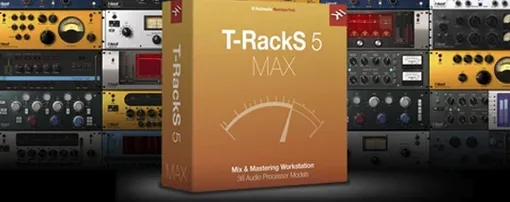 T-RackS
6.3.2 VST Plugins
2.3 GB
T-RackS
6.3.2 VST Plugins
2.3 GB
 Steinberg SpectraLayers Pro
13.0.20-All-in-One VST Plugins
3.9 GB
Steinberg SpectraLayers Pro
13.0.20-All-in-One VST Plugins
3.9 GB
 SSG Audio Optimus
1.5.143 VST Plugins
58 MB
SSG Audio Optimus
1.5.143 VST Plugins
58 MB
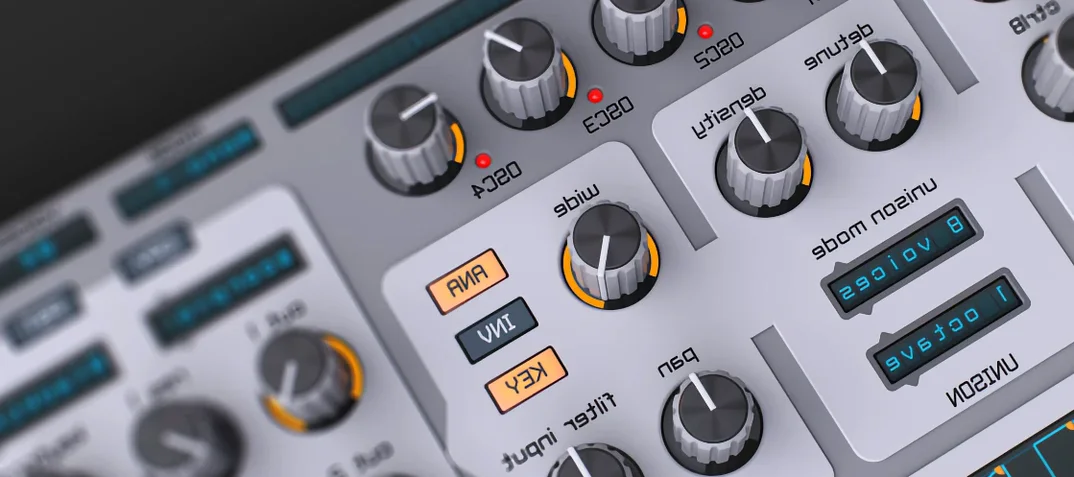 Spire
1.5.19 VST Plugins
158 MB
Spire
1.5.19 VST Plugins
158 MB
 Sonic Academy KICK
1.1.8 VST Plugins
Updated 358 MB
Sonic Academy KICK
1.1.8 VST Plugins
Updated 358 MB
 Slate Digital Submerge
1.0.5 VST Plugins
38 MB
Slate Digital Submerge
1.0.5 VST Plugins
38 MB