
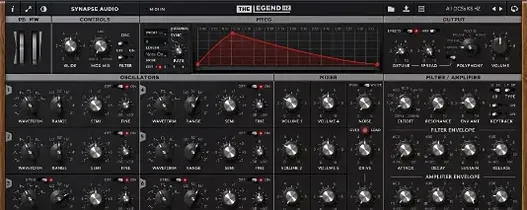
Get Synapse Audio The Legend HZ v2.0.2.R1 2.1 for Mac
VST Plugins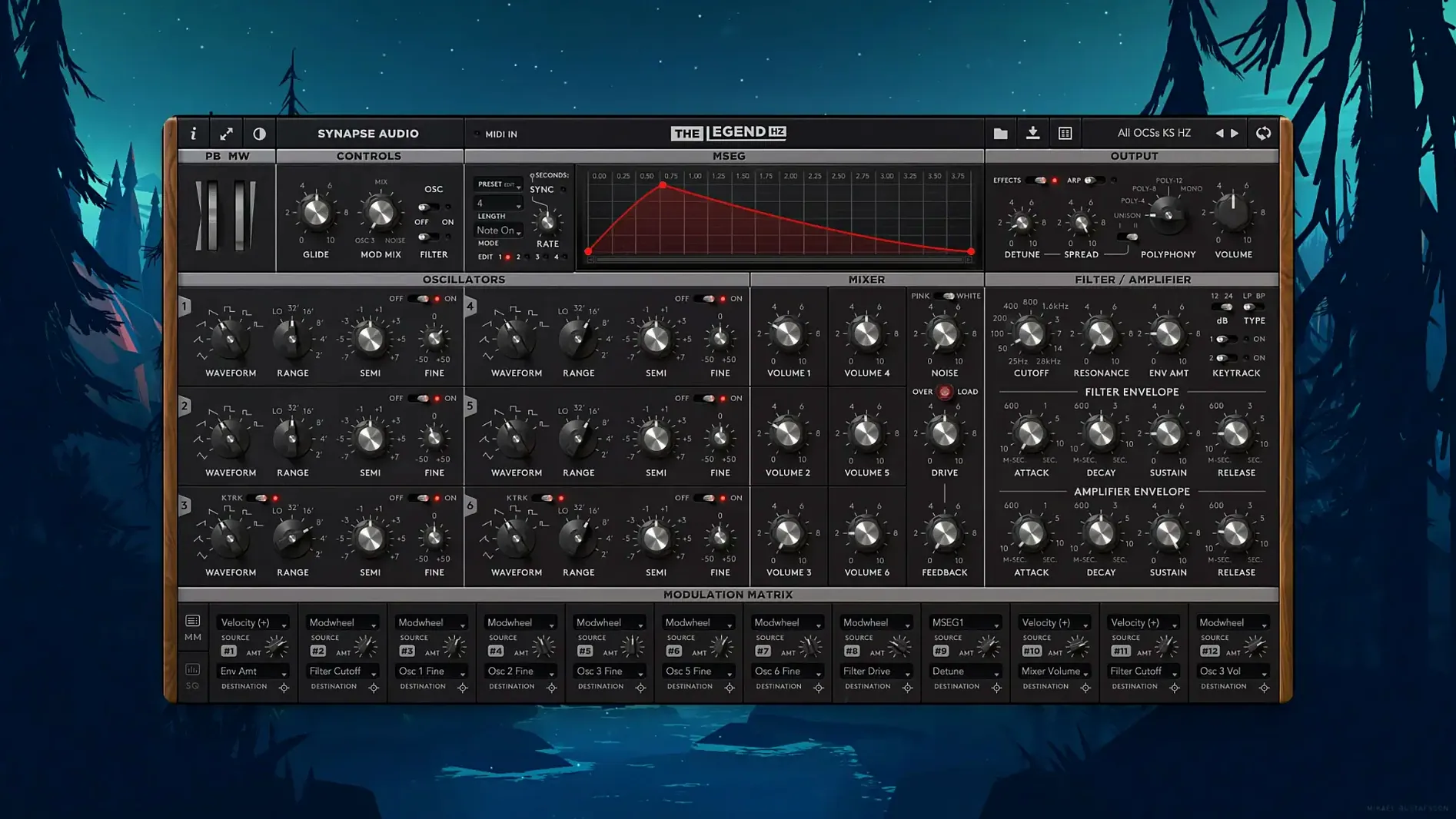
Producers and sound designers who reach for an analog-modeled synth often need it to pull double duty—cutting through a dense mix as a lead one minute, then warming up a background bus the next. The Legend HZ is built for that kind of session flexibility, taking the familiar Minimoog-style signal path and expanding it with six VA oscillators, MPE support, and an onboard arpeggiator/sequencer that pushes it well beyond simple bass duties.
Tucking Detuned Saw Behind a Lead Vocal
On a lead vocal track, a touch of detuned saw from The Legend HZ tucked behind the voice can add weight without crowding the midrange. It shines on mono bass lines where the 400 Hz frequency range needs definition, but it is equally comfortable on a stereo effects bus, drenched in reverb, providing slow-moving pads. Because projects created with the original The Legend will open that instrument, you can run both side by side—maybe the HZ handling a complex sequenced part while the classic version covers a simple sub layer.
Typical jobs and version 2.1
The arpeggiator makes it a go-to for rhythmic synth parts that evolve over a chorus. With MPE, a controller like a ROLI Seaboard bends and slides per note, turning a static chord into something fluid. The recent 2.1 update adds a paragraphic equalizer on the back panel, so you can shape tone without leaving the instrument, plus compressor saturation for thickening a sound before it hits the channel fader. MTS-ESP microtuning support means it fits into alternate tuning workflows without external hacks. Any patch or soundbank made for the original The Legend loads right in, giving you a deep library from day one.
A busy project with a handful of Legend HZ instances, some Pigments pads and a dense drum bus running is where you really feel the engine. On an Apple Silicon Mac, twelve-voice polyphony stays responsive even when you stack unison voices and lean on the arpeggiator. The GUI redraws are quick—turning the 914 Fixed Filter Bank knobs while the transport runs doesn't stutter or lag behind your mouse. On Intel machines it holds up fine too, though I tend to freeze tracks once I am past eight or nine instances just to keep the fan quiet. The 2.1 compressor saturation circuit adds warmth without the CPU penalty of a full mastering compressor, so you can get a little glue on a bass group without reaching for another plug-in.
Memory use stays modest for what it is doing. A single instance sits around 180 MB, and loading a full bank of the 200 factory presets—the ones Hans Zimmer and Kevin Schroeder built—does not balloon that number. Switching between patches is nearly instant, which matters when you are auditioning sounds against a cue and the director is waiting.
Building a Dark Underscore from a Piano Sketch
I open a project that needs a dark, evolving underscore. The timeline has a piano sketch and some string longs, but the low mids feel hollow. I drop The Legend HZ onto an instrument track and open the preset browser. Scrolling past the Zimmer leads, I land on a bass patch called "Subsurface" and hold a low D. Immediately the room fills in—the kind of weight that makes the piano feel anchored rather than floating.
I turn off the arpeggiator for now and play in a simple four-bar phrase with the mod wheel half forward. The MPE routing catches the aftertouch, so the filter opens slightly on harder presses. After recording, I open the back panel and dial in the new paragraphic equalizer. A narrow cut around 400 Hz clears up some mud where the cellos sit, and a gentle shelf at 60 Hz keeps the sub under control.
Next, I duplicate the track and load a sequenced patch. With the arpeggiator set to 1/16 notes and the pattern locked to three octaves, I ride the filter cutoff in real time while the sequence runs. The 914 Fixed Filter Bank adds a hollow, resonant texture that sounds almost like a treated sample. By the end of the cue, that one instance is doing bass, a mid-range pulse and a high shimmer—three layers from a single plug-in.
Before bouncing stems, I add a touch of compressor saturation on the back panel—just enough to round off the transient peaks so the mastering engineer has less to catch later.
Audition Your Old Patches Through the Expanded Engine
- Load your old The Legend patches first. If you have any, drag them in on day one. Hearing familiar sounds through the expanded voice engine and filter bank is the quickest way to understand what is new.
- Spend an evening with the 914 Fixed Filter Bank alone. Turn off the oscillators and feed in external audio from a drum loop or a vocal chop. Small boosts in the upper bands create a lo-fi radio effect that sits beautifully behind a lead.
- Map MPE to something unexpected. Most people assign aftertouch to filter cutoff. Try mapping it to the arpeggiator rate or the compressor saturation amount for a few minutes—you will stumble on gestures that feel more musical than the defaults.
- Stack unison voices on a simple triangle wave. At six voices, it fattens up without turning into a phasey mess. At twelve, it becomes a convincing pad layer you can high-pass and tuck under a chorus.
- Browse the Zimmer presets slowly. Do not just click through. Hold a chord for ten seconds on each one and move the mod wheel. A patch that sounds unremarkable at first often opens up with a little pressure.
Version 2.1 brings some useful tone-shaping tools to the back panel, along with microtuning support and a fresh set of presets.
- Added a paragraphic equalizer on the back panel.
- Added compressor saturation.
- Added MTS-ESP microtuning support.
- Added 50 factory presets by Kevin Schroeder.
- macOS 10.14 or later
- Apple Silicon or Intel 64-bit system
Questions I actually get
Can I load my old The Legend patches into The Legend HZ?
Yes, patches and soundbanks made for the original The Legend can be loaded directly into The Legend HZ.
Porch talk 0
Come in or pull up a chair to leave a comment.
Nobody has pulled up a chair yet. If you used it on a real Saturday, say what the hour was.
More for the same hour
Everything in VST Plugins T-RackS
6.3.2 VST Plugins
2.3 GB
T-RackS
6.3.2 VST Plugins
2.3 GB
 Supertone Air
1.0.1 VST Plugins
408 MB
Supertone Air
1.0.1 VST Plugins
408 MB
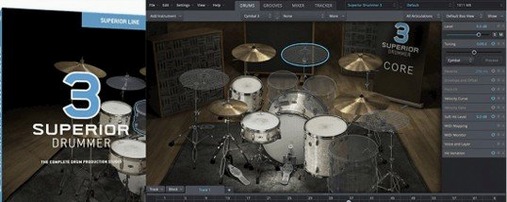 Superior Drummer
3.4.4 VST Plugins
625 MB
Superior Drummer
3.4.4 VST Plugins
625 MB
 Steinberg SpectraLayers Pro
13.0.20-All-in-One VST Plugins
3.9 GB
Steinberg SpectraLayers Pro
13.0.20-All-in-One VST Plugins
3.9 GB
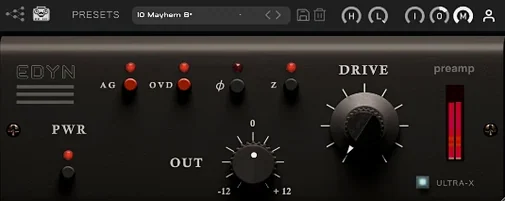 Tone Empire EDYN
1.0.2 VST Plugins
198 MB
Tone Empire EDYN
1.0.2 VST Plugins
198 MB
 Toontrack EZkeys
2.1.5 VST Plugins
707 MB
Toontrack EZkeys
2.1.5 VST Plugins
707 MB
 SSG Audio Optimus
1.5.143 VST Plugins
58 MB
SSG Audio Optimus
1.5.143 VST Plugins
58 MB
 Toontrack EZmix Bundle
3.2.2 VST Plugins
977 MB
Toontrack EZmix Bundle
3.2.2 VST Plugins
977 MB