
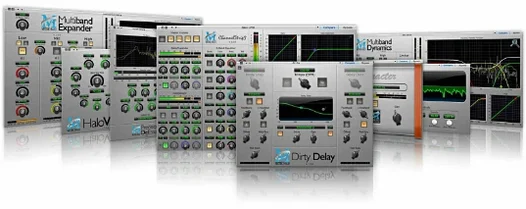
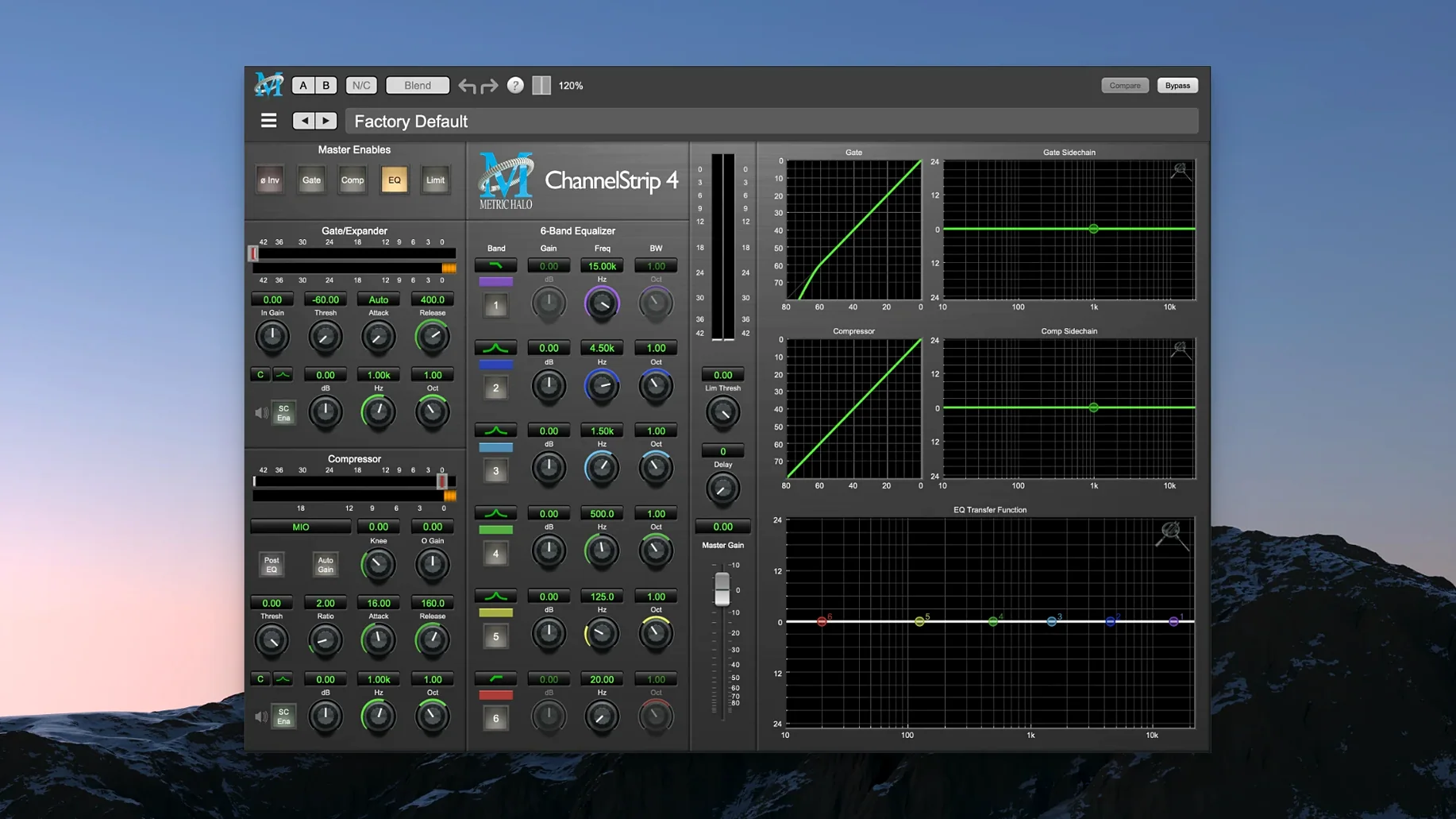
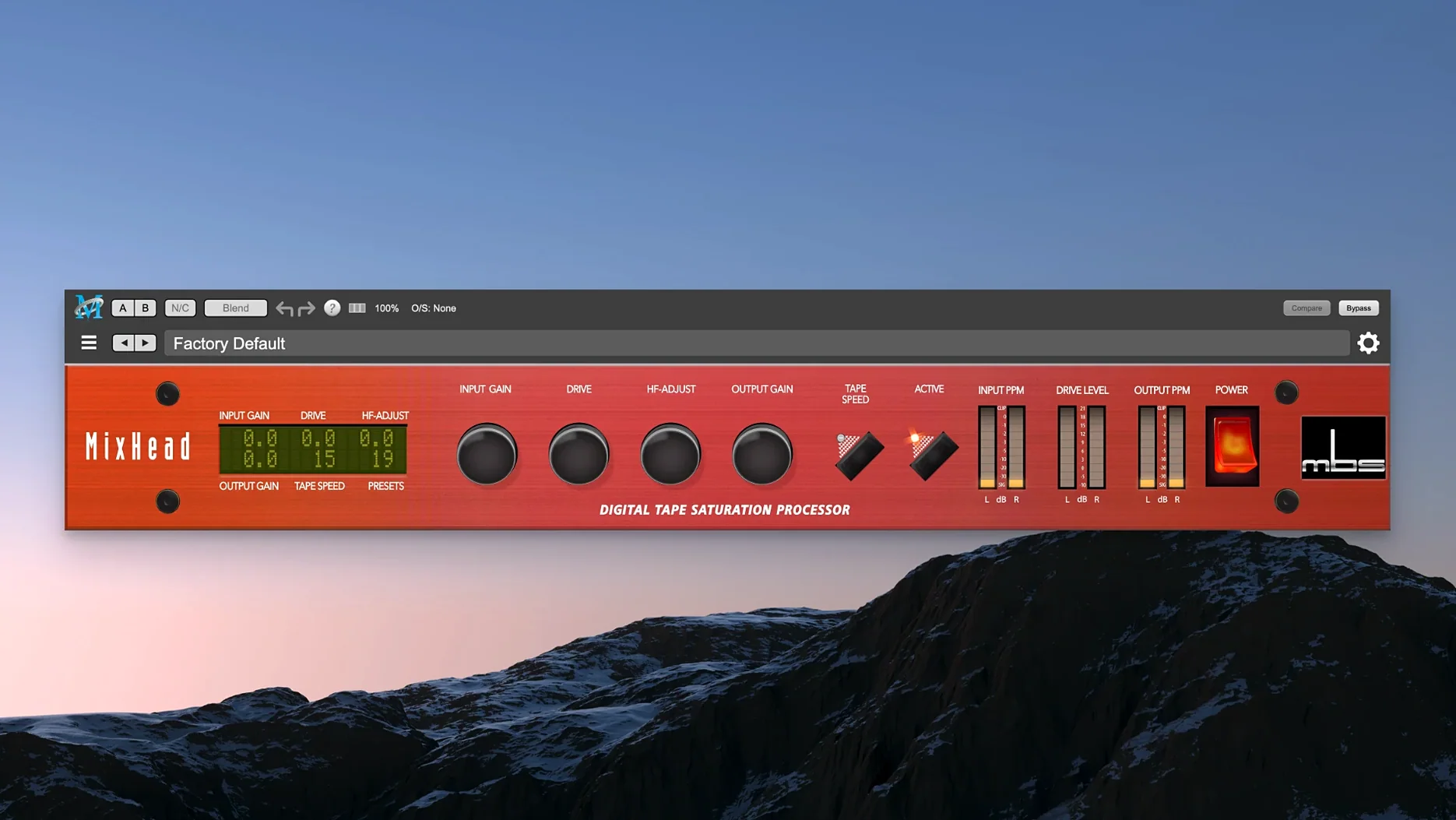
You pull up a fader and the sound is almost there, but the space around it feels flat. A dry vocal, a kick drum that needs weight, a whole bus that could use a little glue — these are the moments a channel strip alone won't fix. The Metric Halo Production Bundle steps in with a focused set of processors that cover the ground between an idea and a finished mix.
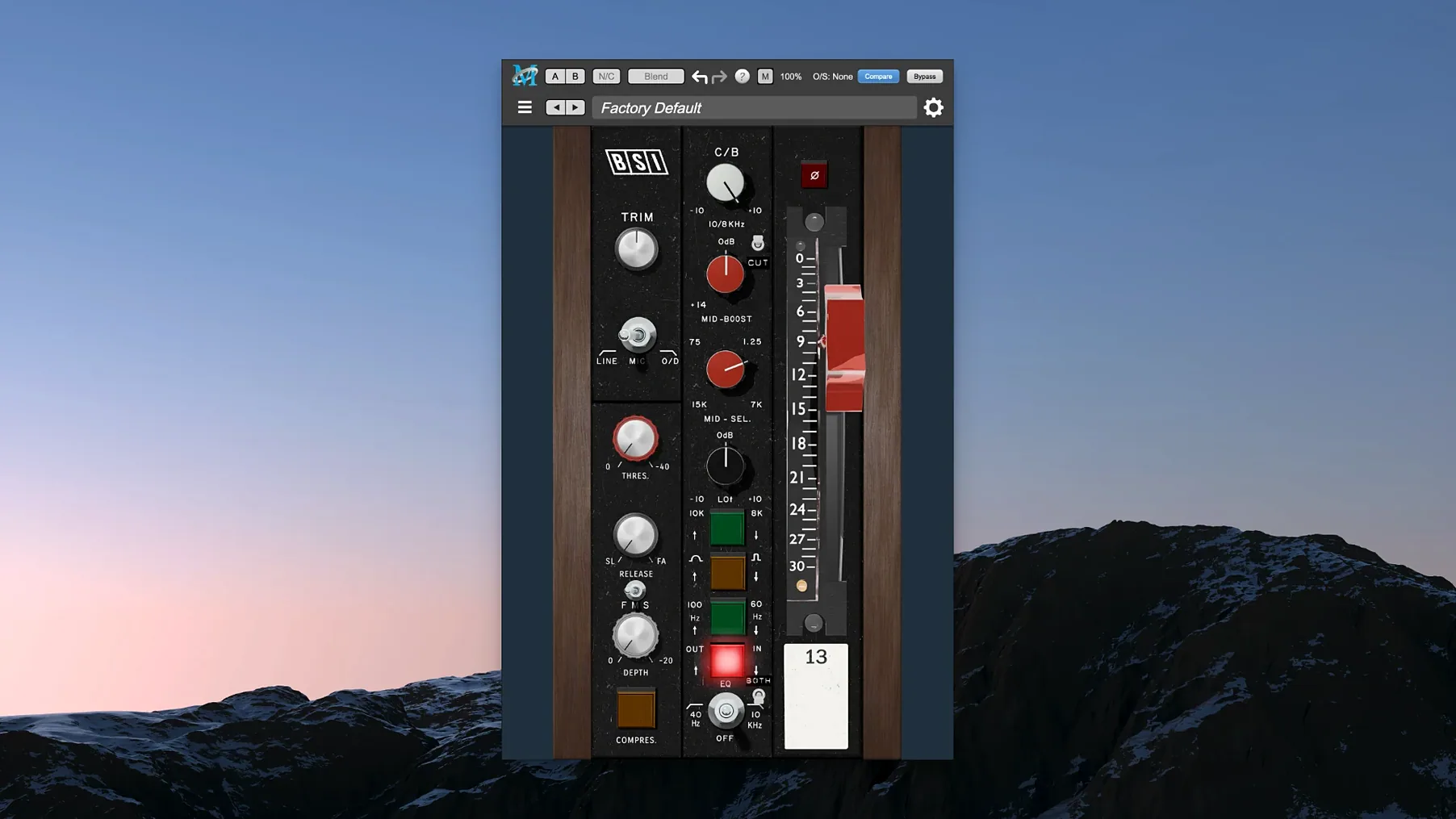
At the center is MIOStrip, a full channel strip that puts gate, compressor, and EQ in one window. The compressor has a way of grabbing transients without making the tail obvious; the EQ bands are broad and musical, the kind you reach for when you want to shape tone rather than surgically remove problems. Alongside it, HaloVerb builds spaces that feel tuned for music. It is an algorithmic reverb with controls that let you dial in early reflections and tail density separately, so a small room stays small and a hall blooms without turning muddy.
Thump handles the low end. It does not just boost sub frequencies — it adds harmonics that make the weight of a kick or a bass line translate on smaller speakers. Used lightly, it gives a track presence; pushed harder, it can reshape the character of a drum bus.
These are plug-ins built for signal flow thinkers. Every control is on the surface, no hidden menus, and the interface stays responsive when you are tweaking during playback. If you mix in the box on an Apple Silicon Mac and want a tight set of tools that sound as good as the hardware they nod toward, this bundle is worth a close listen.
Tracking bands with ChannelStrip’s gate, comp, and EQ
If you track bands in a project studio and mix on the same machine, ChannelStrip alone earns its keep. The gate closes cleanly on tom mics between hits, the compressor does not choke on snare transients, and the EQ section handles broad tone shaping without forcing you to open a second plug-in. You can work fast, which matters when the band is still in the room.
People mixing other folks' tracks tend to reach for different pieces. HaloVerb becomes the go-to when the session arrives with whatever stock reverb the producer printed and you need something that actually sits in the stereo field. Thump gets used on kick drums that were recorded in a bedroom, on bass DI tracks that lack body, even on thin synth pads that need weight below 80 Hz without a muddy low-mid buildup.
Mastering engineers who already own dedicated tools will still find the Precision De‑Esser useful for quick vocal chain fixes. It catches sibilance in the 5–9 kHz range without dulling the air above it, which makes it a decent safety net before the signal hits a broad‑stroke exciter. Sound designers, meanwhile, often overlook channel strips entirely and head straight for HaloVerb's early reflection engine — dialing reflection patterns for footsteps in a metal corridor or a voice inside a helmet works surprisingly well with a reverb that lets you separate early and late energy.
ARM-native M-series speed without Rosetta
The jump to native ARM code is the headline item. On an M‑series Mac, the plug‑ins load instantly and do not trigger Rosetta, which means sessions with thirty or forty instances stay responsive. CPU meters in Logic and Live show the difference most clearly on Thump — the harmonic synthesis engine runs cooler now, so you can stack it across multiple drum channels without nudging the buffer size upward.
The activation flow has been reworked. The current package includes a patched installer that skips the online challenge‑response step, so you drop the components into your plug‑ins folder and the DAW finds them on the next scan. No license file juggling, no iLok prompts. For anyone who has rebuilt a Mac from scratch after an OS update, that simplicity is the kind of quality‑of‑life change that does not make the feature list but absolutely shapes the first hour of getting back to work.
Several users searching for a metric halo plugin bundle v2026.01 macos [u2b]-flare have noticed the version numbering shift — Metric Halo moved away from the old point‑release scheme, so the 2025.05 label replaces what would have been a 4.x designation. The plug‑ins themselves remain functionally identical to the previous stable release; the update is about ARM compatibility and installation streamlining rather than new DSP algorithms.
Swap ChannelStrip onto a vocal bus and toggle
Start by swapping ChannelStrip onto a vocal bus you already mixed with stock EQ and compression. Match the rough gain reduction on the compressor and set the EQ to taste, then toggle between the two plug‑ins. The difference usually shows up in the low mids — ChannelStrip's filters have a gentler phase shift around the cutoff points, so vocals keep their chest resonance without turning boxy.
On the low‑end side, try Thump on a kick drum before your usual compressor. Dial the frequency to the fundamental of the kick, bring up the harmonic amount until you hear the note solidify, then back it off by a couple of dB. The result tends to hit harder on earbuds and phone speakers because the added harmonics give the ear something to latch onto even when the sub frequencies disappear on small drivers.
For HaloVerb, build a medium room preset and save it as your utility reverb. Set the early reflections to taste, pull the tail down to around 1.2 seconds, and route a few key elements — snare, lead vocal, a mono guitar line — to it in small amounts. The consistency glues disparate tracks without the wash you get from a longer hall. It is the kind of setup that lives on an aux send for an entire project.
If you grabbed the bundle through a metric ab torrent or a metric ab mac torrent, make sure the component files land in the correct Library folder. A quick DAW rescan after dropping them in place is all it takes — no extra authorization steps, no background daemons to approve in System Settings. From that point on, the plug‑ins show up in your insert menus the same way any native Audio Unit would.
- macOS 11 or later
- Apple Silicon Mac
Questions I actually get
What is included in the Metric Halo Production Bundle?
The bundle includes MIOStrip, a channel strip with gate, compressor, and EQ; HaloVerb, an algorithmic reverb; and Thump, a low-end processor that adds harmonics to bass frequencies.
Porch talk 0
Come in or pull up a chair to leave a comment.
Nobody has pulled up a chair yet. If you used it on a real Saturday, say what the hour was.
More for the same hour
Everything in VST Plugins Melodyne
5.4.2.006 VST Plugins
97 MB
Melodyne
5.4.2.006 VST Plugins
97 MB
 MeldaProduction MCompleteBundle
2026.07 VST Plugins
1.2 GB
MeldaProduction MCompleteBundle
2026.07 VST Plugins
1.2 GB
 MiniMeters
1.0.30.358 VST Plugins
103 MB
MiniMeters
1.0.30.358 VST Plugins
103 MB
 Minuit Solstice
1.2.0 VST Plugins
117 MB
Minuit Solstice
1.2.0 VST Plugins
117 MB
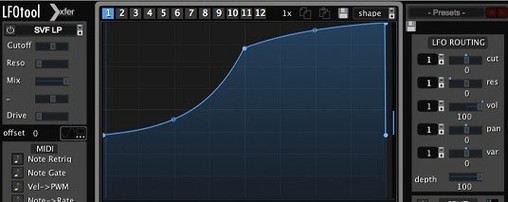 LFOTool
1.768 VST Plugins
7 MB
LFOTool
1.768 VST Plugins
7 MB
 Native Instruments Massive X
1.7.1 VST Plugins
1.6 GB
Native Instruments Massive X
1.7.1 VST Plugins
1.6 GB
 Neural DSP Archetype Petrucci
1.0.0 VST Plugins
745 MB
Neural DSP Archetype Petrucci
1.0.0 VST Plugins
745 MB
 LANDR Vocal Bundle
2025.12 VST Plugins
447 MB
LANDR Vocal Bundle
2025.12 VST Plugins
447 MB