
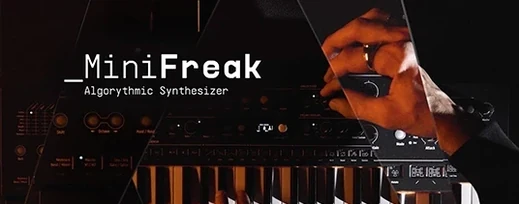
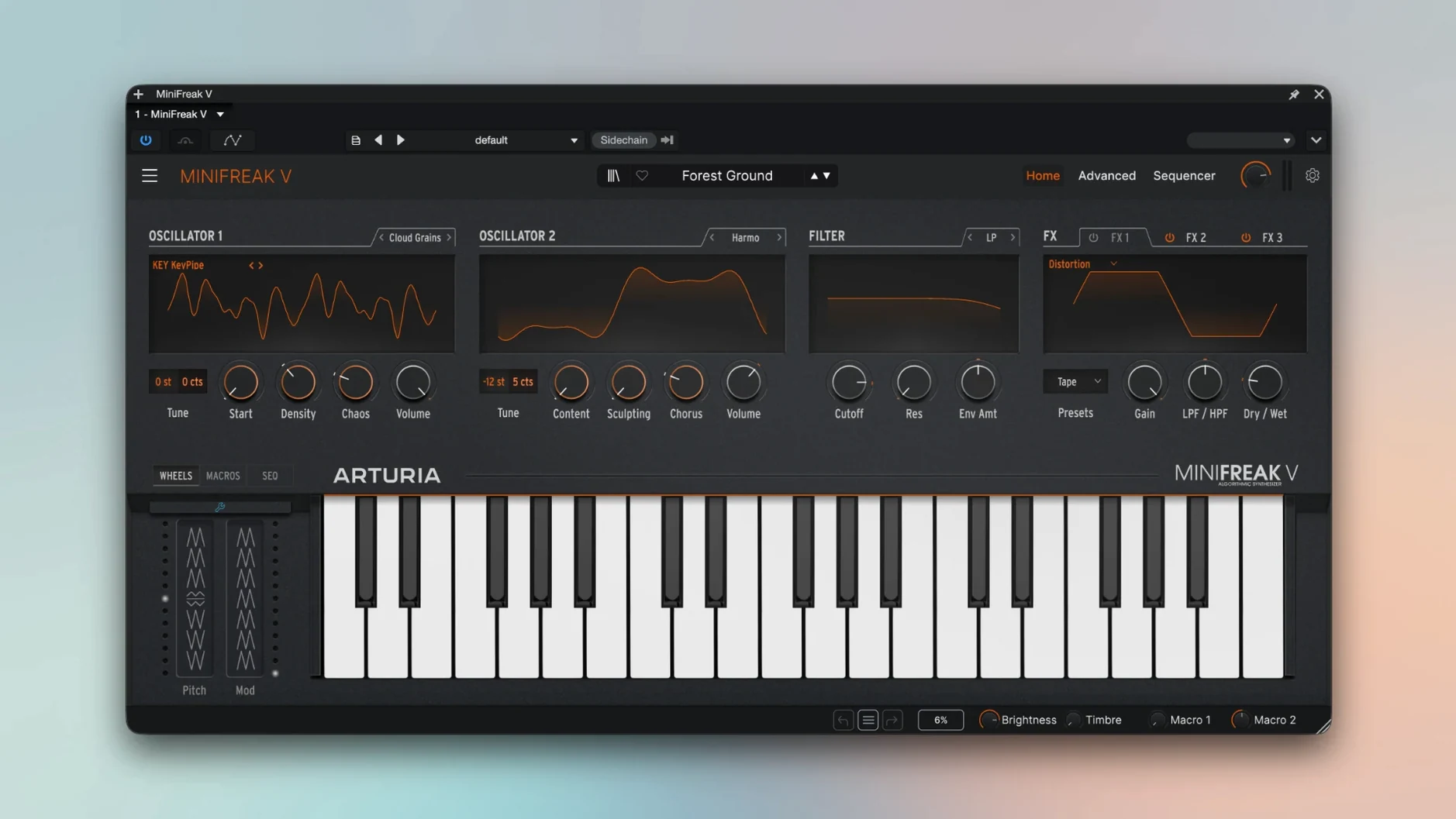
This one lands on your Mac as a VST, AU, AAX, or standalone app, and it asks for macOS 11 or later on either Apple Silicon or Intel hardware. That wide net means you can open it in Live, Logic, Cubase, or just fire it up on its own without a DAW. Arturia built MiniFreak V as the exact software counterpart of their hardware synth, so the architecture mirrors the real thing down to the dual digital sound engines and modeled analog filters. It loads the same presets, responds to the same knob twists, and brings the hardware's spontaneous modulation and playing sequencer into your screen.
- 3 FX slots pulling from 13 choices—reverbs, delays, distortion, and weirder textures
- Polyphonic hybrid engine blending digital oscillators with analog-modeled filtering
- Modulation matrix for routing almost anything to anything else
- Spontaneous modulation and a playing sequencer for lines that shift as you go
- Works as VST, AU, AAX, and standalone on ARM and x86 64-bit Macs
The signal path starts with those two digital sound engines—wavetable, FM, virtual analog, and a handful of other modes—then runs through a filter section modeled after analog circuitry. Toss in the three effects slots and the deep modulation, and you get a virtual instrument that pushes well past bread-and-butter poly sounds into experimental territory. If your setup already includes a hardware MiniFreak, the latest update even lets you import your own samples and wavetables, which opens the door further. It’s a solid fit for anyone who wants the MiniFreak sound without the desk space, or a way to grab patches and sequences inside a project without printing audio too early.
Daily Use Without the Drag
In a typical session, MiniFreak V settles in quickly. Patches load without long waits, and switching between the standalone app and a DAW insert rarely causes a hiccup. On Apple Silicon it runs as a native process, so CPU headroom stays comfortable even when you stack a few instances in a bigger project. Older Intel machines will work harder, but the instrument scales reasonably well if you keep the effects slots lean.
Memory use stays modest for what it offers. The dual engines and modeled filters don't demand much beyond what a standard modern soft synth needs, and the app doesn't spawn background helpers that linger after you quit. That makes it easy to leave open while you browse presets or audition sequences, which is where the spontaneous modulation really shines.
Playing Well with Others
The AU and VST3 versions behave as you'd expect in Logic, Live, and Cubase—automation lanes map cleanly, and the playing sequencer syncs to host tempo without extra setup. Standalone mode works nicely with MIDI controllers, and if you own the hardware MiniFreak, the controls map over USB with almost no configuration. The same presets travel between hardware and software, so a patch you tweak on the unit shows up in the plugin without exporting anything.
It also respects macOS conventions. Audio MIDI Setup sees it as a normal Core Audio device, and the app follows system sample rate changes instead of fighting them. If you're grabbing an Arturia MiniFreak V Mac torrent to try it on a fresh machine, the installer places everything in the standard component and VST folders, which keeps your plugin manager tidy. No custom background daemons, no odd permissions requests—just a synth that slots into whatever workflow you already have running.
This update opens the door to your own sounds. You can now load custom wavetables and samples straight into MiniFreak V, and they'll sync right across to the hardware MiniFreak if you have one.
- Added the ability to import your own wavetables and samples.
- Sample and wavetable sync now works between MiniFreak and MiniFreak V.
- Fixed sustain pedal handling — releasing the pedal no longer cuts off notes held on the keyboard.
- Fixed a bug where modulating the first oscillator could crash the audio engine.
- Fixed preset recall for patches that use wavetables.
- macOS 11 or later
- Apple Silicon or 64-bit Intel processor
Questions I actually get
Does MiniFreak V work without the hardware?
Yes, it runs as a standalone virtual instrument or plug-in and does not require the physical MiniFreak to make sound.
What synthesis types are in the dual digital engines?
The engines cover wavetable, FM, virtual analog, and several other modes that feed into modeled analog filters.
Porch talk 0
Come in or pull up a chair to leave a comment.
Nobody has pulled up a chair yet. If you used it on a real Saturday, say what the hour was.
More for the same hour
Everything in VST Plugins Arturia Mellotron V
1.9.3 VST Plugins
2.1 GB
Arturia Mellotron V
1.9.3 VST Plugins
2.1 GB
 Arturia Pigments
7.0.1-6772 VST Plugins
1.8 GB
Arturia Pigments
7.0.1-6772 VST Plugins
1.8 GB
 Arturia FX Collection
2026.02 VST Plugins
16.1 GB
Arturia FX Collection
2026.02 VST Plugins
16.1 GB
 Arturia V Collection 11 Pro
2025.20.26 VST Plugins
53.8 GB
Arturia V Collection 11 Pro
2025.20.26 VST Plugins
53.8 GB
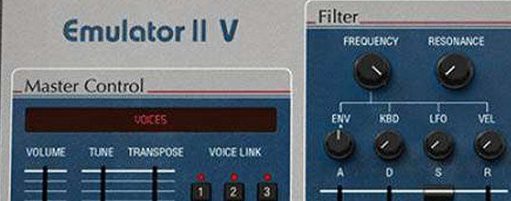 Arturia Emulator II V
1.6.2 VST Plugins
700 MB
Arturia Emulator II V
1.6.2 VST Plugins
700 MB
 Arturia Efx AMBIENT
1.0.0 VST Plugins
285 MB
Arturia Efx AMBIENT
1.0.0 VST Plugins
285 MB
 Arturia Augmented STRINGS
2.0.0 VST Plugins
4.9 GB
Arturia Augmented STRINGS
2.0.0 VST Plugins
4.9 GB
 Arturia Analog Lab V
5.12.0 VST Plugins
4.4 GB
Arturia Analog Lab V
5.12.0 VST Plugins
4.4 GB