


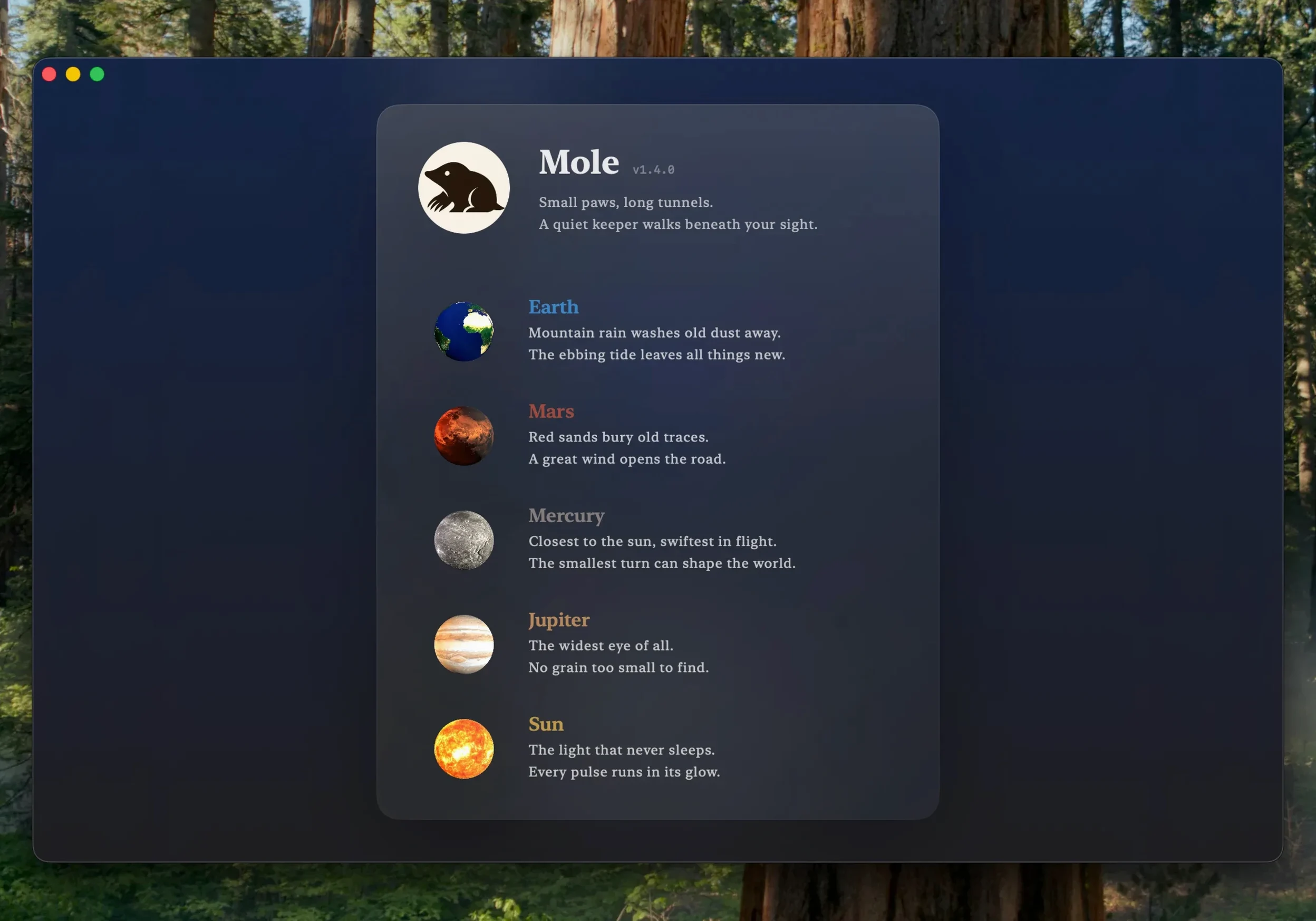
You finish a long week, and your Mac feels a touch slower. Before jumping to conclusions, you open an app that shows exactly where your drive space went and which caches have ballooned. That is the kind of quiet maintenance Mole handles.
Here is how a typical cleanup session goes:
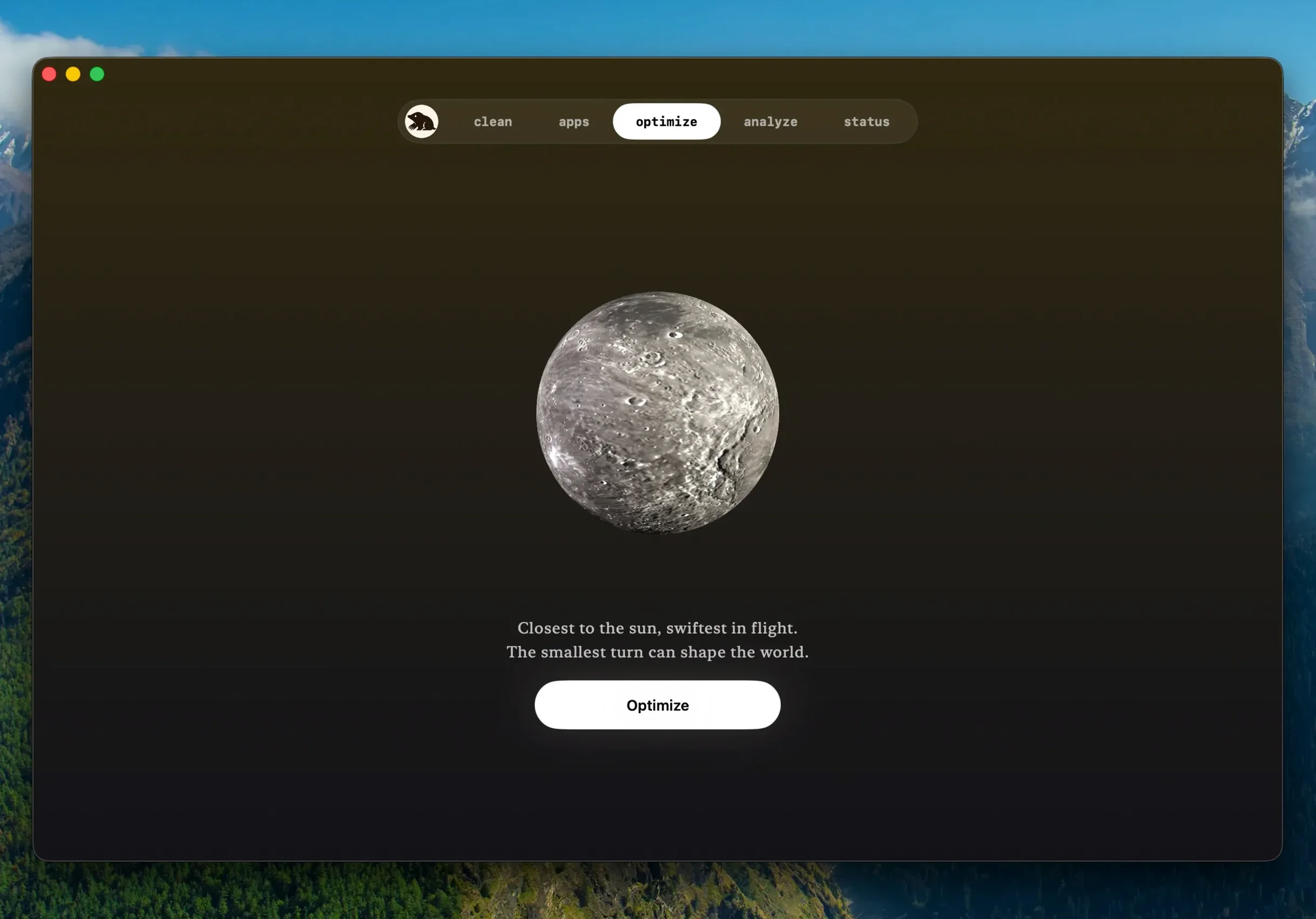
- Scan the obvious spots first. Mole reads caches, logs, and temporary files without needing extra permissions. The numbers are clear, and you can clear them with one click.
- Let it dig deeper. Grant full disk access, and the app runs a deep scan that finds leftover files from applications you removed months ago. It is thorough without being pushy.
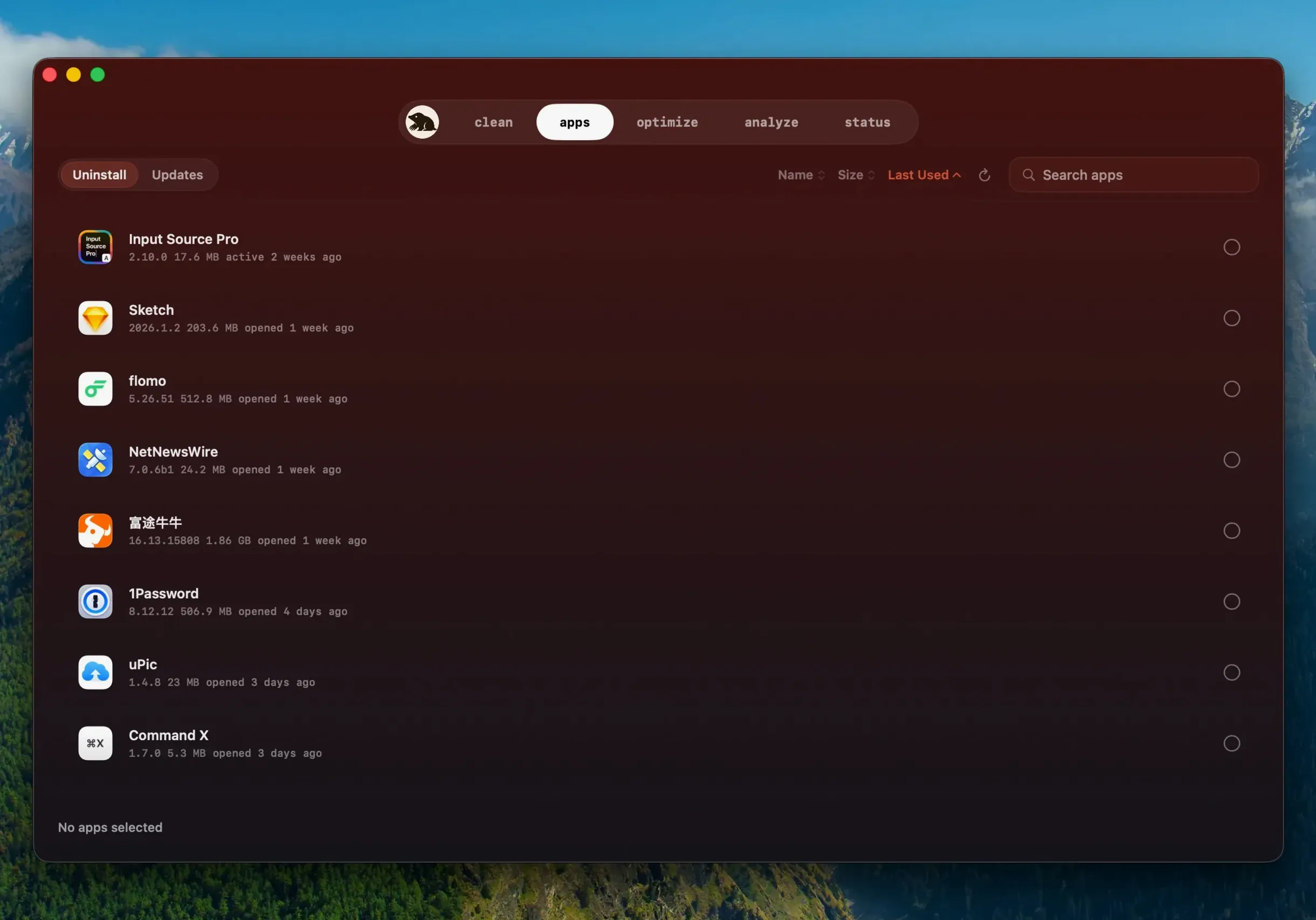
- Remove apps completely. Dragging an app to the Trash often leaves crumbs behind. Mole catches those — preferences, support files — and removes them in one pass.
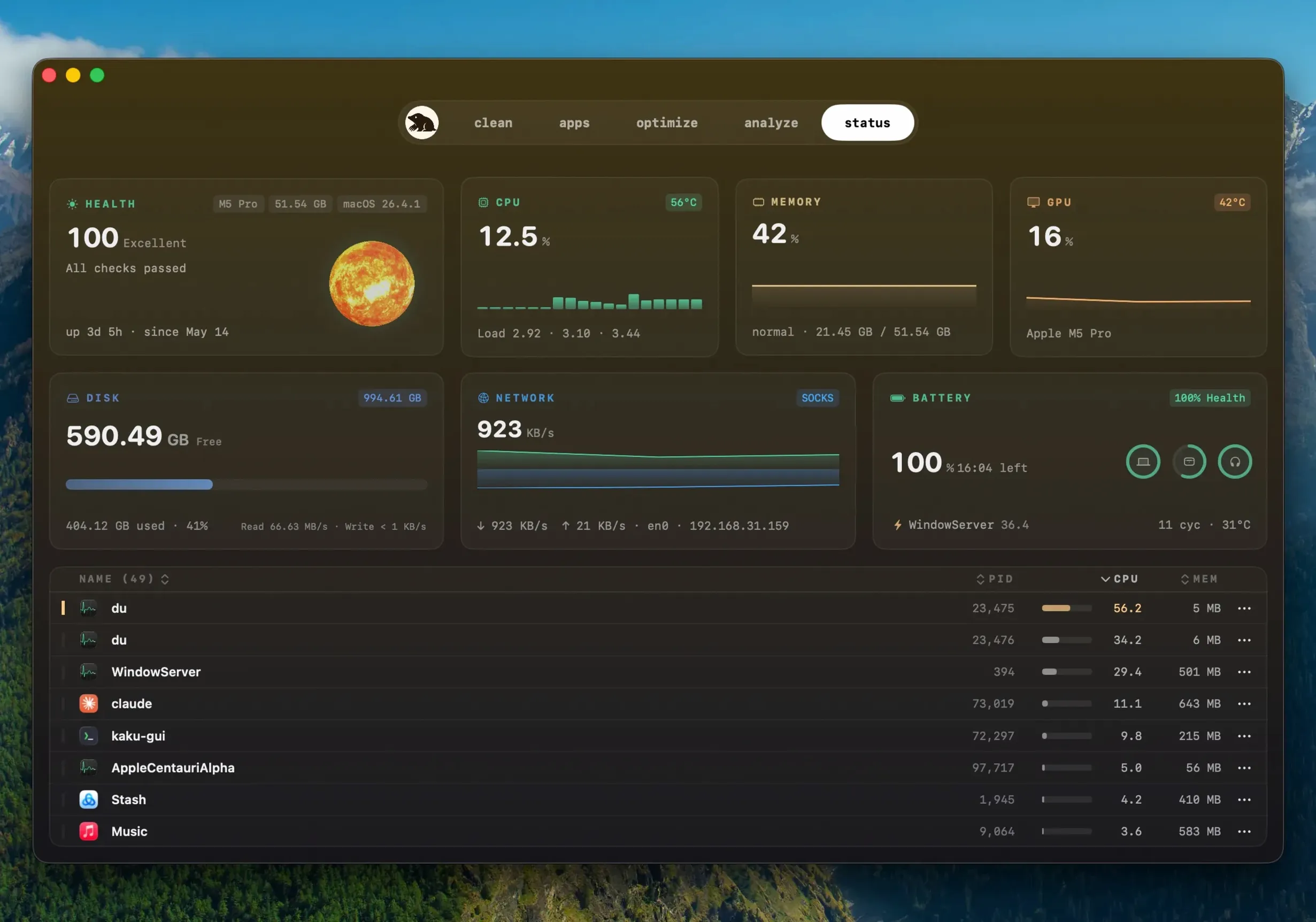
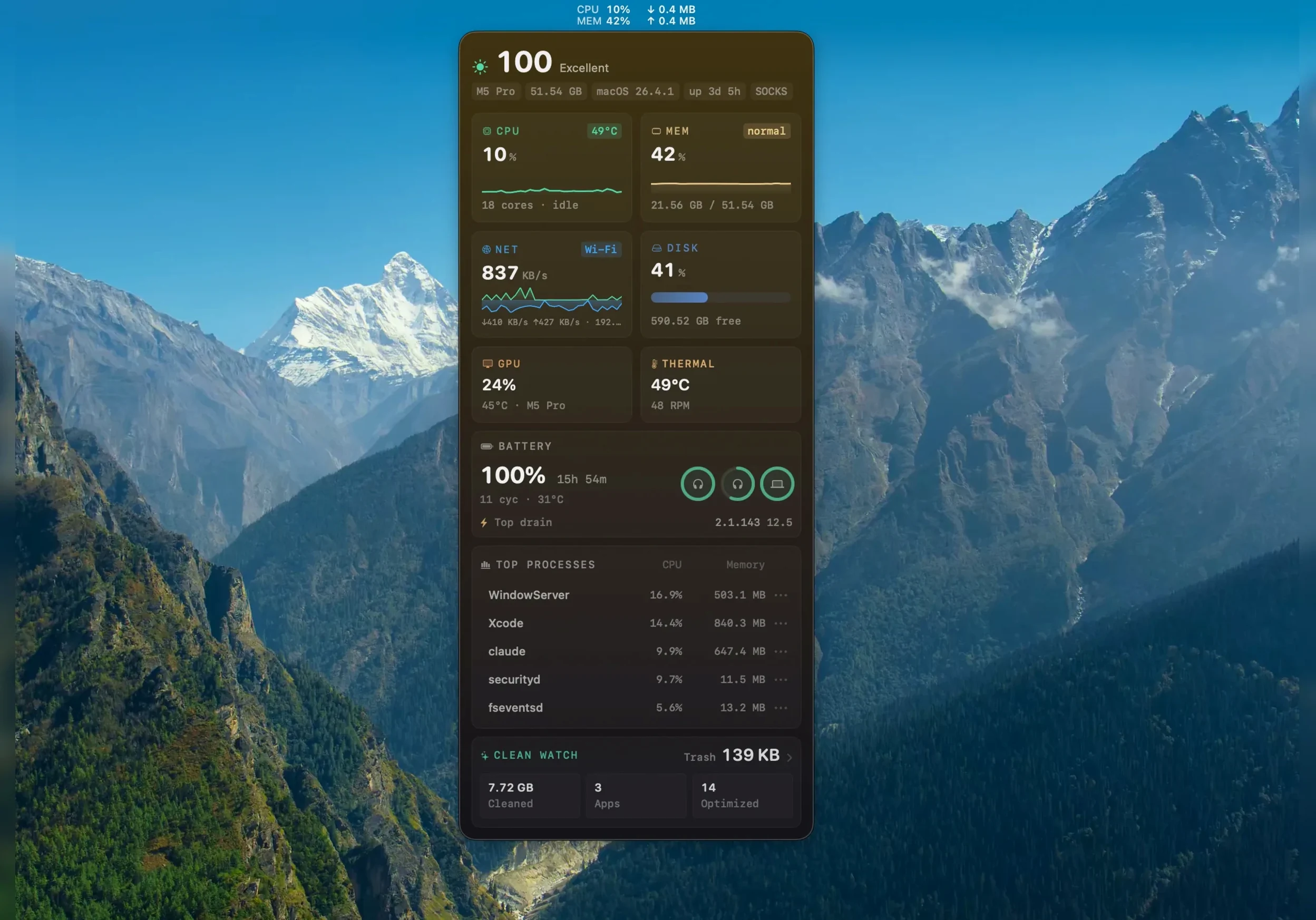
- Check system status at a glance. The analysis panel shows CPU load, memory pressure, and disk health in a simple readout, so you can spot trouble before it slows you down.
It is a straightforward toolkit for anyone who wants their Mac to run cleanly without hunting through Library folders. If you have ever uninstalled an app and wondered what it left behind, this is worth a look.
Cache Scan Beats the Beachball, Finishing in Ten Seconds
Most cleanup apps talk a big game and then beachball for two minutes while they scan. Mole sidesteps that trap. The initial cache scan finishes in under ten seconds on a typical machine, and the deep scan — which really does need full disk access to shine — rarely pushes past thirty seconds unless your drive is genuinely packed. Memory use stays modest. With the app open and the system status panel running, I watched it hover around 90 MB of RAM, which is easy to forgive when you consider it is tracking CPU, GPU, network throughput, and disk activity in real time.
Stability has been uneventful in the best way. Across several days of leaving it open in the background, it never beachballed, never spiked the CPU, and never tripped over a permissions prompt it had already been granted. The 1.14.0 build in particular feels locked down — no crashes when switching between the cleanup and analysis tabs, no weird hangs when a scan completes. If you have ever used a maintenance tool that made you nervous about what it might delete, the steadiness here is a comfort.
Thirty Sunday Minutes to Quiet a Spinning Fan
Picture a Sunday morning. You have downloaded a few things during the week, uninstalled an old screen recorder, and noticed your MacBook Air fan spinning up during Zoom calls. Here is how thirty minutes with Mole plays out.
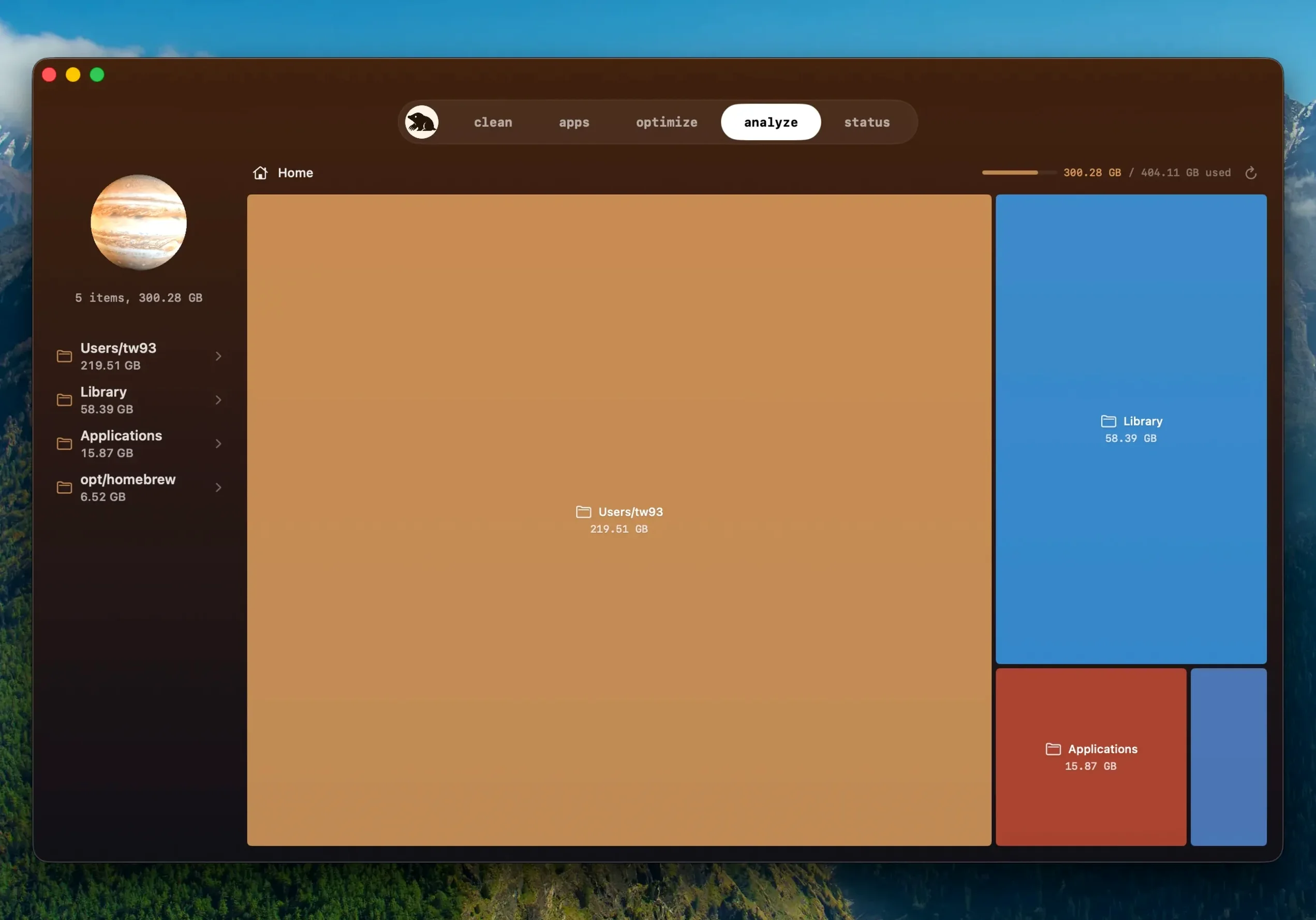
You launch the app and click straight to the system status tab. CPU sits at 12%, memory pressure is green, but the disk readout shows 88% full. That is the real culprit. You switch to the disk analysis section and let the tree map build. A large block labeled “Creative Cloud leftovers” catches your eye — 14 GB you thought you cleaned up months ago. You tap it, confirm the file list, and clear it. The fan will thank you later.
Next, the cleanup tab. A quick scan pulls up 3.2 GB of user caches and system logs. You skim the list — nothing jumps out as important — and clear them. Then you flip to the app removal section. That old screen recorder? Gone in two taps, along with three preference files and a launch agent you never knew existed. The whole session took maybe fifteen minutes, and most of that was you reading the tree map and deciding what mattered.
Skipping Full Disk Access Leaves Deep Leftovers Behind
Mole is designed to be safe, but a few habits trip up first-time users. The most common one is skipping full disk access. Without it, the app can only scan surface-level caches and logs. You miss the deep leftovers, the orphaned preference files, and the large chunks of space that actually matter. Grant the permission once and forget about it.
Another mistake is treating the cleanup results as a to-do list to approve blindly. Mole shows you file sizes and paths before it acts, and that is your moment to look. A cache folder for a video editor might be 8 GB and perfectly safe to clear — or it might hold render previews you still need. Reading the path takes five seconds. Do it.
Some people also run the disk analysis and panic at the first large block they see. System data like Time Machine snapshots or Spotlight indexes can look enormous, but they are not junk. Mole skips suspicious items when it has doubt, which helps, but a little curiosity about what you are looking at goes a long way.
Put a Tiny Readout in Your Menu Bar
Out of the box, Mole works without much fuss, but two tweaks make it feel like your tool, not a generic one. Head into preferences and enable the menu bar indicator. It places a tiny readout in the menu bar that shows CPU temperature or memory pressure at a glance. You might not need the full app window open every day, but a quick look at that number can tell you when something is running hot.
The second change is to adjust the deep scan exclusions. Mole lets you mark folders to skip, and if you have external drives with archived work or a photography library on a NAS, excluding those keeps scans fast and relevant. You can also set the app to skip certain file types, which is handy if you keep large ISO files around that you do not want flagged as space hogs.
If you grabbed mole 1.12.1 a while back or have an older mole 1.8.0 build sitting around, the jump to 1.14.0 is worth it for the update features alone. And for anyone searching a Mole torrent or an older Mole 1.11.0 for Mac, the current release runs cleaner and handles permissions better than those earlier versions ever did.
Version 1.14.0 sharpens the update experience. A few welcome changes landed:
- Apps you downloaded from websites can now update directly inside Mole, and it reuses an existing download instead of fetching it again when possible.
- The app now detects newer builds of the same version, so you are not left guessing.
- When an update needs to restart an app, Mole asks first and reopens it afterward.
- macOS 14 or later
- Apple Silicon or Intel Mac
- Full disk access supported for deep scanning
Questions I actually get
Does Mole work on Intel and Apple Silicon Macs?
Yes, it supports both ARM and x86 64-bit Macs running macOS 14 or later.
What languages is Mole available in?
The interface is translated into English, German, Spanish, Italian, Traditional Chinese, Simplified Chinese, Korean, French, and Japanese.
Porch talk 0
Come in or pull up a chair to leave a comment.
Nobody has pulled up a chair yet. If you used it on a real Saturday, say what the hour was.
More for the same hour
Everything in Mac Cleaners
 Magic Disk Cleaner
5.5.1 Mac Cleaners
Updated 7 MB
Magic Disk Cleaner
5.5.1 Mac Cleaners
Updated 7 MB

 MacCleaner Pro
4.0.2 Mac Cleaners
128 MB
MacCleaner Pro
4.0.2 Mac Cleaners
128 MB

 MacBooster
8.3.0 Mac Cleaners
38 MB
MacBooster
8.3.0 Mac Cleaners
38 MB

 Ghost Buster Pro
6.3.1 Mac Cleaners
Updated 11 MB
Ghost Buster Pro
6.3.1 Mac Cleaners
Updated 11 MB

 CleanMyMac
5.7.0 Mac Cleaners
180 MB
CleanMyMac
5.7.0 Mac Cleaners
180 MB

 CCleaner Pro
1.18.30 Mac Cleaners
6 MB
CCleaner Pro
1.18.30 Mac Cleaners
6 MB

 AppZapper
2.0.3 Mac Cleaners
4 MB
AppZapper
2.0.3 Mac Cleaners
4 MB

 App Cleaner & Uninstaller
10.0 Mac Cleaners
47 MB
App Cleaner & Uninstaller
10.0 Mac Cleaners
47 MB