
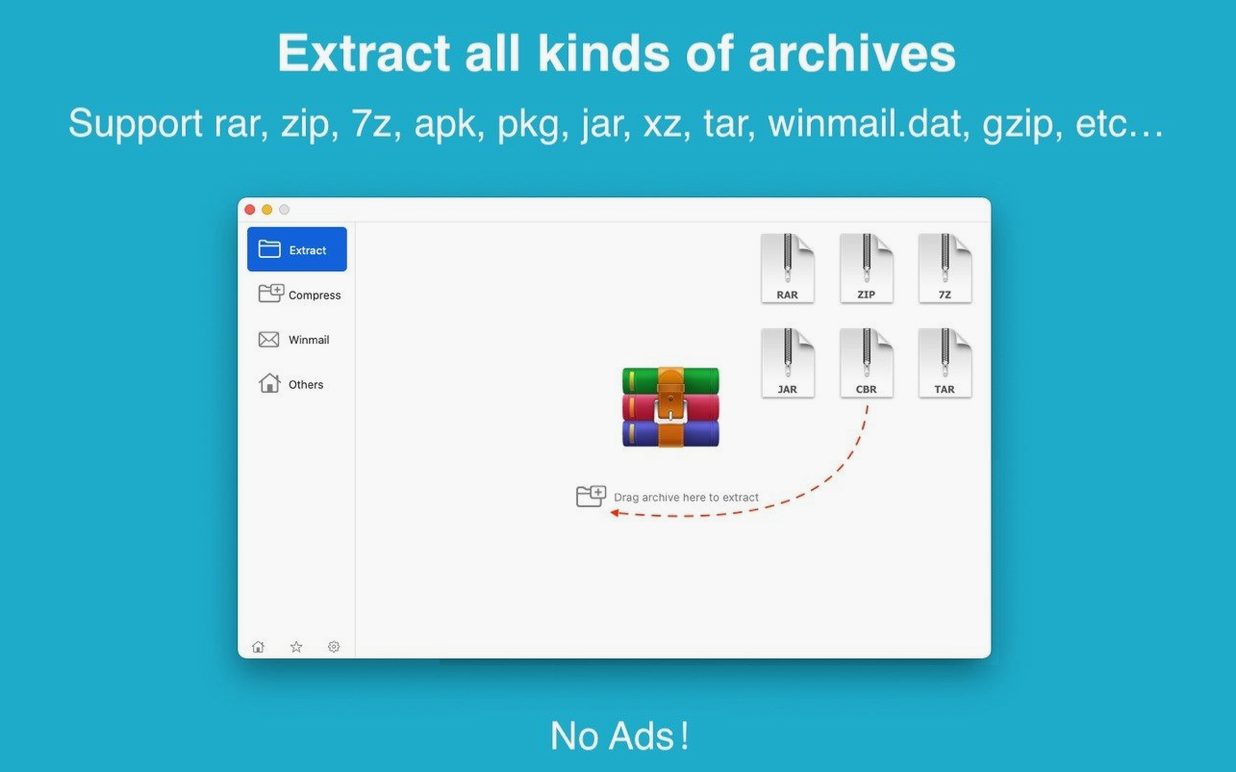
You just received a project folder full of archived assets — RARs, old CAB files, and a password-protected 7Z from the client. Your Mac’s built-in tool handles the ZIPs, but the rest just sit there with generic file icons. RAR Extractor is a straightforward utility that steps in for those moments, handling over thirty archive formats without sending you to a terminal window.
| Detail | Note |
|---|---|
| Current version | 13.9.6 |
| Key formats | RAR, ZIP, 7Z, TAR, CAB, ISO, and many more |
| Encryption | AES-256 for ZIP and 7Z creation |
| Languages | English, Simplified Chinese |
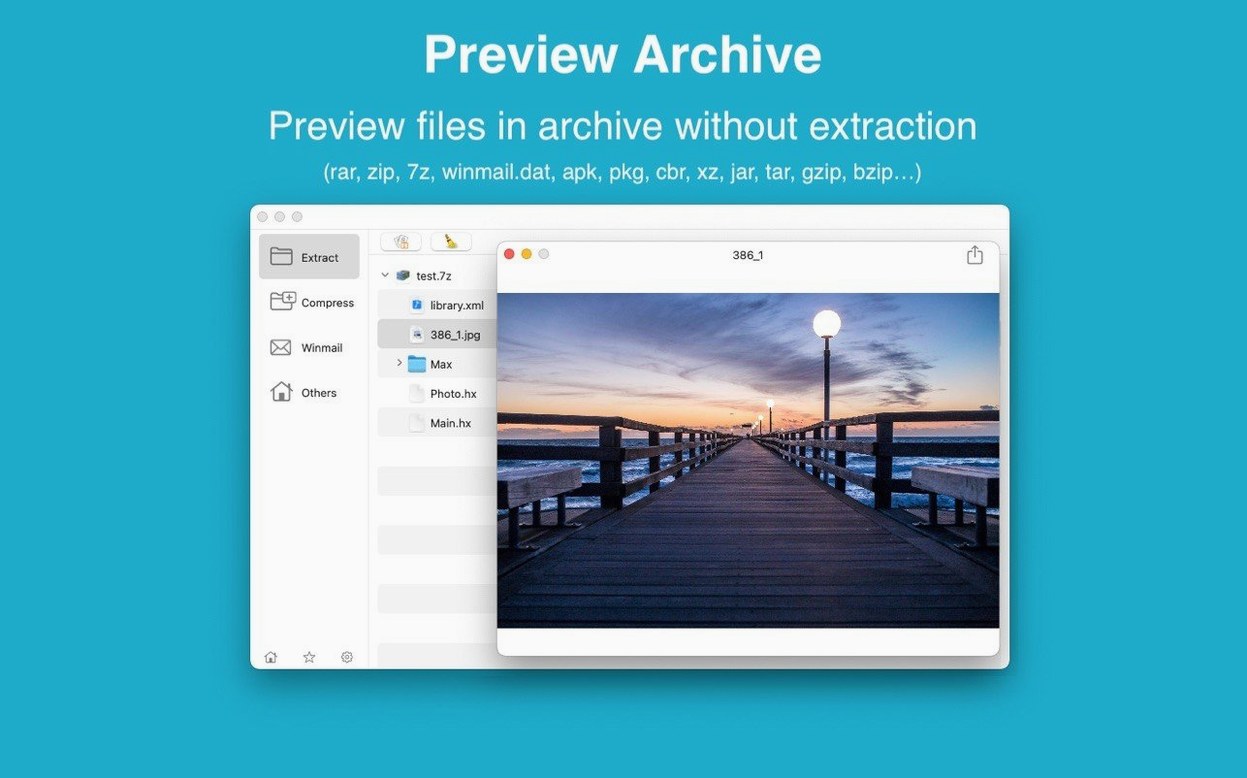
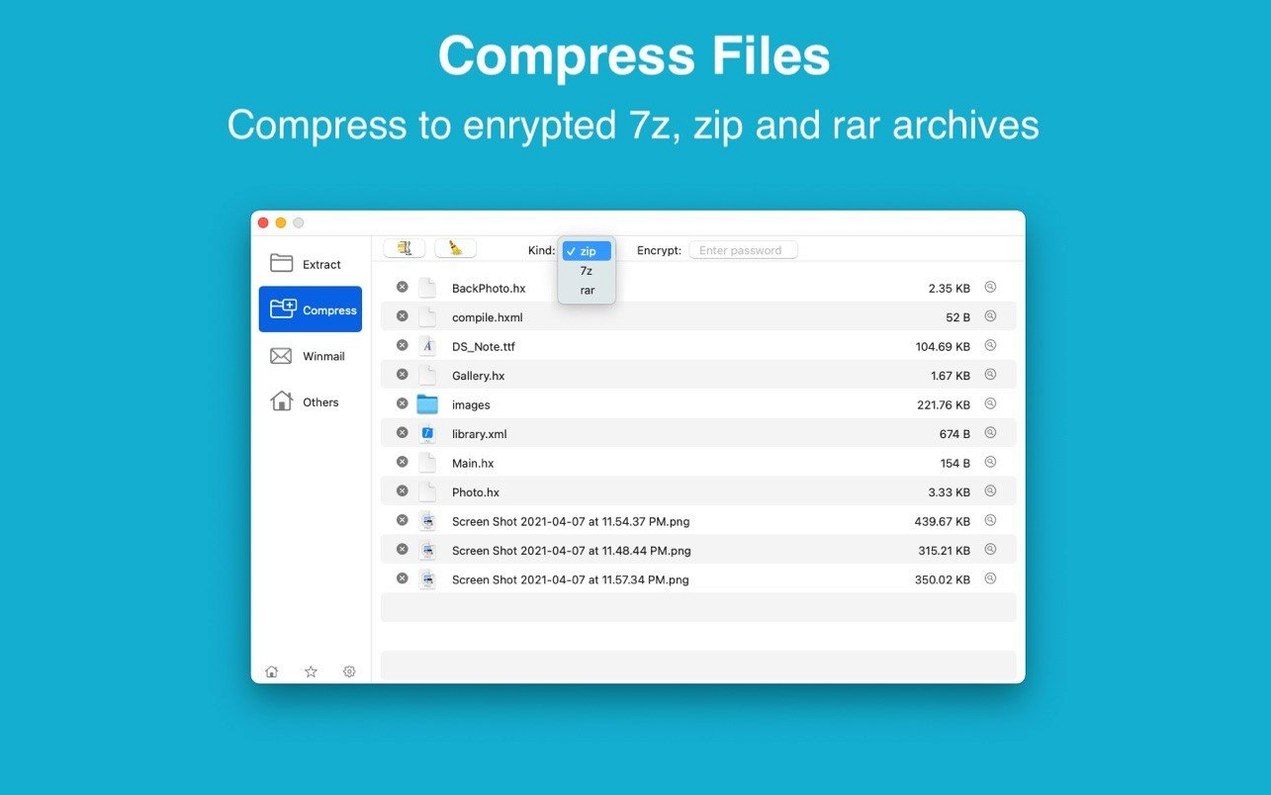
Working with the app feels direct. You can drag an archive onto the Dock icon and immediately peek at what’s inside — a fast preview that avoids unzipping a whole folder just to check one file name. The dual-window layout keeps your source list on one side and the destination on the other, which cuts down on Finder clutter when you’re pulling files from several archives at once. When it’s time to send finished work back, creating a password-protected ZIP or 7Z is a few clicks away, with AES-256 encryption built in. If you regularly bump into RAR, 7Z, or legacy formats like ACE and CAB, this one earns its spot in the dock.
RAR and 7Z Files Open Right from Finder
RAR Extractor doesn't try to replace the Finder's built-in ZIP handling. It picks up where Archive Utility stops. Double-click a RAR or 7Z in the Finder, and if you've set RAR Extractor as the default archive app, it opens right up instead of showing a "there is no application set" alert. That little change alone keeps things flowing when colleagues share archives in formats macOS never learned to speak.
The app also plays nicely with Quick Look. Select an archive in the Finder, hit the spacebar, and you see what's inside before committing to an extraction. That tight loop between browsing and opening means fewer extracted folders cluttering your desktop. For people who use a 7z extractor regularly, pairing it with Spotlight search helps too: type a file name you remember from inside an archive, and Spotlight finds the container. RAR Extractor handles the rest once you open it.
If you're the kind of person who has a rar mac download workflow — downloading, unpacking, repackaging for sharing — the app sits comfortably alongside tools like ForkLift or Path Finder. Drag an archive from a remote server pane, drop it on the Dock icon, preview, extract what you need, and move on. No intermediate folder dumps unless you ask for them.
Passworded RARs from a Second Shooter
Imagine a freelance photographer wrapping up an engagement shoot. The second shooter sends over a batch of edited TIFFs: three RAR files, one with a password sent separately by text. Another folder arrives from the couple's family — a ZIP of scanned childhood photos, plus a stray 7Z file labelled "venue scans" that nobody mentioned. The photographer drags the RARs onto RAR Extractor's icon, enters the password once, and checks the preview to confirm all the layers are intact before extracting to the project drive. The stray 7Z turns out to be a floor plan from the event coordinator, which she extracts straight to a client-proofs folder. No double-click guessing, no "unrecognized format" interruptions. Within ten minutes, everything sits sorted in one project folder, and she's already culling selects in Lightroom.
Teach macOS to Always Use This App
Start by letting the app handle a few archives from the Finder directly. Right-click a RAR or 7Z, choose Open With, and pick RAR Extractor. Tick the "Always Open With" box if it feels right. That one change teaches macOS to stop prompting you, and from then on, double-clicking just works.
Next, try the dual-window mode early — even if it seems like overkill for a single archive. Open an archive, then click the second pane icon. Browse your target folder on the right side, pick a few files from the archive list on the left, and extract just those. It's the fastest way to internalize that you don't have to dump everything every time.
When you create your first password-protected archive, use a short test folder first. Set a simple password, confirm the encryption setting shows AES-256, and extract it right back to make sure the password prompt appears as expected. Better to learn the flow with dummy files than with the real client delivery.
Also worth doing: drop a rar extractor unarchiver pro free download habit from your thinking. The app is straightforward; you don't need a chain of extraction utilities once it's set up. Let it handle RAR, 7Z, and the odd legacy format. Reserve other tools for niche cases that genuinely fall outside its format list.
When the Password Prompt Stays Hidden
A few things can trip people up in the first week. Here are the common ones and what to do about them.
Password prompt doesn't appear. If you double-click an encrypted archive and nothing happens, the file might not have been associated with RAR Extractor yet. Drag it directly onto the app window or Dock icon instead. The password dialog shows up reliably that way. Once the association is set, double-clicking should trigger it normally.
Extraction creates a nested folder you didn't expect. Some archives pack everything inside a top-level folder; others don't. Before extracting a large batch, use the preview list to check the internal structure. If the files are loose at the root of the archive, create a destination folder yourself first, or use the dual-window view to pick a specific target. That avoids forty TIFFs spilling across your desktop.
A 7Z file won't open but you know it's valid. A handful of 7Z archives use compression methods that require a bit more patience. If the preview hangs, wait a moment — large solid-compressed 7Z files can take longer to index. If it still stalls, try extracting one file at a time from the list rather than the whole batch. That often lets the 7z file extractor handle the archive incrementally when a full unpack bogs down.
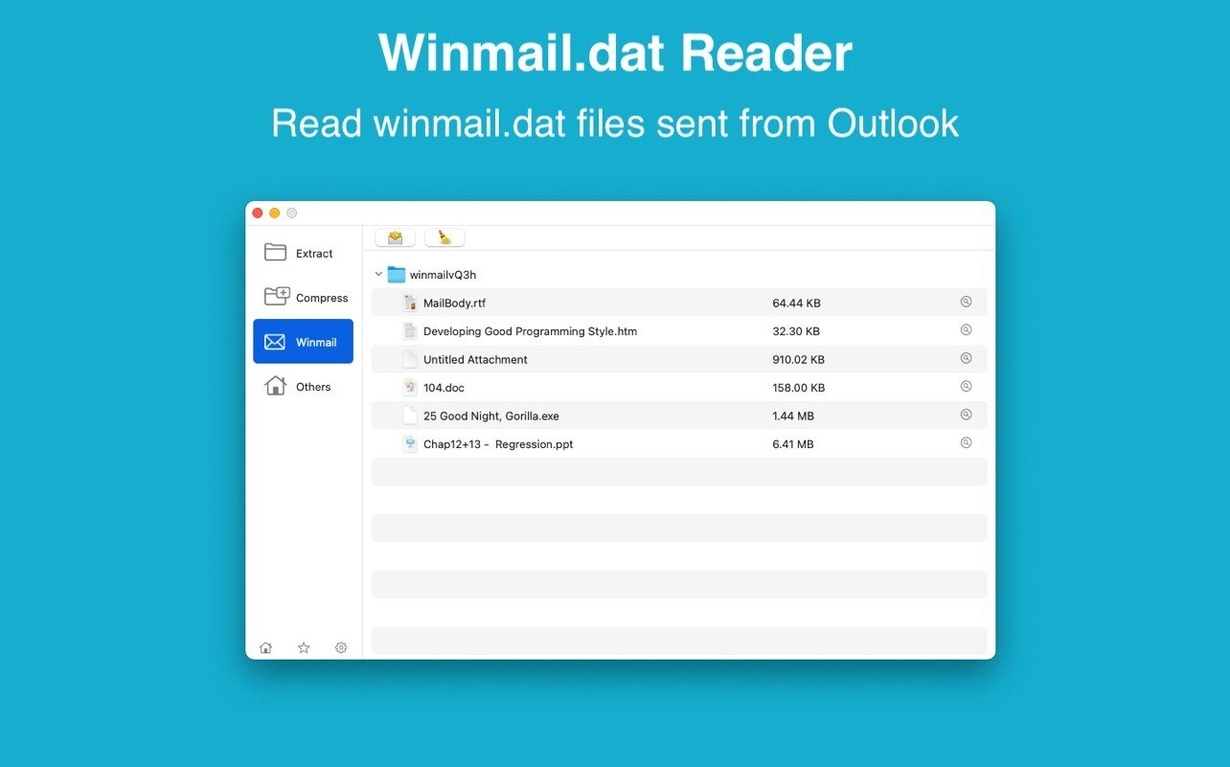
WINMAIL.DAT attachments look like gibberish. The built-in winmail.dat previewer handles most TNEF-encoded files from Outlook, but if the preview shows empty or garbled content, the sender may have used an unusual encoding variant. In that case, extract the raw content and try a dedicated TNEF decoder. RAR Extractor gets the file open and shows what's inside; it's the first step that usually works.
Batch extraction names clash. When you unpack multiple archives into the same destination, files with identical names overwrite without warning. Get in the habit of using the dual-window view to set a unique subfolder per archive batch. A few extra seconds upfront saves the headache of missing files later.
- macOS 11.5 or later
- Apple Silicon or Intel 64-bit Mac
Questions I actually get
Can RAR Extractor open password-protected archives?
Yes, it supports extraction from encrypted archives and can also create password-protected ZIP and 7Z files using AES-256 encryption.
Does the app let me see what’s inside an archive before I extract it?
It offers a fast preview feature that displays the contents of an archive so you can check the file list without performing a full extraction.
What other formats does it handle besides RAR and ZIP?
The format list is extensive and includes 7Z, TAR, GZIP, BZIP2, CAB, ISO, ACE, LZH, CPIO, RPM, and many more — over thirty in total.
Porch talk 0
Come in or pull up a chair to leave a comment.
Nobody has pulled up a chair yet. If you used it on a real Saturday, say what the hour was.