
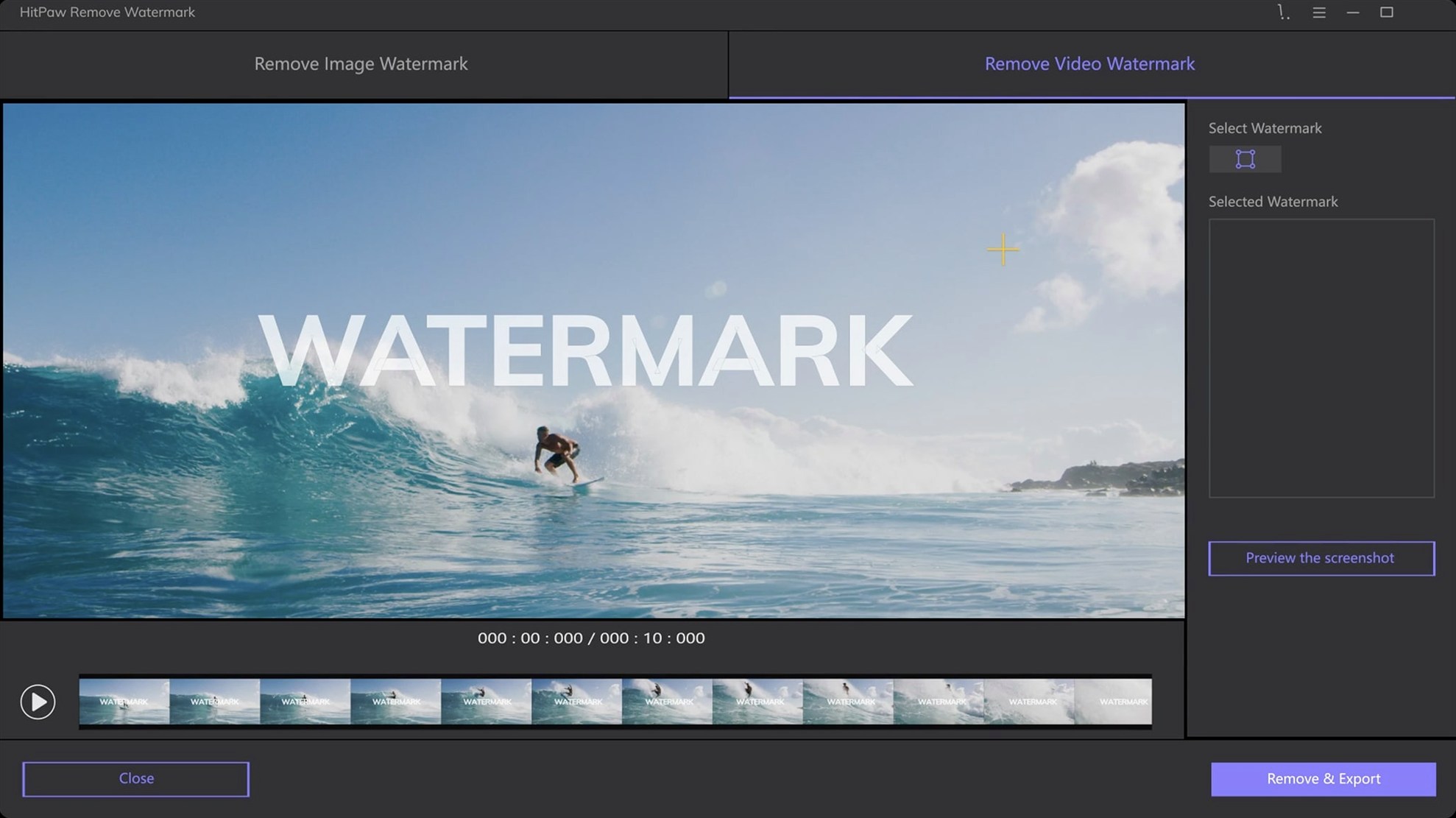
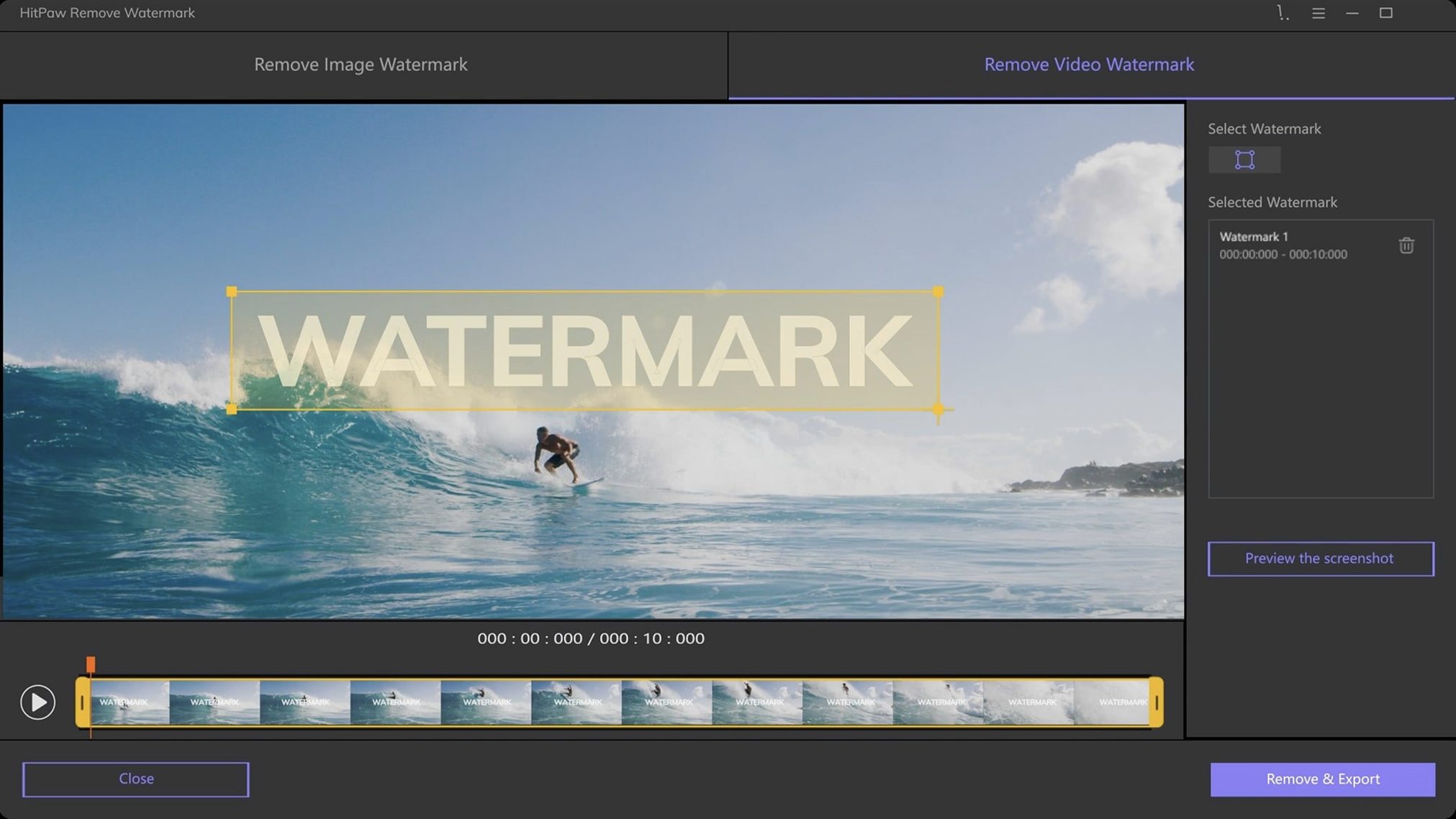
A rectangle, triangle, or freeform selection — that's usually where it starts. You open a photo from last year's trip, one where the timestamp sits right across a good patch of sky, and you grab the tool that fits the shape of the problem. HitPaw Watermark Remover keeps that first step simple, so you're not hunting through menus before you've even begun. Drag a file in, make your selection, and the app is already working.
It sits comfortably next to the tools you already use for quick edits. This isn't a full photo editor and it doesn't try to be. You keep your regular workflow in Photos or Lightroom, and you reach for this when a watermark, a logo, or a stray object needs a focused removal. The three repair modes — smooth filling, edge filling, and texture repair — give you a practical range for different backgrounds, from clean gradients to busier surfaces where a simple blur would stand out.
The video side works the same way. Drop in a clip, select the watermark area, and let it process. It's not a timeline editor, but for cleaning up a logo in the corner of a screen recording or removing a timestamp from a family video, it fits the job without asking you to learn a whole new application.
If you already have your preferred editors for the big work, this fills a narrow gap well: one-off removals where you want a dedicated tool that gets to the point.
HitPaw Watermark Remover vs. Similar Mac Apps
There are a handful of ways to remove watermarks on a Mac, and they fall into two rough camps: general-purpose editors with a healing brush, and dedicated removal tools. HitPaw sits in that second group, and the difference shows up the moment you open it.
Take PhotoStamp Camera — a Mac app that also targets watermark removal from photos and videos. It offers a similar selection-then-remove approach, but leans harder into batch processing and timestamp removal. Where HitPaw gives you three distinct repair modes (smooth filling, edge filling, texture repair), PhotoStamp keeps the removal logic more automatic. You get less control over how the fill behaves, which matters when you're working on textured backgrounds like brickwork or fabric. HitPaw's edge filling mode, on the other hand, tries to preserve the lines and contours around your selection, so a watermark crossing a horizon or a building edge doesn't leave a smudge behind.
Then there's iWatermark Pro, which comes at the problem from the opposite direction — it's built primarily for adding watermarks, with removal as a secondary feature. Its removal tool works on clean, simple backgrounds but struggles once the watermark overlaps detail. If you're pulling a logo off a flat-colored banner, iWatermark handles it. If that same logo sits on a patterned shirt or a busy street scene, HitPaw's texture repair mode gives you a better shot at a natural result.
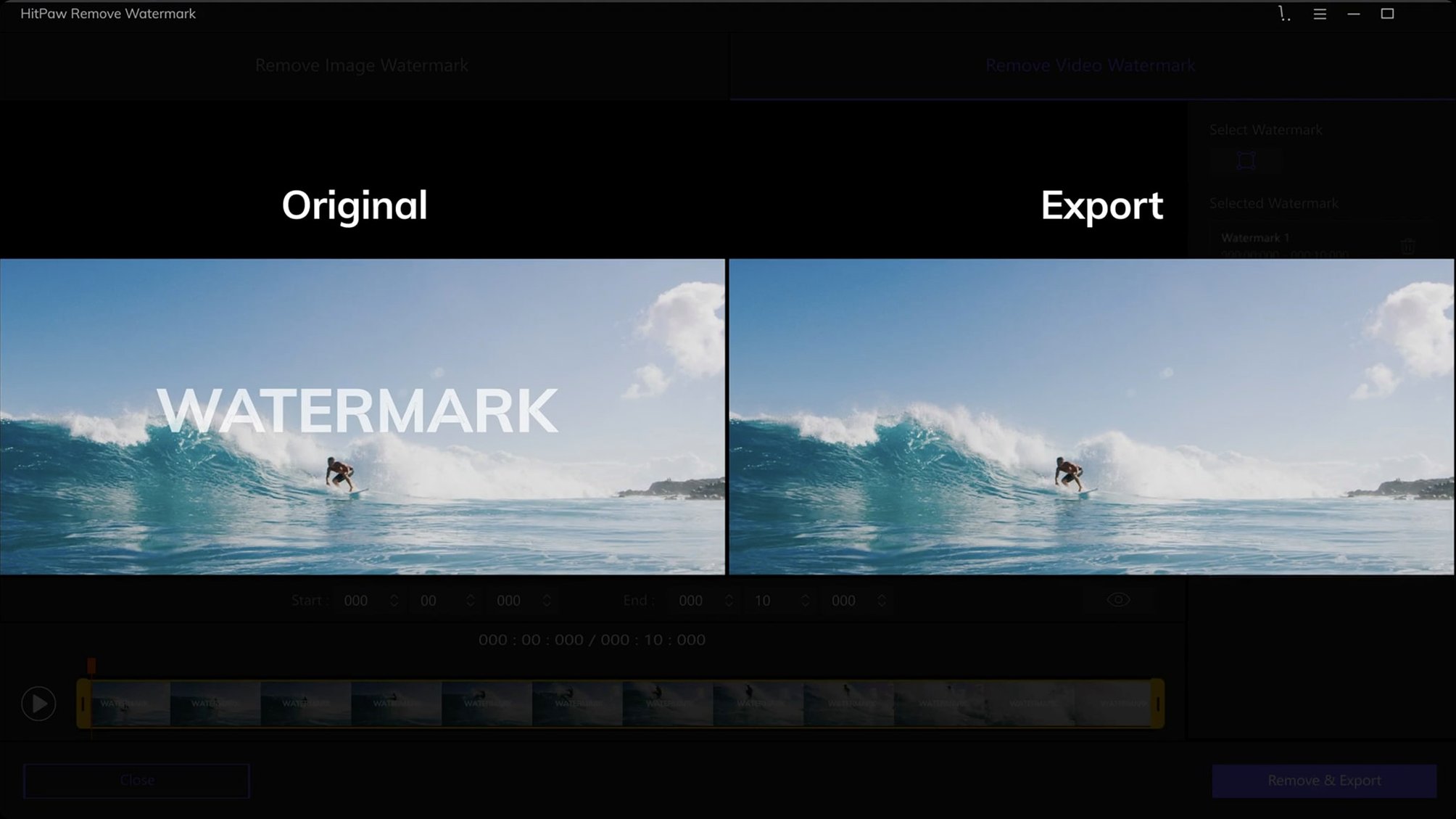
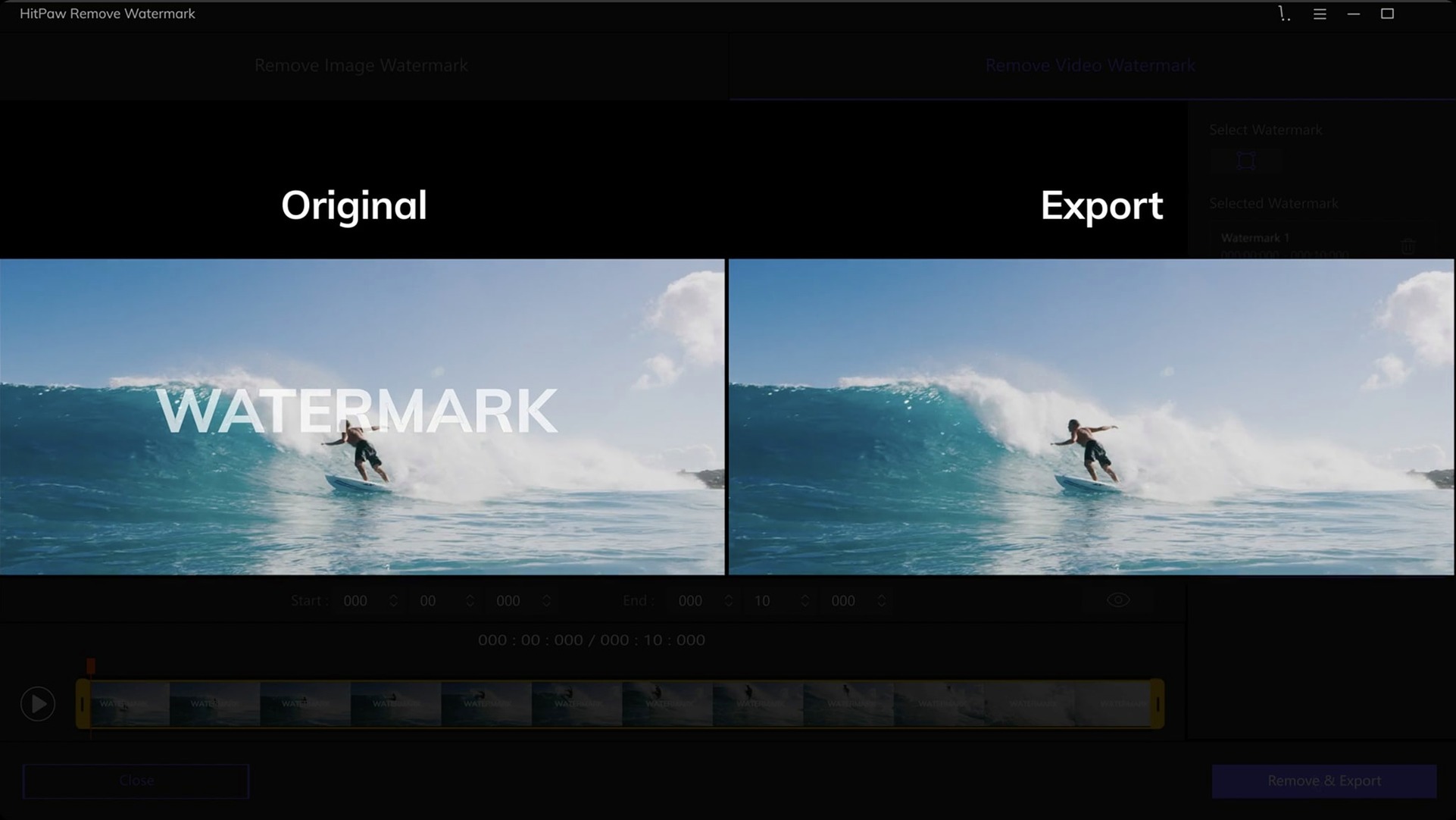
The video side narrows the field further. General video editors like iMovie or DaVinci Resolve can cover or crop a watermark, but they won't fill the area with surrounding detail. HitPaw processes the selected region frame by frame, which takes time but yields a result that doesn't just mask the problem — it rebuilds it. For a logo in the corner of a ten-minute screen recording, that's the difference between a black box and something that blends in.
Swap Output Format to PNG for Lossless Edits
The app opens ready to work, but a few preferences are worth adjusting before you start your first real project.
- Output format and quality. By default, HitPaw saves processed images back to their original format. If you're working with a JPEG and plan to edit further, switch the output to PNG in the preferences panel — it avoids re-compressing an already compressed file and keeps the repaired area clean for any cropping or color work you do later. For video, check the output resolution matches your source clip; the app sometimes defaults to a lower setting.
- Selection feathering. The rectangle and freeform tools include a subtle edge softness that helps the repair blend. For watermarks with hard edges — think white text on a dark background — dial the feathering down to zero. You'll get a crisper transition between the filled area and the original pixels. For logos with soft shadows or gradients, leave a small feather of two to three pixels to avoid a visible seam.
- Repair mode default. The app remembers your last-used mode, which is handy once you know what you need. Start with texture repair for anything on a busy surface, then drop to smooth filling for skies and solid walls. Edge filling works best when the watermark crosses a distinct line — a window frame, a horizon, a shirt collar — where you need the contour to continue unbroken through the removed area.
- Language. HitPaw supports eleven languages, including Russian, Japanese, Korean, and Czech. The setting is in the preferences menu and takes effect immediately — useful if you're sharing the machine with someone who prefers a different localization.
Workflow: Removing a Timestamp from a Travel Video
Say you pulled a short video from an old camcorder — maybe an MP4 clip of a street market, two minutes long, with a bright orange date stamp burned into the bottom-right corner. It's the only copy you have, and the timestamp sits right on top of a fruit stand with a striped awning. Here's how that cleanup goes in HitPaw, start to finish.
Step 1. Launch the app and drag the MP4 file straight into the main window. The video opens in the preview pane. Scrub through a few seconds to confirm the watermark doesn't move or change size — if it's static, you only need one selection for the whole clip.
Step 2. Pick the rectangle selection tool. Draw a box tight around the timestamp, leaving just a pixel or two of padding on each side so the app has enough surrounding detail to sample from. Zoom in to 150 or 200 percent — the zoom control is right below the preview — and nudge the selection edges with the arrow keys until they're exactly where you want them.
Step 3. Set the repair mode to texture repair. The awning behind the timestamp has horizontal stripes, and smooth filling would blur them into a muddy patch. Texture repair attempts to continue the stripe pattern through the filled area. It won't be perfect on a complicated surface, but for a two-minute clip watched at normal speed, the goal is for the repair to not draw attention.
Step 4. Hit the remove button and let the app process. For a two-minute 1080p clip on an Intel Mac, expect a couple of minutes of processing — frame-by-frame work isn't instant. A progress bar keeps you informed, and you can minimize the window while it runs.
Step 5. Play back the result in the preview. Toggle between the original and the repaired version with the comparison button to check how the filled area holds up as people walk past the fruit stand. If the repair flickers or drifts, undo and try a slightly larger selection with more surrounding pixels for the algorithm to reference.
Step 6. Save the cleaned clip. Use the same format and resolution as the source — in this case, MP4 at 1080p. The finished file drops into the same folder as the original, with a modified filename so you don't overwrite anything.
The whole job takes under five minutes, and most of that is waiting for the
- macOS 10.13 or later
- Intel Mac
- Interface languages: Russian, English, German, Spanish, Italian, Korean, Portuguese, French, Czech, Japanese
Questions I actually get
Does HitPaw Watermark Remover work on video files?
Yes, it removes watermarks from both images and video files, using the same selection tools and repair modes for each.
What kind of selection tools are included?
The app provides rectangle, triangle, and freeform selection options so you can match the shape of the watermark you need to remove.
Porch talk 0
Come in or pull up a chair to leave a comment.
Nobody has pulled up a chair yet. If you used it on a real Saturday, say what the hour was.