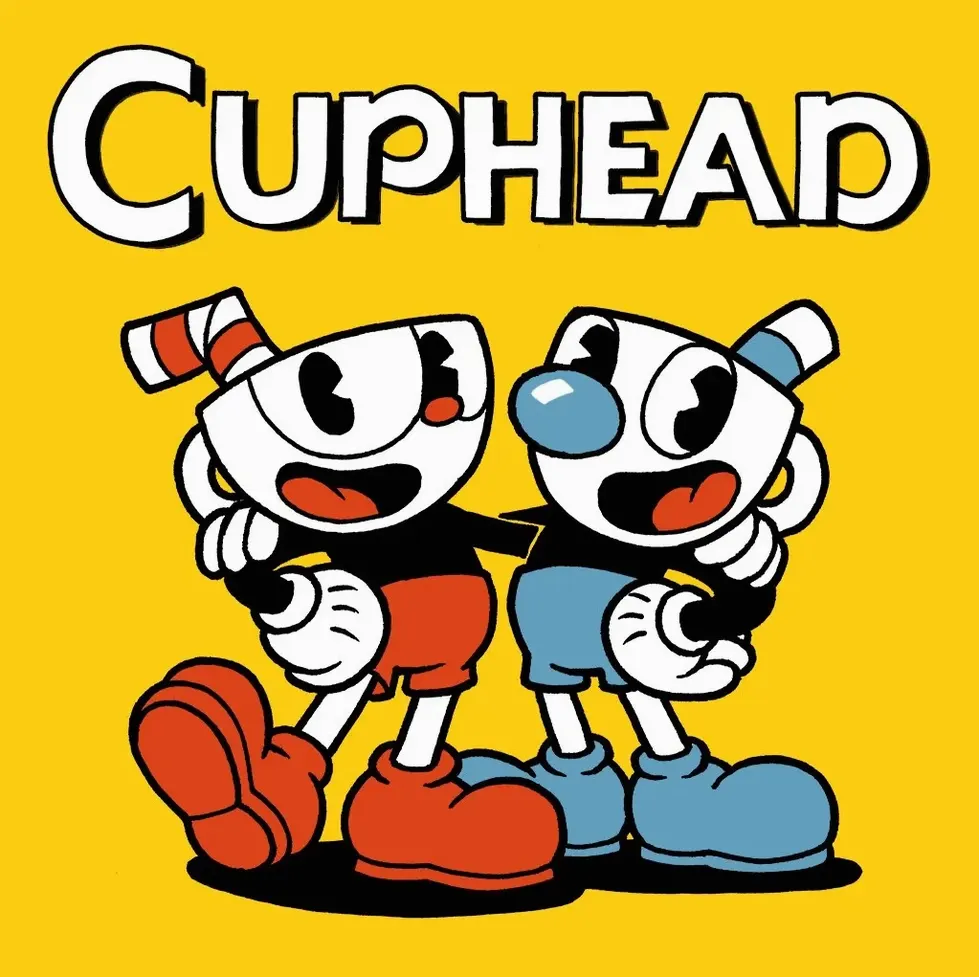
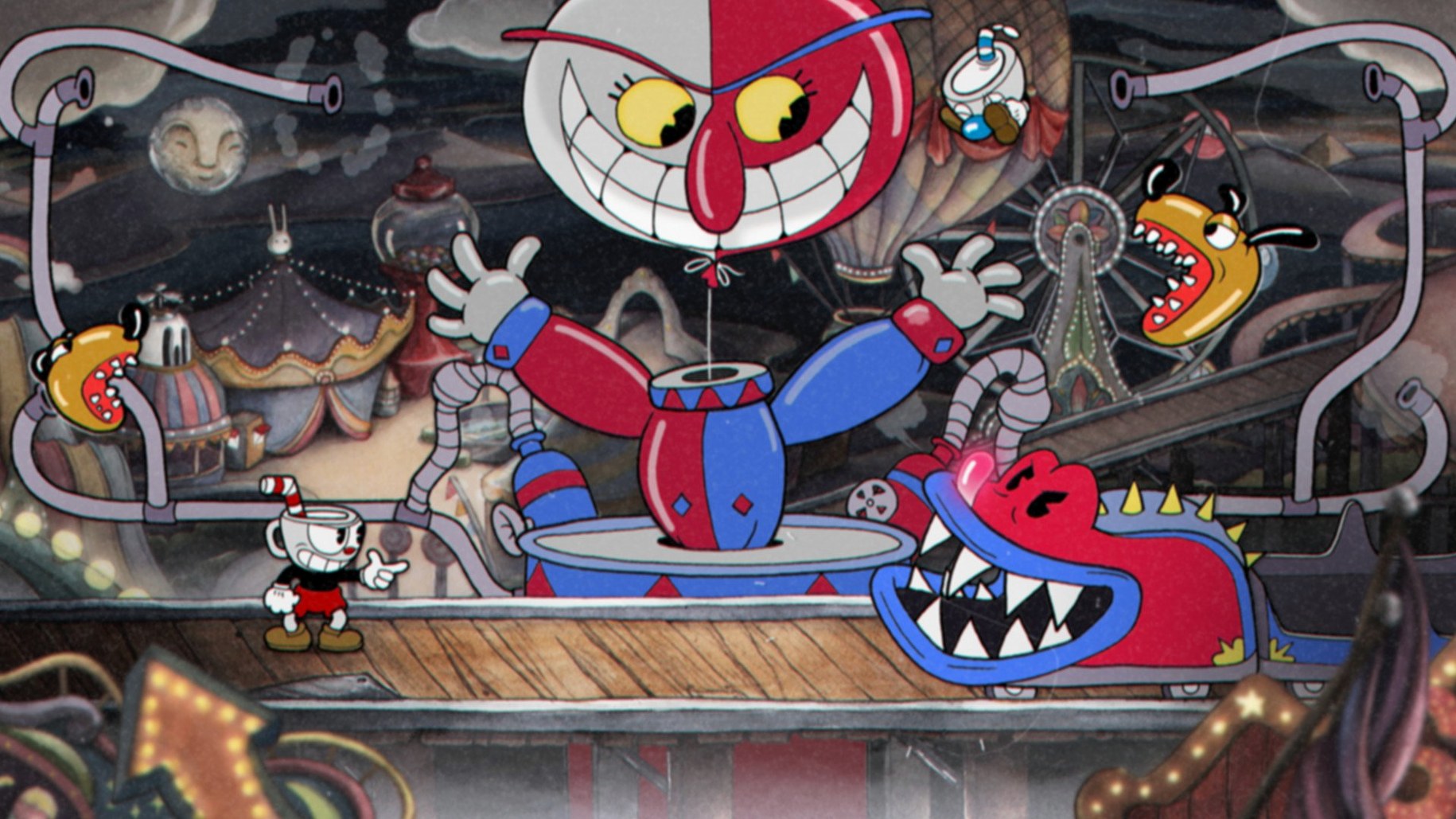
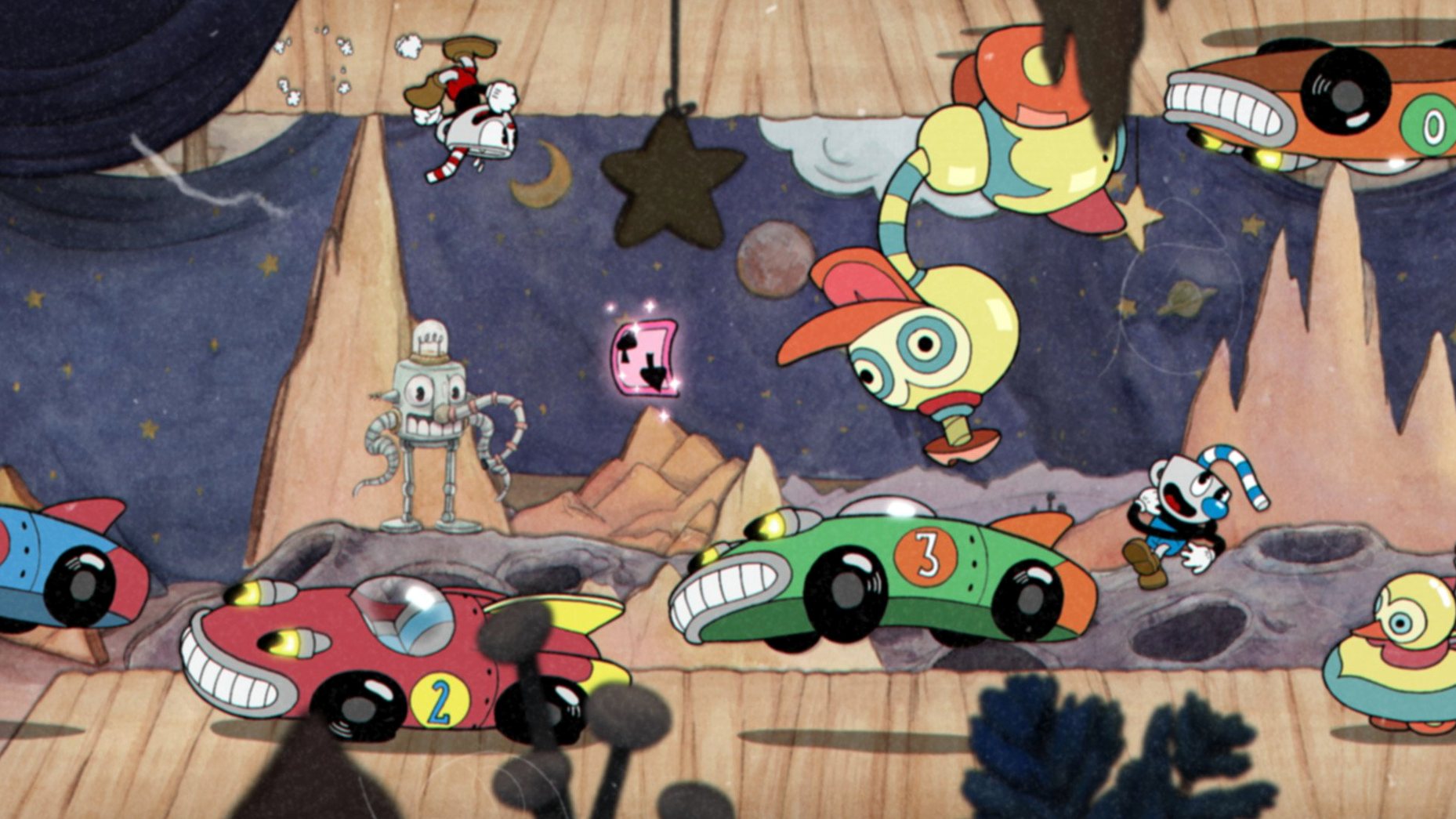
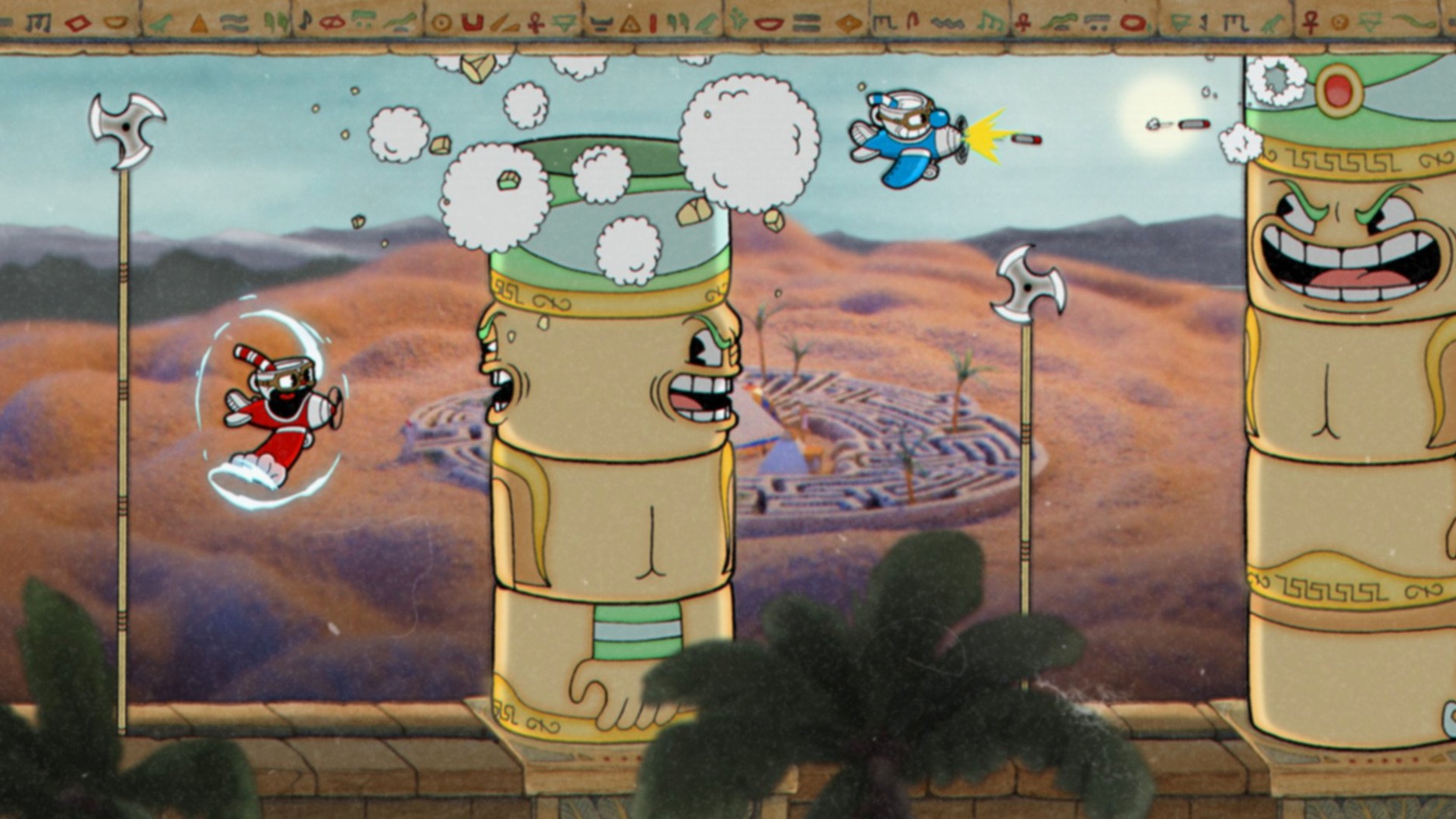
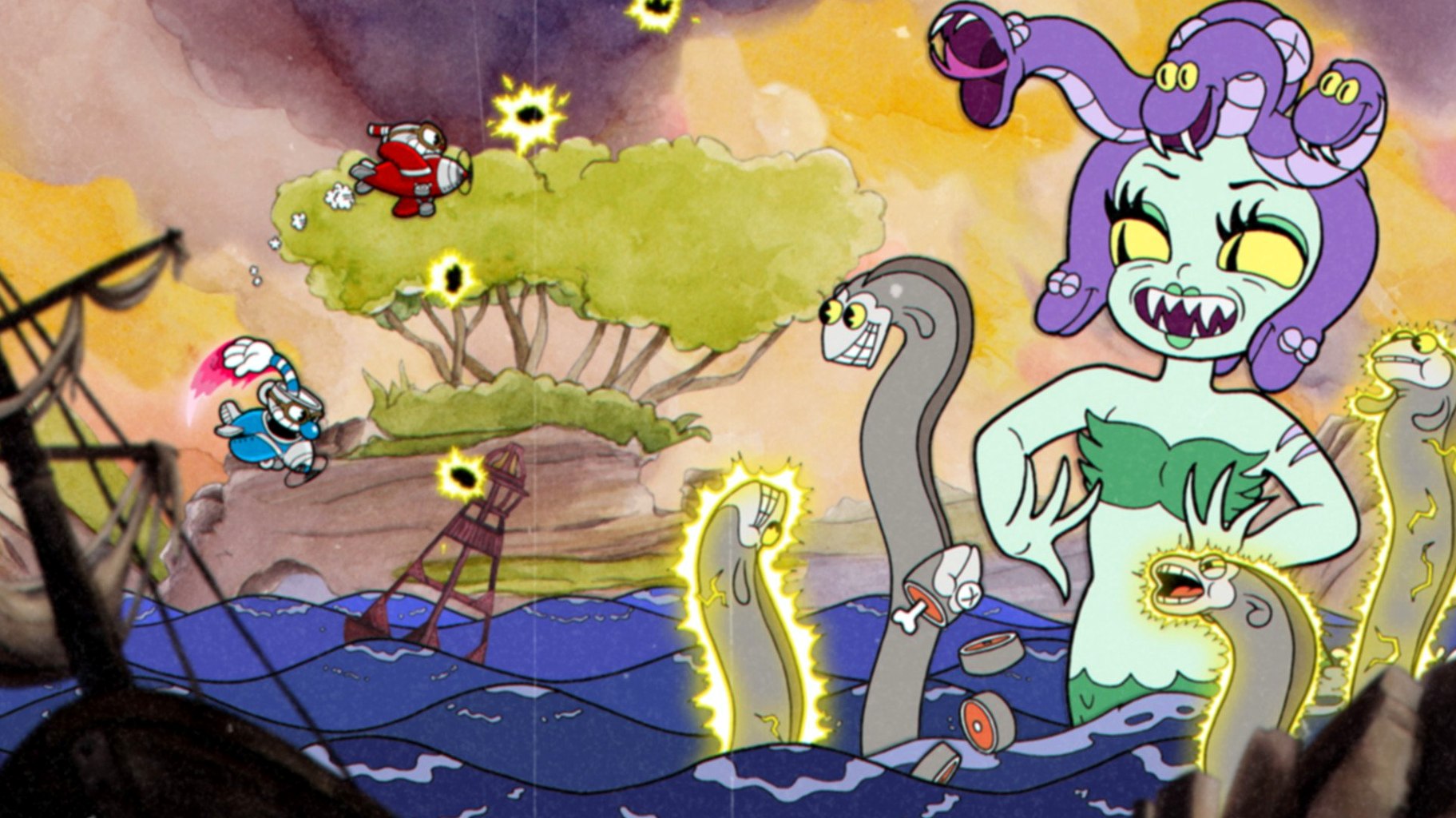
Cuphead is a run-and-gun action game built almost entirely around screen-filling boss battles. You pick Cuphead or Mugman, then walk right into a series of multi-phase fights that throw waves of hand-drawn attacks at you. Movement is a tight mix of jumping, dashing, and parrying pink objects to build a super meter, while you fire back with a growing arsenal of weapons. Between bosses, short run-and-gun side levels break up the rhythm and let you earn coins for upgrades. The two-player local co-op drops a second character into the chaos without toning anything down. Every frame looks like a lost Fleischer Studios cartoon, and the original jazz recordings push the whole thing into a strange, urgent energy.
Boss Rush Built on Pattern Mastery
- Players who want a boss rush where pattern recognition matters more than grinding
- Local co-op sessions where you can revive a fallen partner by parrying their ghost
- Anyone drawn to hand-inked, watercolor animation and live jazz soundtracks
Sparse Platforming, Bosses Take Center Stage
- Run-and-gun platforming stages are sparse—bosses are the main course
- Difficulty asks for patience; expect to retry fights while you learn attack sequences
- Tested on macOS Catalina; the current build is Intel-native
Bluetooth Controllers Pair Without Extra Software
Game controllers on macOS can be fussy, but Cuphead lands in a comfortable spot. The system recognizes most Bluetooth gamepads without extra software—pair a DualSense or an Xbox controller through the Bluetooth menu, launch the game, and the button prompts usually map themselves. If you keep a wired SNES-style pad around, that works too, though you'll want to check the input settings once before starting a run.
When I'm switching between a session and my desktop, Mission Control handles it cleanly. The game runs in a dedicated fullscreen space, so a three-finger swipe left gets me back to my notes or a reference video without minimizing anything. That matters when you're stuck on a boss phase and want to glance at a pattern breakdown without quitting to the menu.
QuickTime screen recording cooperates with the game if you need to capture a clean clip of a fight. Just start recording before you launch, or use the keyboard shortcut once the game is running. The audio comes through in sync, which isn't always a given with fullscreen apps. Voice chat apps like Discord sit happily in the background during local co-op sessions too—useful when your co-pilot is in the same room but you're both wearing headphones.
Spotlight won't index Cuphead's save files in a way you can browse, but the game writes progress reliably to its Application Support folder. If you back up your Mac with Time Machine, those saves get picked up automatically.
Rock-Solid 60 FPS on Intel Macs
On an Intel Mac meeting the Catalina baseline, the game holds a steady sixty frames per second without breaking a sweat. Load times between stages are short—a few seconds at most—and the hand-drawn animation reads as fluid as it does on other platforms. The watercolor backgrounds scroll smoothly even during multi-phase transitions where the screen floods with projectiles.
Memory use stays modest. Activity Monitor shows the process hovering under two gigabytes of RAM during extended play, which leaves breathing room for background apps. I've run it alongside a browser with a dozen tabs open and didn't feel any stutter. CPU temperature climbs a bit during longer sessions, as you'd expect from a game pushing constant sixty-frame animation, but the fans on my iMac never ramped up to an audible whine.
Stability is one of those quiet strengths. Across dozens of boss retries—and you will retry—the game never crashed to the desktop. No corrupted saves, no mid-fight freezes, no audio desync creeping in after hours of play. The only quirk I noticed: waking the Mac from sleep with the game still running occasionally mutes the audio until you toggle the sound output device in System Preferences. A minor thing, and it only happened twice.
Battery life on a MacBook will drain faster than casual desktop work, but the game doesn't hammer the discrete GPU in ways that feel wasteful. If you're on integrated graphics, you'll still get playable performance, though you may want to close other GPU-hungry apps first.
Mistakes beginners walk into
The first trap is ignoring the parry. The tutorial mentions it once, then the game throws you into a boss fight where dodging feels more urgent than slapping pink objects out of the air. But parrying is how you build super meter fast, and the super moves are what crack open the tougher phases. Spend ten minutes in the first run-and-gun level just parrying everything pink until the timing becomes muscle memory. You'll need it.
Another common misstep: buying the wrong weapon first. The shop tempts you with the Spread shot because it looks powerful up close, and it is—but new players usually spend most of their time at mid-range, dodging patterns they haven't memorized yet. The Chaser, which homes in on targets, lets you focus on survival while still dealing damage. Get that one early, then branch out.
Co-op players often forget they can revive each other. When one character goes down, a ghost floats on screen. Parry the ghost before it fades, and your partner jumps back into the fight with a sliver of health. In the heat of a boss's final phase, it's easy to tunnel-vision on damage and miss the revive window. Communicate. One person handles the boss, the other goes for the save.
The biggest mistake, though, is treating every death as failure. Cuphead expects you to die. Each death teaches you a phase's rhythm, a tell before an attack, a safe spot you didn't notice. The people who bounce off the game are usually the ones who see a dozen retries as a sign they're bad at it, rather than the intended learning loop.
Boss Fights Without the Metroidvania Wandering
Hollow Knight shares Cuphead's demand for pattern recognition and patience, but the pacing splits in opposite directions. Hollow Knight spreads its challenge across a sprawling Metroidvania map with quiet exploration between fights. Cuphead cuts the wandering entirely—you're either in a boss arena or a short run-and-gun corridor. Where Hollow Knight builds atmosphere through silence and lonely environments, Cuphead fills every second with jazz horns and character animation. If you want a world to get lost in, Hollow Knight fits better. If you want a concentrated boss gauntlet, Cuphead delivers that with less downtime.
Celeste matches Cuphead's retry speed but not its structure. In Celeste, you die and respawn in the same room within a heartbeat—the punishment is almost zero. Cuphead makes you restart the entire fight, which raises the tension but also forces you to master early phases before you can practice later ones. Celeste is a precision platformer about climbing; Cuphead is a boss rush about shooting and dodging. Both reward persistence, but Celeste feels more meditative in its loop, while Cuphead keeps the adrenaline up.
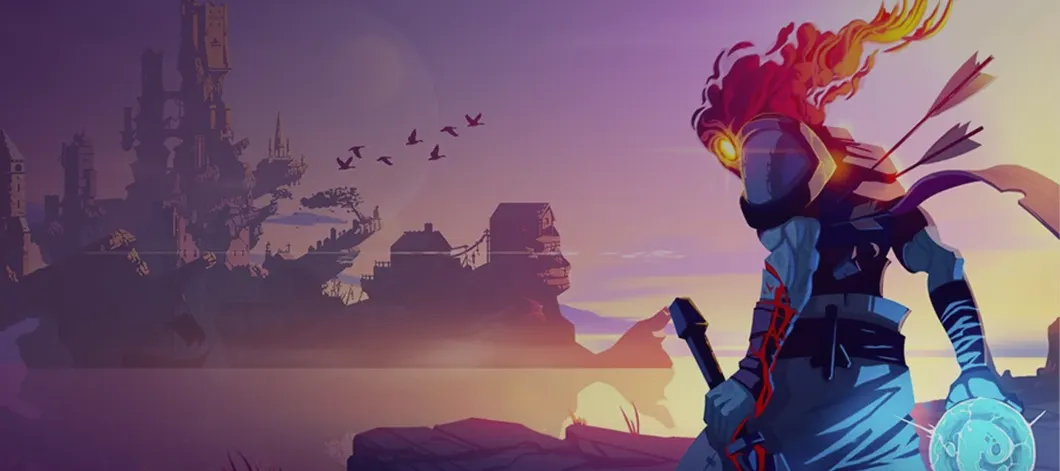
Dead Cells brings run-based randomization and a much broader weapon pool to the action side of things. Every Dead Cells run shuffles the level layout and gear drops, so adaptability matters more than memorization. Cuphead never randomizes—the same boss always throws the same attacks in the same order. That makes Cuphead feel fairer once you learn a fight, but also means you can't get lucky with a broken weapon combo. Dead Cells is about rolling with what the game gives you; Cuphead is about drilling a sequence until it's second nature.
None of these games are easy, but they ask for different kinds of focus. Cuphead asks for rhythm and repetition. Hollow Knight asks for exploration and patience. Celeste asks for precise movement. Dead Cells asks for improvisation. The one you pick depends on which kind of tension you enjoy sitting with.
A small maintenance update ships with the DLC Fix, keeping the base game stable alongside The Delicious Last Course expansion content.
- macOS Catalina or later
- Intel processor
Questions I actually get
Can I play through Cuphead with a friend on the same Mac?
Yes, the game supports two-player local cooperative play. A second player can drop in as Mugman, and you can revive each other mid-fight by parrying the fallen character's ghost.
Porch talk 0
Come in or pull up a chair to leave a comment.
Nobody has pulled up a chair yet. If you used it on a real Saturday, say what the hour was.