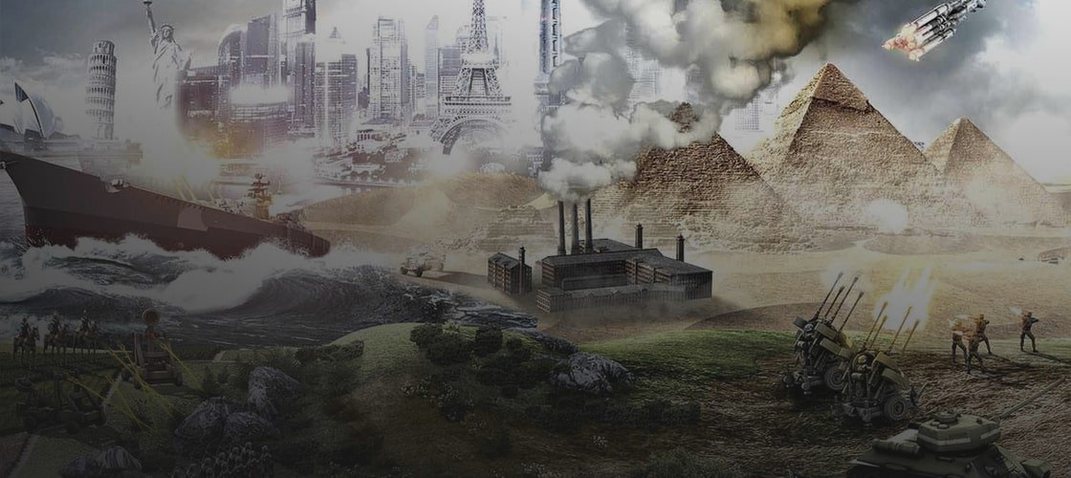
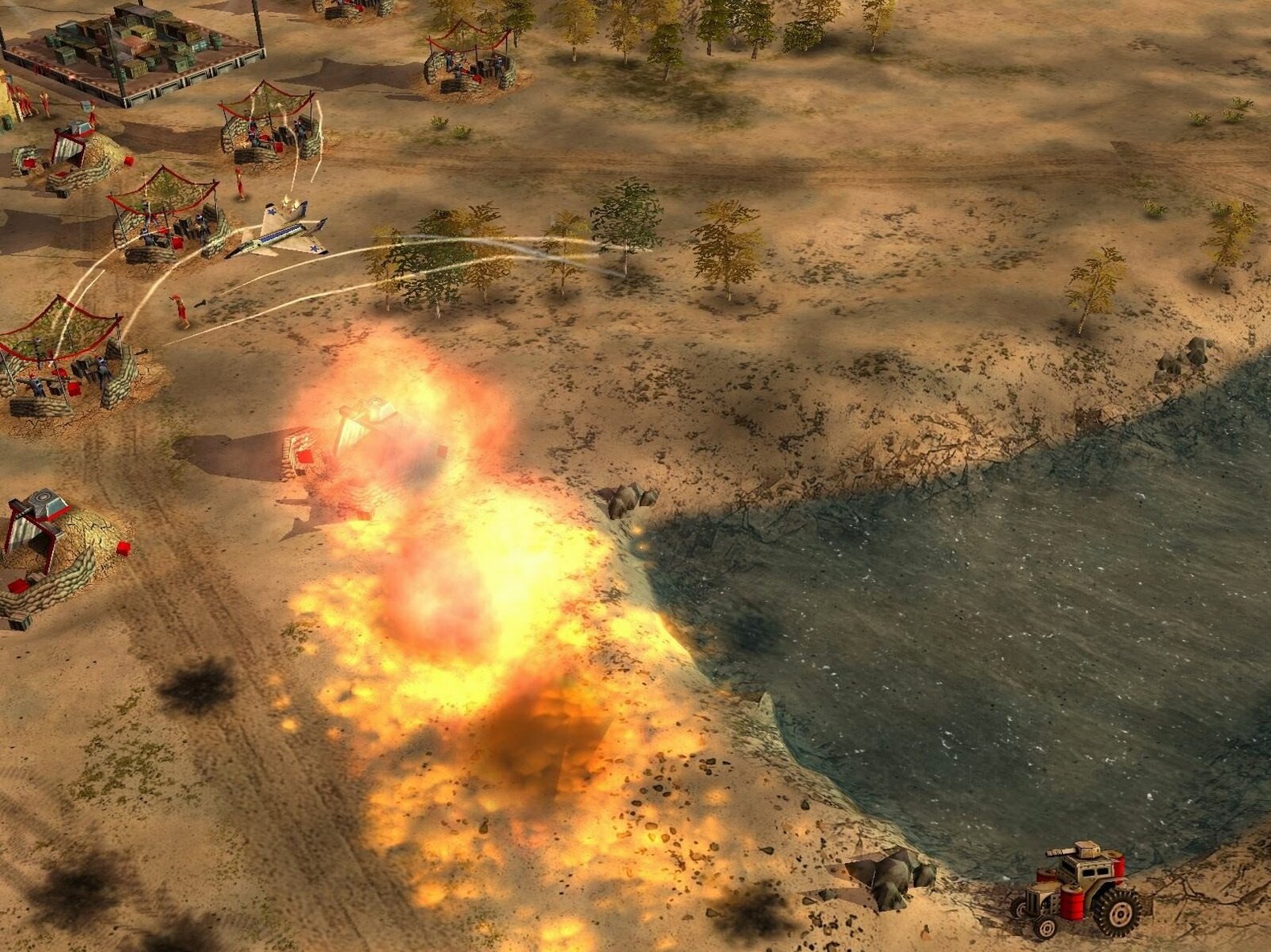
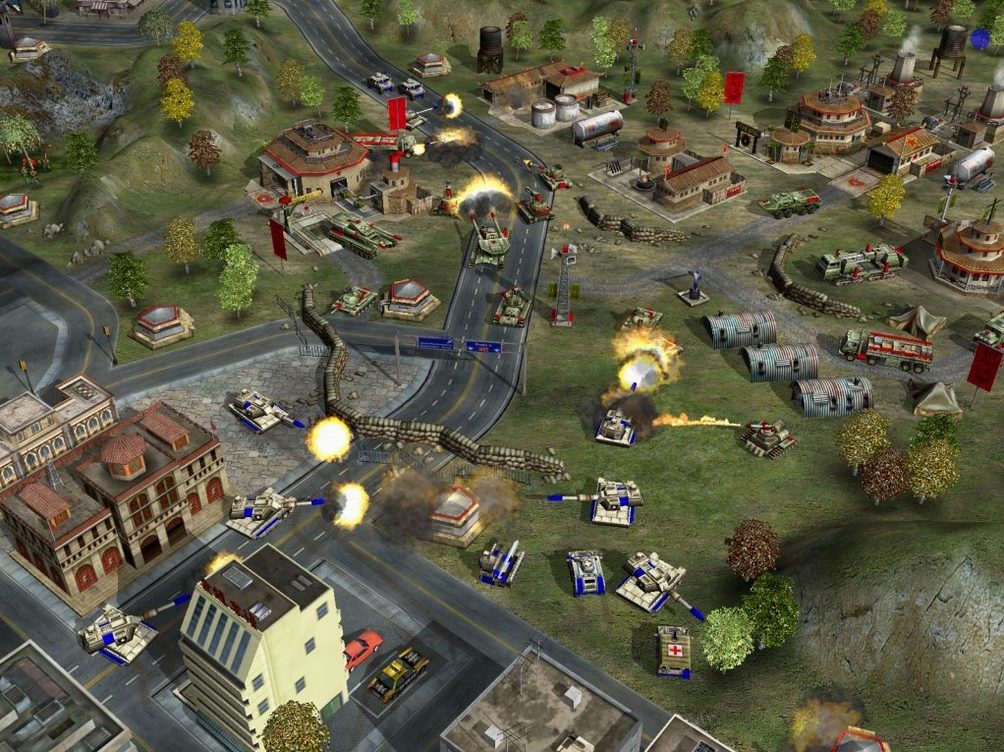
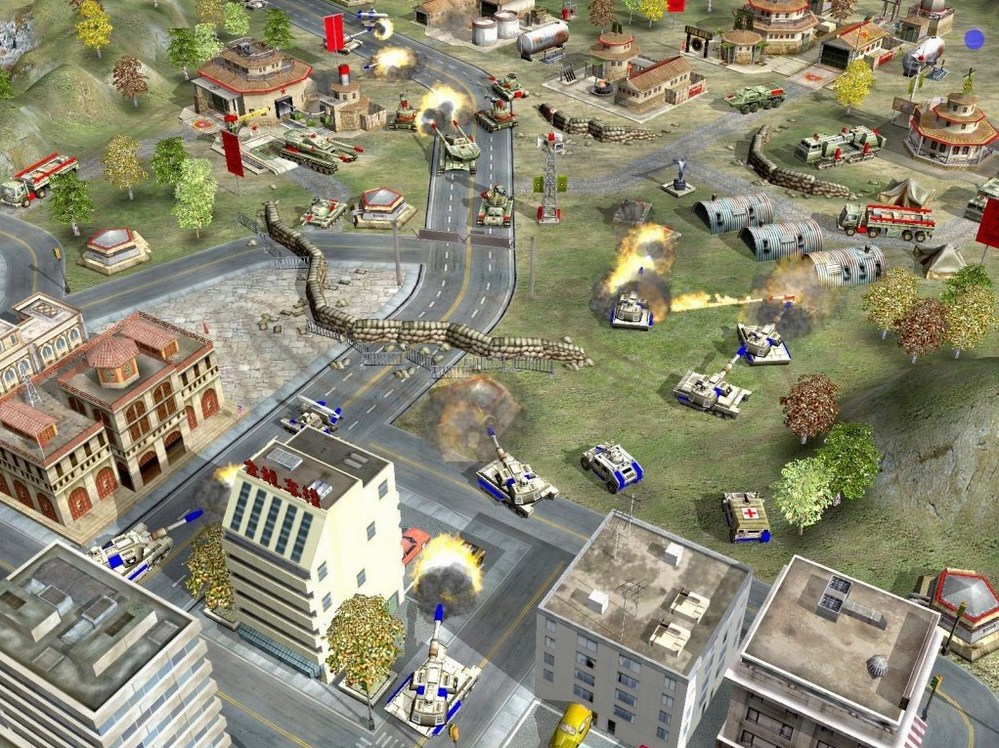
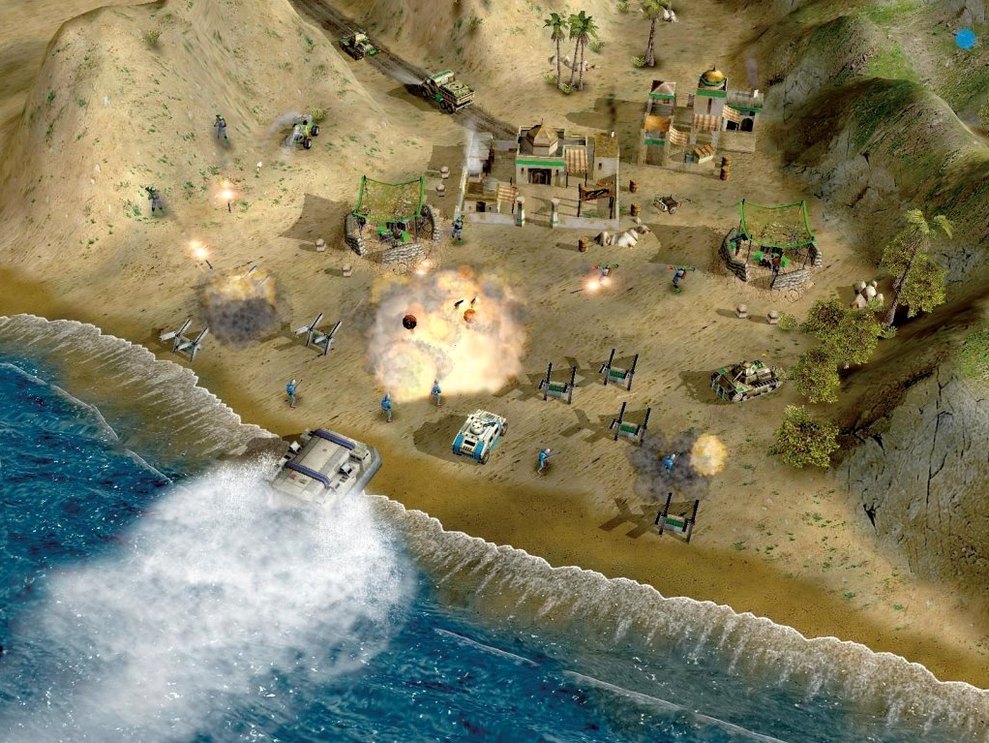
When the Particle Cannon fires, you’re not just watching a light show — you’re clearing a path to rush their command center. Zero Hour builds its whole rhythm around moments like that. It’s a standalone expansion that rewards players who love constant pressure over slow base-building.
Who enjoys the focus on capturing enemy bases?
You’ll click with this if you prefer finishing a match by sending an engineer into a rival’s command center instead of methodically destroying every last wall. The emphasis on capturing makes aggression feel smart and immediately rewarding.
What do the unique generals change?
Each general brings active or passive abilities that push a faction’s style to an extreme. You might specialize in swarming with cheap infantry or bringing overwhelming air power, so picking a general feels like choosing a distinct playbook.
When Fortress Players Get Overrun
If you enjoy taking your time behind layers of walls and teching up in peace, the pacing can feel relentless. The AI rarely lets you breathe, and the new units are built to crack open defenses, not reinforce them.
What does the expansion add to the original story?
New missions continue the storyline and introduce events that set the stage for the generals’ specialized arsenals. It’s a quick, focused campaign that frames the new tools without bogging you down in lengthy cutscenes.
Afternoon of No-Agenda General Testing
Give yourself an afternoon with no agenda. Pick the Laser General or the Air Force General and just play three skirmish matches against the easiest AI. You’re not trying to win — you’re learning where each new unit sits on the build menu and how the general’s passive ability changes your opening minutes. By the third match, the hotkeys for the dozer and the war factory start to feel like muscle memory.
Before you touch the campaign, hop into a skirmish as the Infantry General. Build nothing but barracks and tunnels for ten minutes. It’s the fastest way to internalize how the expansion’s economy works: supply docks still drop cash, but the pressure to spend it on units instead of teching up hits you within the first two minutes. Once you can hold a forward position with rocket soldiers and a few technicals, you’re ready for the real thing.
One quiet tip: the p key pauses. Zero Hour doesn’t advertise it loudly, but pausing mid-skirmish lets you queue buildings and study the tech tree without the AI punishing your hesitation. Use it liberally in your first week.
Fixing Particle Cannon Stutter in Wineskin
The Wineskin wrapper means the game occasionally stutters when particle effects pile up during a Particle Cannon strike or a Scud Storm. Dropping shadow detail to “Low” and switching anti-aliasing off inside the in-game settings smooths things out without making the battlefield look bare.
If the game window appears tiny on a Retina display, right-click the app in the Applications folder, choose “Get Info,” and check “Open in Low Resolution.” That forces the wrapper to scale sensibly. A few players on M1 Macs mention the mouse cursor feeling floaty — turning off “Hardware Cursor” in the game’s options usually fixes it.
Quick-save often, and don’t rely on a single slot. Some mission scripts get fussy after a reload, especially the ones that trigger a general’s ability mid-cutscene. Cycling through three save slots per mission keeps you from replaying the first twenty minutes when a trigger hiccups.
Send the Dozer Before the Power Plant
- Building a power plant before scouting. Zero Hour rewards early aggression. Send a dozer toward the nearest oil derrick the moment the match starts, and build your first supply center near it — not tucked behind your command center.
- Treating every general like the vanilla faction. The Toxin General doesn’t need an early war factory the way the Tank General does. If you copy the same build order for every general, you’ll lose rushes you could have stopped.
- Ignoring the general’s rank-up ability. Each general unlocks a unique upgrade as they gain experience — things like cheaper units or faster build times. Beginners often save that promotion for a “perfect moment” that never comes. Spend it as soon as you earn it.
- Forgetting that capturing is faster than destroying. A single engineer in a Humvee can flip a command center while your tanks distract their front line. New players tend to grind down every structure when a quick capture ends the match in half the time.
Why Generals Rewards Aggression Over Macro
Zero Hour versus StarCraft II
StarCraft II lives and dies by build-order precision and unit micro. Zero Hour cares less about perfect timing and more about map control. If someone snipes your refinery in StarCraft, you’re behind for minutes. In Zero Hour, you can capture their supply dock and flip the pressure instantly. It’s looser, scrappier, and you spend more time reacting to the battlefield than executing a memorized opener.
Zero Hour versus Age of Empires III
Age of Empires III gives you a slow-burn economy, multiple resource types, and tech trees that stretch across ages. Zero Hour’s economy is dead simple: supply docks and oil derricks, period. You’re fighting within thirty seconds, not five minutes. If you enjoy the early-game skirmish phase of Age of Empires but wish it never ended, Zero Hour feels like that phase stretched across an entire match.
Zero Hour versus Company of Heroes
Company of Heroes asks you to hold territory sectors and worry about cover, suppression, and squad positioning. Zero Hour is faster and more direct — you don’t retreat a squad to heal, you build ten more rocket soldiers and send them in. The destruction feels more kinetic, especially when a general’s ability levels a base, but you sacrifice the tactical granularity Company of Heroes is built on.
Version 1.04 turns the focus toward specialized command with a few impactful additions.
- Unique generals replace the Super Strike, each with their own active or passive abilities.
- New units and buildings were added for all three factions, deepening tactical options.
- A new set of missions and events continues the original storyline.
- macOS ?
- Architecture: Intel
- Tested on macOS Monterey, MacBook Air (M1, 2020)
Questions I actually get
Was Zero Hour tested on modern Macs?
Yes, version 1.04 was tested on macOS Monterey running on a MacBook Air with an M1 chip, so it plays well on that setup.
Porch talk 0
Come in or pull up a chair to leave a comment.
Nobody has pulled up a chair yet. If you used it on a real Saturday, say what the hour was.