
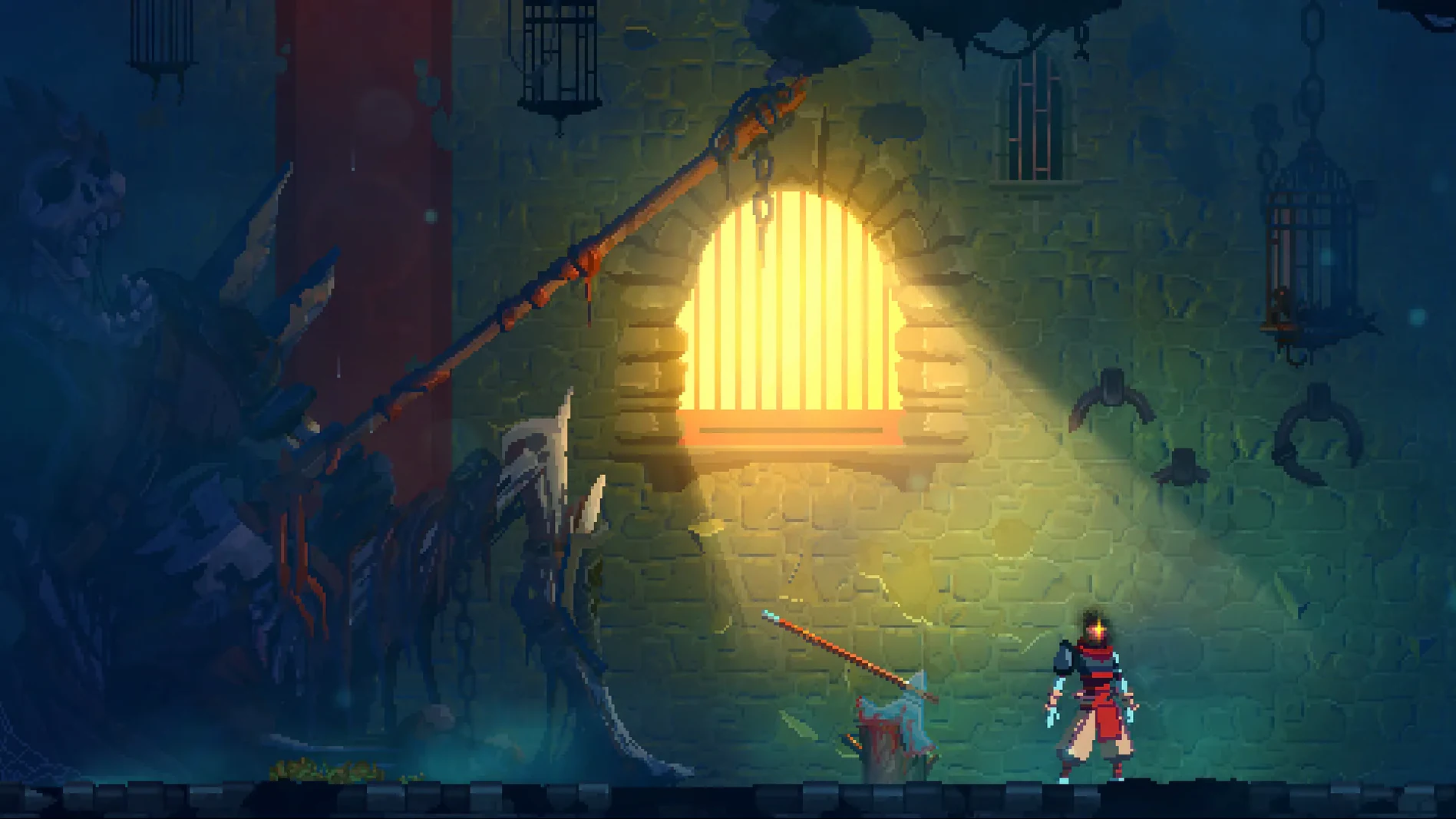
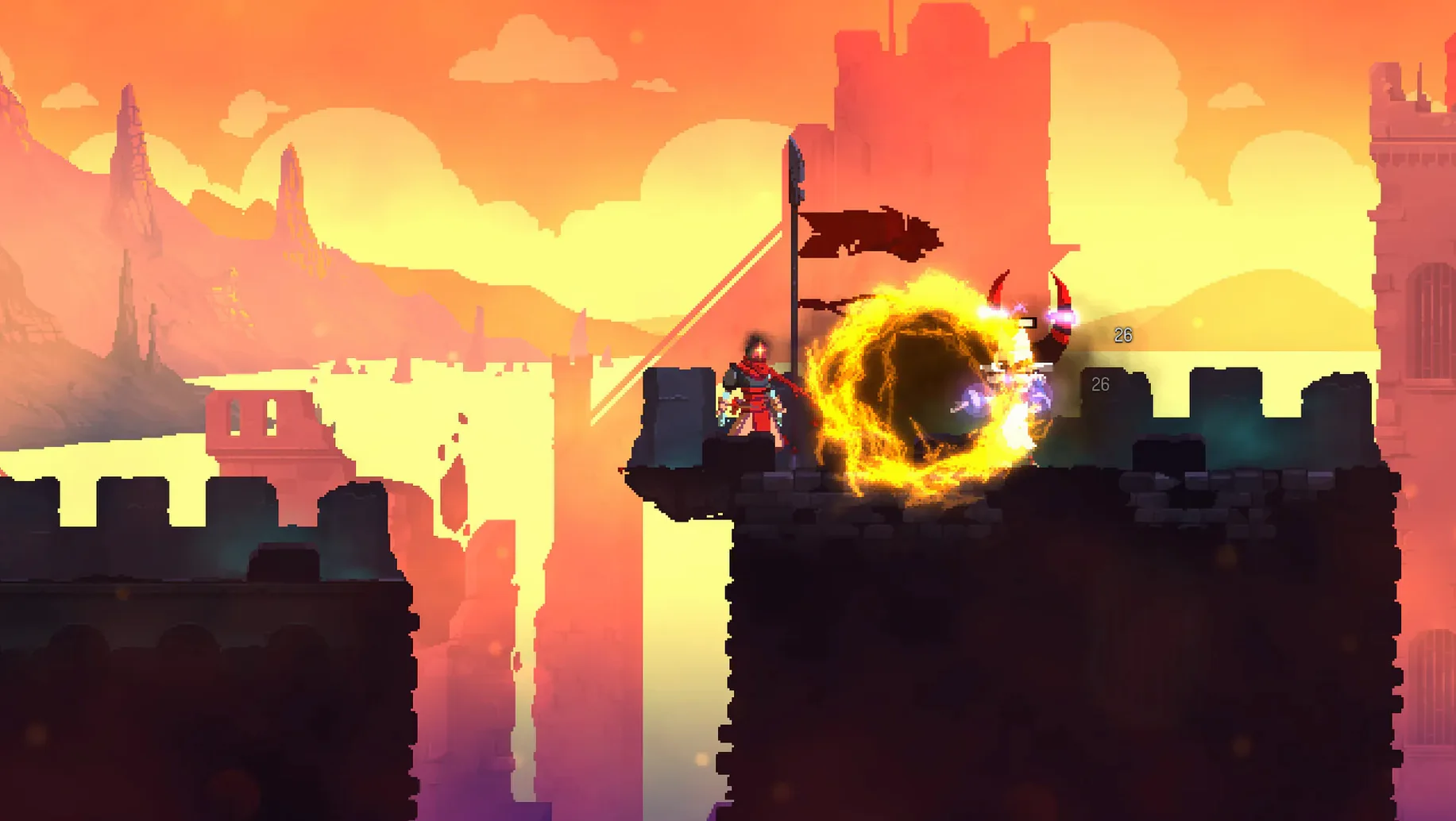
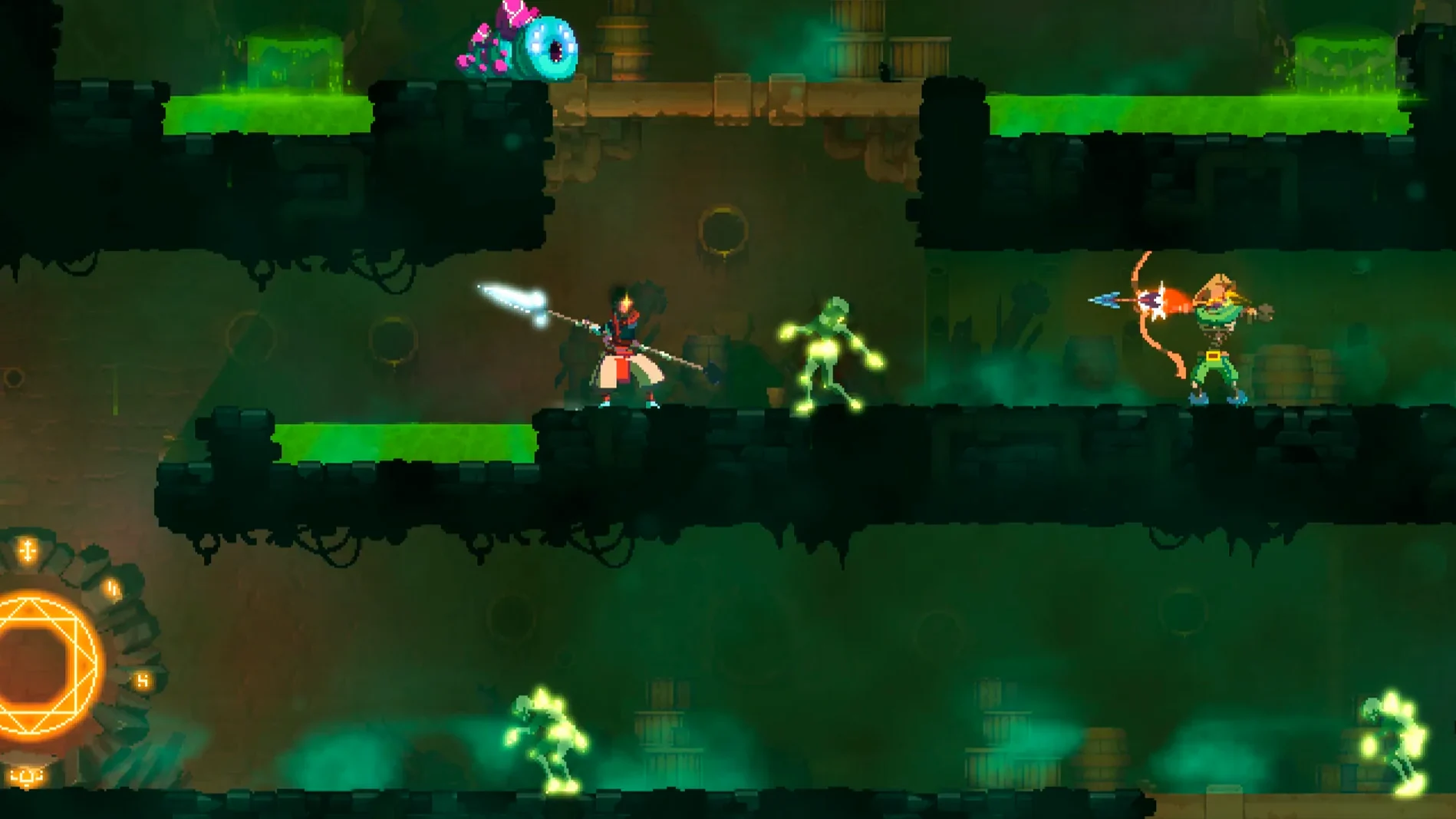
Weekend players who like their reflexes tested and their progress earned will find a lot to love here. Motion Twin's side-scroller blends tight combat with a world that remixes itself each time you fall.
Death — There is no save system. When you're done, you're done, and the layout you just learned has already begun to change.
Combat — A deliberate, Souls-like rhythm. Enemies telegraph their moves, and button-mashing won't save you.
World — An interconnected castle where rooms shift over time, opening and closing paths in a Metroidvania style.
Audio — Music-only, with a soundtrack that drives the action without a word of dialogue.
Unlock the Health Flask Before Anything Else
You'll die a lot early on. That's the design, not a failure. What separates a frustrating first evening from a satisfying one is how you spend the cells you've collected between runs.
Unlock the health flask first. It sits in the Collector's menu between levels and gives you one extra heal per run. Nothing else in those opening hours will keep you in the fight as reliably. After that, grab the random starting bow or shield — having a ranged option from the jump changes how you approach crowded rooms.
Learn to parry on the first bridge. The wooden bridge just past the opening courtyard has two slow zombies. They're the best training partners in the game. Stand still, watch the yellow exclamation mark above their heads, and tap the shield. A successful parry stuns them and deals massive damage. Spend ten minutes here and the muscle memory will carry you through the next three biomes.
Break the door, don't open it. Rolling through a wooden door or smashing it with a ground pound staggers enemies on the other side. Opening it politely gives them the first swing. Small habit, big survival bump.
Fix a Mac Controller That Won’t Register
Players coming from other roguelikes sometimes bounce off Dead Cells in the first two hours for reasons that are easy to correct. Here are the ones I hear about most.
Controller not registering on Mac. The game expects a controller, but macOS sometimes grabs it before the game does. If your DualSense or Xbox pad feels dead on the title screen, plug it in before launching the deadcells file, then wait for the controller indicator in the menu bar to settle. Wireless Bluetooth pads occasionally need a quick forget-and-repair. The build runs on Intel architecture through Rosetta, and controller support has been solid on M1 machines.
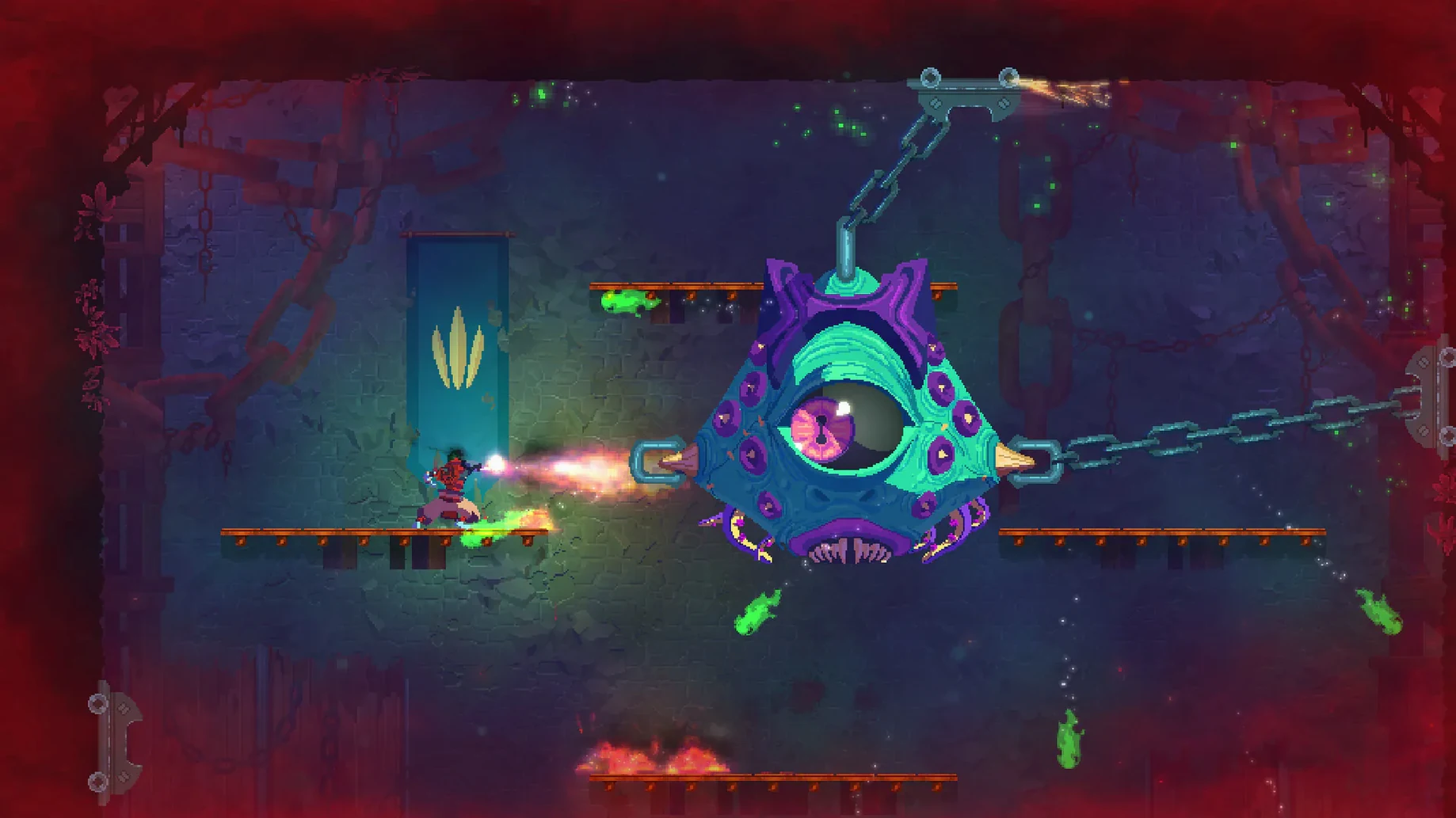
Stuck on the first boss. The Concierge feels like a wall until you notice his attack pattern loops in threes: swipe, swipe, leap. Roll behind him during the leap and you'll get four or five free hits every cycle. Traps like the sinew slicer or wolf trap do passive damage while you dodge, which turns a long fight into a short one.
"I lost all my cells again." After the first boss, the Collector offers a upgrade that lets you keep a portion of cells on death. It's easy to miss because the game doesn't push you toward it. Grab it as soon as it appears in the menu. Until then, spend cells before entering any door marked with a boss skull — you won't be coming back with them.
Frame drops in heavy fights. If the action chugs when a dozen bats and a golem fill the screen, drop the particle effects to low in the video settings. The pixel art keeps its character, and you'll read enemy tells more clearly without the visual noise.
A run, step by step
You double-click the deadcells file, the title screen hums, and you're in the Prisoners' Quarters. The first room has two basic zombies. You roll through the door, stun them both, and clear them with three swings of the balanced blade you started with. The scroll on the floor offers a Brutality upgrade — you take it, because your blade scales with red.
Two rooms later you find a shop. The merchant has a frost blast. You trade 25 cells, swapping your shield to the backpack slot. Now you can freeze groups and shatter them with the blade. A timed door is closing in 45 seconds — you sprint past three enemies, roll through spikes, and make it with two seconds to spare. Inside: a colorless twin daggers that scales with your highest stat. The run has legs.
Promenade of the Condemned. Ramparts. The Black Bridge. The Concierge falls to frost blast volleys and turret fire, and you walk away with 38 cells and a heavy crossbow. You spend the cells on the forge, raising your chance of "+" quality weapons on future runs. Back in the Quarters, a cursed chest drops an amulet with a double-jump modifier. Three biomes later, a trap room you didn't read in time ends the run. The cells are gone, but the forge upgrade is permanent. You hit restart before the death animation finishes.
How an explorer plays it
A player who grew up on Super Metroid and bounced off the punishing speed of some roguelikes will approach Dead Cells differently than a speedrunner. They're not chasing timed doors or flawless boss kills; they're mapping the castle in their head.
This kind of player takes the slow route through the Toxic Sewers, not because it's optimal, but because the vine-rune door they unlocked three runs ago still has unexplored rooms behind it. They'll spend a whole run just poking at walls in the Ramparts, looking for the hidden food stash that lets them reach the Stilt Village with full health. Combat is a puzzle, not a race — each enemy group is a small room to clear methodically, shield up, watching for the tell before committing.
When they find the ram rune, it's not a key — it's an invitation to revisit every stone-marked floor they've walked past for six hours. The game rewards that curiosity. A Dead Cells torrent that lands on a Mac and gets played this way stops being a run-based action game and turns into a sprawling, interconnected world that just happens to reset when you die. The exploration thread runs deep, and the castle keeps its secrets tucked behind breakable walls, challenge rifts, and lore rooms that change the way you read the whole island.
- Architecture: Intel (x86 64-bit)
Questions I actually get
What languages does Dead Cells support for its interface?
It includes Russian, English, German, Spanish, Italian, Simplified Chinese, Korean, Portuguese, Turkish, French, and Japanese.
Porch talk 0
Come in or pull up a chair to leave a comment.
Nobody has pulled up a chair yet. If you used it on a real Saturday, say what the hour was.