
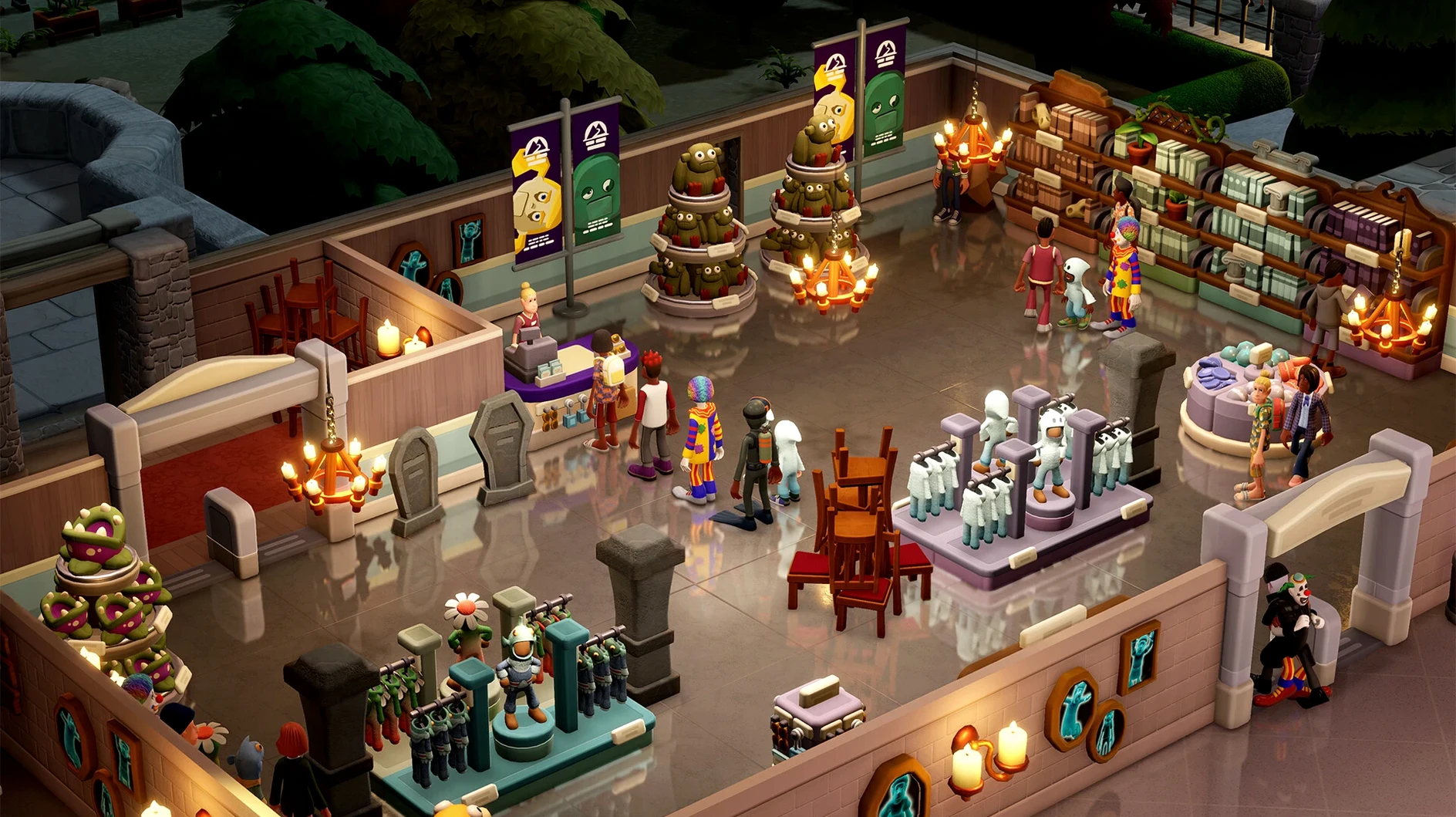
Designing exhibits is the easy part. Keeping them safe from thieves, guiding bored guests to the gift shop, and figuring out why your prehistoric display is on fire? That's the real challenge of running a museum—and exactly the kind of warm, funny chaos Two Point Studios has been perfecting for years.
Custom Museum Sandbox for Two Point Veterans
- Fans of the studio's earlier games like Two Point Hospital and Two Point Campus.
- Sandbox builders who want to shape sprawling custom museums without a campaign breathing down their neck.
- Anyone who enjoys a management sim with a distinctly British sense of humor and a charismatic tour guide.
Juggling Ghosts, Fossils, and Six Exhibit Types
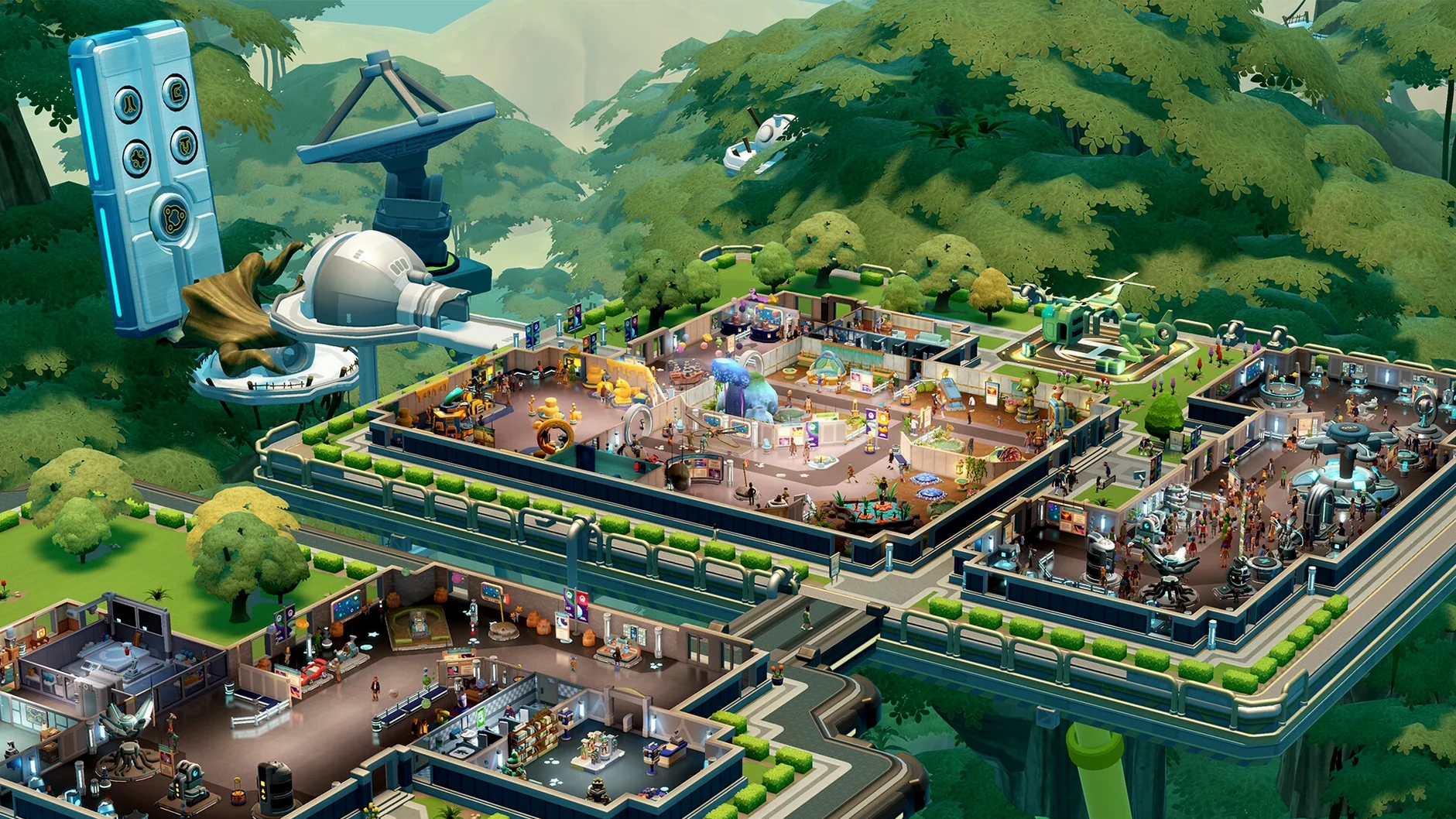
- You'll be juggling security, staff, and guest happiness across five very different locations—from a spooky supernatural manor to a frozen prehistoric site.
- Managing six main exhibit types and over 30 subcategories means a lot of plates to spin at once.
- Sending experts on expeditions to over 100 points of interest on the adventure map pulls your focus away from the daily hum of the museum floor.
Looser and More Layered Than Two Point Campus
A few management sims on macOS chase the same audience. The obvious comparison is Two Point Campus, the studio's own 2022 outing. Campus is brighter and more focused on room prestige and student schedules. Museum feels looser and more layered—you're not just arranging a building, you're curating a collection that changes with every expedition. The adventure map sends your staff off-screen in a way Campus never does, and the thrill of hauling back a rare fossil or a haunted portrait gives Museum a pacing the earlier game lacks.
Outside the Two Point universe, Parkitect scratches a similar creative-management itch. Parkitect leans hard into coaster physics and scenery depth, and the guest simulation is arguably more granular, but it doesn't have the narrative charm or the sheer variety of exhibit types. Museum's tours, thieves, and temporary exhibits give it a personality Parkitect's generic park guests never quite reach. If you want a management sim that feels like a sitcom running in the background, Museum is the one.
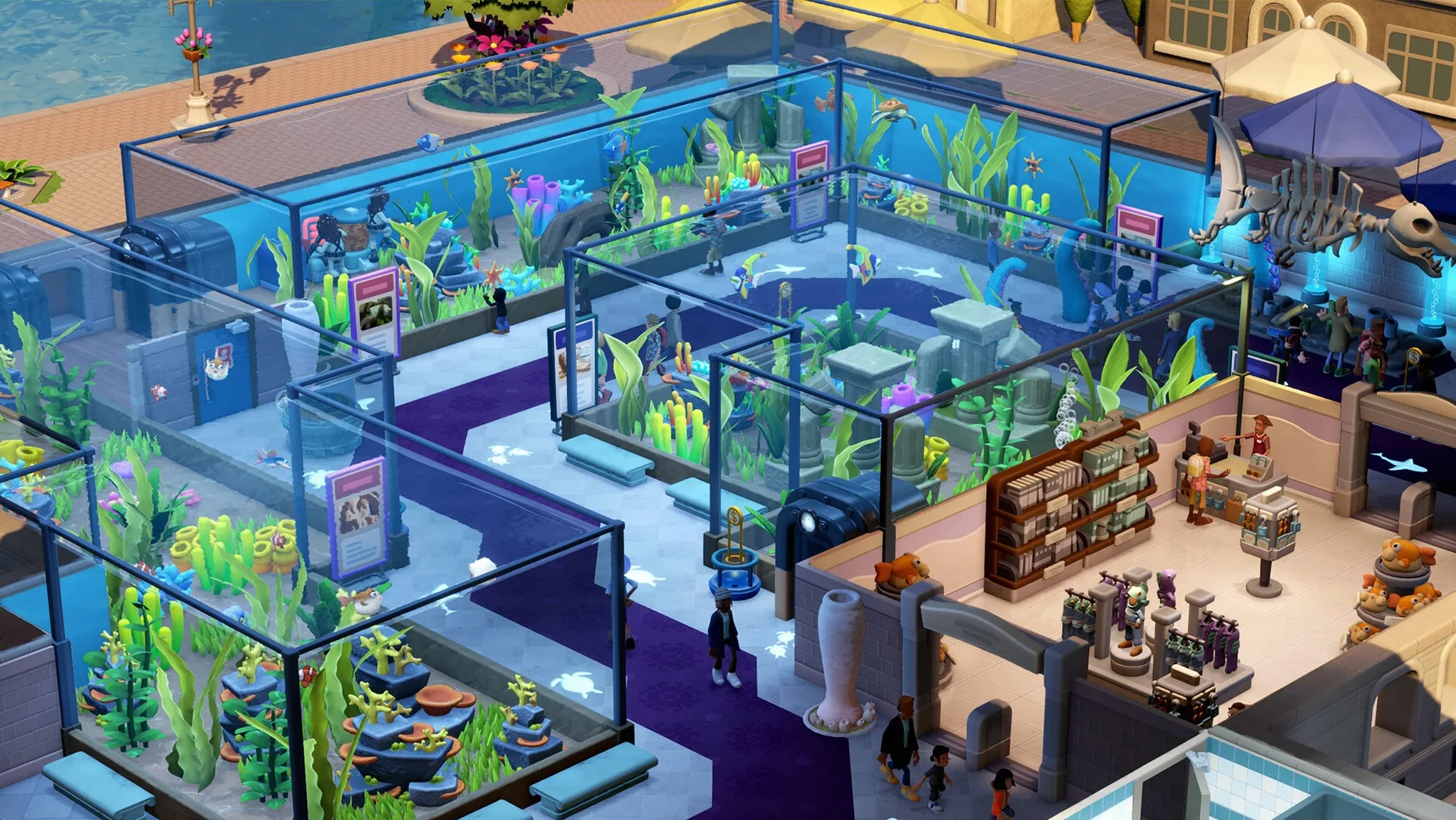
Compared to something like Megaquarium, which overlaps on the aquarium theme, Museum is broader and more playful. Megaquarium is a tighter, more earnest fish-breeding simulation. Two Point Museum treats its aquarium as one flavor among five, and its guests as walking punchlines who'll complain about toilets, curse your ticket prices, and occasionally steal a dinosaur bone.
When an Expedition Leaves Your Artifact Unguarded
People coming from Two Point Campus often hit the same wall: the expedition system feels disconnected at first. You send your expert off to a dig site, the timer ticks down, and meanwhile a thief is circling your prized artifact. The fix is rhythm. Treat expeditions like a background beat—start one, then spend the downtime tweaking security camera coverage or adding a drinks machine near a heat map of thirsty guests. Don't watch the timer.
Another headache is guest flow through the supernatural museum. The manor's tight corridors create bottlenecks, especially when a tour group stops to gawk at a ghost. The solution isn't more benches; it's splitting your exhibits across two wings and placing a second gift shop near the exit. Guests who finish a tour with a clear path to the shop spend more and complain less.
Security can feel unfair until you realize thieves always target the most valuable, least-guarded item in the room. Double up on cameras near your rarest exhibits, and hire a security guard whose patrol route overlaps the gift shop—thieves love a distracted cashier moment. If an exhibit disappears, pause the game, check your expedition map, and you can usually send a retrieval team to snatch it back.
A Monday afternoon at the prehistoric museum
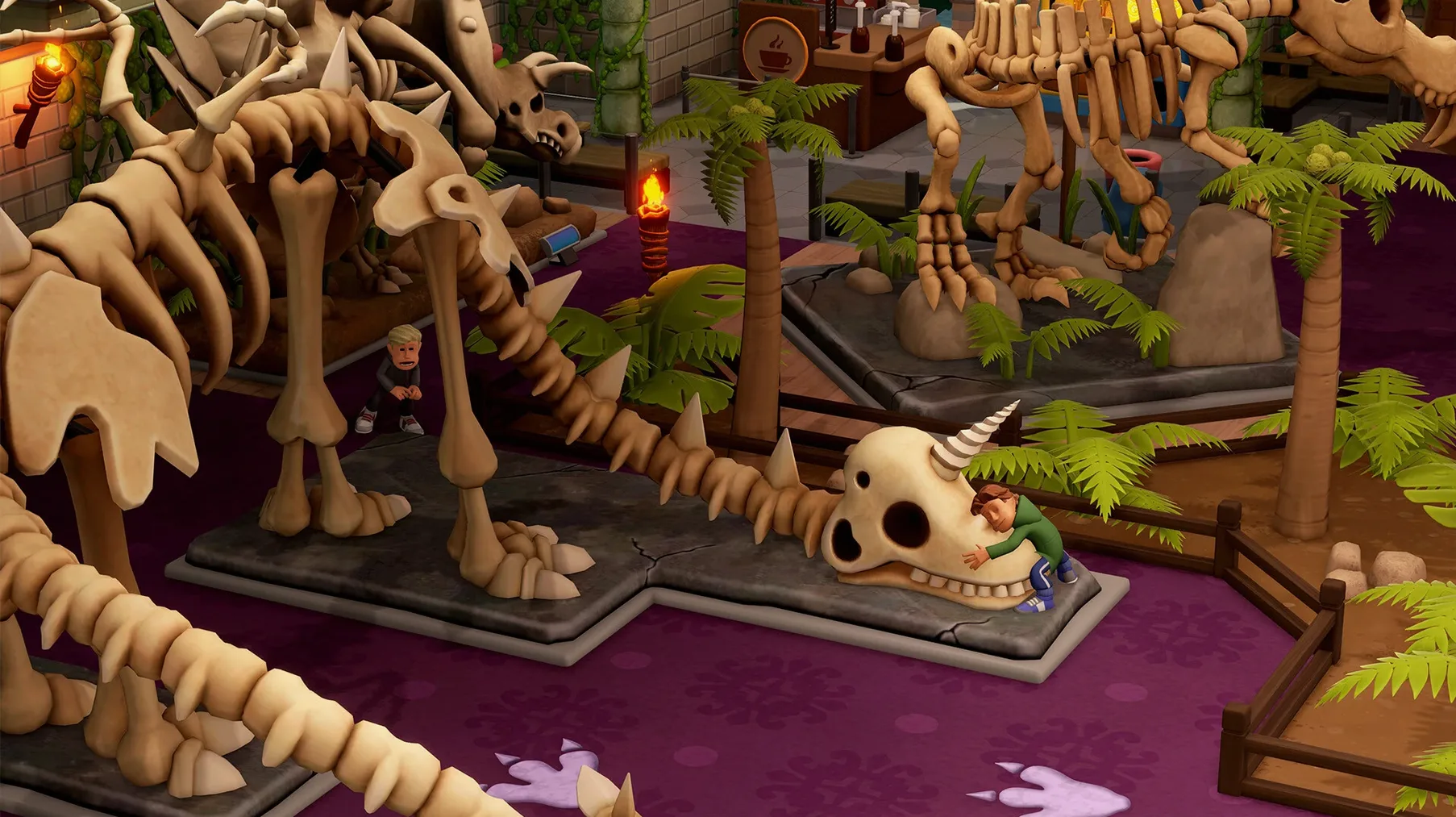
You open the sandbox mode and pick a frozen valley just outside Two Point County. The ground is icy, the space is wide, and you've got a fresh batch of fossils from last night's expedition to the Tar Pits. First step: lay out a wide entrance plaza with a ticket booth, a drinks kiosk, and a couple of those goofy dinosaur topiary decorations. You drop a large exhibit space in the center for the Triceratops skull, then flank it with smaller rooms for the trilobite collection and a hands-on fossil scraping station.
By midday, your expert returns from a new expedition carrying a half-frozen cave bear skeleton. You carve out a chilled wing—literally, you're placing ice-themed décor and keeping the temperature low—and set up a tour route that snakes from the entrance, past the Triceratops, through the bear room, and out by the gift shop. The tour guide kicks off, her voice echoing through the speakers, and you watch the first group shuffle along, rating everything four stars and buying plushie trilobites on the way out.
Then the alert pings: a thief is casing the bear skeleton. You drop a security camera on the wall just as your guard wanders over. Crisis averted. You end the session with a museum that feels alive, a queue at the toilets, and a new expedition already ticking down toward the next discovery.
A specific workflow: building the perfect tour
Let's say you've just unlocked the supernatural museum, and you want a tour that keeps guests happy long enough to empty their wallets. Start by placing your highest-quality exhibits—possessed portraits, a cursed suit of armor, a glowing séance table—in a single line from the tour start point. Tours work best when guests never have to double back; a loop shape keeps them moving toward the exit. Drop interactive displays every third exhibit. A ghost-summoning bell or a "touch the ectoplasm" station breaks the walk and bumps up the tour rating.
Next, set your tour guide's schedule. Assign one guide to run tours every 20 minutes, and hire a second guide to cover breaks, because a canceled tour sends guest satisfaction off a cliff. Place a drinks machine and a bench at the halfway point. Guests who pause for a soda will rejoin the tour—they're not lost, they're just thirsty.
When the tour ends, guide them straight into a gift shop stocked with supernatural-themed merchandise. A guest who just watched a portrait's eyes follow them across the room is primed to buy a haunted snow globe. After a few runs, open the tour analytics panel. If a particular exhibit scores low, swap it with a fresher find from your latest expedition. Tweak the route, adjust the guide's timing, and watch the star ratings climb. It's a loop that rewards patience: expedition, placement, tour, profit, repeat.
- macOS (both Apple Silicon and Intel 64-bit supported)
Questions I actually get
Does Two Point Museum run on Intel Macs or just Apple Silicon?
It runs natively on both Apple Silicon and Intel 64-bit Macs, so you're covered regardless of which architecture you have.
How many different museum themes are there to manage?
There are five distinct locations including a prehistoric museum, an aquarium, a supernatural history museum, a science museum, and a space museum.
Porch talk 0
Come in or pull up a chair to leave a comment.
Nobody has pulled up a chair yet. If you used it on a real Saturday, say what the hour was.
More for the same hour
Everything in Games
 Tropico
t6 1290 Games
40 GB
Tropico
t6 1290 Games
40 GB

 Tropico 5
1.11 Games
4 GB
Tropico 5
1.11 Games
4 GB

 Trombone Champ
1.28E Games
757 MB
Trombone Champ
1.28E Games
757 MB

 Tower of Babel: Survivors Of Chaos
1.12.2 Games
173 MB
Tower of Babel: Survivors Of Chaos
1.12.2 Games
173 MB

 Total War: ROME REMASTERED
2.0.5 Games
35 GB
Total War: ROME REMASTERED
2.0.5 Games
35 GB

 Total War: ROME II - Emperor Edition
2.4.1 Games
20 GB
Total War: ROME II - Emperor Edition
2.4.1 Games
20 GB
 Unmourned
1.0 Build 20836643 Games
20 GB
Unmourned
1.0 Build 20836643 Games
20 GB
 Total War: PHARAOH DYNASTIES
2.0.2 Games
50 GB
Total War: PHARAOH DYNASTIES
2.0.2 Games
50 GB