

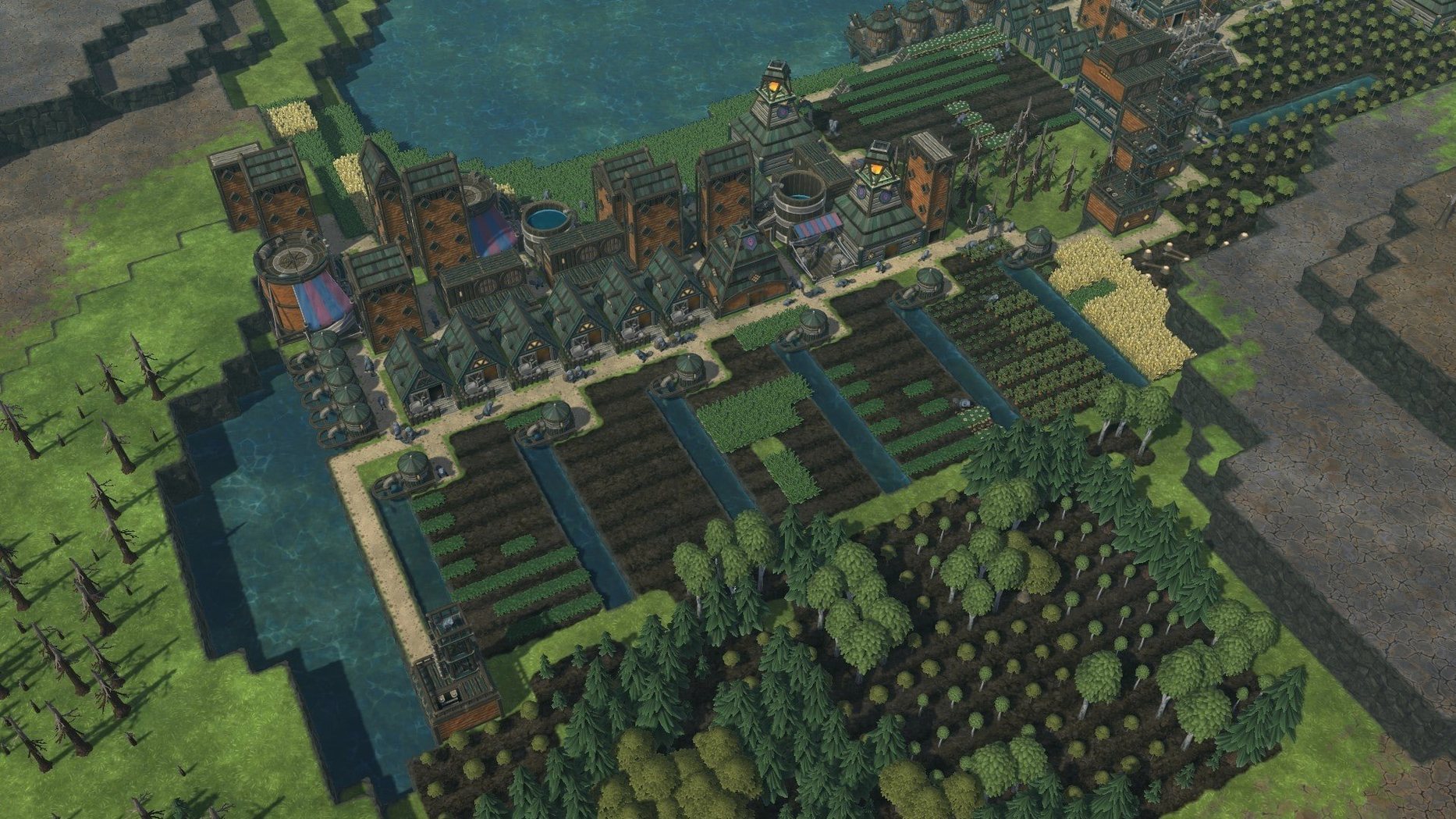
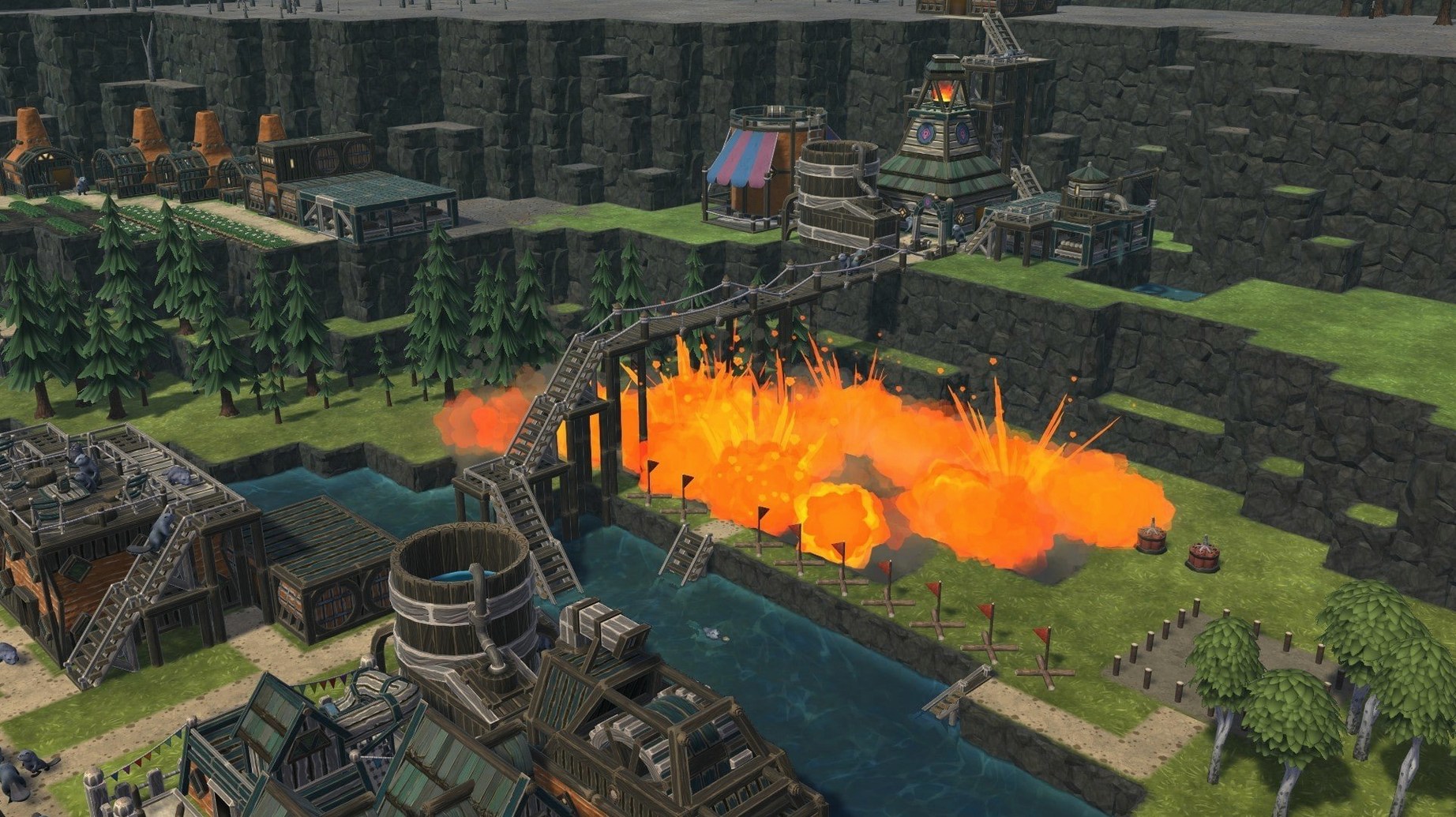
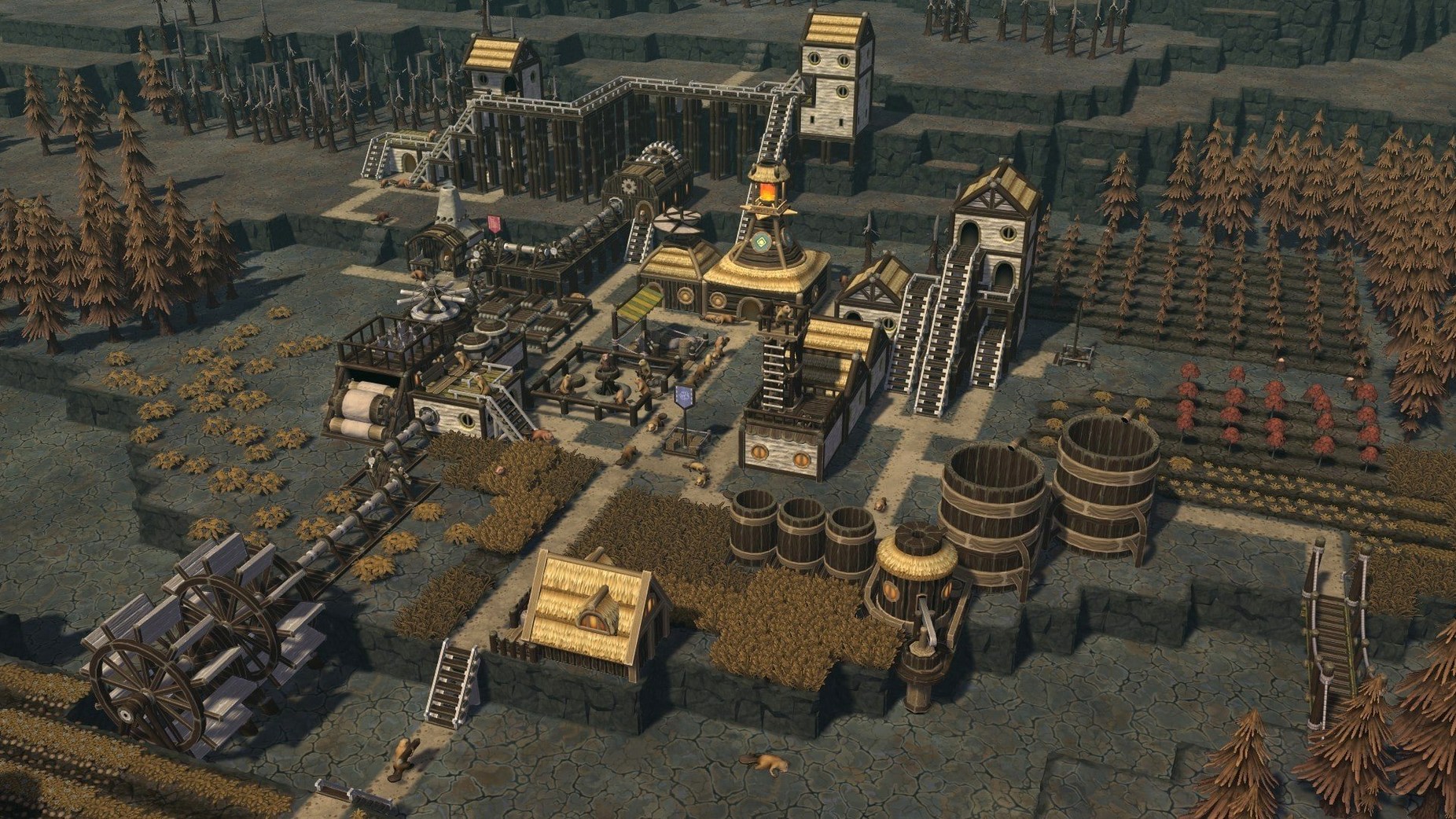
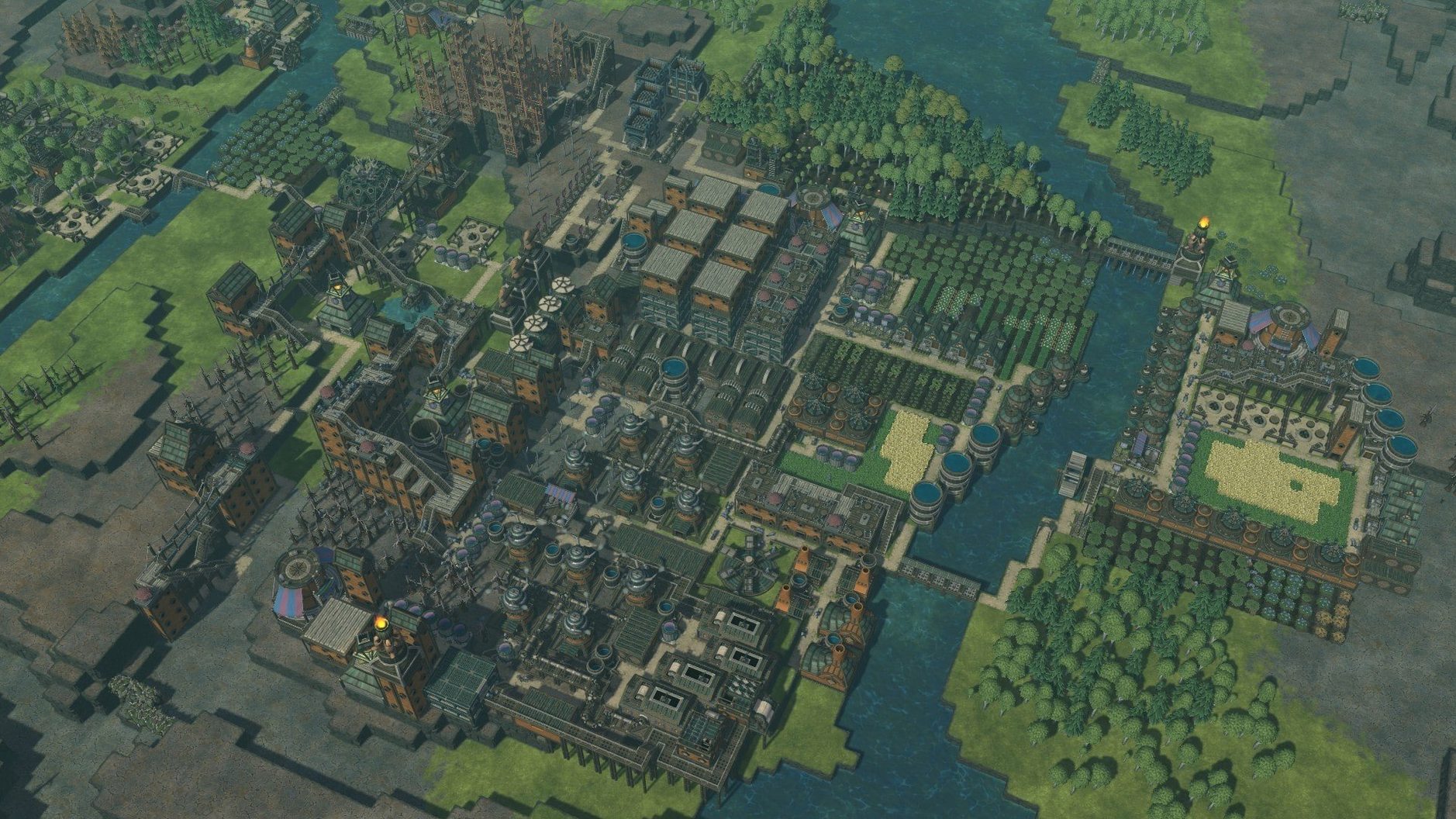
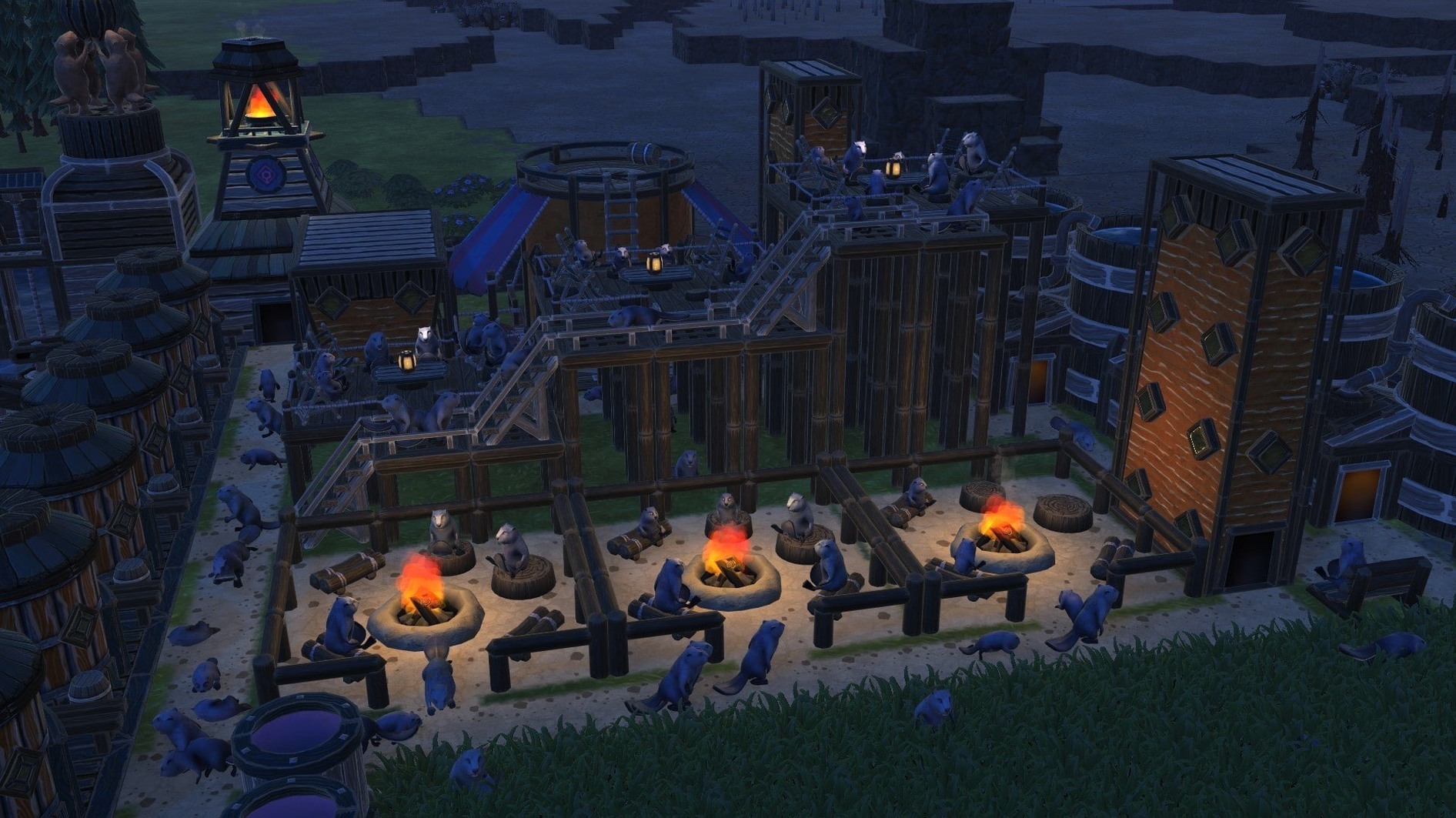
If you've ever lost an afternoon rearranging waterways in a city builder just to get the flow right, Timberborn operates in that same headspace—but with a lot more wood. This is a colony-building simulator from Mechanistry that puts you in charge of a society of beavers after humanity has dried up and left. Your job isn't just to place huts. It's to reshape rivers.
Slow-burn water engineering and vertical beaver cities
- Players who enjoy slow, systems-heavy planning over rapid action.
- Anyone fascinated by water physics, dams, and canal networks.
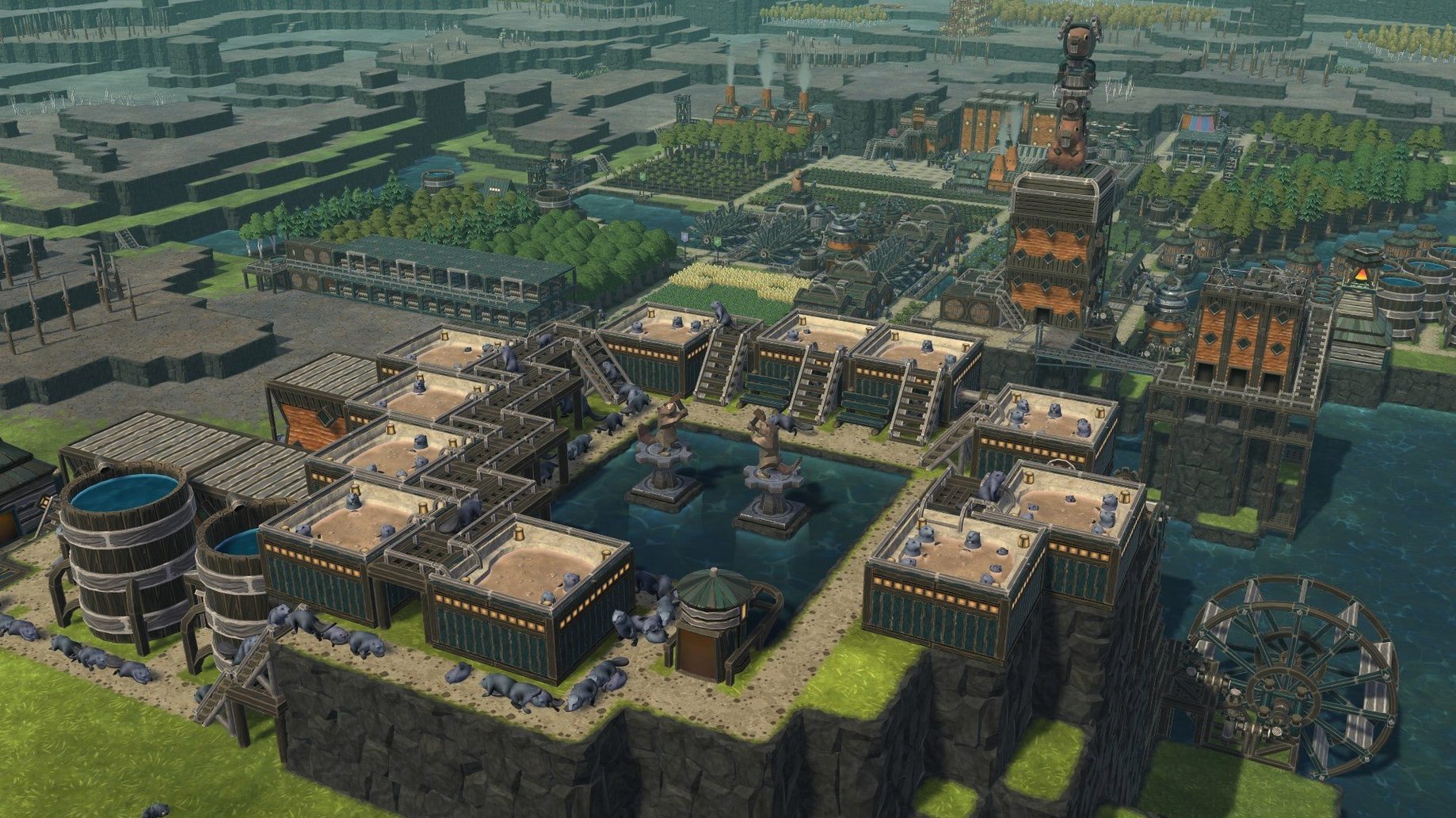
- Builders who like verticality—stacked lodges, platforms, and bridges are central here, not an afterthought.
- Managing districts and scheduling night work to keep a colony running around the clock.
Droughts will demolish hours of work
- The pace is deliberate. A single drought cycle can undo hours of work if your engineering is off.
- This is Mechanistry's debut title, so expect a focused idea executed deeply rather than a kitchen-sink approach.
- Success depends on reading the terrain and redirecting rivers, not just placing the right buildings.
Rock-solid on Mac mini M4 after hour three
A colony builder lives or dies by how it feels after the third hour, not the first ten minutes. Timberborn holds up remarkably well on the Mac mini M4 I ran it on. The build tested here is the DRM‑free 1.1.2.4.52e959e.gm release, and it runs natively on both Apple Silicon and 64‑bit Intel hardware. On the M4, the simulation churns through hundreds of beavers and a web of irrigation channels without the fan ever making itself known. That’s not nothing—water physics recalculates constantly, and the game tracks every cubic meter of flow across the whole map.
Loading a large, late‑game settlement with stacked platforms and multiple districts takes around eight seconds from the main menu. Frame pacing stays smooth even when you flip between the layered vertical view and the classic top‑down camera. I’ve seen a slight hitch when autosave kicks in on a map with heavy terraforming, but it’s a blink—no freeze, no stutter that pulls you out of the moment. Memory use sits around 2.4 GB in a mature colony, which leaves plenty of headroom for other apps on a 16 GB machine. Stability over a week of daily sessions was spotless: no crashes, no corrupted save files, no odd behavior when waking the Mac from sleep with the game paused in the background.
Banished’s drought survival, now with stacked lodges
If you’ve spent time with Banished, you’ll recognize the survival‑colony rhythm Timberborn shares: winter in one is drought in the other, and both punish poor resource planning without mercy. The difference is verticality. Banished keeps you on the ground; Timberborn lets you stack lodges, warehouses, and even farmland upward, which changes how you think about space entirely. It’s less about spreading wide and more about building smart, multi‑level districts.
Next to Frostpunk, the emotional register shifts. Frostpunk is grim, urgent, and demands morally uncomfortable choices under a ticking clock. Timberborn has stressful moments—a seven‑day drought with empty tanks will wake you up—but the tone stays lighter. You’re redirecting rivers with cute, industrious beavers, not deciding who freezes. The engineering depth, however, is arguably richer here. Timberborn’s water simulation, with its evaporation rates, contamination logic, and dam‑and‑sluice systems, asks for a kind of hydraulic creativity Frostpunk never attempts.
Then there’s Cities: Skylines on Mac. That’s a traffic‑management game wearing a city‑builder coat. Timberborn flips the focus: water, not roads, is your primary infrastructure. Managing flow rates and reservoir levels replaces roundabout design. For players who bounced off Skylines because the simulation felt too abstracted, Timberborn’s physical, visible water makes cause and effect satisfyingly direct. You see the river rise behind your dam, and you see crops wither when a canal runs dry.
Does one bad dam really flood your whole settlement
Does it feel complete, or is this an early‑access skeleton?
The 1.1 release brought new maps, a statistics panel, and a polish pass that moves Timberborn firmly out of “wait and see” territory. Two distinct factions—Iron Teeth and Folktails—play differently enough that a second colony feels like learning a new rhythm, not just a reskin. The custom‑map editor and community sharing add months of replay value. Nobody would call it a thin experience. Searching for a timberborn mac download puts you in a game with its systems fully in place.
Will it run well on an older Intel Mac?
The build supports x86 64‑bit, and while I didn’t test on Intel hardware this round, the adjustable graphics settings—shadow quality, water reflection detail, draw distance—give you meaningful levers. Dropping reflections and reducing the beaver population cap helps older machines keep frame rates playable. A 2017 iMac with a dedicated GPU should handle medium settings at 1080p without complaint.
Can you play it without an internet connection?
Yes. The DRM‑free nature of this release means no launcher, no authentication check, no online requirement. Start it on a laptop in a cabin with no Wi‑Fi and it works exactly as it does at home. That’s rare and worth mentioning.
Is it closer to a puzzle game or a sandbox?
Both, depending on the map and difficulty you choose. A narrow canyon map with short wet seasons plays like a hydraulic puzzle where every block placement matters. A wide plains map with custom difficulty—mild droughts, abundant resources—turns into a relaxing sandbox where you sculpt a beaver metropolis. The game doesn’t force one mode on you; the sliders and map selection let you dial in the pressure you want.
The 1.1 update brings fresh ground to build on and better ways to track your colony's numbers.
- New maps to test your engineering skills on unfamiliar terrain.
- Added statistics features for a clearer picture of how your beavers are doing.
- macOS: See developer site for current version support
- Architecture: Intel and Apple Silicon
- Interface languages: English, Russian, German, Spanish, Italian, Simplified Chinese, Korean, Polish, Portuguese, Ukrainian, French, Japanese
Questions I actually get
What kind of game is Timberborn?
It's a colony-building simulator where you guide a society of beavers, focusing heavily on water management through dams, canals, and river redirection.
Does Timberborn include vertical building?
Yes, vertical architecture is a key feature. You can create stacked buildings, multi-level platforms, and bridges for your beaver colonies.
What was added in the latest version?
The 1.1 release for Mac introduced new maps to build on and additional statistics features to track your colony's performance.
Porch talk 0
Come in or pull up a chair to leave a comment.
Nobody has pulled up a chair yet. If you used it on a real Saturday, say what the hour was.
More for the same hour
Everything in Games
 The Sims 4
1.127.41.1030 Games
78 GB
The Sims 4
1.127.41.1030 Games
78 GB
 The Forest
1.12 Games
4 GB
The Forest
1.12 Games
4 GB

 The Drifter
1.1.5 Games
669 MB
The Drifter
1.1.5 Games
669 MB

 Total War: PHARAOH DYNASTIES
2.0.2 Games
50 GB
Total War: PHARAOH DYNASTIES
2.0.2 Games
50 GB

 The Colonists
1.9.29 Games
379 MB
The Colonists
1.9.29 Games
379 MB

 Total War: ROME II - Emperor Edition
2.4.1 Games
20 GB
Total War: ROME II - Emperor Edition
2.4.1 Games
20 GB

 Total War: ROME REMASTERED
2.0.5 Games
35 GB
Total War: ROME REMASTERED
2.0.5 Games
35 GB

 Tower of Babel: Survivors Of Chaos
1.12.2 Games
173 MB
Tower of Babel: Survivors Of Chaos
1.12.2 Games
173 MB