



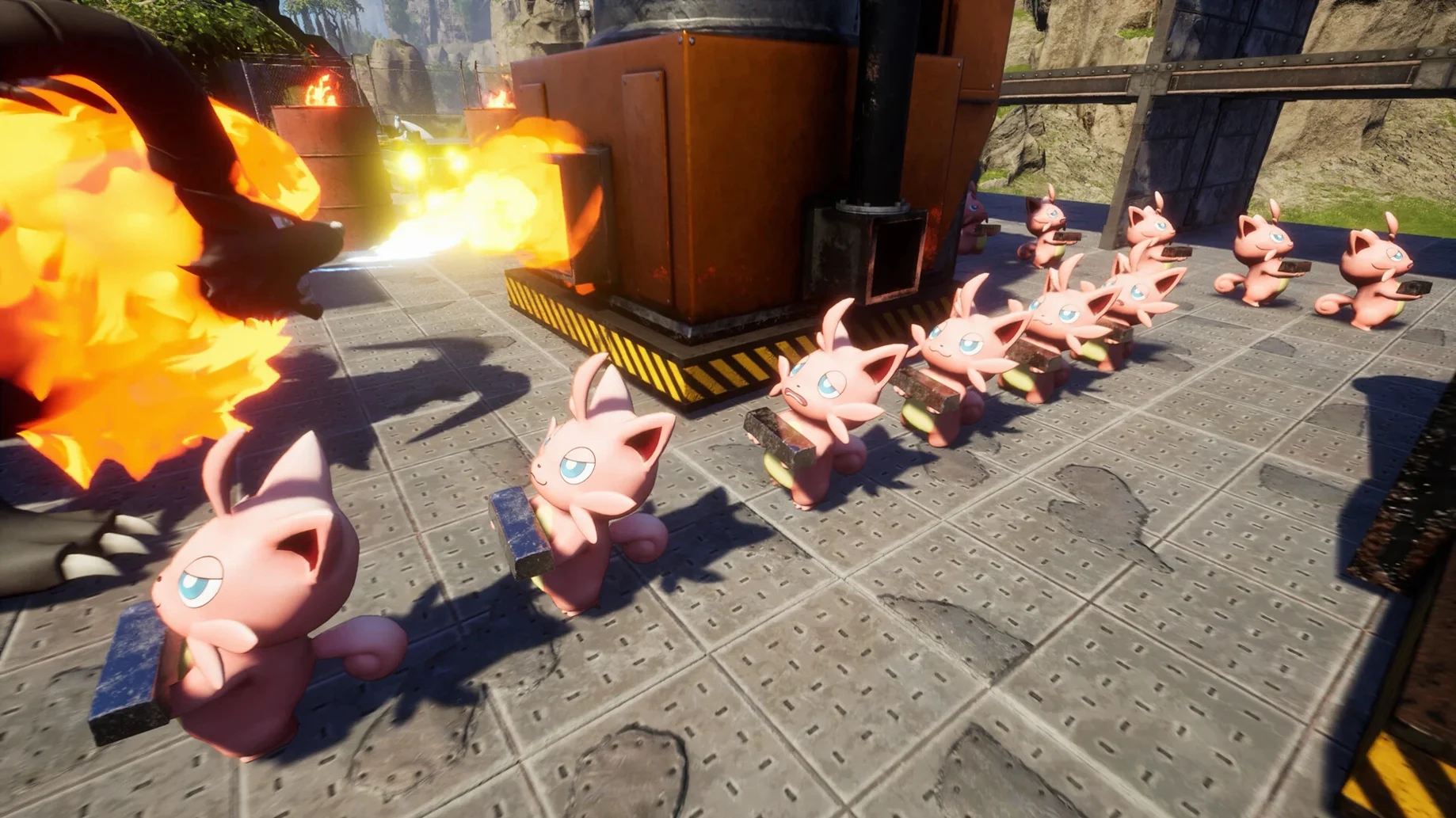

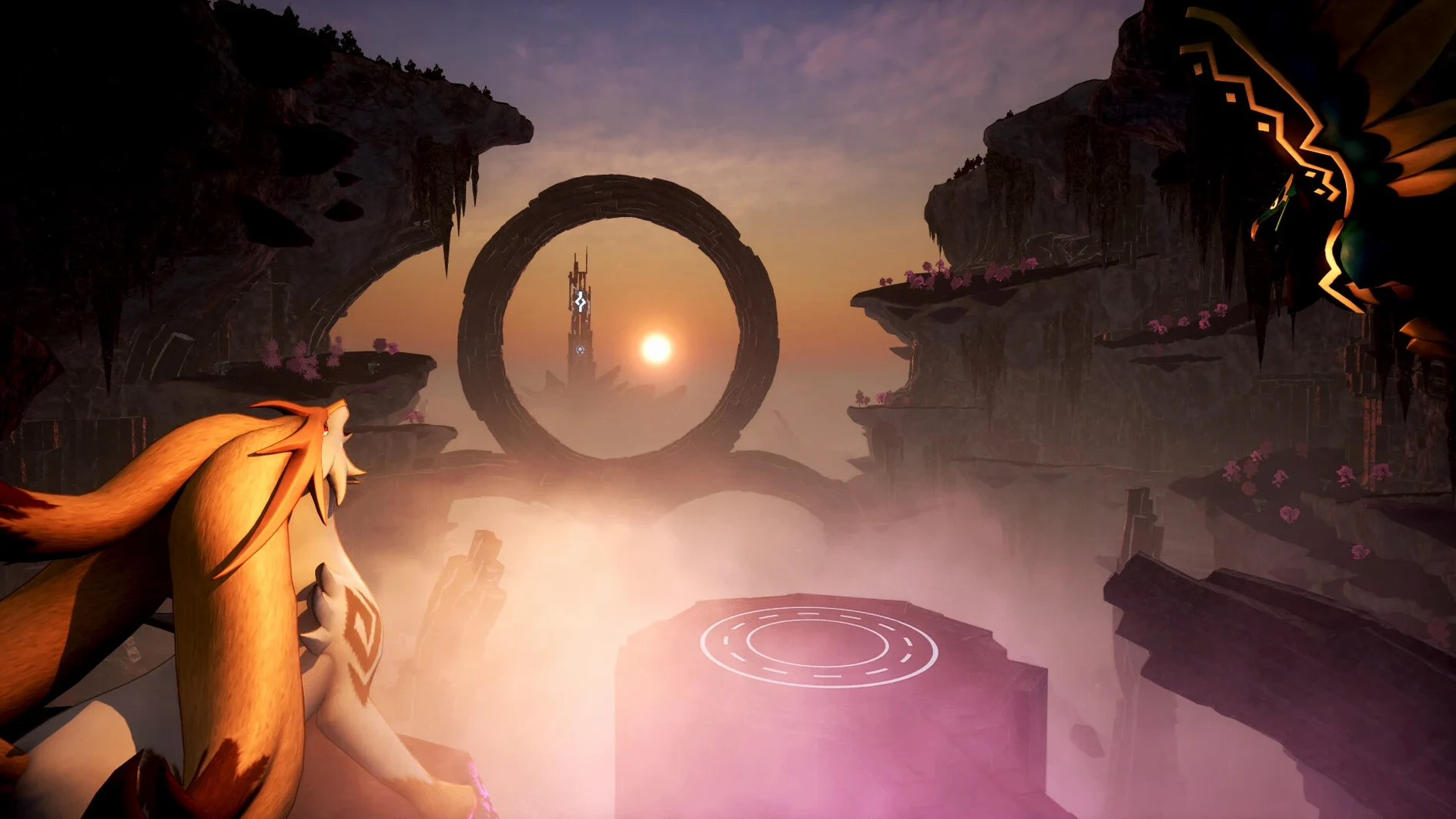


After years of watching survival-crafting games stick to the same few creature archetypes, the idea of a world filled with bizarre, weapon-toting companions feels like a shot of electricity. Palworld doesn’t just hand you a pickaxe and wish you luck; it drops you into a sprawling archipelago and immediately asks you to negotiate life alongside creatures called Pals, who are as useful in a factory line as they are in a firefight. It’s a strange, chaotic blend of cozy life sim and desperate third-person combat.
- Creature capture and combat: Weaken wild Pals in real-time battles, then throw a sphere to catch them. Once in your party, they fight alongside you with their own skills or can be ordered to work at your base.
- Full traversal system: Pals aren’t just fighters. Suitable species can be ridden across land, glided through the air, or used to paddle across oceans, making the map a playground of movement options.
- Base building and automation: Construct production lines, farms, and defensive walls, then assign Pals to handle the grunt work. They’ll water crops, mine stone, and craft materials while you’re away.
- Breeding and heredity: Pair two Pals at a breeding farm to produce an egg. The offspring visually and statistically inherits traits from its parents, letting you chase specific builds over generations.
- Ethical flexibility: The game doesn’t lock you into a single moral path. Pals can be nurtured, sold at market for profit, or dispatched in a pinch to keep your own character fed.
- Co-op multiplayer: Invite friends into your world or join theirs to explore dungeons, tackle towering boss Pals, and build a shared settlement.
If you find the idea of a game where you can hatch a fluffy sheep, arm it with a submachine gun, and then ride it to a poacher camp oddly compelling, this build on Apple Silicon is a peculiar pocket of chaos worth stepping into.
Where Palworld fits on a Mac
Palworld sits in an odd spot. It’s not a lightweight indie you run while a dozen browser tabs hum in the background, and it’s not the kind of triple‑A port that expects an external GPU enclosure. On a Mac mini M4 it finds a comfortable middle ground — demanding enough to spin up the fans during a boss fight, quiet enough that you forget about thermals while you’re laying out plantation rows. The game plays well with macOS’s focus modes: flip on Gaming focus and notifications hush themselves, leaving you alone with a foxparks igniting a poacher camp.
Where it really clicks is alongside the Mac’s built‑in screen recording and voice chat. I’ll grab a quick replay with the screenshot tool’s video capture when a breeding pair produces something unexpected, or drop into a FaceTime audio call with a co‑op partner while we’re both fumbling through a dungeon. The system‑wide microphone routing just works; no third‑party mixer needed. And because Palworld respects the native full‑screen space on Apple Silicon, swiping between the game and a Safari window full of breeding charts feels fluid, not like the machine is gasping.
One integration that surprises people is iCloud file sync for save backups. The game stores its world data locally, so dropping that folder into an iCloud‑synced location gives you a poor‑man’s cross‑machine backup — handy if you’re moving between a desktop and a MacBook. Just remember to pause syncing while you play, or the constant writes can cause stutter.
Hoarding Pals starves your base
New players often treat Palworld like a Pokémon game where every Pal needs to be captured first and asked questions later. That instinct leads to a crammed Palbox and a base that’s starving because nobody is assigned to the berry plantation. The first ten minutes reward observation: watch what a wild Pal does before you engage. Some species will water nearby crops on their own; catch those early and your food problems shrink.
Another trap is ignoring weight capacity. The game lets you hoard stone, wood, and ore with abandon, but the stat screen’s “carry weight” number isn’t a suggestion. Over‑encumbrance slows you to a crawl mid‑battle, and beginners don’t realize they can assign a Cattiva or a similar Pal to their party specifically to boost carry limits. A single party slot dedicated to a weight‑buffer Pal changes how long you can stay out gathering.
The third classic slip is building a base out in the open with no defensive walls. A raid by poachers or a wandering boss can undo hours of construction, and the tutorial never stresses how cheap wooden walls are to craft. Put up a ring of barricades before you lay the third workbench. Pals assigned to guard duty will do the rest.
Finally, don’t sleep on the monitoring stand. It’s an unlockable structure that lets you dictate work conditions for your Pals — speed, rest frequency, even whether they’re allowed to slack off. Beginners ignore it entirely and then complain their production line is slow while their Pals are napping in the hot spring.
Pals no longer starve behind furnaces
The jump to this build brought a handful of fixes that quietly reshape a session. Pal pathfinding inside bases used to be a running joke — a sweepa would get stuck behind a furnace and starve rather than walk three steps around it. That’s substantially reduced now. Pals find their way to beds and food bowls with fewer detours, which means your base chugs along unattended without needing a rescue mission every half hour.
Another welcome shift is how mounted flight handles altitude. Earlier builds would jitter when you ascended near cliff faces or tree canopies; now the camera stays composed, and the plummet‑to‑your‑death moments from a sudden frame hitch are rare. This matters enormously when you’re traversing the volcanic region and every second of air control counts.
The breeding farm also saw a quiet tweak: egg production timers are more consistent across different server tick rates. Before, multiplayer sessions could see wildly different incubation times depending on who hosted. In this build, a large egg takes a predictable chunk of real‑world time regardless of whether you’re playing solo or on a friend’s world. For breeders chasing perfect passives, that consistency means planning a session around egg cycles actually works.
Performance and stability impressions
On the M4 Mac mini, Palworld settles into a steady rhythm. At 1440p with settings around medium‑high, the frame rate rarely dips below 45 fps even when a base is crammed with two dozen working Pals and a handful of conveyors. The GPU handles the particle effects from a multi‑Pal firefight without the telltale stutter that plagued earlier Apple Silicon builds of Unreal Engine titles. Memory pressure stays in the green zone — Activity Monitor shows the game grabbing around 6–8 GB of RAM, leaving breathing room for a browser or Discord on a 16 GB machine.
Load times are the unsung hero. Booting into a world from the title screen takes under fifteen seconds, and fast‑traveling between waypoints across the map adds a blink‑and‑you‑miss‑it three to four seconds. That speed encourages you to hop between bases freely instead of dreading a loading screen.
Stability isn’t flawless. A long session — think four hours plus — can trigger a rare crash when exiting a dungeon, though the autosave system is aggressive enough that you rarely lose more than a minute of progress. The crash doesn’t corrupt world files, which is the kind of low‑stakes failure that keeps frustration from bubbling over. Palworld free download seekers on Apple Silicon will find a build that’s settled into a dependable groove, no longer the shaky early‑access experience some remember from last year.
Battery life on a MacBook is what you’d expect from a 3D game — about an hour and a half of genuine play before you’re reaching for the charger. Limiting the frame rate to 30 fps in the settings stretches that closer to two hours, a reasonable trade‑off for a long flight.
The game coexists peacefully with macOS multitasking. Swipe to another desktop mid‑flight and the game pauses cleanly; come back thirty minutes later and you’re still hovering in the same spot, no audio glitches, no corrupted rendering. For a title that started life as a Windows‑first project, the Apple Silicon port has matured into something that feels native rather than translated.
- Architecture: Apple Silicon (ARM)
Questions I actually get
Can I play Palworld on an Intel-based Mac?
No, the current macOS build is specifically compiled for Apple Silicon (ARM) architecture and will not run on Intel Macs.
Does the Mac version support multiplayer?
Yes, it includes cooperative multiplayer, so you can host a world or join friends to explore and build together.
What languages are available in the interface?
The game supports a wide set of interface languages including English, Russian, German, Spanish, French, Japanese, Korean, and several Chinese variants.
Porch talk 0
Come in or pull up a chair to leave a comment.
Nobody has pulled up a chair yet. If you used it on a real Saturday, say what the hour was.