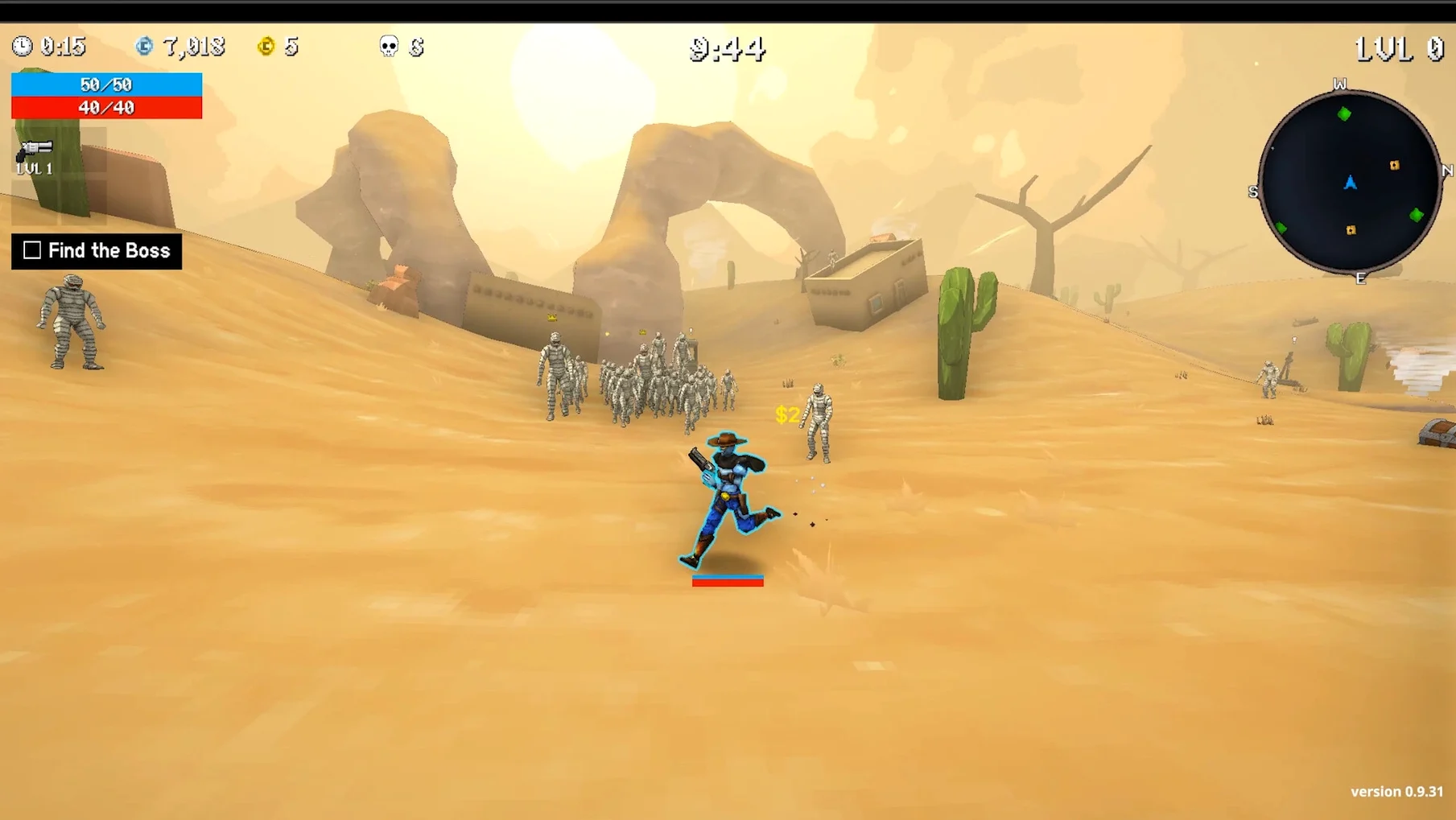

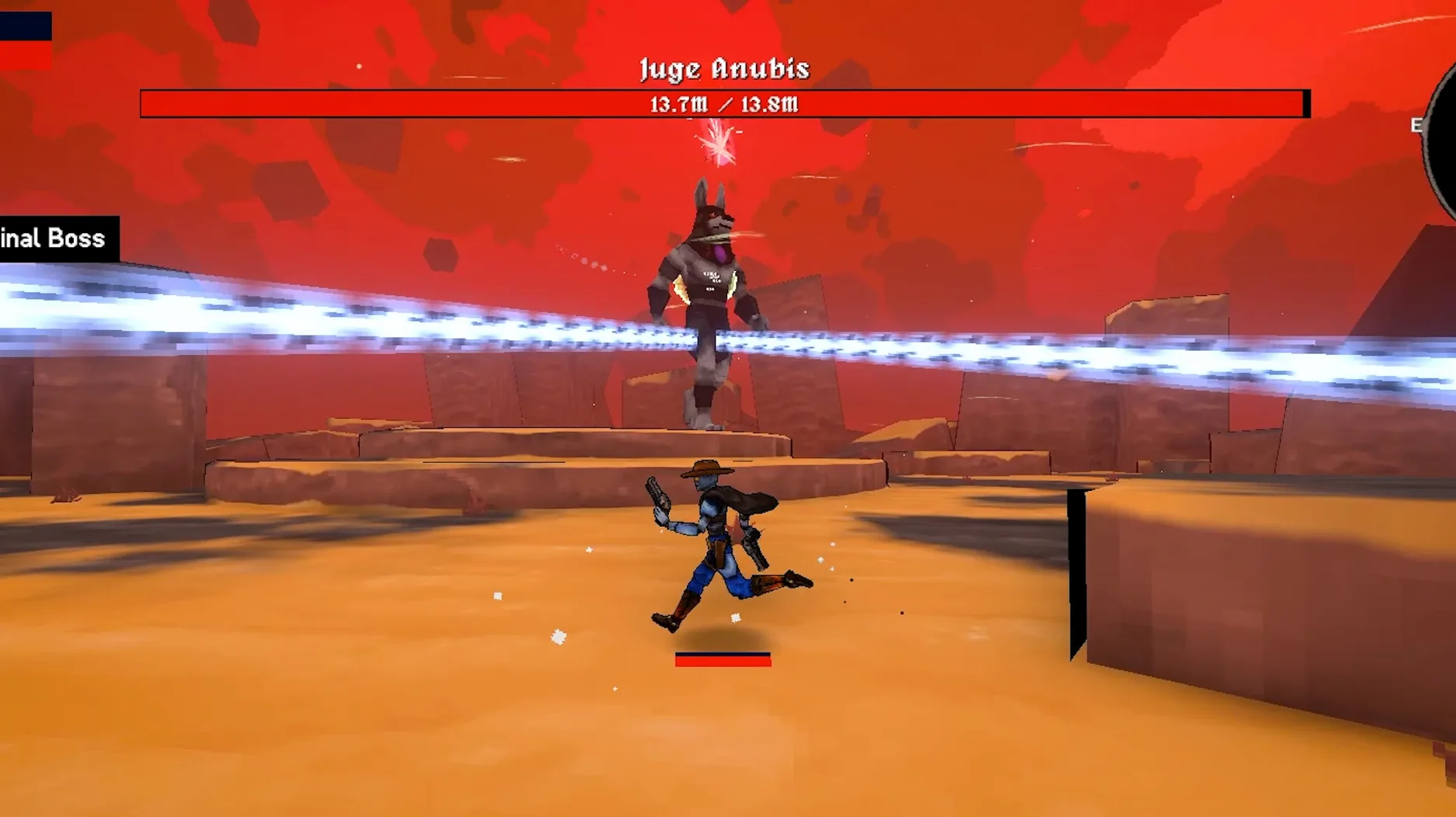
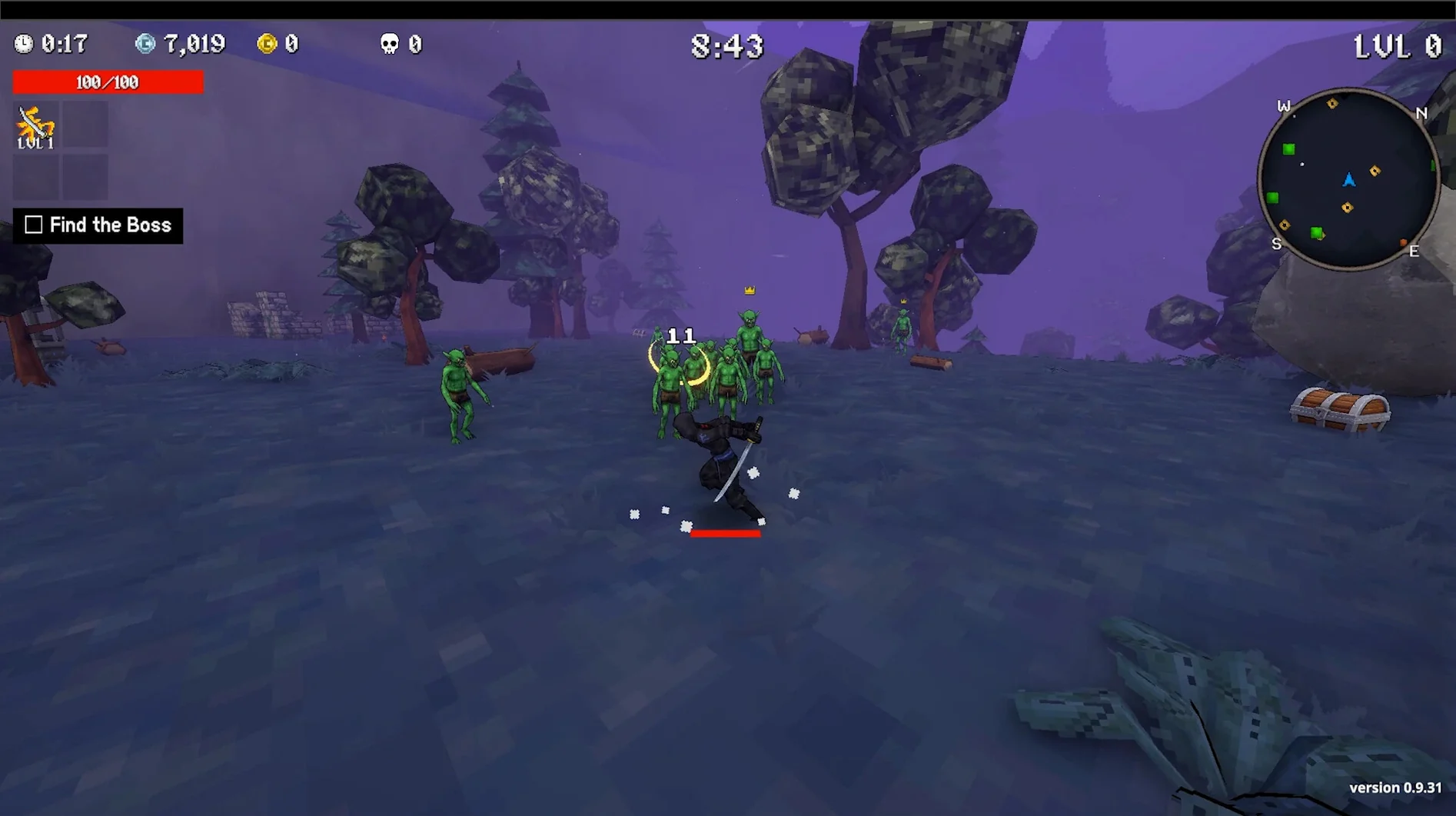
Megabonk runs on Apple Silicon Macs through a Wineskin wrapper — it's been tested on macOS Tahoe with an M4 Mac mini, and the build is marked for ARM architecture. That means no emulation layer guesswork; you download, mount, and go.
20 characters, one fresh map
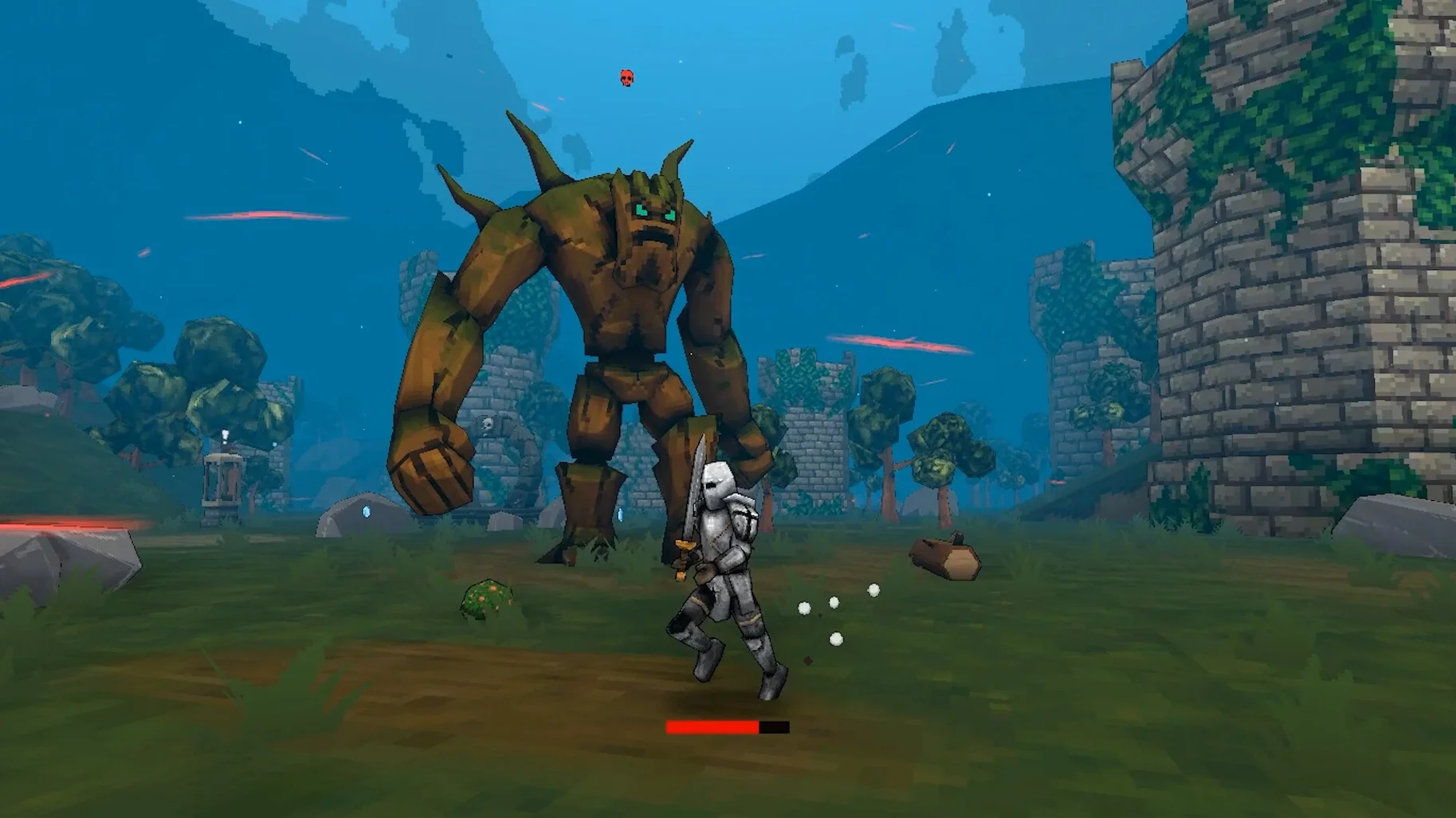
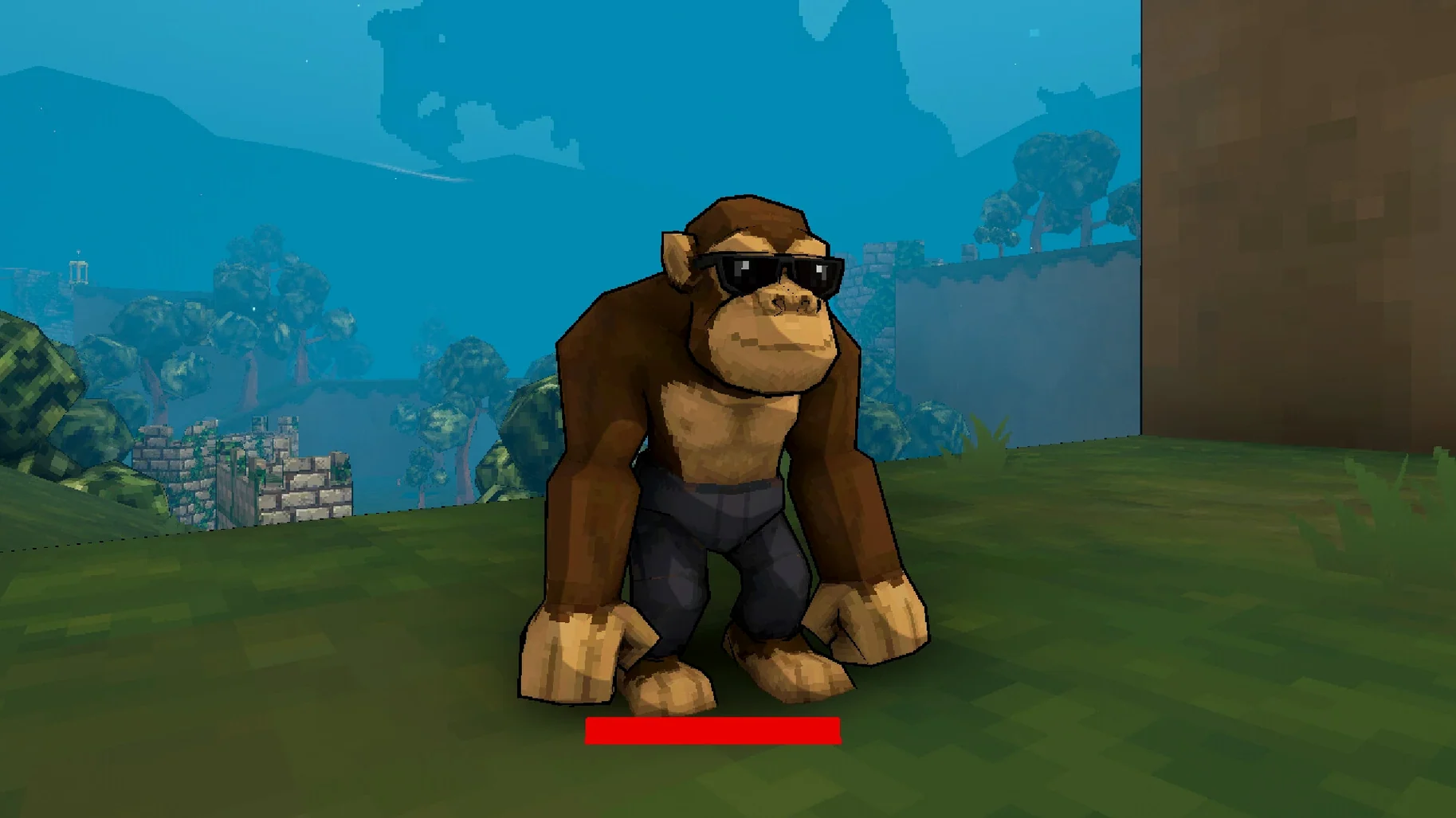
A run starts with a character pick. There are 20 of them, each with a unique ability that nudges you toward a certain playstyle. The map is freshly generated every time, so you never memorize layouts. You move through it, bump into enemies, and fight. Defeating them grants XP, and when you level up the game hands you a random upgrade — rarity varies, so some runs feel blessed and others ask you to scrape by with what you've got. Between fights you scoop up items scattered around the map, patching together a build from whatever the run decides to give you.
Why the next run always feels different
The upgrades are the heart of the unpredictability. You don't pick from a skill tree — the game deals you options, and the rarity spread means a run can tilt from scrappy to overpowered in a single level-up. One session you might stack damage boosts and tear through rooms; the next you're cobbling together defensive patches just to reach the end. The 20 characters add another layer: a character that thrives on speed feels nothing like one built around area control, so swapping between them reshuffles how you approach the same random rooms. If you like roguelikes where adaptation matters more than memorization, the loop here clicks.
Lives in your Applications folder
The Wineskin wrapper means Megabonk lives in your Applications folder like any other app — no launcher, no extra accounts. That simplicity makes it a natural fit alongside other indie titles you might keep in a dedicated Games folder on the dock. It responds to standard macOS keyboard shortcuts for quitting and window focus, so hopping between a run and a browser tab feels frictionless. If you use Mission Control to separate workspaces, the game behaves well when flicked to its own desktop, which is handy for longer sessions where you want a clean mental split between play and everything else.
The ARM-native Wineskin build also means it doesn't trip up macOS's memory management the way heavier emulation layers sometimes do. On an Apple Silicon machine, the system treats it as a standard process — background tasks like Time Machine backups or photo syncing won't suddenly choke the framerate during a boss fight. That reliability is the quiet kind of integration you only notice when it's absent elsewhere.
Thrives on improvisation, not memorized builds
People who enjoy roguelikes for the improvisation tend to settle into Megabonk fastest. There's no perfect build to memorize, no route to optimize across runs. The random upgrades and 20 characters reward the kind of player who looks at a stack of oddball synergies and thinks, "Alright, let's see if this works," rather than someone hunting for a tier list. Weekend gamers with 30-minute gaps get a full run without feeling rushed, while longer sessions invite back-to-back attempts — the post-run curiosity of "what if I'd picked the other character" pulls hard.
Mac users who keep their game library lean often appreciate a download like megabonk for mac free download that doesn't demand a runtime environment or a compatibility layer they have to babysit. It's also a comfortable pick for folks coming from action-heavy survival games who want something that respects their system's resources. The 240 quests give goal-oriented players something to chip away at, while the item synergies — over 70 of them — keep tinkerers busy experimenting long after they've seen most of the enemy patterns.
Apple Silicon tuning tightened room loads
The jump to 1.0.49 arrived in September 2025 with a few practical touches that changed how a run feels day to day. The Wineskin wrapper was tuned for Apple Silicon specifically, so load times between rooms tightened up noticeably — less time staring at a black screen before the next fight starts. Interface responsiveness got a polish pass too; selecting characters and browsing quest progress feels snappier, which matters when you're cycling through options between runs.
The developer also expanded language support in this build to 16 interface languages, which means the community grew broader overnight. If you play in Turkish, Thai, or Czech, you're no longer squinting at English tooltips. That kind of update doesn't change the core loop, but it quietly makes the game feel more finished — the sort of thing that keeps a game installed long after the first dozen runs.
- Apple Silicon Mac
Porch talk 0
Come in or pull up a chair to leave a comment.
Nobody has pulled up a chair yet. If you used it on a real Saturday, say what the hour was.