



You lay out the parking lot, sketch a few offices, and drop in desks fresh from the box. By afternoon, your first hire is coding a project you named on a whim, and the rent is already due.
Build the Office, Then Fill It with Talent
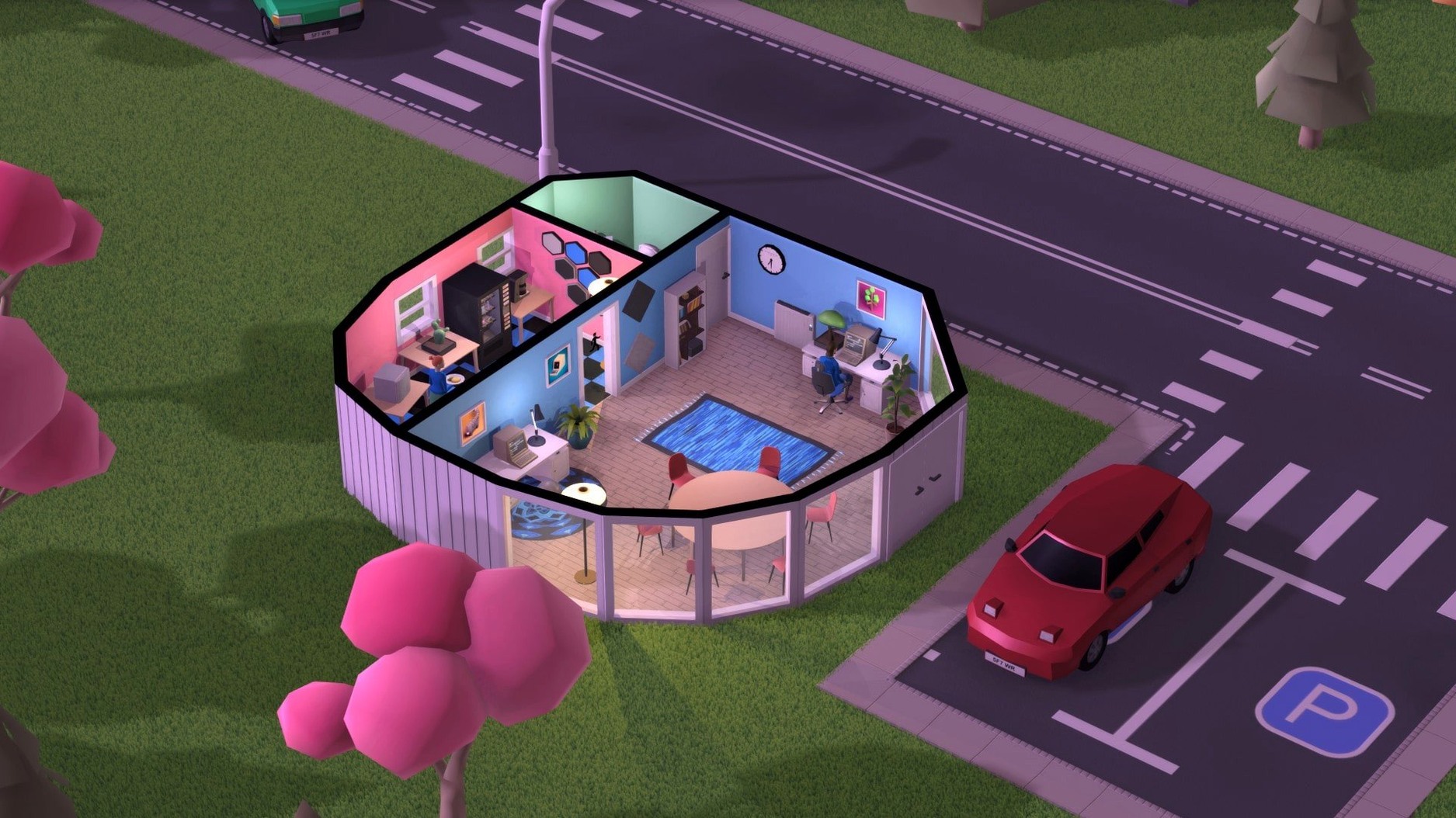
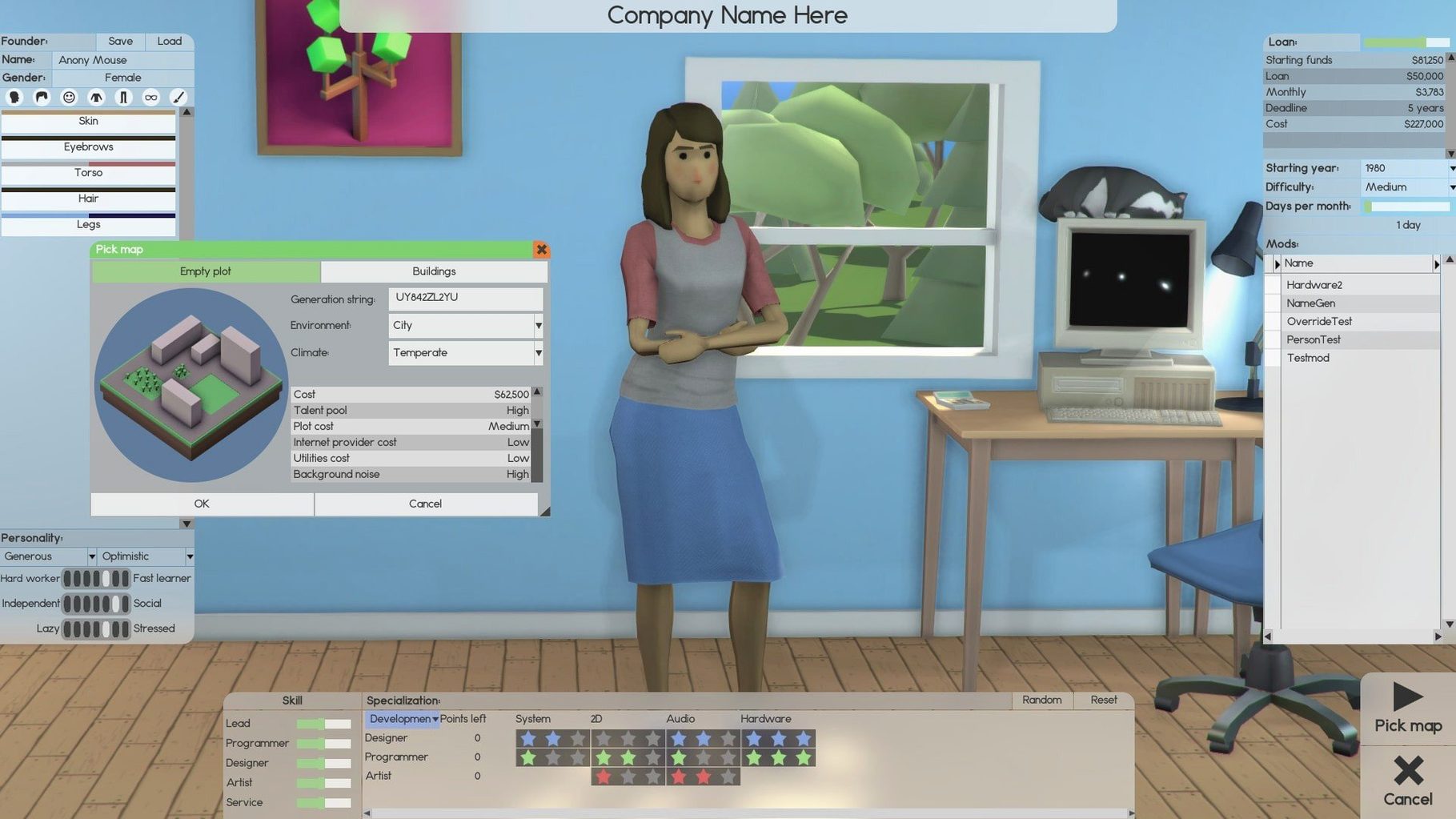
It's a strategy simulation that sits comfortably alongside office-building, staff-management, and game-development sims. You run a software company from the concrete up — constructing the building, furnishing the rooms, and then filling them with people who have skills, quirks, and relationships that affect the work.
Leaders, Maintenance Crews, and Funding Fights
You assign leaders to coordinate development and manage subordinates, hire maintenance staff to repair equipment and clean rooms, and decide whether to sell products, sign contracts, or issue shares to stay competitive. Every desk placement and team dynamic ripples into the quality of the code.
What can you build?
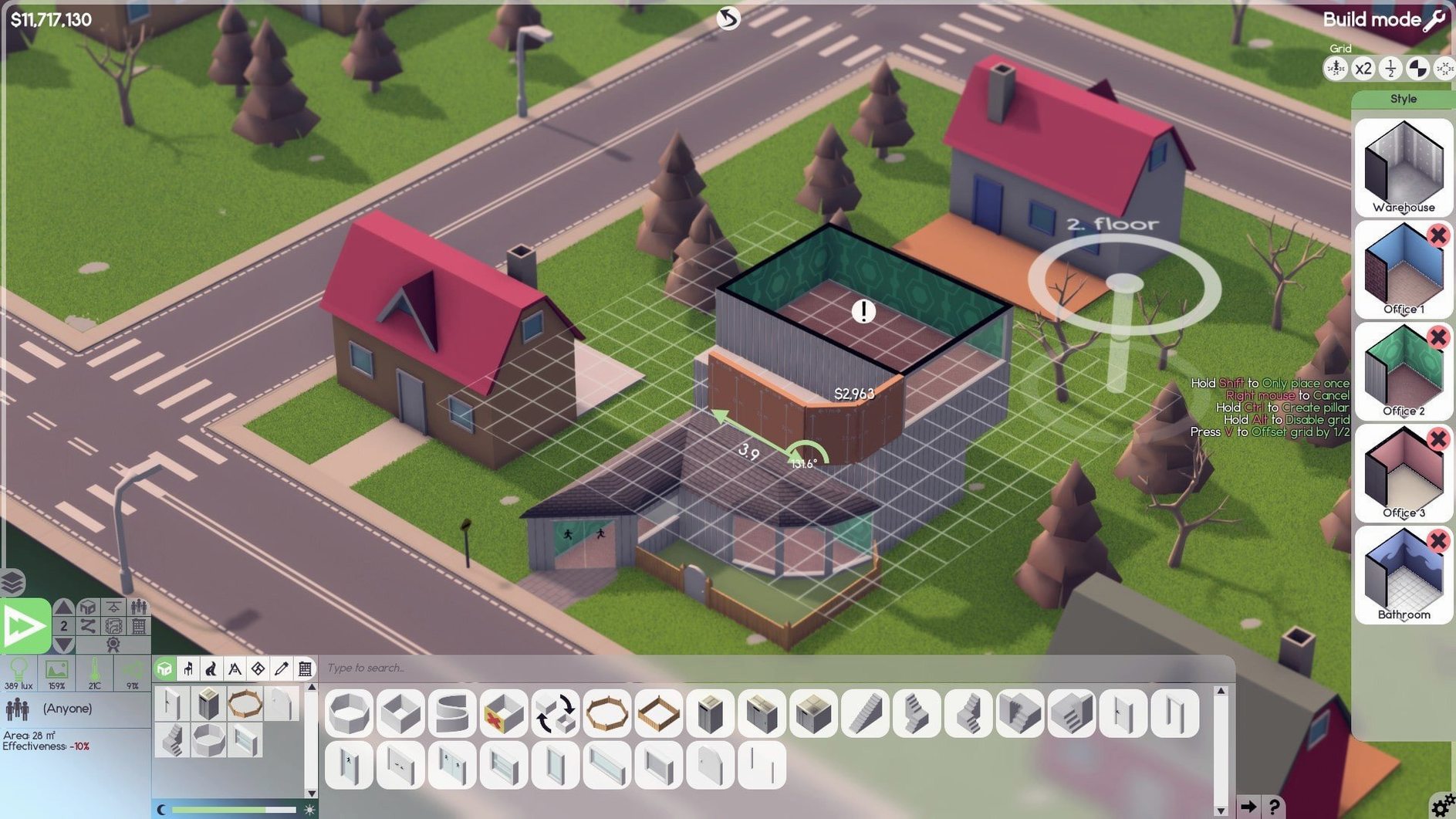
Beyond the software itself — programs and full franchises — you construct roads, parking lots, and the entire office layout. The physical space matters as much as the org chart.
Forty Employees Deep, Still Butter-Smooth
I ran Software Inc through a four-hour stretch on a Mac mini M4, and the frame rate stayed butter-smooth even with three floors built out and roughly forty employees shuffling between meeting rooms and server racks. The simulation doesn't hiccup when you speed through months at 3×, which matters when you're waiting for a product to hit the market and the bills are stacking up. Memory use hovered around 1.2 GB — modest for a game simulating this many interlocking systems at once.
Stability has been solid through Beta 1.8.41. Autosave triggers on schedule, and I haven't seen a crash during office construction or contract negotiation, two areas where early builds occasionally stumbled. The soundtrack stays in its lane too — a low-key music accompaniment that loops without getting under your skin after hour three.
Autosave Every Two Months for Risky Launches
- Autosave interval — the default is generous, but if you're experimenting with risky franchise launches, bump it to every two months. A bad release can crater your reputation faster than you'd expect.
- Edge scrolling sensitivity — tuck it down a notch unless you enjoy the camera flying across the lot when your cursor grazes the screen border.
- Wall transparency during build mode — toggle it to full so you can see furniture placement through walls without rotating the view constantly. Saves real frustration when you're laying out cubicles on multiple floors.
- Employee relationship visibility — the game tracks friendships and friction between staff. Turn on visible indicators early; seating two developers who can't stand each other next to a humming server rack is a productivity killer you won't notice until deadlines slip.
For Fans of Floor Plans and Staff Dynamics
If you've lost an evening to Game Dev Tycoon or spent a weekend tweaking floor plans in Prison Architect, this is your territory. The overlap is real — office construction scratches the same spatial puzzle itch, while the staff-management layer rewards players who pay attention to personalities, not just skill ratings.
Mac users who enjoy slow-build strategy without combat will settle in comfortably. There's no rush mechanic beyond your own financial pressure, so the pace suits people who want to experiment with a software inc download on macOS and explore the simulation at their own rhythm. Players drawn to simulation games where systems collide — construction, HR, product design, and market timing — will find the most to chew on.
If you bounce off games that don't hand you a tutorial for every menu, be prepared to learn by failing. The game assumes you'll study the tooltips and figure out why your support team is drowning in tickets while development sits idle. That friction is part of the appeal for its core audience.
A focused workflow: launching your first franchise
Here's a concrete path I followed after a few restarts, once I understood how the pieces fit together.
1. Start small with a contract job. Before you design your dream product, open the contracts panel and accept a short-term development gig. The upfront payment covers furniture and a server rack without debt. Assign two developers and let them grind it out while you build the office around them.
2. Lay out only what you need. On the ground floor, build a small open area with four desks, a meeting room with a whiteboard, and a bathroom. Skip the kitchen until you have at least six employees — maintenance costs eat into thin margins early on.
3. Hire a leader before you expand. Once the contract wraps, bring in a team leader with decent social and coordination stats. Place their desk near the developers they'll manage. Without a leader, your second product cycle will feel chaotic — tasks stall, priorities drift, and you won't know why until you trace it back to the org chart.
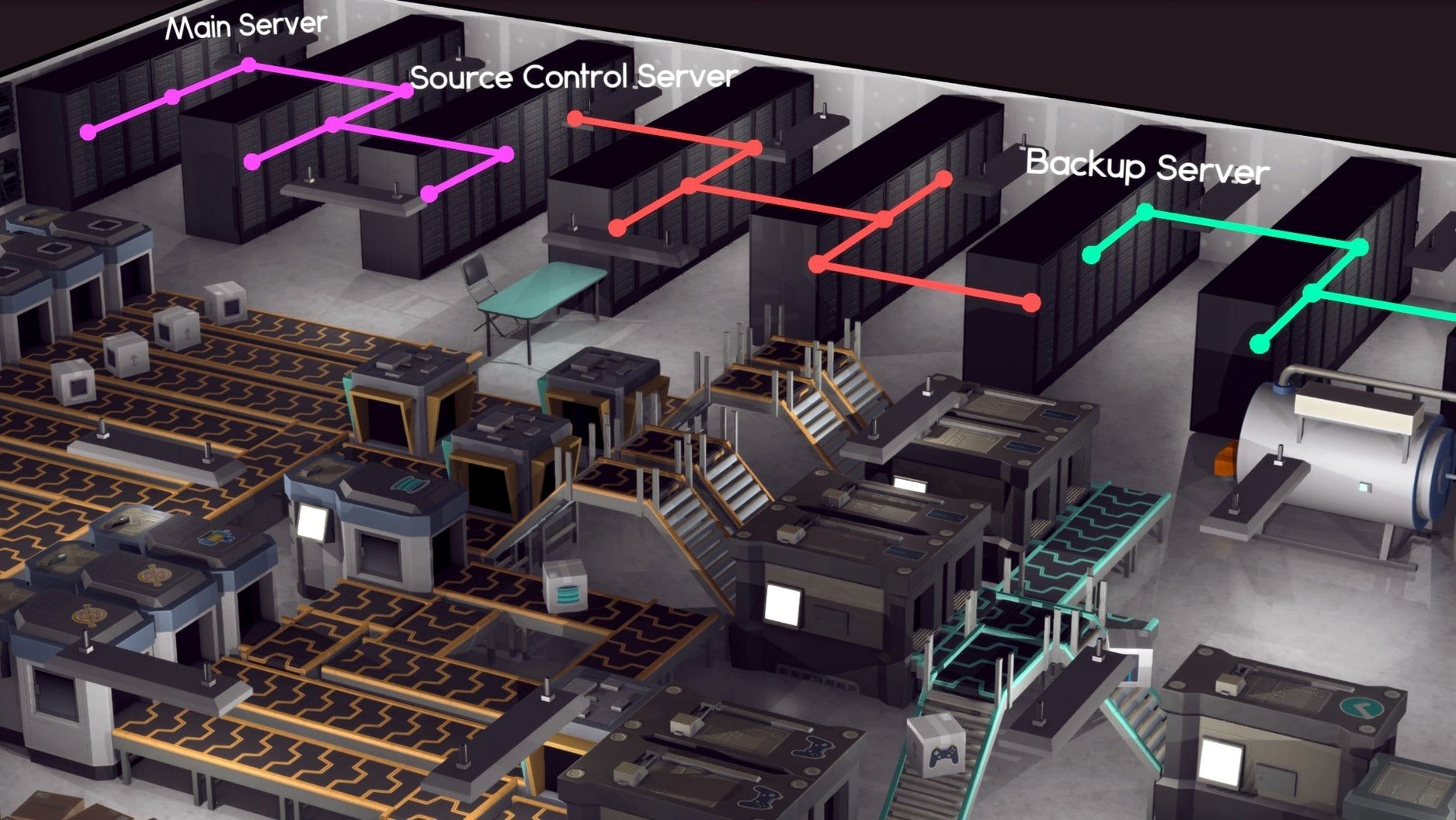
4. Design and market your first program. Use the revenue from the contract to fund a modest product — maybe an audio tool or a small game. Assign a designer to set features, then let development and a small marketing push run simultaneously. Put a server in a ventilated room (heat matters for hardware lifespan) and launch an online store to handle distribution.
5. Support matters more than you think. After release, ticket volume will surprise you. Hire at least one support staffer before launch day, or your development team will get pulled off their next project to handle bug reports. That's the kind of cascade that sinks a second product cycle.
The whole process — from empty lot to first franchise sale — took me about six in-game years on a normal difficulty start. Your mileage will vary, but the rhythm of build, hire, ship, and support stays consistent whether you're chasing a Software Inc torrent to try the beta or running the latest macOS build from a fresh install.
- Runs on both Intel and Apple Silicon Macs
- Interface language: English
Questions I actually get
Is this just a tycoon game about writing code?
It's broader than that. You design and furnish the building, manage employee relationships, assign leaders, and choose between selling products, signing contracts, or trading shares to grow.
Can I create more than one product?
Yes, you can build a catalog of programs and turn successful ones into full franchises, all while expanding your company's physical campus.
Porch talk 0
Come in or pull up a chair to leave a comment.
Nobody has pulled up a chair yet. If you used it on a real Saturday, say what the hour was.
More for the same hour
Everything in Games
 Sleeping Dogs
1.1 Games
15.5 GB
Sleeping Dogs
1.1 Games
15.5 GB

 Sonic Mania Plus
1.0 Games
202 MB
Sonic Mania Plus
1.0 Games
202 MB

 Slay the Spire 2
0.107.1 Games
1 GB
Slay the Spire 2
0.107.1 Games
1 GB

 Spirit of the North
Build 6112756 Games
4 GB
Spirit of the North
Build 6112756 Games
4 GB
 Stardew Valley
1.6.15.24357.8705766150 Games
467 MB
Stardew Valley
1.6.15.24357.8705766150 Games
467 MB

 Silly Polly Beast
1.1 Games
1.8 GB
Silly Polly Beast
1.1 Games
1.8 GB

 Sid Meier’s Civilization VII
1.5.0 Games
18 GB
Sid Meier’s Civilization VII
1.5.0 Games
18 GB

 Stellaris
4.5.1 Games
21 GB
Stellaris
4.5.1 Games
21 GB