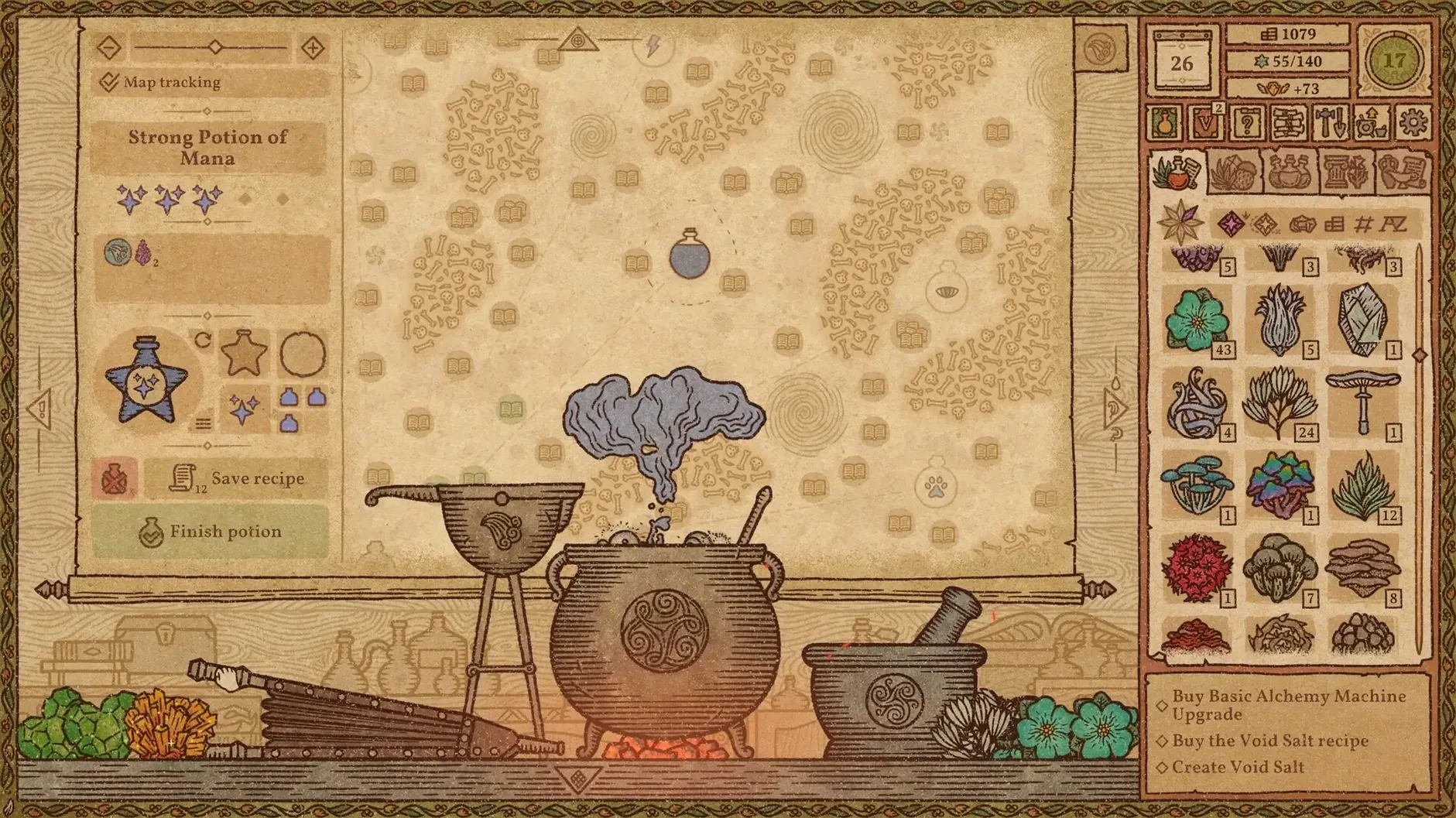
Every day starts with a mortar full of Firebell and a line of customers outside the wooden door. Potion Craft: Alchemist Simulator puts the workshop bench directly under your fingertips.
Base — Water, oil, or something cloudier; the liquid you choose steers the whole recipe before a single petal hits the mortar.
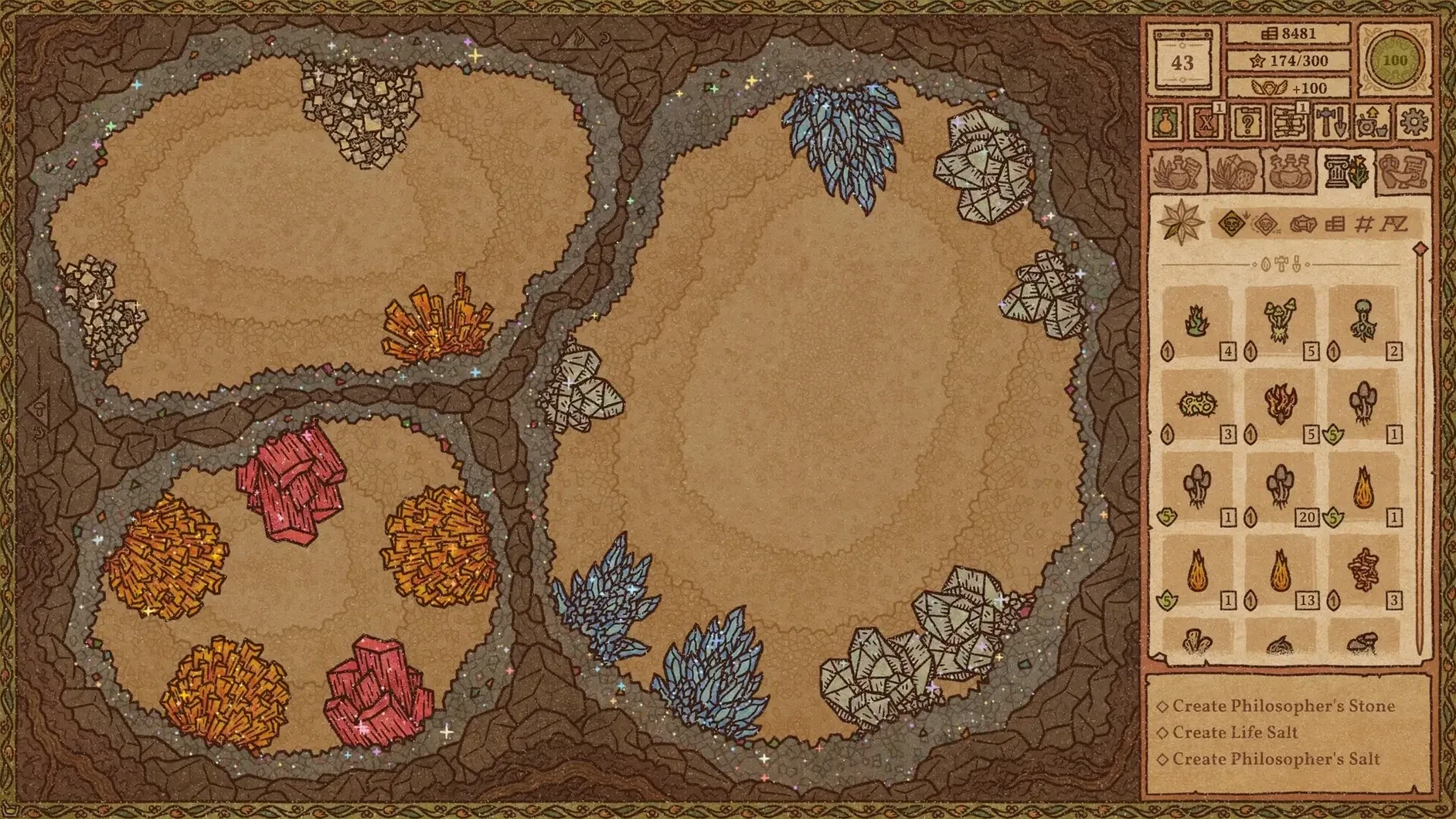
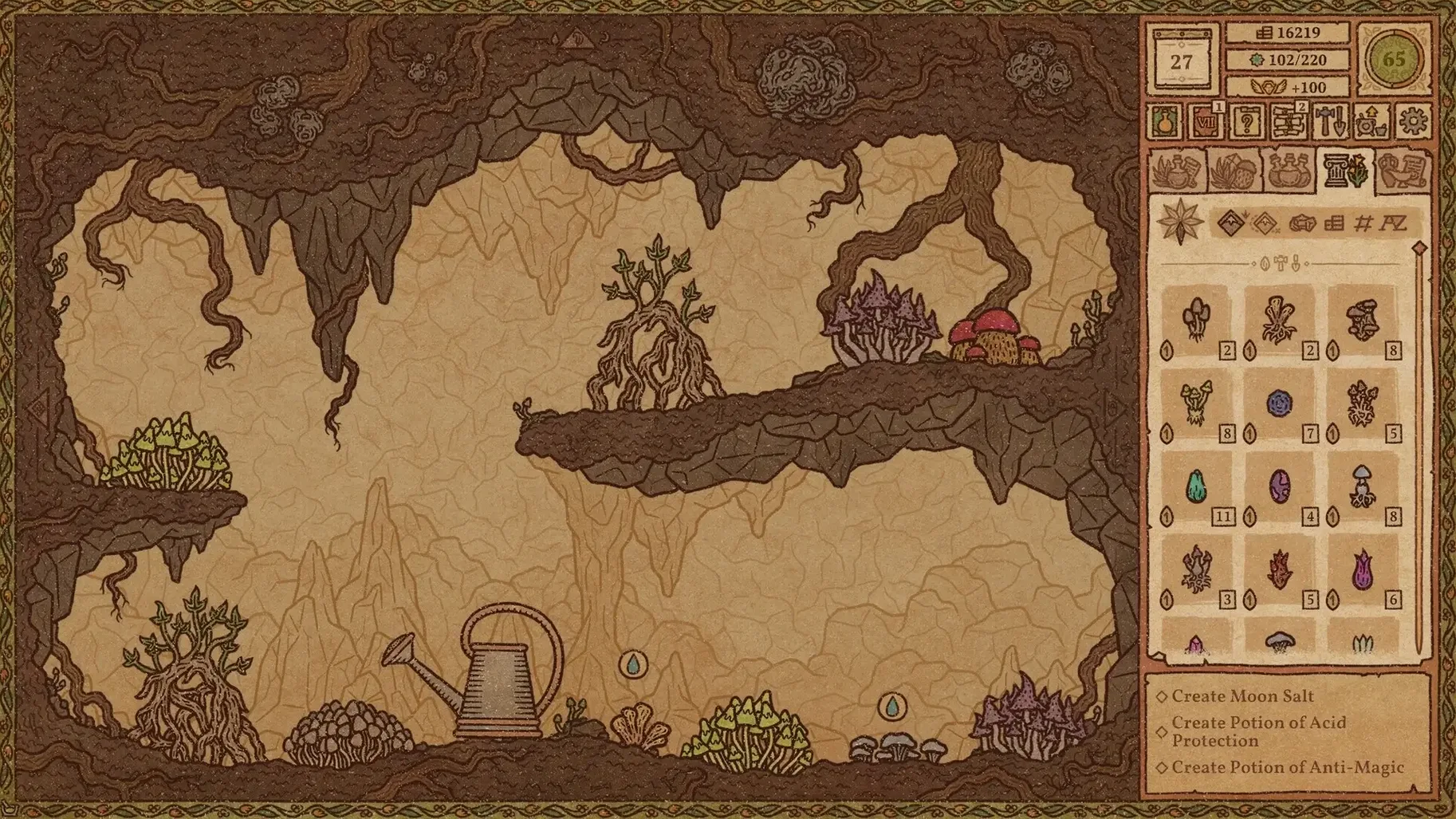
Ingredients — Flowers, leaves, berries, roots, fruits, minerals, and mushrooms. Each one nudges the potion’s path across the alchemy map in a different direction, and you grind them by hand with a pestle.
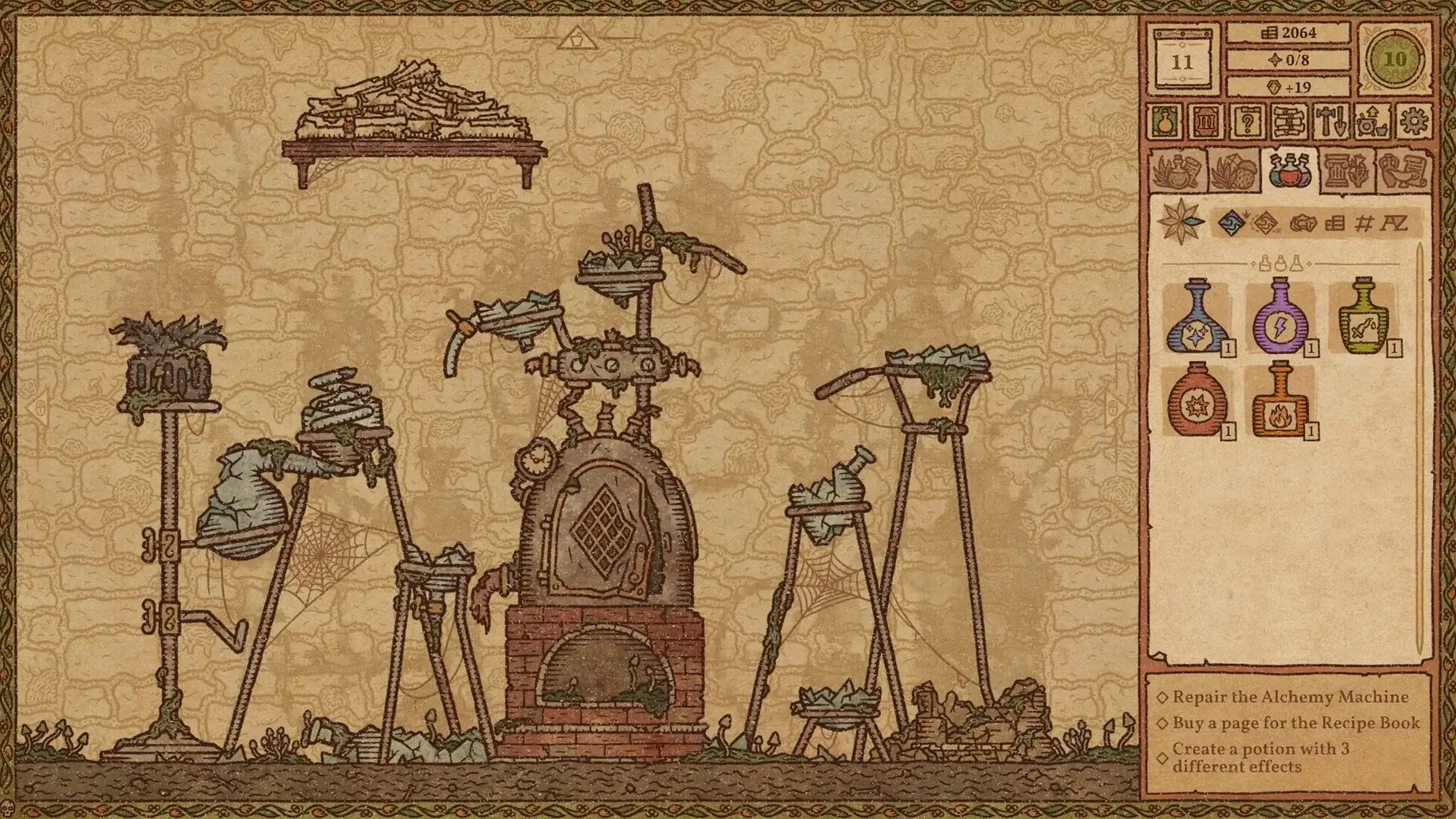
Cauldron — A spoon and a bellows are your main tools. Stir to move through the map, pump the bellows to add heat, and watch the concoction bubble in real time.
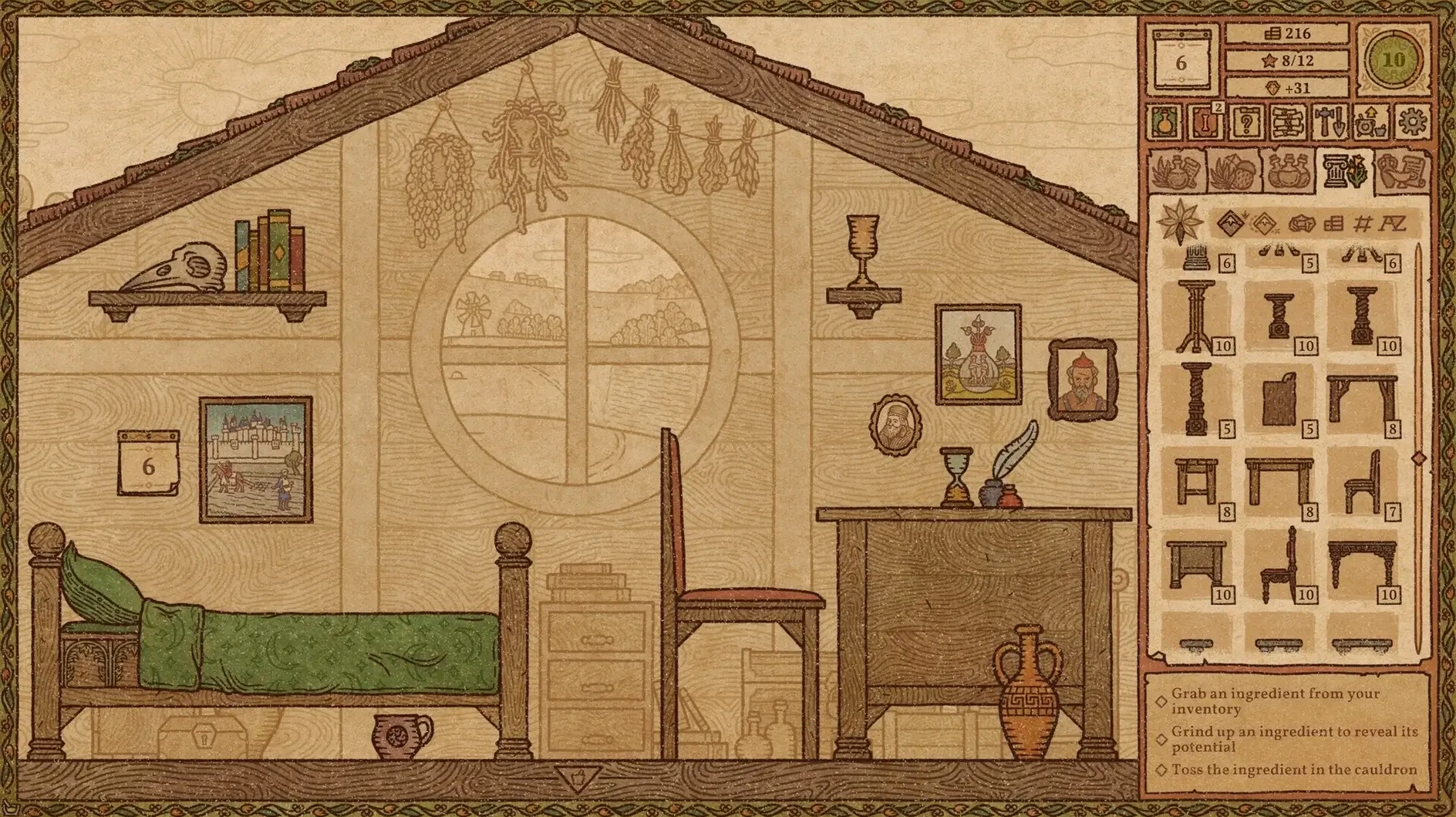
Shop — Customers arrive daily with requests, sometimes vague, sometimes very specific. You name your price, hand over the bottle, and build a reputation that attracts guilds and known characters.
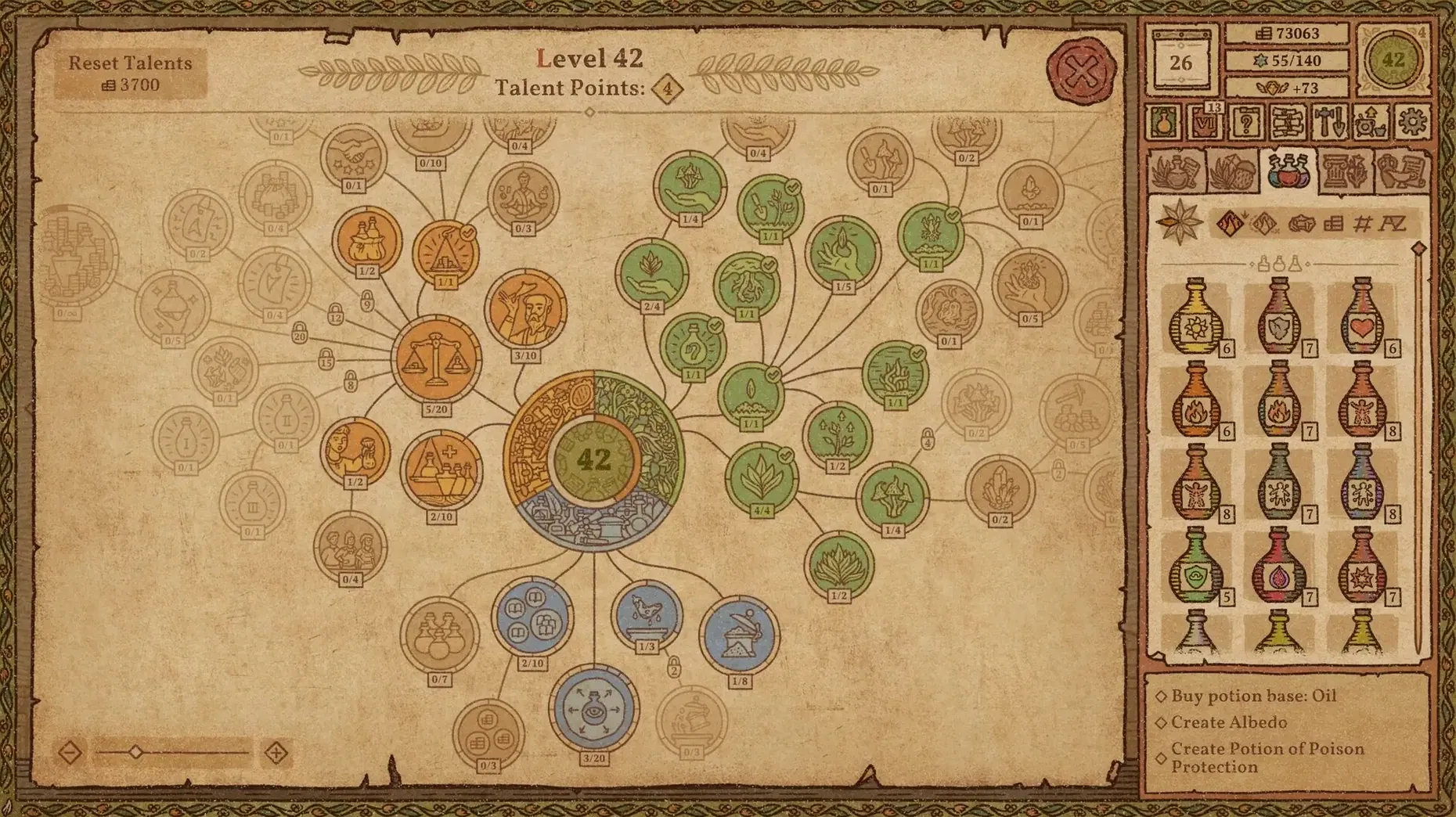
Recipes — The game remembers what you discover, but it also leaves room to invent new recipes from scratch when a visitor asks for something you haven’t bottled before.
It’s a tactile little loop of grinding, stirring, and selling, set to a quiet musical accompaniment. The shop runs at your pace, and the bench always has one more combination worth trying.
Before You Fire Up the Mortar
A few questions tend to float up the moment someone hears about a potion shop simulator that landed on Mac. The first is whether the whole thing runs natively—yes, this is an Apple Silicon build, tested on a Mac mini M4 with macOS Tahoe, so there’s no emulation layer to trip over. The second is whether you need to be online. You don’t. The shop, the garden, the wandering traders, and every crushed petal sit right on your drive.
Another common worry is the learning curve. The alchemy map can look intimidating on a first glance, but the game teaches through doing. You grind a Windbloom, drop it into the cauldron, and watch the marker drift northwest. That’s your lesson. The map rewards curiosity more than a steady hand, and nothing stops you from dumping a failed brew into the sink and starting fresh.
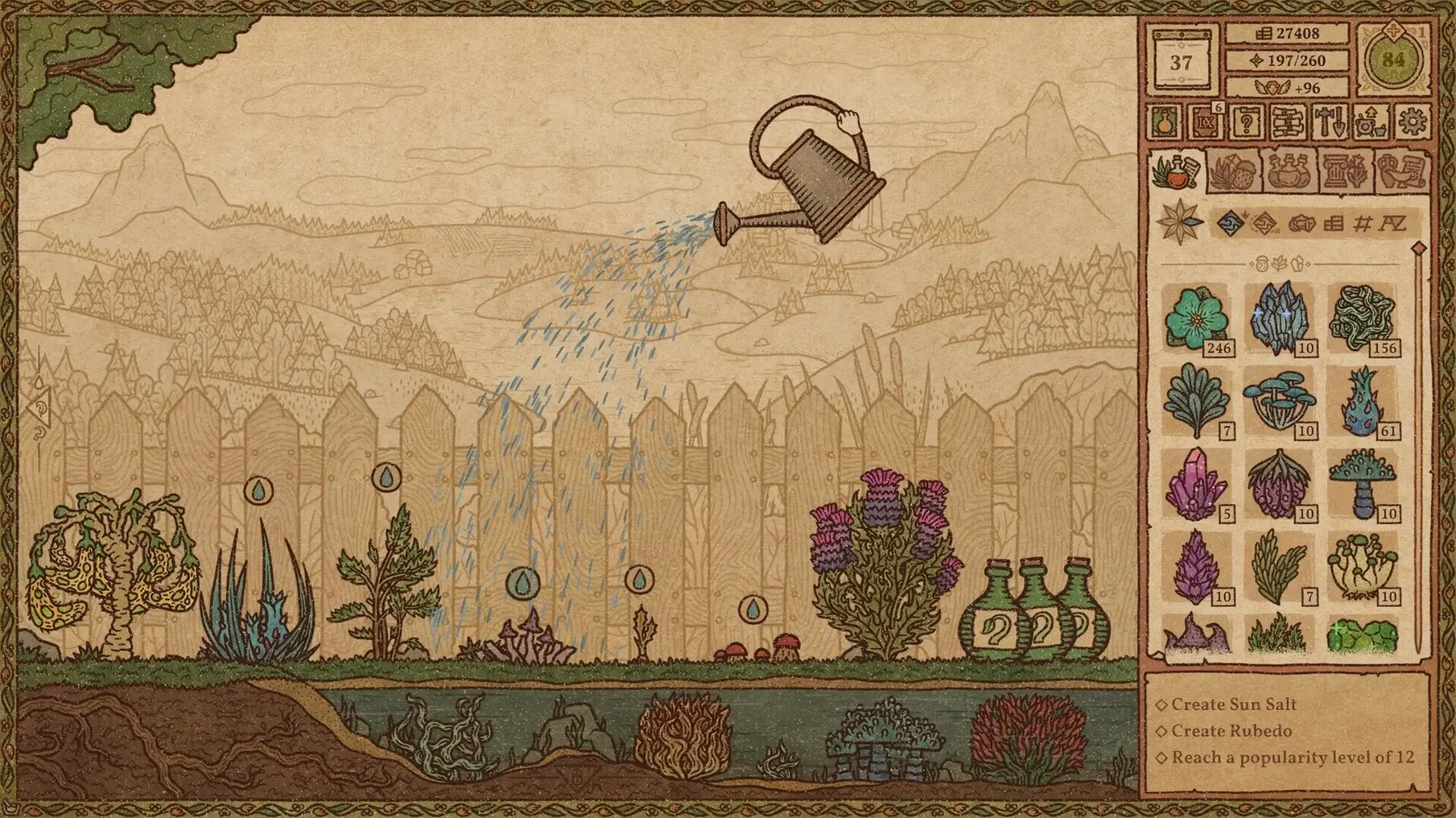
People also ask if the Mac version includes the garden and the full soundtrack—it does. The musical accompaniment plays quietly under the clink of bottles and the hiss of the bellows, and the garden unlocks naturally once your shop gains enough footing to need a steady supply of ingredients.
Water-by-Drop Ladle Control
- Water by the drop. Tapping the ladle adds a single drop of water, not a splash. One drop can be enough to finesse a potion onto a tight spot on the map without overshooting.
- Mortar texture matters. Grinding halfway versus grinding to a fine powder changes how far an ingredient pushes the path. Coarse chunks move less; dust moves more.
- Bellows patience. A gentle squeeze heats the cauldron slower than a hard pump, which matters when you’re threading through a narrow corridor between two skull-marked dead zones.
- Recipe pages as scratch pads. The saved recipes aren’t locked—you can tweak an existing entry, rename it, and save the variation without losing the original.
- Haggle whispers. Customers sometimes accept a higher price if you’ve built a reputation for quality. Watch their posture; a subtle animation shift often hints at a yes before the dialogue confirms it.
From Icon Logic to Bellow-Stoked Brewing
Next to Little Alchemy 2, Potion Craft is far more physical. Little Alchemy lives in the drag-and-drop logic of icons combining into new icons, while Potion Craft places you in a workshop with a spoon, a bellows, and ingredients that respond to how you handle them. The map-based brewing adds a spatial puzzle layer that Little Alchemy doesn’t aim for.
Compared to Strange Horticulture, the difference is the loop. Strange Horticulture wraps plant identification and narrative mystery around a shop counter, but you’re not stirring a cauldron or mapping potion effects bottle by bottle. Potion Craft leans harder into the tactile craft itself—the shop management supports the brewing, not the other way around.
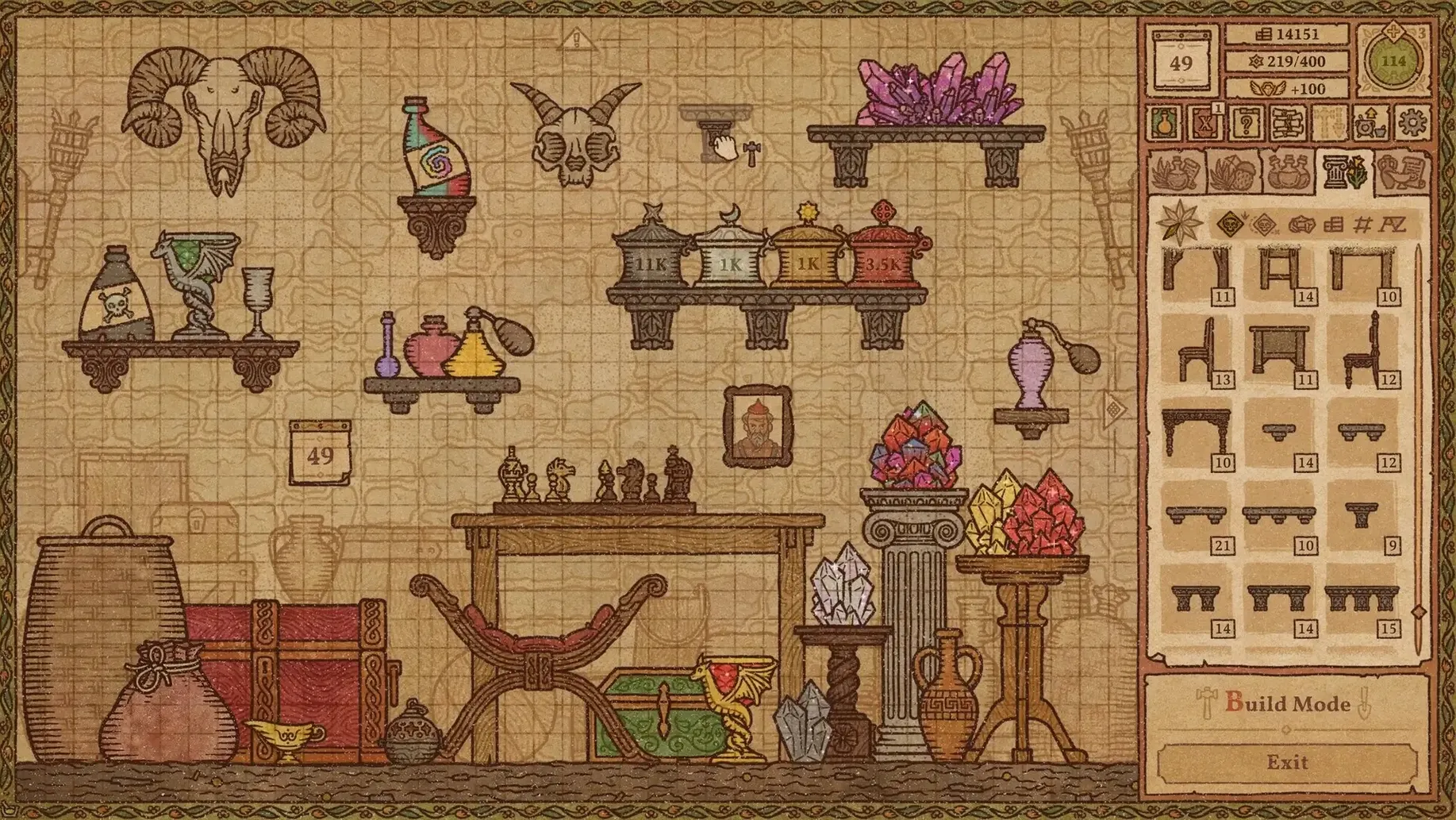
And if you’ve spent time with Winkeltje: The Little Shop, the overlap is in the shopkeeping rhythm, but Winkeltje puts its weight on floor plans and inventory layouts. Potion Craft keeps the focus tight on the alchemy bench. You arrange bottles on shelves, sure, but the real attention stays on what’s swirling inside them. If you’ve wanted to download Potion Craft: Alchemist Simulator for Mac and wonder how it measures up, think of it as a hands-on brewing sandbox with a storefront attached, not a retail sim with crafting on the side.
- macOS 12.0 or newer
- Apple Silicon Mac
Questions I actually get
What ingredients can you use in Potion Craft?
You can work with flowers, leaves, berries, roots, fruits, minerals, and mushrooms, each with its own effect on the potion’s path through the alchemy map.
Can you create your own potion recipes?
Yes. While the game saves the recipes you discover, you are free to invent entirely new ones by experimenting with different bases, ingredients, and stirring techniques.
Porch talk 0
Come in or pull up a chair to leave a comment.
Nobody has pulled up a chair yet. If you used it on a real Saturday, say what the hour was.